
Fillmore, Utah
Want to see how Fillmore compares to other top cities in Utah? Explore all city regulations in Utah. →
Fillmore, UT
Generally Investor Friendly
STR Regulations for Fillmore, Utah
Overview: Are Short-Term Rentals Allowed in Fillmore, UT?
Yes, short-term rentals are allowed in Fillmore, Utah. Based on the available data, Fillmore has an active short-term rental market with 53 active listings and a median revenue of $12,536. The city maintains regulations for short-term rental operations, as evidenced by the presence of a dedicated regulations page for Fillmore on the STRProfitMap platform.
Utah operates under a local-level regulatory framework for short-term rentals, meaning cities like Fillmore have the authority to establish their own rules, restrictions, and requirements. Investors should note that while short-term rentals are permitted, specific zoning restrictions, permit requirements, and operational guidelines may apply.
What do Airbnb hosts actually earn in Fillmore?
Fillmore hosts earn a median $12,469/year with $84 ADR and 42% occupancy.
Top performers pull in $14,738+ per year.
See the full Fillmore market breakdownHow to Start a Short-Term Rental Business in Fillmore, UT
Step 1: Research Local Zoning Requirements
Before purchasing or investing in property for short-term rental use, investors should:
- Contact Fillmore city planning department to verify zoning compatibility
- Identify whether STRs are permitted in the specific zone where the property is located
- Understand any density restrictions or caps on the number of STRs in certain areas
Step 2: Obtain Necessary Permits and Licenses
Based on Utah's local regulatory framework, Fillmore likely requires:
- Business license registration
- Short-term rental permit or registration
- Compliance with health and safety standards
- Payment of applicable fees and taxes
Step 3: Register for Tax Obligations
Short-term rental operators in Utah must:
- Register with the Utah State Tax Commission
- Collect and remit transient room taxes and state sales taxes
- Maintain accurate records of rental income and expenses
Step 4: Establish Operational Procedures
Develop comprehensive operational guidelines including:
- Guest check-in/check-out procedures
- House rules and occupancy limits
- Emergency contact information
- Maintenance and cleaning protocols
Required Documents, Permits, Licenses, and Guidelines
While specific requirements vary by jurisdiction, typical documentation for Fillmore short-term rentals includes:
Business Documentation
- Utah business license
- Federal EIN (Employer Identification Number)
- Property deed or lease agreement demonstrating legal right to operate
- Liability insurance policy
Regulatory Compliance
- Short-term rental permit or registration certificate
- Zoning compliance verification
- Fire safety inspection certificate (if required)
- Health department approval (if applicable)
Operational Documentation
- Guest registration and check-in/out procedures
- Emergency contact information
- House rules and occupancy limits
- Maintenance and cleaning protocols
Specific Regulations for Short-Term Rentals
City-Level Regulations (Fillmore)
Due to the limitations of the provided content, specific Fillmore city regulations are not detailed. However, based on typical Utah municipal frameworks, Fillmore regulations likely address:
Zoning Restrictions:
- Permitted zoning districts for short-term rentals
- Minimum distance requirements between STR properties
- Prohibition zones or special overlay districts
Operational Requirements:
- Maximum occupancy limits
- Parking restrictions
- Noise ordinance compliance
- Quiet hours enforcement
Permit and Registration:
- Initial application process and fees
- Renewal requirements and timelines
- Inspection protocols
- Compliance monitoring
County-Level Regulations (Millard County)
Fillmore is located in Millard County. County-level regulations may include:
- Unincorporated area zoning requirements
- Building code compliance
- Fire safety standards
- Environmental health requirements
State-Level Regulations (Utah)
Utah's regulatory framework for short-term rentals includes:
Taxation Requirements:
- Transient room tax collection and remittance
- State sales tax on rental transactions
- Income tax reporting obligations
Consumer Protection:
- Guest cancellation policies
- Accurate listing requirements
- Safety disclosure obligations
Health and Safety Standards:
- Building code compliance
- Fire safety equipment requirements
- Guest safety protocols
Contact Information for Local Authority
Fillmore City Government
While specific contact information was not provided in the available content, investors should contact:
Fillmore City Hall
- Address: Fillmore, Utah
- Phone: Contact local directory for current number
- Email: Contact local directory for current email
- Website: Check official Fillmore city website for planning and zoning departments
Recommended Departments to Contact:
- Planning and Zoning Department
- Business Licensing Division
- Building Safety Division
- Finance/Tax Collection Division
Millard County Government
For county-level requirements:
- Millard County offices
- County planning and zoning department
- County health department
State-Level Contacts
Utah State Tax Commission
- Website: tax.utah.gov
- For transient room tax and sales tax registration
Utah Division of Real Estate
- For property management licensing requirements
- Website: realestate.utah.gov
Links to Source Pages
Based on the provided content, the following source was referenced:
- Utah STR Regulations Overview: www.strprofitmap.com/regulations/UT
Note: This guide was created using limited available content. Investors should verify all current regulations, requirements, and contact information with official Fillmore city and Millard County authorities before making investment decisions. Regulations and requirements can change, and this guide does not constitute legal or professional advice.
Important Disclaimer: This guide is based on limited available information. Always verify current regulations, tax obligations, and permit requirements with local authorities before investing in or operating a short-term rental property in Fillmore, Utah. Regulations may change, and this guide does not replace professional legal or tax advice.
Next step
Found a property in Fillmore?
Paste any address and get estimated revenue, cash-on-cash return, and comparable STR performance in under 5 minutes. 3 free analyses per day.
Free brief
Get the free Fillmore STR Investment Brief
Revenue data, top neighborhoods, seasonal trends, and the key regulations for Fillmore, Utah in one email.
Fillmore
Market Saturation Score
Photos of Fillmore


Overview of Fillmore
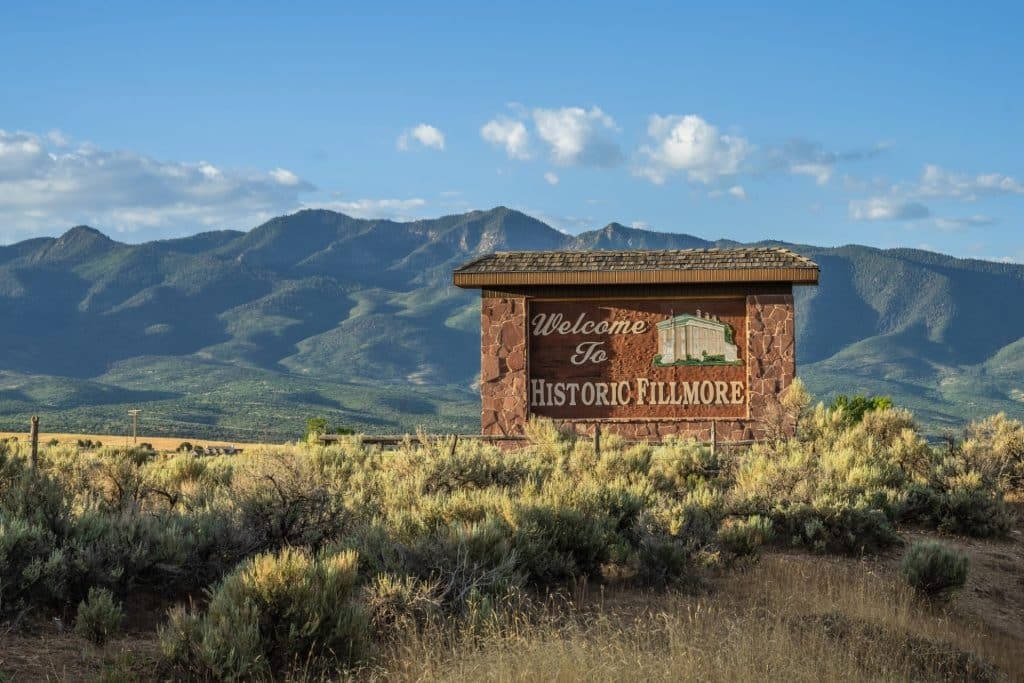
Fillmore is a small, historic city that serves as the county seat of Millard County in central Utah, with a population of approximately 2,500 residents. Sitting alongside Interstate 15 roughly 150 miles south of Salt Lake City, the town has a quiet, agricultural feel rooted in its pioneer past. It is best known as the site of Utah's first territorial capital, established in 1851 and named for President Millard Fillmore, and it functions as a practical overnight stop for travelers heading to the state's southern red-rock parks.
The most prominent historical landmark in town is the Utah Territorial Statehouse, a modest adobe and frame building just off the town center that served as the seat of the territorial government from 1851 until the capital moved to Salt Lake City in 1856. Today it operates as a museum and is one of the oldest public buildings still standing in Utah, offering exhibits on pioneer life and the early territorial period. Visitors can walk through restored legislative chambers and learn about the Mormon settlement of the Sevier Valley.
About twenty minutes south of Fillmore, Cove Fort is a square-walled fortification built in 1867 by Ira Hinckley at the request of Brigham Young. The fort was constructed to protect travelers and telegraph workers in the region, and today it is preserved as a historic site with guided tours through the original stone buildings, a blacksmith shop, and a rare pioneer telegraph station. It remains one of the few fort structures of its kind still standing in the American West.
For travelers willing to venture farther, Capitol Reef National Park lies roughly two hours to the southeast, where the Waterpocket Fold creates a hundred-mile wrinkle in the earth's crust. The park combines colorful sandstone cliffs, the pioneer-era Fruita Historic District, and a quiet scattering of Fremont petroglyph panels, all accessible by scenic drives and short, family-friendly hikes. Further to the west, Great Basin National Park is a longer drive of about three and a half hours, but it offers a markedly different experience with ancient bristlecone pine groves, the marble passages of Lehman Caves, and the alpine summit of Wheeler Peak rising above thirteen thousand feet.
Fillmore's appeal as a base for short-term rentals lies in this combination of small-town quiet and central geographic positioning. Visitors who book a stay here can spend a day exploring the Territorial Statehouse, then use the town as a jumping-off point for southern Utah's national parks, returning each evening to a peaceful community with easy freeway access and a tangible sense of nineteenth-century western history.
Want to know if a property in Fillmore is a good investment?
Enter an address to get instant revenue potential and comps.