
Zapata, Texas
Want to see how Zapata compares to other top cities in Texas? Explore all city regulations in Texas. →
Zapata, TX
Generally Investor Friendly
STR Regulations for Zapata, Texas
Overview and Direct Answer
Direct answer: Yes—short-term rentals (STRs) appear to be allowed in Zapata, Texas, and in Zapata County based on the provided sources. The Lone Star State does not prohibit STRs at the state level; it primarily regulates STRs through taxation (the Texas Hotel Occupancy Tax) and property/building standards rather than blanket bans. The provided materials do not identify any city of Zapata or Zapata County–specific STR prohibitions, licensing, or permit programs. This means that, subject to zoning, building code compliance, and tax obligations, an STR is likely permissible, but confirmations with the county building department and the local tax office are still required before opening.
What do Airbnb hosts actually earn in Zapata?
Zapata hosts earn a median $12,269/year with $113 ADR and 41% occupancy.
Top performers pull in $17,559+ per year.
See the full Zapata market breakdownHow to Start an STR Business in This Market
-
Confirm legal status and zoning:
- Call Zapata County Building Department to confirm that the intended property type and location are allowed for overnight lodging use (e.g., single-family homes, cabins, “tiny homes” built to Appendix Q).
- Verify any deed restrictions, HOA rules, or covenants that could restrict STR activity.
-
Structure the business and comply with taxes:
- Register a legal entity (LLC recommended for liability protection).
- Obtain an EIN from the IRS.
- Open a dedicated business bank account.
- Collect and remit the 6% Texas Hotel Occupancy Tax (H.O.T.) on all STR bookings; if the county or any local municipality later adopts a local H.O.T., register and remit that as well.
- Set up sales tax collection and reporting with the Texas Comptroller if you sell goods or services beyond lodging (e.g., tours, extras), though lodging revenue itself is not subject to sales tax.
-
Property preparation:
- For tiny homes, ensure compliance with the International Residential Code (IRC) Appendix Q (adopted by Texas), including maximum size and minimum ceiling height, and complete required inspections and certificate of occupancy.
- Maintain safe and sanitary conditions, provide safe egress, functional smoke and CO detectors, fire extinguishers, and basic first-aid supplies.
- If offering sleeping accommodation, provide clean linens, towels, and essential amenities (e.g., toilet paper, soap).
-
Marketing and booking operations:
- List on STR platforms (Airbnb, Vrbo, Booking.com) and ensure accuracy of descriptions, photos, and local rules.
- Adopt clear house rules (occupancy, quiet hours, pets, smoking, parking).
- Maintain guest communications, check-in procedures, and secure key management.
-
Compliance and recordkeeping:
- Maintain records for all bookings, guest stays, H.O.T. filings, and property/building inspections.
- Monitor any future ordinances or taxes from Zapata County or the city.
Required Documents, Permits, Licenses, and Guidelines
-
General:
- Valid photo ID and proof of address for property owner/operator.
- Property deed or lease (if leasing), and written authorization from the property owner for STR operations.
-
Entity and tax setup:
- Business formation documents (e.g., Certificate of Formation for an LLC) and operating agreement.
- IRS EIN confirmation letter.
- Texas Comptroller tax accounts for any applicable taxes.
- Registration/permit for the 6% Texas Hotel Occupancy Tax (H.O.T.). Keep evidence of registration and monthly/quarterly filings.
-
Property and safety:
- Building permit(s) and final inspection approvals if any construction occurred, including tiny homes built to Appendix Q.
- Certificate of Occupancy.
- Smoke detector and CO detector documentation; fire extinguisher placement.
-
Operational:
- Platform listing materials (rules, contact information, check-in details).
- House rules and guest policies posted inside the unit or digitally.
- Housekeeping and maintenance logs.
Specific Regulations: City (Zapata), County (Zapata), and State (Texas)
-
City of Zapata:
- The provided sources do not include any city-specific STR ordinances (no permit program, licensing, or ban). Before operating, confirm with city officials for any local rulemaking that may have been adopted after these materials were compiled.
-
Zapata County:
- The provided sources do not include county-specific STR ordinances. County zoning authority will be the critical gatekeeper for whether lodging use is allowed at your site and what standards apply.
- For tiny homes used as STRs, Texas has adopted Appendix Q of the 2018 IRC, which provides construction standards for tiny houses (including size and ceiling height) and requires permits and inspections.
-
Texas (State-Level):
- STRs are not prohibited by the state.
- Hotel Occupancy Tax: A 6% state H.O.T. applies to lodging; you must register, collect, and remit on all STR bookings.
- Building Standards: Tiny homes must comply with IRC Appendix Q (Texas adopted this in the 2018 IRC), including size limitations, ceiling height, and inspection requirements.
- Local Add-Ons: Many Texas municipalities/counties can add their own H.O.T. or STR permits; no such additions were found in the provided content for Zapata or Zapata County.
- Property Use and Zoning: STRs must comply with local zoning, land use, and any homeowner association covenants or deed restrictions.
Contact Information (Local Authority)
-
Zapata County (Primary Authority):
- Website: www.co.zapata.tx.us/
- Phone and email for building/zoning were not included in the provided content. Use the county website’s contact directory to reach the Building Department and County Judge/Commissioners’ Office for zoning verification and any future STR-related inquiries.
- Purpose of inquiry:
- Confirm whether overnight lodging use is permitted at the property location.
- Verify building code compliance (including tiny home construction if applicable).
- Request the Certificate of Occupancy process for the lodging unit.
- Ask about any county-level H.O.T. registration or STR permit requirements.
- Clarify enforcement procedures.
-
State-Level Resources:
- Texas Hotel Occupancy Tax: Registration and filing are administered by the Texas Comptroller. Contact the Comptroller’s office or visit the official state website for H.O.T. procedures. If you sell taxable goods/services beyond lodging, register for sales tax with the Comptroller.
Links to Source Pages (as provided)
- Zook Cabins – Tiny Home Regulations in Texas: www.zookcabins.com/regulations/tiny-home-regulations-in-texas
- IRC Appendix Q (2018 Edition): codes.iccsafe.org/content/IRC2018?p=%2Fcontent%2FIRC2018%2Fappendix-q-tiny-houses
- Zapata County Official Website: www.co.zapata.tx.us/
Practical Compliance Checklist for STR Investors
-
Site and zoning:
- Confirm lodging use is permitted at the property site (call the county building/zoning department).
-
Building and safety:
- Verify a valid Certificate of Occupancy.
- Ensure smoke/CO detectors and fire safety equipment are installed and tested.
-
Legal entity and taxes:
- Form an LLC; obtain an EIN; open a business bank account.
- Register for the 6% Texas Hotel Occupancy Tax; set up monthly/quarterly filings.
-
Guest operations:
- Publish house rules, occupancy limits, and contact information.
- Implement cleaning protocols and maintenance logs.
-
Records and monitoring:
- Maintain booking and tax records.
- Monitor county or city updates for new ordinances, H.O.T. add-ons, or permit requirements.
Notes for Investors
- The provided materials focus on tiny home regulations and county links; they do not present any city or county STR permits for Zapata. This implies STRs are likely permissible under state law, but a direct call to the county building and county tax authority is essential to finalize site feasibility.
- If your STR is a tiny home on wheels or park model, ensure it meets Appendix Q and is inspected/approved under the International Residential Code; many lenders and insurers will require proof of compliance and a standard Certificate of Occupancy.
Next step
Found a property in Zapata?
Paste any address and get estimated revenue, cash-on-cash return, and comparable STR performance in under 5 minutes. 3 free analyses per day.
Free brief
Get the free Zapata STR Investment Brief
Revenue data, top neighborhoods, seasonal trends, and the key regulations for Zapata, Texas in one email.
Zapata
Market Saturation Score
Photos of Zapata


Overview of Zapata
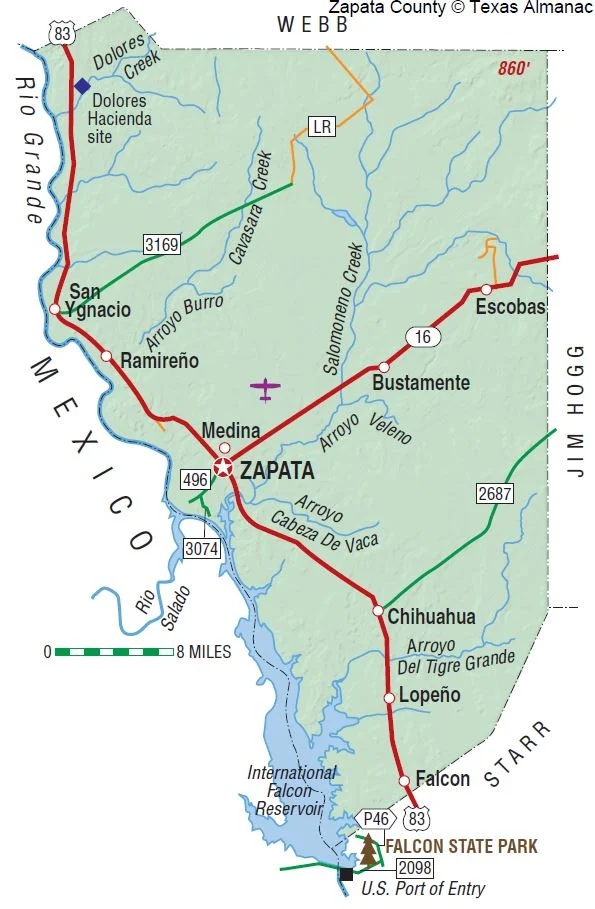
Zapata is a small town in Zapata County, Texas, situated in the South Texas Plains near the Rio Grande and the U.S.-Mexico border. With a population of roughly 5,000, it has the feel of a quiet, working South Texas community rooted in ranching heritage and serving as a waypoint for travelers and outdoor recreationists. The town sits along U.S. Highway 83, roughly 60 miles southeast of Laredo, the nearest major city, and it functions primarily as a gateway to the Falcon International Reservoir and the surrounding border country.
Falcon State Park, located about 20 miles south of town, draws anglers, boaters, and birdwatchers to the shores of the reservoir on the Rio Grande. The lake is well known for trophy largemouth bass fishing, and the park offers campsites, cabins, and trails for visitors who want to spend more than a day on the water. The reservoir and park are the single biggest reason visitors pass through Zapata at all, especially during the fall and winter fishing seasons.
The river itself defines the character of the area just south of town. Falcon Dam spans the Rio Grande, and the surrounding Tamaulipan thornscrub attracts birders hoping to spot green jays, plain chachalacas, and other species typical of the brush country. Because Zapata County sits along a major migratory flyway, the area is a year-round destination for wildlife watchers, with peak activity during spring and fall migration.
In town, the historic downtown plaza around the Zapata County Courthouse anchors the community and hosts local events throughout the year. The area's ranching past is visible throughout the county, and the local food scene leans heavily on Tex-Mex traditions rooted in the borderland setting. Travelers stopping for the night will find a handful of small, family-run restaurants that reflect the region's heritage.
Zapata's appeal as a short-term rental base lies in its proximity to one of Texas's most productive fishing lakes and its distance from more developed tourist corridors. Visitors who want to wake up on the water, spend the day chasing bass, and return to a quiet small-town evening tend to value the area's slow pace and unspoiled character. For owners, the combination of seasonal fishing traffic, weekend getaways from Laredo and the Rio Grande Valley, and the steady stream of travelers moving between Laredo and South Texas destinations makes Zapata a niche but durable market for short-term rental demand.
Want to know if a property in Zapata is a good investment?
Enter an address to get instant revenue potential and comps.