
Charleston, South Carolina
Want to see how Charleston compares to other top cities in South Carolina? Explore all city regulations in South Carolina. →
Charleston, SC
Challenging To Investors
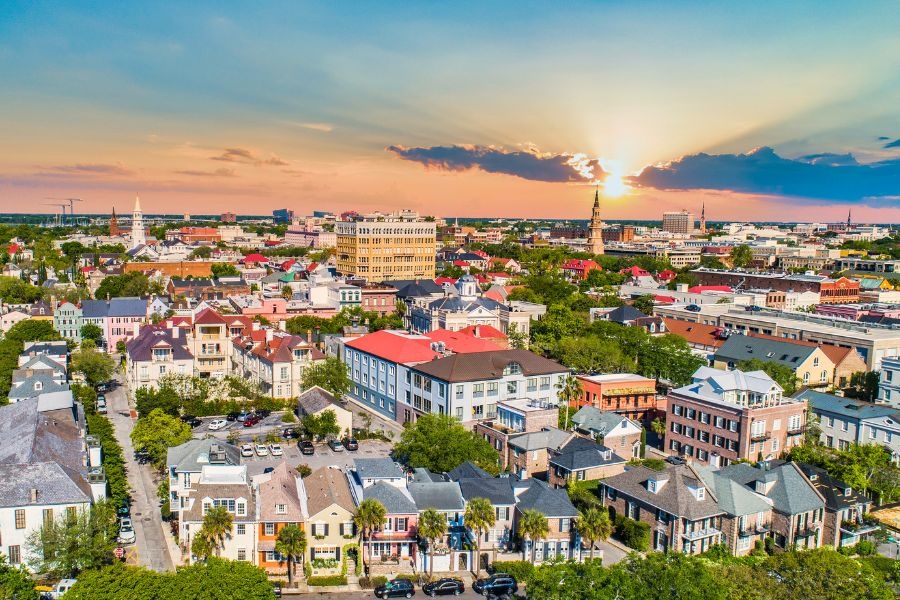
STR Regulations for Charleston, South Carolina
Overview: Are Short-Term Rentals Allowed in Charleston, SC?
Yes, short-term rentals are explicitly allowed in Charleston, SC under specific regulations that have been in effect since 2018. The city has established a comprehensive framework that distinguishes between two primary types of short-term rentals: residential short-term rentals (where the owner resides on the property) and commercial short-term rentals (entire property conversions in commercially zoned areas). The city has divided properties into three main categories based on location and zoning, each with distinct requirements and limitations. Short-term rentals are defined as providing sleeping accommodations for periods of 1-29 consecutive days.
What do Airbnb hosts actually earn in Charleston?
Charleston hosts earn a median $67,571/year with $343 ADR and 69% occupancy.
Top performers pull in $108,362+ per year.
See the full Charleston market breakdownHow to Start a Short-Term Rental Business in Charleston
Step 1: Property Eligibility Assessment
Before investing in a Charleston property for short-term rental purposes, you must first determine the property's eligibility based on its zoning and location:
Category I Properties:
- Individually listed on the National Register of Historic Places
- Located within the city's Old and Historic District
- Subject to the most restrictive regulations
Category II Properties:
- Located on the Charleston peninsula but outside the Short-Term Rental Overlay Zone
- More limited than Category III but less restrictive than Category I
Category III Properties:
- All other properties within Charleston city limits
- Includes incorporated areas of West Ashley, James Island, Johns Island, Cainhoy, and Daniel Island
- Generally the most permissive category for STR operations
STR Overlay Zone:
- Located in the Cannonborough-Elliotborough area
- Commercially zoned properties within this district are eligible for commercial short-term rental permits
- Offers the most flexibility for investment-focused operations
Step 2: Determine Your Rental Model
Residential Short-Term Rental Model:
- Property owner must reside on the premises
- Maximum of four people aged 18 or older per rental period
- Only one STR unit permitted per residential property
- Must be the owner's primary residence (verified through 4% Legal Residence tax exemption)
- STR must be an accessory unit (main house cannot be rented short-term)
Commercial Short-Term Rental Model:
- Entire property conversion with full facilities (cooking, living, sanitary, and sleeping)
- Must be located in commercially zoned areas
- Can be owned by LLCs
- More suitable for investment properties
Step 3: Application Process
Timeline:
- Application submission to Zoning Administrator
- 15-day public notice period on property
- Additional 5 business days for appeals
- Total processing time: approximately 20 business days
Requirements:
- Owner must be "generally available" during guest stays (not necessarily present for entire duration)
- Annual permit renewal required within the original issuance month
- Property must comply with all life safety requirements
Required Documents, Permits, Licenses, and Guidelines
Mandatory Permits
Residential Short-Term Rental Permit:
- Floor plans drawn to scale
- Site plan
- Photographs of the structure
- Signed statement from property owner
- Property verification as primary residence
Commercial Short-Term Rental Permit:
- Application for commercial vacation rentals
- Documentation proving commercial zoning compliance
- All residential permit requirements plus commercial-specific documentation
Business License
Requirement: All short-term rentals must obtain a Charleston business license Duration: Business licenses expire December 31 annually Renewal: Required every year with full reapplication process
Insurance Requirements
Minimum Coverage: General liability insurance policy with minimum $1 million per occurrence limits Provider Requirements: Must be with a company authorized to do business in South Carolina Coverage: Must insure against personal injury including death and property damage
Life Safety and Fire Inspection Requirements
Mandatory Safety Equipment:
- Working smoke alarms in all applicable areas
- Carbon monoxide detectors where required
- Operable window or door from each bedroom (egress requirement)
- Fire extinguishers (properly maintained and accessible)
- Visible address numbers on property
- No visible electrical hazards
Additional Documentation
Guest Register: Maintain records including:
- Guest names, addresses, and telephone numbers
- Dates of occupancy
- Must be available for inspection upon request
Tax Compliance: Registration for all applicable taxes (detailed in tax section below)
Specific Regulations for Short-Term Rentals
Zoning and Location Restrictions
Downtown Charleston Peninsula:
- Only one STR unit permitted per residential property
- Must be accessory unit (main house cannot be rented short-term)
- Owner must declare property as primary residence
- Owner must be physically present near property when guests are present
- Minimum one off-street parking space exclusively designated for rental tenants
- No physical signage advertising STR use permitted
- Online advertising allowed with valid permit
Southern Peninsula Requirements:
- Maximum one STR unit per property
- One off-street parking spot required
- Must be existing structure or accessory building listed on National Historical Registry
- One-year holding period for properties previously occupied by long-term tenants
Upper Peninsula Requirements:
- Maximum one STR unit per property
- One off-street parking spot required
- Building must be more than 50 years old
STR Overlay Zone:
- Eligible for bed & breakfast or commercial STR operations
- One off-street parking spot required
- Building must be more than 50 years old
Parking Regulations
General Requirements:
- Minimum one off-street parking space exclusively for STR tenants
- Tandem parking allowed only if one space remains exclusively for tenant use
- Street parking by overnight guests prohibited in some jurisdictions (specifically North Charleston)
Specific Limits:
- North Charleston: Maximum 4 parking spaces per dwelling
- Mount Pleasant: Parking requirements vary by rental frequency
Operational Restrictions
Event Prohibitions:
- North Charleston: Hosting events such as weddings, parties, or similar gatherings prohibited
Occupancy Limits:
- North Charleston: Maximum 2 persons per bedroom, 8 persons total (including children)
Property Modifications:
- Only interior alterations permitted for STR conversion
- Exterior modifications prohibited to maintain historic integrity
Permit Transferability
Ownership Changes: Permits do not transfer to new property owners Requirement: New owners must reapply for permits
Tax Requirements and Financial Obligations
State-Level Taxes
- State Sales Tax: 5%
- State Accommodations Tax: 2%
Local and Regional Taxes
- Local Option Sales Tax: 1%
- County Transportation Tax: 1%
- School District/Education Tax: 1%
- Charleston County Accommodation Tax: 2%
- City of Charleston Accommodations Tax: 2%
Tax Implications for Investment Properties
Mount Pleasant Specific:
- Rentals 24-72 nights per year: Residential tax rate (4%), $250 application fee
- Rentals over 72 nights per year: Commercial tax rate (approximately triple residential rate), $1,500 application fee
Regional Variations Beyond Charleston City Limits
Charleston County (Unincorporated Areas)
Limited Home Rental:
- Primary residence STR
- Maximum 72 days per calendar year
Extended Home Rental:
- Investment property STR
- Maximum 144 days per calendar year
- Requires special exception from County Zoning
Commercial Guest House:
- Located in commercially zoned districts
- More flexible operational parameters
Beach Communities
Generally Permissive (Business License Required):
- Isle of Palms
- Folly Beach
- Kiawah Island
- Seabrook Island
Prohibited:
- Sullivan's Island: Openly prohibits short-term rentals under 30 days (grandfathered pre-2002 rentals excepted)
Other Municipalities
Mount Pleasant:
- 400 permits currently capped with wait list
- Not allowed in multifamily dwellings or Old Village area
North Charleston:
- No specific STR ordinance currently enforced
- General business license and safety requirements apply
Hanahan and Summerville:
- No current restrictions
- Municipalities retain right to deny business permits
Contact Information for Local Authority
Primary Contact:
- Phone: (843) 724-7311
- Address: 80 Broad Street, Charleston, South Carolina 29401-0304
- Website: www.charleston-sc.gov
- Department: Planning, Preservation & Sustainability
Online Resources:
- Permit Applications: Available through city's online permitting system
- Application Materials: www.charleston-sc.gov/1871/Application-Materials
- Short-Term Rental Information: www.charleston-sc.gov/1840/Short-Term-Rental-Permit-Information
Direct Department Contacts:
- Zoning Administrator: For permit approval questions
- Planning Department: For zoning and compliance questions
- Business License Department: For business license requirements
- Fire Department: For life safety inspection requirements
Source Links
- Charleston STR Ordinance Main Page: www.charleston-sc.gov/2529/Short-Term-Rental-Ordinance
- Charleston STR Permit Information: www.charleston-sc.gov/1840/Short-Term-Rental-Permit-Information
- Approved STR Ordinance (PDF): www.charleston-sc.gov/DocumentCenter/View/18216
- STR Regulations Map - City Wide (PDF): www.charleston-sc.gov/DocumentCenter/View/18055
- STR Regulations Map - Peninsula (PDF): www.charleston-sc.gov/DocumentCenter/View/18056
- Application Materials: www.charleston-sc.gov/1871/Application-Materials
- Property Eligibility: www.charleston-sc.gov/2314/Property-Eligibility
- Category Criteria: www.charleston-sc.gov/2316/Category-Criteria
- STR Enforcement Information: www.charleston-sc.gov/1846/Short-Term-Rental-Enforcement
- Charleston STR FAQs: www.charleston-sc.gov/2317/FAQs
This comprehensive guide provides investors with the complete regulatory landscape for short-term rentals in Charleston, SC. The city's framework is complex but navigable, with clear pathways for both primary residence owners seeking supplemental income and commercial investors. Success inCharleston's short-term rental market requires thorough understanding of these regulations, proper documentation, and strict compliance with ongoing operational requirements.
Next step
Found a property in Charleston?
Paste any address and get estimated revenue, cash-on-cash return, and comparable STR performance in under 5 minutes. 3 free analyses per day.
Free brief
Get the free Charleston STR Investment Brief
Revenue data, top neighborhoods, seasonal trends, and the key regulations for Charleston, South Carolina in one email.
Charleston
Market Saturation Score
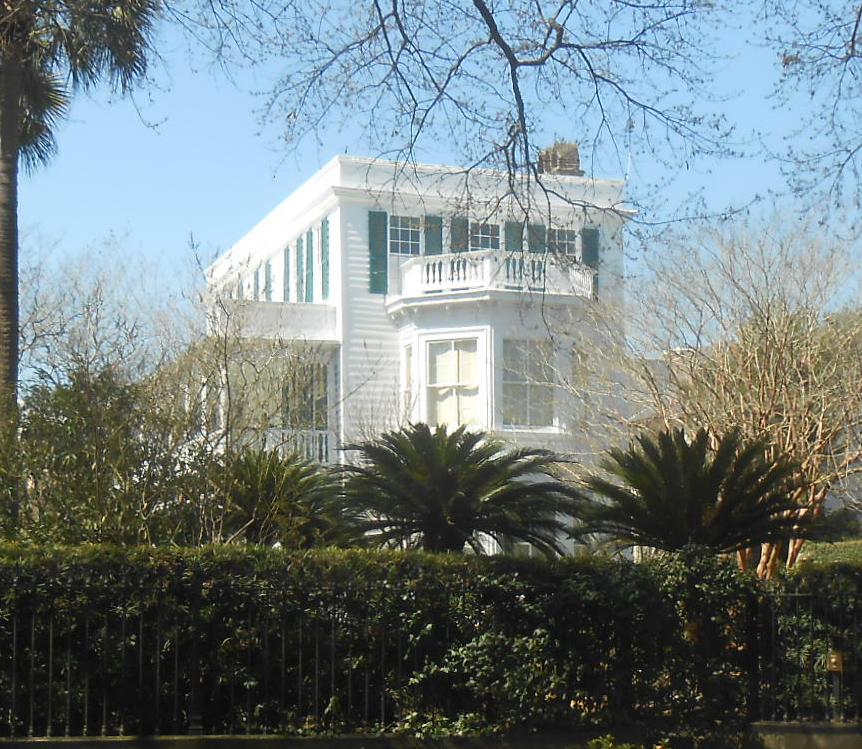
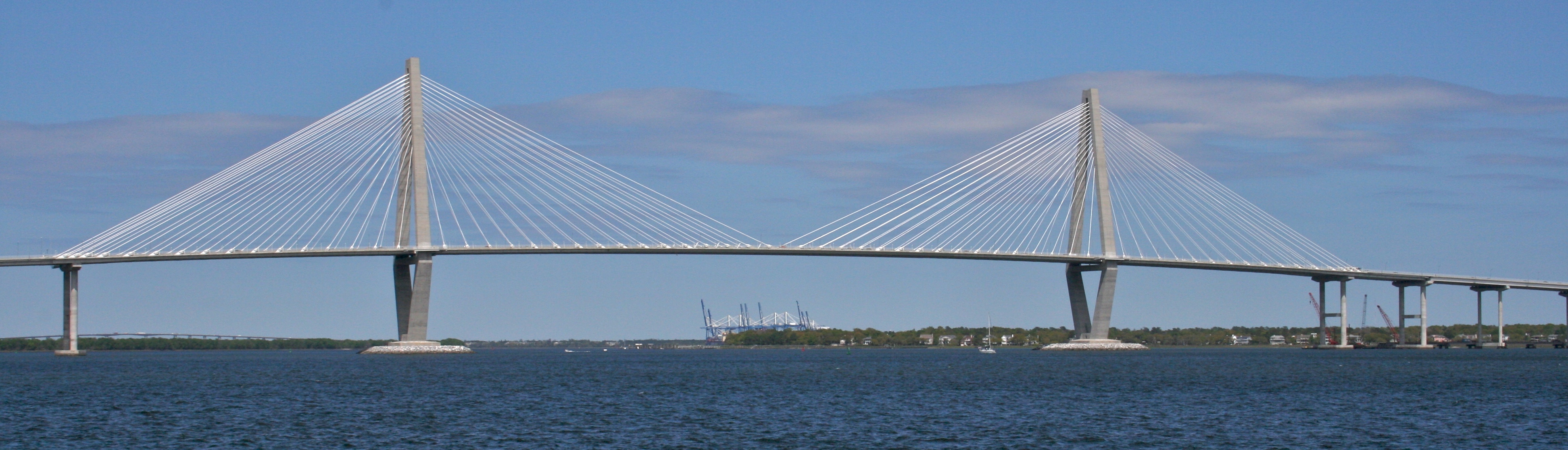
Photos of Charleston

Overview of Charleston
Charleston is a historic port city in Charleston County, South Carolina, with a city population of roughly 150,000 residents. Set on a low peninsula between the Ashley and Cooper rivers where they empty into the Atlantic Ocean, the city is celebrated for its preserved antebellum architecture, cobblestone streets, pastel-colored row houses, and centuries of Lowcountry history. Long a magnet for visitors drawn to its Southern charm, distinctive cuisine, and coastal setting, Charleston also serves as a gateway to the surrounding sea islands, Atlantic beaches, and the plantation country along the Ashley River. It sits approximately 110 miles northeast of Savannah, Georgia, and roughly 115 miles southeast of Columbia, the state capital.
The Historic District forms the heart of the city, a walkable grid of eighteenth- and nineteenth-century buildings anchored by landmarks such as the Battery promenade overlooking Charleston Harbor, Rainbow Row on East Bay Street, and the open-air City Market. The area can be explored on foot and is within minutes of most short-term rentals on the downtown peninsula, making it a natural anchor for any guest's stay.
Just across the harbor, reached by a roughly fifteen-minute ferry from the downtown waterfront, Fort Sumter National Monument marks the sea-fort where the first shots of the American Civil War were fired in April 1861. Operated by the National Park Service, the fort and its small museum draw history-minded travelers to the harbor islands year-round and pair easily with a downtown walking itinerary.
To the northwest of the city, the historic plantations along the Ashley River corridor include Magnolia Plantation and Gardens, founded in 1676 and considered one of the oldest plantations in the South, as well as Middleton Place, known for its formal gardens, butterfly lakes, and house museum. Both lie within about a twenty- to thirty-minute drive of the historic core, making them popular half-day excursions.
To the east, across the Cooper River in the town of Mount Pleasant, Patriots Point Naval & Maritime Museum is home to the aircraft carrier USS Yorktown and an extensive collection of naval aircraft and vessels. The site is about a twenty-minute drive from downtown and also serves as a launching point for harbor cruises and ferries to Fort Sumter.
Southwest of the city, a roughly twenty-five-minute drive brings travelers to Folly Beach, a laid-back barrier island popular for surfing, fishing, and beachside dining. A short drive further inland, on Johns Island, the Angel Oak — a massive and reportedly centuries-old live oak — stands as one of the Lowcountry's most photographed natural landmarks.
Charleston's mix of walkable historic streets, harbor and Civil War history, antebellum gardens, and nearby Atlantic beaches gives short-term rental owners year-round appeal. Visitors come in every season for the mild weather, the renowned culinary scene, and the easy access to both the historic core and the surrounding coast, supporting steady demand across the downtown peninsula, Mount Pleasant, the sea islands, and the West Ashley neighborhoods.
Want to know if a property in Charleston is a good investment?
Enter an address to get instant revenue potential and comps.