
New Castle, Pennsylvania
Want to see how New Castle compares to other top cities in Pennsylvania? Explore all city regulations in Pennsylvania. →
New Castle, PA
Generally Investor Friendly
STR Regulations for New Castle, Pennsylvania
Overview: Are short‑term rentals allowed in New Castle, PA?
- Short‑term rentals are allowed in New Castle, Pennsylvania (Lawrence County) only if the use is permitted by local zoning and related municipal codes. New Castle (a Third Class City) does not have a city‑specific ordinance that expressly regulates STRs; consequently, STRs are governed by general zoning and health/safety codes, plus statewide requirements.
- A property rented on a transient basis (less than 30 days) is treated as a hotel/lodging establishment under Pennsylvania law and must comply with tax and public health/safety obligations. Municipalities may permit or restrict STRs via zoning (permitted, conditional, prohibited, or treated as hotel/boarding house uses); investors must verify zoning status for the subject parcel.
- Actionable bottom line: New Castle is permissive by default (no STR‑specific ban was identified), but legal operation depends on zoning compliance, health/safety licensing if applicable (rooming/boarding house standards), and state/county tax collection and remittance.
How to start a short‑term rental business in this market
- Confirm zoning eligibility:
- Review the City’s zoning map and zoning ordinance to determine whether STRs (often defined as transient lodging, tourist homes, boarding houses, or lodging establishments) are permitted, conditional, or prohibited in the zoning district where the property sits.
- If the intended use falls into a lodging/boarding house category, seek a zoning interpretation and any required approvals (use registration, variance, or conditional use).
- Satisfy health and safety licensing:
- If renting rooms to unrelated guests without the owner present (boarding/rooming house use), licensing and inspections typically apply (e.g., under local health/housing codes). Confirm requirements with City Code Enforcement.
- Register and collect hotel occupancy taxes:
- State hotel occupancy tax is 6% (7% if a 1% local sales/use tax applies in your county—Philadelphia and Allegheny have special provisions; this does not apply to Lawrence County). If you list independently or your booking agent does not collect on your behalf, register with the Pennsylvania Department of Revenue for a Sales, Use and Hotel Occupancy Tax license and collect/remit these taxes. Note that booking agents are mandated to collect and remit if they facilitate payments.
- Lawrence County may impose an additional local hotel/room tax (many Fifth Class counties are authorized up to 5%, with some exceptions). Confirm the current rate and local collection procedures with Lawrence County and/or your local tax collector.
- Set up compliance and operations:
- Maintain guest records (see statutory recordkeeping guidance under state transient lodging provisions) and retain for two years.
- Implement safety measures consistent with state transient lodging standards (recordkeeping, guest safety/秩序).
- Procure adequate insurance. Homeowners’ policies generally exclude business activity; add short‑term rental coverage/riders or a separate policy. Consider the liability and property protections offered by platforms (Airbnb Host Liability; VRBO stay protections).
- Align HOA/leasehold rules (if applicable) before listing; covenants may restrict short‑term rentals and can be enforceable.
Required documents, permits, licenses, and guidelines
- State and County
- Pennsylvania Sales, Use and Hotel Occupancy Tax license (for hosts not using a booking agent exclusively; required to collect/remit the 6% state hotel tax and any applicable county local hotel tax).
- Recordkeeping: Maintain guest records required for lodging establishments; retain for two years.
- Income reporting: Report STR income to the PA Department of Revenue as business income; federal rules for short‑term rentals apply (e.g., use of residence less than 15 days is not reportable; 15+ days requires full income reporting and expense allocation between personal and rental use).
- City/County Health and Safety (if renting rooms to unrelated guests)
- If the STR functions as a boarding/rooming house, a city/county lodging or rooming house license and inspection is typically required (fire, structural, electrical, plumbing, sanitation, and capacity standards).
- Local Zoning
- Zoning determination/permit: Confirm whether STRs are permitted (as transient lodging, tourist home, boarding house, lodging establishment) and obtain any required approvals or registrations.
- Insurance
- Short‑term rental liability/property coverage (policy rider or separate policy). Platform protections (Airbnb/VRBO) can supplement but not replace comprehensive coverage.
Regulatory frameworks (city, county, and state)
- City of New Castle (Third Class City)
- No city‑specific STR ordinance identified. STRs are subject to general zoning and any applicable lodging/rooming house licensing and inspections.
- Status guidance: Third Class Cities’ STR frameworks vary; New Castle is among the Third Class cities without a dedicated STR ordinance as of the Joint State Government Commission’s 2025 report. Treat STRs as lodging uses under zoning and licensing.
- Lawrence County
- No county‑wide STR ordinance identified.
- Local hotel/room tax: Fifth Class counties (Lawrence) are authorized to impose up to 5%, though some counties have different rates. Confirm the current Lawrence County rate and collection procedures with the county or local tax collector.
- Commonwealth of Pennsylvania
- State hotel occupancy tax: 6% on transient lodging. Booking agents must collect/remit; hosts listing independently must obtain a state tax license and remit.
- Lodging establishment coverage: STRs that provide lodging for less than 30 days fall within Pennsylvania’s Lodging and Housing Code (transient lodging), including recordkeeping and guest safety requirements.
- Municipal regulation authority: Zoning is the primary tool; municipalities may allow, condition, or prohibit STRs. Case law (Slice of Life, 2019) underscores that purely transient commercial use must be expressly permitted in residential districts.
- Tax administration and income reporting: Register with the PA Department of Revenue, collect/remit hotel taxes, and report STR income as business income. Federal rules apply to personal/residence use and Schedule E.
- Planned communities/HOAs: Declarations and covenants govern rental rights; they may restrict short‑term rentals and are generally enforceable.
Contact information (local authority and tax administration)
- City of New Castle, Code Enforcement (zoning/health & safety licensing)
- Address: City Hall, 196 South Jefferson Street, New Castle, PA 16101
- Phone: 724‑658‑5521
- Website: newcastlepa.org
- Lawrence County (general government; confirm local hotel tax with local tax collector)
- Address: Lawrence County Courthouse, 430 Court Street, New Castle, PA 16101
- Phone: 724‑658‑2541
- Website: lawrencecountypa.gov
- Pennsylvania Department of Revenue (hotel occupancy tax; business registration)
- Website: pa.gov/agencies/revenue/resources/tax‑types‑and‑information/sales‑use‑and‑hotel‑occupancy‑tax/home‑sharing.html
- Phone: 717‑787‑1064 (general tax assistance)
- Email (for tax questions):-ra-rentals@pa.gov
- Address (general correspondence): PA Department of Revenue, Harrisburg, PA 17128
Key links to source pages
- Short‑Term Rental Industry in Pennsylvania (Joint State Government Commission, March 2025) – study report with municipal survey, state tax framework, and case law: jsg.legis.state.pa.us/resources/documents/ftp/publications/2025-03-17%20Short-term%20Rental%20Web%203.17.25.pdf
- PA Department of Revenue: Home‑sharing/Third‑party Broker Rentals: www.pa.gov/agencies/revenue/resources/tax-types-and-information/sales-use-and-hotel-occupancy-tax/home-sharing.html
- IRS Publication 527: Residential Rental Property (2024): www.irs.gov/pub/irs-pdf/p527.pdf
- County hotel tax rates and contacts (CCAP, 2025; county rates vary): www.pacounties.org/getmedia/607608ac-4f1d-44e9-93c3-5fc2f1f747d0/Hotel-Tax-Rates-and-Contacts.pdf
- New Castle, Pennsylvania official city website: newcastlepa.org
- Lawrence County government website: lawrencecountypa.gov
Practical compliance checklist for New Castle investors
- Verify zoning approval for the specific property and intended occupancy configuration (whole‑home vs. room‑level rental; owner‑present vs. absentee).
- If renting to multiple unrelated guests, obtain any required boarding/rooming house license and pass inspections (fire, structural, electrical, plumbing).
- Register for the PA Sales, Use and Hotel Occupancy Tax license; set up tax collection/remittance for the 6% state rate.
- Confirm and collect any Lawrence County local hotel/room tax; remit to the proper local collector.
- Implement recordkeeping (guest name/address/contact, dates, occupants), retain for two years.
- Procure STR‑appropriate insurance; do not rely on a standard homeowners’ policy.
- Ensure HOA/leasehold compatibility before listing.
- Monitor city/county health orders, fire code updates, and local licensing requirements annually.
This guide is intended to help investors assess and structure compliant STR operations in New Castle. Because municipal zoning and health code requirements can vary by property and use type, consult the City’s Code Enforcement and, as needed, the PA Department of Revenue to confirm current obligations.
What do Airbnb hosts actually earn in New Castle?
New Castle hosts earn a median $25,202/year with $159 ADR and 62% occupancy.
Top performers pull in $29,941+ per year.
See the full New Castle market breakdownNext step
Found a property in New Castle?
Paste any address and get estimated revenue, cash-on-cash return, and comparable STR performance in under 5 minutes. 3 free analyses per day.
Free brief
Get the free New Castle STR Investment Brief
Revenue data, top neighborhoods, seasonal trends, and the key regulations for New Castle, Pennsylvania in one email.
New Castle
Market Saturation Score
Photos of New Castle


Overview of New Castle
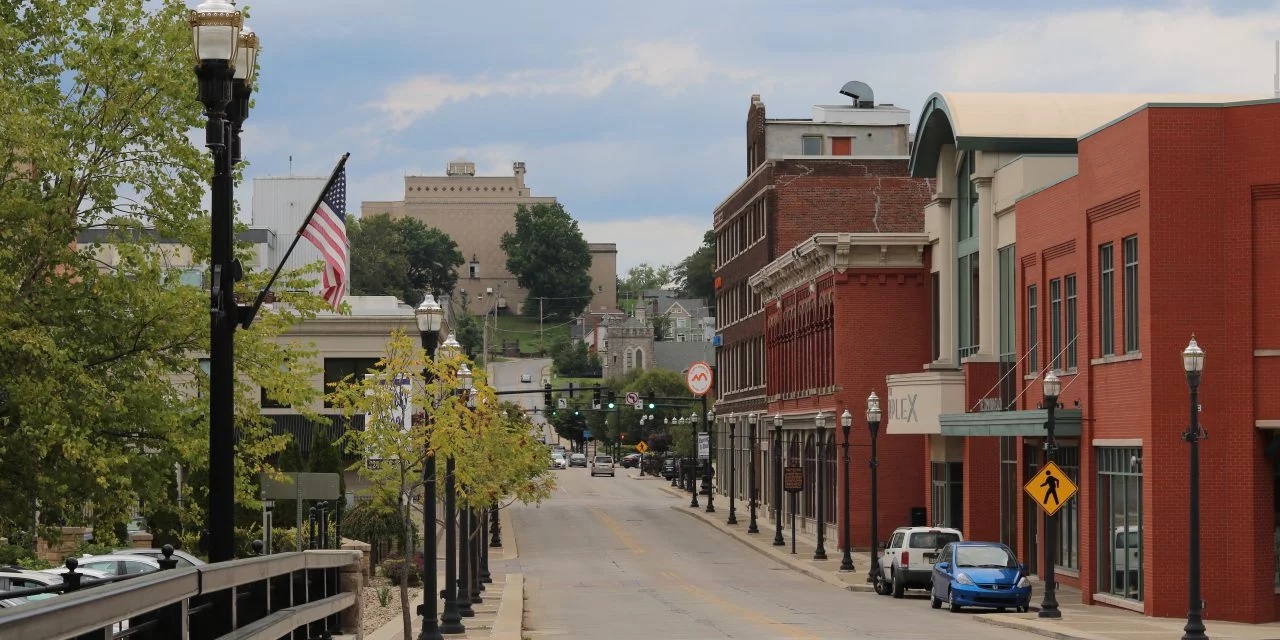
New Castle is a small city in western Pennsylvania, serving as the seat of Lawrence County. With a population of roughly 21,000, it carries the character of a classic Rust Belt town that has reinvented much of its historic core in recent years. The city sits along the Shenango River and Neshannock Creek, and is best known for its preserved Victorian-era architecture, its starring role in several Hollywood films, and as a gateway to a cluster of state parks in the rolling hills of western Pennsylvania. New Castle lies approximately fifty miles northwest of Pittsburgh, making it a comfortable drive for visitors who want a quieter base than the larger city while still being within reach of major urban amenities.
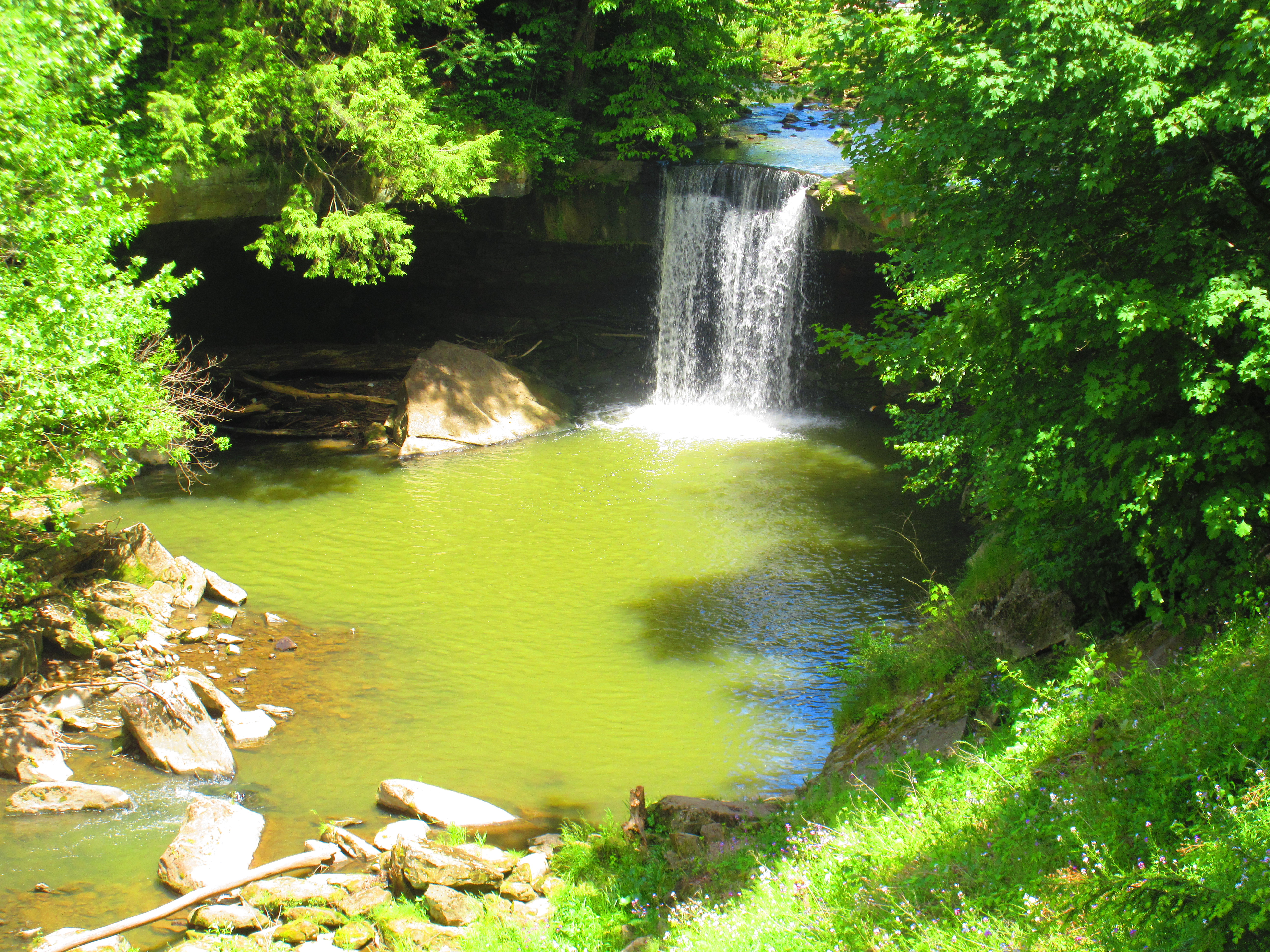
Just to the west of the city, McConnell's Mill State Park is one of the region's marquee natural attractions. A short drive of about fifteen minutes brings visitors to the namesake nineteenth-century gristmill, the adjacent McConnell's Mill Covered Bridge, and the dramatic Slippery Rock Creek Gorge. The park offers hiking trails, rock climbing, picnicking, and whitewater paddling during releases from the mill's dam, making it a strong draw for outdoor enthusiasts.
About twenty minutes north of town, Moraine State Park surrounds the 3,200-acre Lake Arthur. The lake is a year-round draw, with swimming at the beach, a paved seven-mile loop trail popular with cyclists and runners, and extensive boating and fishing opportunities. In winter, the surrounding trails become cross-country ski routes, giving the area four-season appeal for short-term rental guests.
Within the city itself, the New Castle Historic District showcases an extensive collection of nineteenth-century commercial and residential architecture, and the area has been used as a filming location for movies set in earlier eras. The Hoyt Institute of Fine Arts, housed in a historic mansion, presents rotating exhibitions and art classes that give visitors a cultural anchor in the downtown. Local food spots and the restored Cascade Center on the riverfront add to the small-city atmosphere.
For prospective short-term rental owners, New Castle offers a compelling combination of affordability, a walkable historic downtown, and immediate access to two well-trafficked Pennsylvania state parks. Its proximity to Pittsburgh expands the potential guest pool, while the surrounding natural and cultural attractions give the destination enough variety to appeal to outdoor travelers, film-history buffs, and visitors exploring small-town Pennsylvania alike.
Want to know if a property in New Castle is a good investment?
Enter an address to get instant revenue potential and comps.