
Lock Haven, Pennsylvania
Want to see how Lock Haven compares to other top cities in Pennsylvania? Explore all city regulations in Pennsylvania. →
Lock Haven, PA
Very Investor Friendly
STR Regulations for Lock Haven, Pennsylvania
1. Overview: Are Short-Term Rentals Allowed in Lock Haven, PA?
Short-term rentals are explicitly allowed in Lock Haven, PA. Lock Haven is classified as a Third-Class City in Pennsylvania. As of the most recent comprehensive review (August 2024), Lock Haven does not have a specific short-term rental ordinance in place. The provided source (Table 4, page 31) lists Lock Haven under "N" for having an STR ordinance.
Implications: Without a city-specific ordinance, the operation of STRs in Lock Haven falls under general Pennsylvania state laws and potentially broader Clinton County regulations. Investors must comply with state-level requirements (taxes, housing codes) but are not subject to any local restrictions such as permits, licensing, or caps that might exist in other municipalities. The Slice of Life Pennsylvania Supreme Court decision (2019) allows municipalities to prohibit STRs in residential zones if they choose, but the absence of an ordinance in Lock Haven means it is currently permitted under the default residential use.
What do Airbnb hosts actually earn in Lock Haven?
Lock Haven hosts earn a median $26,692/year with $180 ADR and 50% occupancy.
Top performers pull in $40,594+ per year.
See the full Lock Haven market breakdown2. How to Start a Short-Term Rental Business in Lock Haven
- Identify the Property: Select a residential property zoned for its intended use. Since there is no local STR ordinance, the primary zoning designations (e.g., residential single-family, residential multi-family) will govern the baseline legality of renting the entire dwelling or a room within it.
- Understand State & Federal Tax Obligations:
- Hotel Occupancy Tax: You are legally required to collect and remit Pennsylvania state hotel occupancy tax (6%) and any applicable local hotel taxes. If you use a booking platform like Airbnb or Vrbo, they may collect this tax on your behalf, but you are ultimately responsible for compliance. If you rent directly, you must register with the PA Department of Revenue and handle collection/remittance yourself.
- Personal Income Tax: Income from STRs is taxable under Pennsylvania Personal Income Tax (PIT) as net income from a business. Report income and deduct allowable expenses on your PA tax return. The federal tax treatment also applies.
- Ensure Compliance with Housing & Safety Codes: While no specific STR inspection might be required by the city, the property must meet all applicable state and local housing codes, including fire safety (smoke/CO detectors), health, building, and zoning standards. This is implicitly required under state law.
- Secure Insurance: Standard homeowner's insurance may not cover commercial activities like STRs. You will likely need to add a rider or purchase a separate commercial liability policy. Platforms like Airbnb and Vrbo offer host liability coverage, but this is secondary to your own policy and may have limitations.
- Marketing: List your property on popular platforms (Airbnb, Vrbo, etc.) or market directly. Ensure your listing complies with state advertising laws regarding pricing and taxes.
3. Required Documents, Permits, Licenses, and Guidelines
- No City-Specific Requirements: Lock Haven does not mandate permits, licenses, or a city registry for STRs.
- State-Level Requirements:
- PA Sales, Use, and Hotel Occupancy Tax License: Mandatory for operators who collect/remit the hotel tax themselves. Register with the PA Department of Revenue if renting directly.
- Compliance with PA Lodging & Housing Code: While not an "STR-specific" document, the state's lodging code (Title 48) outlines regulations for lodging establishments (including private residences rented transiently), covering areas like guest safety, record-keeping, and maintaining order. Complying with these standards is essential.
- Zoning Compliance: While not a "permit" per se, ensure your intended STR use aligns with the property's base zoning (e.g., renting a single-family home in an R-1 zone). Verify with Clinton County zoning officials if needed.
- Financial/Tax Documentation: Maintain records of all rental income and expenses for federal and state tax reporting (PA PIT and federal Schedule E or Schedule C as appropriate).
4. Specific Regulations: City, County, and State
Lock Haven City Regulations
- No specific STR ordinances exist. The city does not regulate licensing, permits, occupancy limits, owner presence, or noise for STRs beyond what is covered by general nuisance, noise, and property maintenance ordinances.
Clinton County Regulations
- The provided source indicates that Clinton County does not have specific, county-wide short-term rental policies comparable to places like Monroe County or Allegheny County. STRs fall under the default state-level framework.
Pennsylvania State Regulations
- Taxation:
- Hotel Occupancy Tax: 6% state tax. Local hotel taxes may apply based on Clinton County's classification. Verify with the Clinton County tax office for any local add-on taxes. Booking platforms often collect state/local taxes automatically.
- Personal Income Tax (PIT): STR income is taxable as business income (3.07% PA rate). Deductible expenses include mortgage interest, property taxes, insurance, utilities, maintenance, repairs, supplies, advertising, platform fees, etc.
- Lodging & Housing Code (Title 48): Defines "Lodging Establishment" broadly to include private residences rented to transients for less than 30 days. Outlines requirements for:
- Record Keeping: Maintaining records of guests (name, address, check-in/out dates, number of occupants) for at least 2 years.
- Guest Safety & Order: Ensuring premises are safe, sanitary, and well-maintained. Complying with fire and building codes (detectors, egress, etc.).
- Hotelkeeper Rights & Guest Protections: Defines the legal relationship between operator and transient guest.
- Municipalities Planning Code (MPC): Grants local municipalities (like Lock Haven could in the future) the authority to adopt zoning ordinances regulating land use, which can include STRs. This is the legal basis for municipalities that do have STR laws. Currently, Lock Haven has not exercised this authority for STRs.
- Case Law (Slice of Life): While not a regulation per se, this PA Supreme Court ruling (2019) is critical. It affirmed that municipalities can prohibit exclusive transient use (like STRs) of single-family homes in residential zones if they explicitly do so via ordinance. This means Lock Haven could choose to ban or heavily regulate STRs in the future through the MPC process. Property rights in planned communities (condos/POAs) also have distinct legal considerations under state law.
5. Contact Information for Local Authority (Charge of STRs)
- Lock Haven City Hall: As Lock Haven has no specific STR authority or dedicated STR contact, inquiries should start here regarding general zoning, property maintenance, or nuisance issues related to your STR.
- Phone: (570) 893-1671
- Website: City of Lock Haven Official Website
- Clinton County Government: For zoning verification (if the property is in an unincorporated part of the county, though Lock Haven is a city), tax assessment questions, or information about any potential county-level regulations:
- Phone: (570) 893-4000
- Website: Clinton County Government Official Website
- Pennsylvania Department of Revenue: For hotel occupancy tax registration, reporting, and guidance.
- Phone: (717) 787-1064 (Taxpayer Service & Information Center)
- Website: PA Department of Revenue - Hotel Occupancy Tax
- Website: PA Department of Revenue - Net Income from Rents
6. Links to Source Pages
The source material for this guide is the comprehensive report:
- Title: "The Short-Term Rental Industry in Pennsylvania - A Staff Study"
- Source: Joint State Government Commission (JSGC) of the Pennsylvania General Assembly
- Date: March 2025
- Source Document: https://jsg.legis.state.pa.us/resources/documents/ftp/publications/2025-03-17%20Short-term%20Rental%20Web%203.17.25.pdf
- Key Sections Used:
- Page 31: Table 4 - "Existence of Short-Term Rental Ordinance, By Pennsylvania Third Class City" (showing Lock Haven as "N").
- Page 8-9: Details on State Hotel Occupancy Tax definition and requirements.
- Page 13-14: Details on Pennsylvania Personal Income Tax treatment of STR income.
- Page 15: Information on PA Lodging and Housing Code.
- Page 17-22: Background on Pennsylvania Municipalities Planning Code and case law (Slice of Life and related cases) governing municipal zoning authority and STR regulation.
- Page 35: AirDNA Market Overview Table data (though not specific to Lock Haven).
Important Note: This guide reflects the state of regulations as of March 2025. Municipalities can change ordinances quickly. Investors should always verify the current status with the local authorities listed above before making investment decisions.
Next step
Found a property in Lock Haven?
Paste any address and get estimated revenue, cash-on-cash return, and comparable STR performance in under 5 minutes. 3 free analyses per day.
Free brief
Get the free Lock Haven STR Investment Brief
Revenue data, top neighborhoods, seasonal trends, and the key regulations for Lock Haven, Pennsylvania in one email.
Lock Haven
Market Saturation Score
Photos of Lock Haven


Overview of Lock Haven
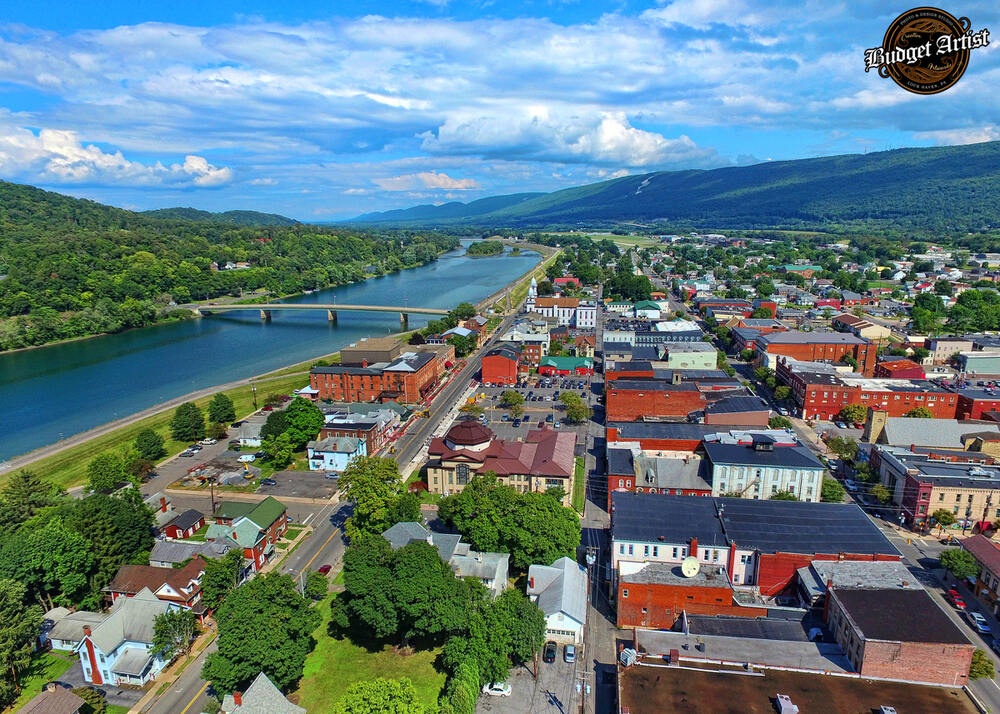
Lock Haven is a small city in central Pennsylvania, set along the West Branch Susquehanna River and serving as the county seat of Clinton County. With a population of approximately 8,000 residents, it has the character of a quiet, historic river town that doubles as a launching point for outdoor adventures in the Pennsylvania Wilds. The city is best known as a gateway to the region's rugged gorge country, riverways, and forested state parks, and it lies about 35 miles south of State College, home of Penn State University, with Williamsport roughly 30 miles to the east.
Just north of town, Pine Creek Gorge — often called the Pennsylvania Grand Canyon — slices through the plateau country and draws hikers, bikers, and leaf-peepers year-round. The rim of the canyon can be reached in roughly 45 minutes by car, and the Pine Creek Rail Trail, which follows the floor of the gorge, is a popular route for cyclists and backpackers. In autumn the surrounding hills flare with color, making this one of the more photographed landscapes in the state.
A shorter drive brings visitors to Hyner View State Park, about 20 minutes north of Lock Haven. The park's main draw is a cliff-top overlook with sweeping views of the West Branch Susquehanna River and the surrounding mountain ridges, and it has long been a favorite spot for watching hang gliders launch from the rim. The small but well-kept park offers picnic areas, short walking trails, and a campground for travelers who want to extend their stay in the area.
Closer to town, Bald Eagle State Park sits roughly 25 minutes to the southwest and centers on a large lake surrounded by hardwood forest. The park offers swimming, boating, fishing, and miles of multi-use trails, and it is a common day-trip destination for families staying in the Lock Haven area. Combined with the nearby Kettle Creek State Park and the riverfront walkways along the Susquehanna, it gives the city a strong base of year-round outdoor recreation within a short drive.
Lock Haven's blend of small-town character, easy access to multiple state parks, and proximity to the Pennsylvania Grand Canyon makes it an appealing base for short-term rentals. Visitors can return each evening to a walkable downtown with locally owned restaurants and the Lock Haven campus of Commonwealth University of Pennsylvania, while spending their days exploring some of the most scenic corners of central Pennsylvania.
Want to know if a property in Lock Haven is a good investment?
Enter an address to get instant revenue potential and comps.