
New Philadelphia, Ohio
Want to see how New Philadelphia compares to other top cities in Ohio? Explore all city regulations in Ohio. →
New Philadelphia, OH
Challenging To Investors
STR Regulations for New Philadelphia, Ohio
Executive Overview: Are Short-Term Rentals Allowed?
- Short-term rentals (STRs)—commonly referred to as Airbnb/VRBO-style accommodations—are not explicitly regulated by the City of New Philadelphia as of October 2024.
- In April 2023, City Council and the Mayor explicitly recognized the need for STR regulations because existing STRs do not face the same requirements as hotels/motels (e.g., inspections, lodging tax collection). City Council assigned the development of STR legislation to a committee, and the Law Director had draft legislation to start from.
- No adopted STR ordinance has been produced in the provided documents, and the current Planning & Zoning Code (effective October 29, 2024) does not define or specifically regulate STRs. As a result, STRs exist in a regulatory gray zone rather than being formally permitted or prohibited.
- Ohio state law does not require a state-level license for STRs, but lodging taxes may apply at the county level. Tuscarawas County does not have an adopted lodging tax in the provided documents.
- Bottom line: You can operate a STR today in New Philadelphia, but you do so without city-specific guidance, inspection, or licensing. Regulatory change is under consideration but not yet enacted.
What do Airbnb hosts actually earn in New Philadelphia?
New Philadelphia hosts earn a median $30,736/year with $209 ADR and 56% occupancy.
Top performers pull in $46,053+ per year.
See the full New Philadelphia market breakdownHow to Start a Short-Term Rental Business in This Market
- Site Selection and Zoning Clearance
- Confirm the parcel’s zoning district and principal-use table in the Planning & Zoning Code (effective Oct. 29, 2024).
- Without an STR-specific ordinance, treat an STR as a “lodging” use (comparable to a hotel/boarding house) if operating commercially. This typically aligns with commercial districts such as the Central Business District (CBD) and may require a Conditional Use Permit in certain districts. In residential districts, commercial lodging is usually not a permitted principal use.
- Obtain a Certificate of Zoning Compliance for any commercial lodging activity to verify zoning consistency (see Chapter 1103.12).
- For properties near colleges or concentrated neighborhoods, expect heightened scrutiny of parking, noise, and neighborhood compatibility (also a common area of concern for any new STR).
- Building, Fire, and Safety Compliance
- Comply with applicable Building Code and Fire Prevention Code requirements (referenced in the City’s Planning & Zoning Code as Part 13 and Part 15 of the Codified Ordinances). The Code Administrator and Fire Inspector can confirm which inspections apply to your building type and occupancy.
- If your STR will involve structural alterations, new signage, outdoor lighting, fences, or changes to parking, ensure those improvements meet the standards in Chapters 1108–1111 and 1112 (signs).
- Maintain property conditions to avoid code enforcement actions (Chapter 1115). The Code Administrator has authority to inspect, issue notices, and initiate penalties.
- Business Formation and Taxes
- Register your business and obtain a federal EIN.
- While no city-specific sales tax is referenced, monitor the county and state for any lodging/transient occupancy taxes that may be adopted in the future. As of the provided documents, Tuscarawas County has no lodging tax, and the state does not require an STR license.
- Consult the Ohio Department of Taxation or a qualified tax professional for current tax obligations (e.g., any county lodging tax if later adopted).
- Operational Preparation
- Draft internal policies for guest occupancy, quiet hours, parking, and party/event restrictions. Consider neighborhood compatibility and safety standards—these are frequently incorporated into municipal STR frameworks even where not yet codified.
- If you plan renovations, confirm setbacks, architectural standards (Chapter 1109), landscaping/buffering (Chapter 1110), and sign limits (Chapter 1112) to ensure you are not unintentionally out of compliance.
- Review Chapter 1107 (Accessory and Temporary Uses) and Chapter 1114 (Nonconformities) if you are repurposing an existing structure or use.
Required Documents, Permits, Licenses, and Guidelines
- Zoning Documents
- City of New Philadelphia Planning & Zoning Code (effective October 29, 2024) [Section references: Chapter 1103.12 (Certificate of Zoning Compliance); Chapter 1115 (Enforcement); Chapter 1105 (Principal Uses); Chapter 1107 (Accessory Uses); Chapter 1114 (Nonconformities)].
- City Processes
- Certificate of Zoning Compliance (Section 1103.12) for any commercial lodging use.
- Conditional Use Permit (Section 1103.05) if the STR is proposed in a district where lodging requires conditional approval.
- Variances (Section 1103.06) if dimensional standards cannot be met.
- Building/Fire compliance per Part 13 and Part 15 of the Codified Ordinances (verification required from the Code Administrator/Fire Inspector).
- Certificates of Appropriateness (Section 1103.09) if the property is in a historic district or landmark (CBD may include historic review).
- Building/Fire Submittals
- Scope to be confirmed with the Code Administrator and Fire Inspector. Expect standard submittals for structural alterations, egress, fire protection, occupancy classification, and life-safety systems where applicable.
- Taxes
- No state STR license required. County lodging tax: none in the provided documents. Monitor for any future local lodging/transient occupancy tax adoption.
- Ongoing Compliance
- Annual renewal or periodic inspection requirements may be imposed by future STR legislation; not currently codified.
- Violations may result in notices, civil penalties, or permit revocation (Chapter 1115).
Specific Regulations: City, County, and State
City of New Philadelphia (Current Status)
- No adopted STR ordinance. STRs are not explicitly permitted or defined.
- If operated commercially, an STR is likely treated as a lodging use. Principal use permissions and potential conditional use requirements vary by district (Chapter 1105).
- Certificate of Zoning Compliance is required to confirm zoning consistency for commercial lodging (Section 1103.12).
- STRs must comply with Building Code, Fire Prevention Code, and zoning development standards (Chapters 1108–1112).
- The Planning & Zoning Code provides robust enforcement tools (Chapter 1115). The Code Administrator can issue notices of violation and revoke certificates issued contrary to the code (Sections 1102.05, 1103.12).
- Future Regulation: City leadership has signaled that STR regulations are forthcoming. Monitor council minutes and committee actions for ordinance drafts, public hearings, and fee schedules.
Tuscarawas County (Current Status)
- No lodging/transient occupancy tax identified in the provided documents.
- No county-level STR registration found in the provided documents.
- Confirm with the Tuscarawas County Auditor/Treasurer for any lodging tax updates.
State of Ohio (Current Status)
- No state-level license is required for operating an STR.
- Ohio law enables counties to impose lodging taxes; if Tuscarawas County adopts such a tax in the future, registration and remittance would become mandatory.
- STRs are generally not subject to state sales tax. Consult the Ohio Department of Taxation or a tax professional to confirm any changes and applicability.
Local Authority Contacts (Phone/Email/Website)
- City of New Philadelphia Official Website: newphilaoh.com
- Mayor Joel B. Day (City Hall; see newphilaoh.com for direct contact)
- Law Director Marvin Fete (City Hall; see newphilaoh.com for direct contact)
- City Council President Don Kemp (City Hall; see newphilaoh.com for direct contact)
- City Councilman Dan Lanzer (Chair, Public Works & Economic Development Committee; City Hall; see newphilaoh.com for direct contact)
- Code Administrator (Zoning and Building Code Administration; see newphilaoh.com for direct contact)
- Zoning and Building Code Administrator Josh Mathias (per Council minutes; City Hall; see newphilaoh.com for direct contact)
- Planning Commission (meets as posted on newphilaoh.com)
- Fire Inspector Captain Jim Sholtz (City Fire Department; see newphilaoh.com for direct contact)
- Tuscarawas County Auditor/Treasurer (for lodging tax, if any; tuscarawascountyauditor.org)
- Tuscarawas County Health Department (tuscarawashealth.com)
Note: Phone numbers and emails are not present in the provided documents. Use the official website to obtain direct contact details for each office or department.
Links to Source Pages
- New Philadelphia City Council Minutes – April 24, 2023: www.newphilaoh.com/downloads/minutes/4-24-2023_Council_Minutes.doc_complete_(1.pdf
- City of New Philadelphia Planning & Zoning Code (effective October 29, 2024): [www.newphilaoh.com/downloads/New_Philadelphia_Planning_&Zoning_Code(adopted_2024](http://www.newphilaoh.com/downloads/New_Philadelphia_Planning_&Zoning_Code(adopted_2024).pdf
Action Steps for STR Investors
- Confirm your zoning district and whether lodging is a principal, conditional, or prohibited use in that district.
- Apply for a Certificate of Zoning Compliance and any required conditional use approvals.
- Engage the Code Administrator to clarify Building/Fire code applicability for your specific structure and occupancy.
- Establish operational policies for occupancy, parking, and neighborhood compatibility.
- Monitor city communications for new STR ordinances (committee meetings, draft legislation, public hearings).
- Check the Tuscarawas County Auditor for any future lodging tax requirements and plan for compliance if adopted.
Next step
Found a property in New Philadelphia?
Paste any address and get estimated revenue, cash-on-cash return, and comparable STR performance in under 5 minutes. 3 free analyses per day.
Free brief
Get the free New Philadelphia STR Investment Brief
Revenue data, top neighborhoods, seasonal trends, and the key regulations for New Philadelphia, Ohio in one email.
New Philadelphia
Market Saturation Score
Photos of New Philadelphia
Overview of New Philadelphia
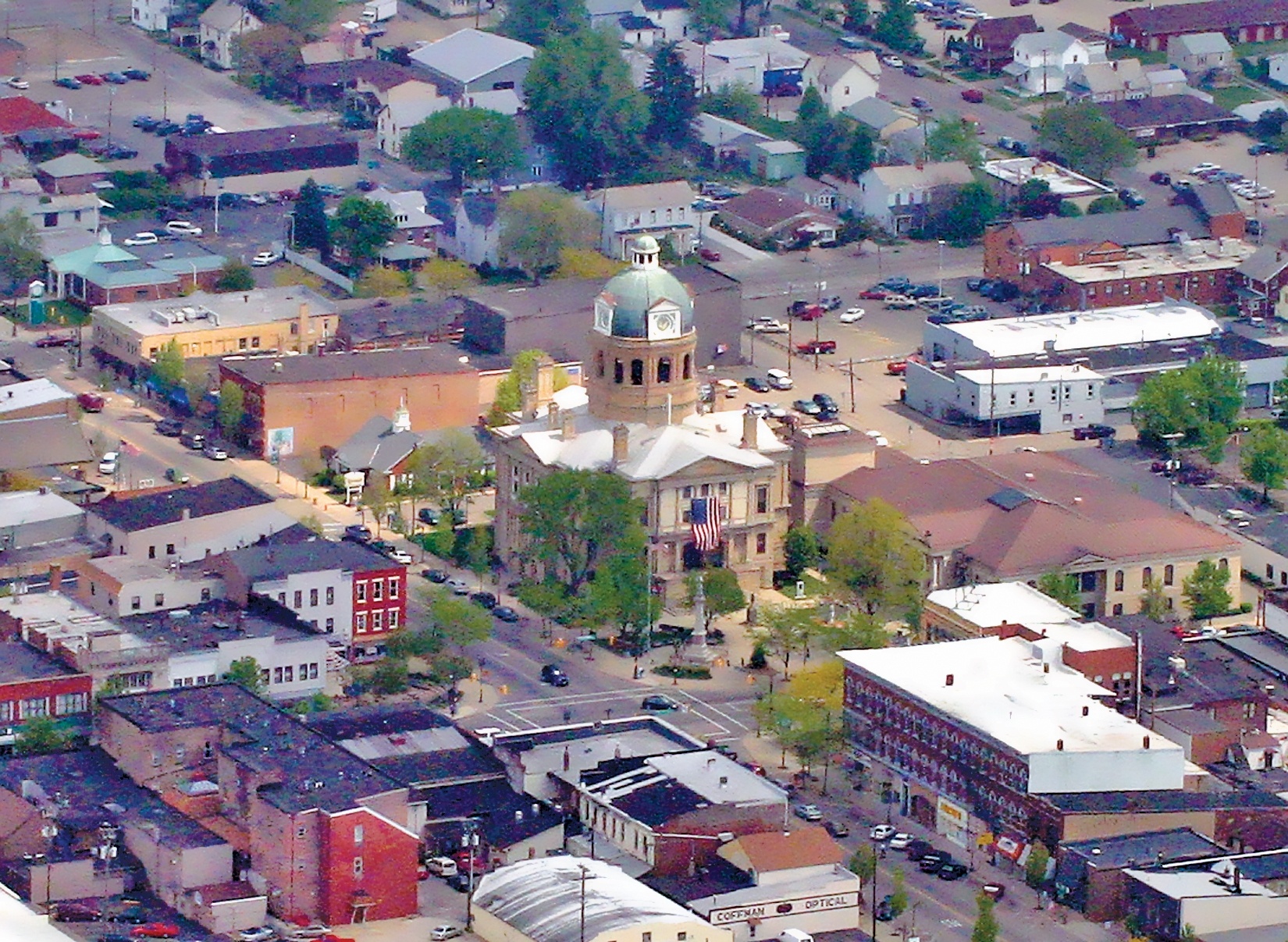
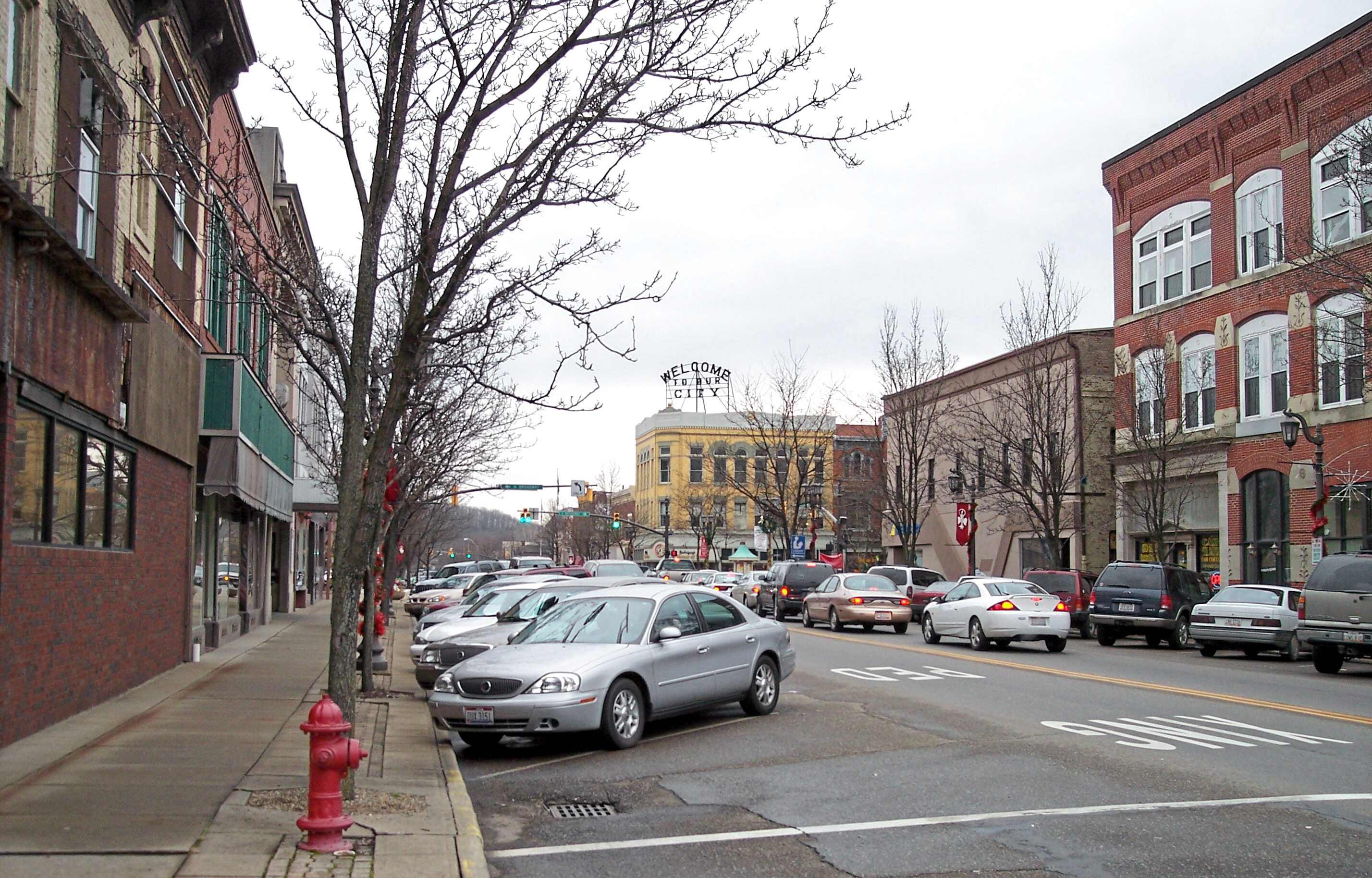
New Philadelphia is the county seat of Tuscarawas County in eastern Ohio, a small industrial and commercial city of roughly 17,000 residents. It sits in the Tuscarawas Valley, with the Tuscarawas River winding past downtown and the rolling farmland of the Appalachian foothills spreading out in every direction. The city carries a quiet, working-class Midwestern character, and it functions as a convenient base for travelers exploring the historic villages, Amish communities, and natural landscapes of east-central Ohio. It lies approximately 90 miles south-southeast of Cleveland and roughly 100 miles east-northeast of Columbus, putting it within easy reach of both major metros while retaining a small-town pace.
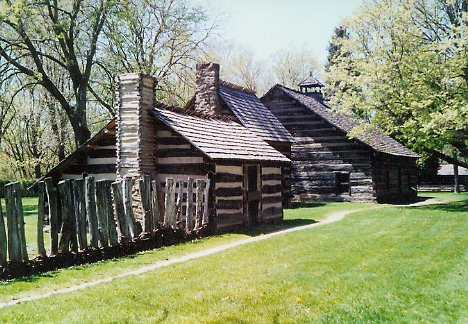
Just outside downtown, Schoenbrunn Village State Memorial preserves the site of the first organized Christian mission and settlement in Ohio, founded by Moravian missionaries in 1772. Visitors can walk through reconstructed log cabins, a meeting house, and schoolhouse, learning about the lives of the Delaware people and the European missionaries who lived there. It is a roughly five-minute drive from the center of New Philadelphia and offers a thoughtful stop for anyone interested in early American frontier history.
A short drive south of the city brings visitors to Zoar Village State Memorial, a remarkably well-preserved 19th-century community founded in 1817 by German Separatists fleeing religious persecution. The village's original brick and timber buildings, gardens, and bakery still stand, and interpreters demonstrate traditional trades throughout the year. It is about a ten-minute drive from New Philadelphia and remains one of the most distinctive historic sites in the region.
To the west, the rolling farmland and backroads of Holmes County — widely recognized as the heart of Ohio's Amish Country — unfold within about a 20-minute drive. The nearby village of Sugarcreek, sometimes called the Little Switzerland of Ohio, anchors the area with its alpine-style architecture, Swiss heritage festivals, and cheese shops. Travelers can spend days exploring the surrounding countryside, browsing farmers' markets, watching craftsmen at work, and sampling the hearty home-style cooking that the region is known for.
A bit farther afield, the Pro Football Hall of Fame in Canton sits roughly 30 miles to the north, about a 40-minute drive. The museum draws gridiron fans from across the country and pairs well with a broader east-central Ohio itinerary.
For short-term rental owners, New Philadelphia offers a compelling combination of affordability, location, and access to a diverse set of draws — frontier-era history, living Amish heritage, and the biggest names in football all within an hour's reach. The city provides a comfortable, low-key home base for visitors who want to experience a quieter, more traditional corner of Ohio without giving up easy day trips to a wider range of cultural and outdoor attractions.
Want to know if a property in New Philadelphia is a good investment?
Enter an address to get instant revenue potential and comps.