
Sidney, Montana
Want to see how Sidney compares to other top cities in Montana? Explore all city regulations in Montana. →
Sidney, MT
Challenging To Investors
STR Regulations for Sidney, Montana
Overview: Are STRs allowed in Sidney, MT?
- Citywide: Sidney’s zoning code does not expressly authorize “vacation rentals” or “short-term rentals” in most residential zones. The only clearly defined, rentable lodging use in residential districts is Bed & Breakfast, which is allowed only as a conditional use (CUP) and must meet use‑specific standards. Investors should assume renting fewer than 30 days in a dwelling unit (whole‑home or private‑room) is not allowed as‑of‑right in residential zones; a CUP may be required at minimum.
- Recreational vehicle (RV) parks (C‑3): Short‑stay RV rentals (less than 180 days per stay) are a permitted use. Stays of 180 days or more require a CUP. Existing manufactured homes may remain under an RV park approval.
- Hotels/motels: Hotels and motels are permitted uses in B‑1 (Community–Highway Business) and B‑3 (Central Business) districts, and conditionally permitted in R‑3. They are not permitted in R‑1/R‑2 residential districts.
- Bottom line for STR investors: The typical “whole-home STR” is not expressly permitted in Sidney’s residential districts. Your legal pathways are:
- Operate as a licensed Bed & Breakfast (CUP in R‑1/R‑2/R‑3; B‑1/B‑2/B‑3 allow B&B conditionally),
- Locate in the C‑3 RV‑Park district and rent RV spaces for stays under 180 days (no CUP), or
- Develop a hotel/motel in a commercial district (B‑1, B‑3; R‑3 requires a CUP).
How to start a STR business in Sidney
- Confirm zoning district and permitted lodging uses
- Use the City’s Official Zoning Map (kept by the Zoning Administrator; the PDF link in References). Verify whether your parcel is R‑1, R‑2, R‑3, B‑1, B‑2, B‑3, or C‑3. Allowed lodging differs by district.
- In R‑1/R‑2/R‑3: Bed & Breakfast is a conditional use. Hotels/motels are prohibited in R‑1/R‑2 and allowed only conditionally in R‑3. Whole‑home or room‑by‑room STRs are not listed as permitted or conditional uses.
- In C‑3: RV rentals under 180 days are permitted; 180+ days require a CUP.
- In B‑1/B‑3: Hotels/motels are permitted uses (B‑2 does not list hotels/motels).
- Secure land use approvals
- Bed & Breakfast (residential zones): Apply for a Conditional Use Permit (CUP) with the Zoning Commission. A CUP requires “findings of fact” under Section 11.17.10; operation must also comply with use‑specific standards (Section 11.17.22A) and general zoning standards.
- RV‑Park STR (C‑3): File for a Zoning Conformance Permit; meet 11.9.60 and 11.17.22E standards. For stays ≥180 days, apply for a CUP.
- Hotel/motel in commercial zones (B‑1/B‑3; R‑3 with CUP): Secure any applicable CUP and a Zoning Conformance Permit. Coordinate building permits and Certificate of Occupancy.
- Obtain building and occupancy approvals
- Building permits: Required for any construction, alteration, or change of use (Section 11.2.0). No permits issue if the use conflicts with zoning.
- Certificate of Occupancy: Required before occupancy; must comply with zoning and building codes (Section 11.2.0).
- Zoning Conformance Permit
- For any permitted or conditionally approved use, obtain a Zoning Conformance Permit after receiving CUP approval (if applicable). Utilities connections will not be authorized until zoning and city standards are met (Section 11.2.3).
- State and health requirements (Montana)
- Register and collect the Montana Lodging Facility Use Tax (12% on lodging; in addition to local taxes, if any). If selling alcohol, obtain liquor licensing from the Montana Department of Revenue (DOR).
- If serving food, obtain appropriate food service permits/licensing from the Montana DOR (restaurants/lodging food service).
- Short‑term rental marketplace registration and 4% accommodation tax (effective July 1, 2024) apply statewide to platforms and lodging providers; verify current applicability and local collection/registration requirements.
- Final compliance checks
- Ensure building, life‑safety, fire, and ADA standards are met; provide required landscaping/screening; maintain sidewalks; verify parking per zone standards; file any required business licenses with the City/County as applicable.
- Maintain records to document CUP conditions, occupancy limits, and tax remittances.
Required documents, permits, licenses, and guidelines
- Zoning and land use
- Zoning Conformance Permit (post‑CUP, if applicable)
- Conditional Use Permit (CUP) for Bed & Breakfast (residential zones) and for RV‑Park stays ≥180 days; potentially for hotels/motels in R‑3
- Compliance with use‑specific standards:
- Bed & Breakfast standards: Section 11.17.22A
- RV‑Park standards: Section 11.17.22E; C‑3 district standards: Sections 11.9.50–11.9.60
- Building & occupancy:
- Building Permit(s) and Certificate of Occupancy (Section 11.2.0)
- Utilities:
- Utility connections require zoning and city standards met (Section 11.2.3)
- State of Montana
- Montana Lodging Facility Use Tax registration and remittance (12%)
- Marketplace registration/accommodation tax (4%) where applicable
- Liquor license (if applicable)
- Food service permits/licensing (if applicable)
- Operational standards (general)
- Site design, screening, fencing, yard, sidewalk, parking, landscaping, and building design standards per zoning district (e.g., B‑1/B‑2/B‑3 screening next to residential; R‑1/R‑2/R‑3 accessory structure rules; RV‑Park design standards)
Specific STR regulations by district Residential districts (R‑1, R‑2, R‑3)
- Bed & Breakfast: Conditional use in all three residential districts. Requires a CUP and must meet Section 11.17.22A and the general standards of Article 11.18.0. R‑3 also conditionally permits Bed & Breakfast; R‑1/R‑2 list it as conditional.
- Hotels/motels: Prohibited in R‑1/R‑2; conditionally permitted in R‑3.
- Short‑term rentals (whole‑home, private‑room) for <30 days: Not listed as permitted or conditional uses. Investors should plan for a CUP pathway (Bed & Breakfast) if seeking to operate lodging in these zones.
- Accessory/Guest house: Permitted as an accessory use in R‑1/R‑2/R‑3, but not intended for separate transient rental; must meet accessory structure standards and cannot be used as a standalone residence (temporary or permanent).
Commercial districts (B‑1, B‑2, B‑3)
- B‑1 (Community–Highway Business): Hotels & motels are permitted; Bed & Breakfast is conditional.
- B‑2 (Neighborhood Business): Hotels/motels not listed; Bed & Breakfast is conditional; suitable for small, neighborhood‑scale lodging operations (with CUP).
- B‑3 (Central Business): Hotels & motels are permitted; Bed & Breakfast is conditional; historic compatibility standards apply to new/expanded buildings.
- Screening/yard standards: Non‑residential uses must screen service areas/parking lots adjacent to residential with a solid fence/vegetation at least 6 ft high (B‑1/B‑2/B‑3). Additional design compatibility and yard landscaping standards apply.
Recreational Vehicle Park district (C‑3)
- Under 180 days: RVs/temporary dwelling units are permitted (no CUP required).
- 180+ days: RVs/temporary units are conditional (CUP required).
- Minimum district size: 5 acres. Parkland at 0.03 acres per RV space required. Manager/superintendent facilities limited to 5% of gross units. New manufactured homes prohibited; existing with valid permits may remain.
- Design standards: Section 11.17.22E applies; 50% vegetative landscaping required; sidewalk, fencing, and yard standards apply.
Industrial and other districts (CLM, M‑I)
- Residential uses are prohibited in CLM and M‑I. Hotels/motels are not listed as permitted/conditional uses. These districts are unsuitable for STR lodging businesses.
Additional general zoning constraints affecting STRs
- Utilities: Connections withheld until zoning and city standards are met (Section 11.2.3).
- Certificates and permits: No permits or certificates issued for uses conflicting with zoning; any issued in conflict are null and void (Section 11.2.0).
- Building height and lot coverage: Per district standards (e.g., B‑3 height 70 ft; R‑1/R‑2/R‑3 height 35 ft; lot coverage limits vary).
- Sidewalks/ADA: Continuous sidewalks with ADA compliance required per Section 11.18.75.
- Fencing and setbacks: Height limits and setbacks differ by district; accessory structures must meet design, material, and timing requirements.
- Nonconforming uses: Governed by Article 11.20.0; prior approvals may continue if valid.
Local authority contacts (STRs, zoning, permits)
- City of Sidney – Zoning Administrator/Planning
- Physical address: City of Sidney, 115 1st St NE, Sidney, MT 59270
- Phone: (406) 433‑2800
- Website: cityofsidneymt.com
- City Clerk (permits, records, utility connections)
- Physical address: City of Sidney, 115 1st St NE, Sidney, MT 59270
- Phone: (406) 433‑2800
- Building Inspections/Fire Marshal (separate attachment; no direct contacts provided in the materials)
- Phone: (406) 433‑2800 (general City line; ask for Building/Fire)
- Richland County (planning/records outside city limits)
- Website: www.richland.org
State-level guidance and contacts (Montana)
- Department of Revenue (lodging use tax, marketplace tax, liquor, food service)
- Website: mtrevenue.gov
- Montana short‑term rental marketplace/accommodation tax rules and registration
- Montana DOR – Accommodation Tax: mtrevenue.gov/taxes-fees/accommodation-tax/
- Marketplace platform registration guidance is provided on the DOR site; confirm current applicability for your operation.
Key links to source materials
- Sidney Zoning Ordinance (Title 11; PDF; April 2022 revision):
- City of Sidney official site:
- Montana Department of Revenue (lodging/marketplace taxes, licensing):
- Montana DOR – Accommodation Tax information:
- Richland County official site:
Practical investor takeaways
- Residential‑zone STRs (whole‑home/room‑by‑room) are not expressly permitted; expect to pursue a Bed & Breakfast CUP path to legally operate lodging.
- RV‑Park model (C‑3) is a clear, permitted pathway for short‑stay rentals under 180 days; beyond 180 days requires a CUP.
- Commercial districts allow hotels/motels (B‑1/B‑3) or conditionally (R‑3). These are “hospitality product” rather than “residential STR,” but offer another investment route.
- Build a compliance plan that includes: (1) CUP (if required), (2) Zoning Conformance Permit, (3) Building Permit and CO, (4) Montana lodging/marketplace tax registration, and (5) any food/alcohol licensing.
- Confirm district standards early (height, coverage, setbacks, landscaping, screening, sidewalks). Noncompliance can stop utility connections and invalidate permits.
- Verify the most current forms, contacts, and fees with the City Clerk/Zoning Administrator and the Montana DOR before investing or opening.
What do Airbnb hosts actually earn in Sidney?
Sidney hosts earn a median $14,906/year with $82 ADR and 73% occupancy.
Top performers pull in $19,184+ per year.
See the full Sidney market breakdownNext step
Found a property in Sidney?
Paste any address and get estimated revenue, cash-on-cash return, and comparable STR performance in under 5 minutes. 3 free analyses per day.
Free brief
Get the free Sidney STR Investment Brief
Revenue data, top neighborhoods, seasonal trends, and the key regulations for Sidney, Montana in one email.
Sidney
Market Saturation Score
Photos of Sidney

Overview of Sidney
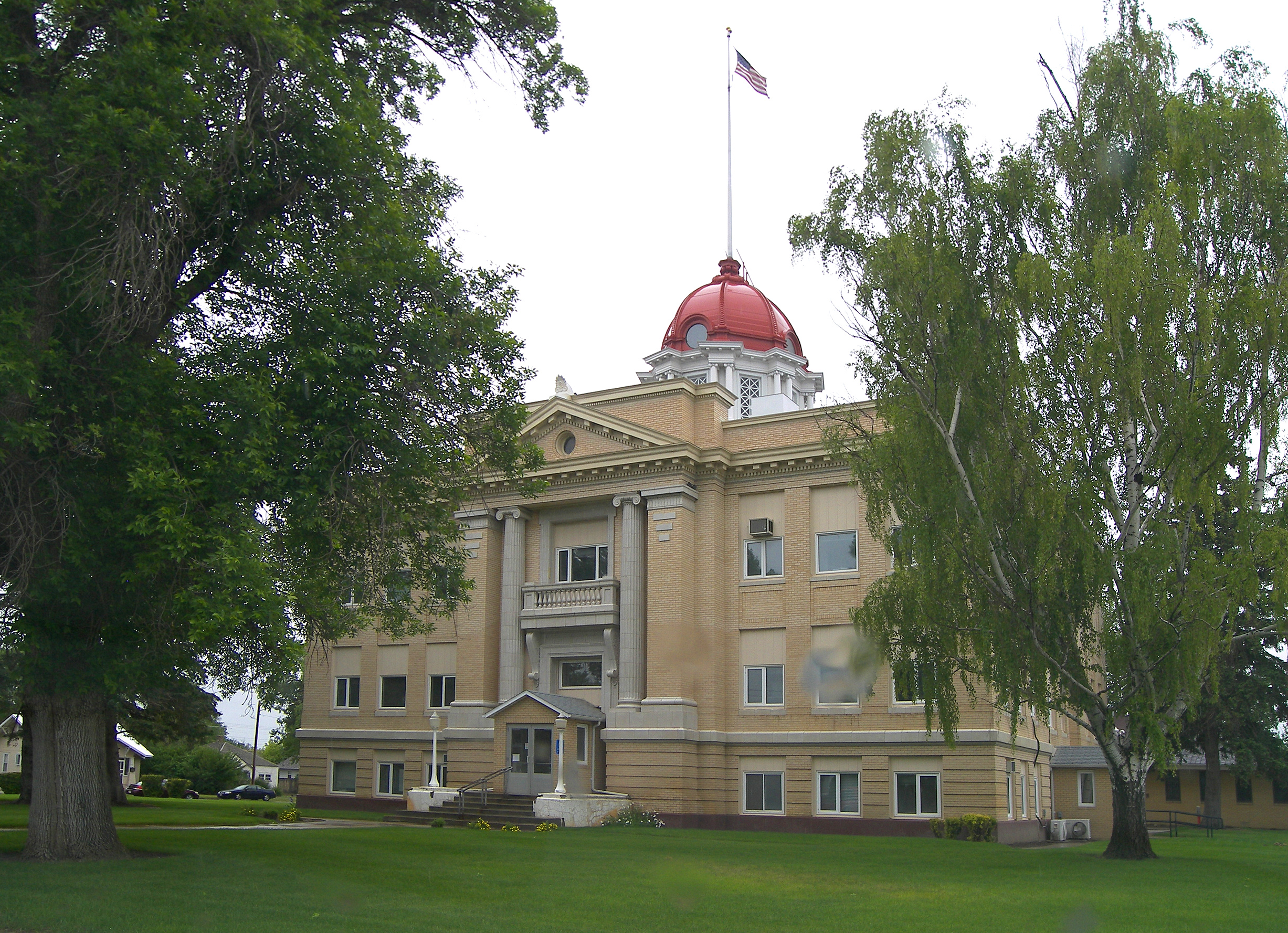
Sidney is a small city in Richland County in the far eastern reaches of Montana, with a population of roughly 6,000 residents. It sits along the Yellowstone River just a short distance from the North Dakota border and carries the steady, working character of a regional service hub. The town is best known for supporting the surrounding agricultural economy and, more recently, the energy activity tied to the Bakken oil formation that stretches beneath the surrounding plains. The nearest large city is Billings, Montana, approximately 300 miles to the west-southwest, while Williston, North Dakota, lies about 55 miles to the east and offers a closer sense of urban scale.
About 25 miles southwest of Sidney, at the confluence of the Missouri and Yellowstone Rivers, Fort Union Trading Post National Historic Site preserves what was once the most important fur trading post on the upper Missouri. Operated by the American Fur Company through the mid-1800s, the site features reconstructed palisade walls, a bourgeois house, and a visitor center that interprets the era of the fur trade and the cultural exchange between Euro-American traders and the Assiniboine, Cree, and other Indigenous nations who gathered there. The drive from Sidney takes roughly 35 minutes and stands as one of the most significant historical landmarks in the region.
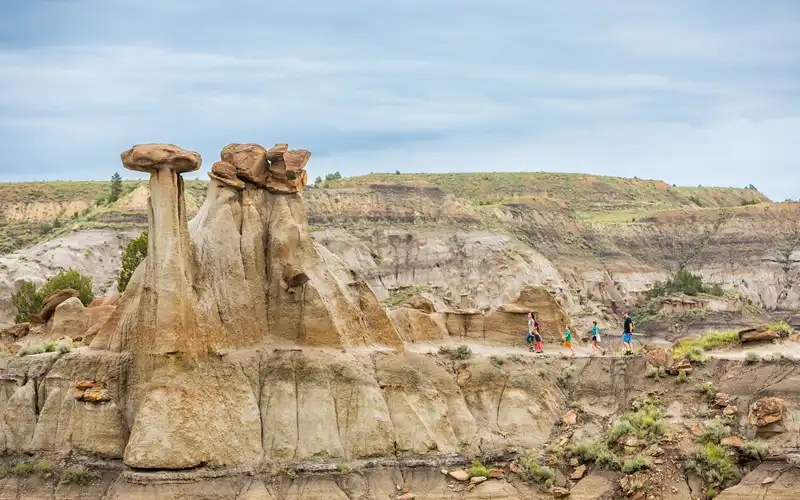
A bit farther afield, Makoshika State Park lies near Glendive, about 80 miles west of Sidney along the Interstate 94 corridor. The park is Montana's largest state park and is known for its badlands-style erosion, caprock buttes, and a notable concentration of dinosaur fossils, with interpretive displays at the on-site visitor center. Hiking trails wind through the colorful rock formations, offering a striking contrast to the surrounding prairie, and the park is easily reached from Sidney in roughly an hour and a half.
The Yellowstone River itself, which flows right past Sidney, anchors much of the local outdoor life. One of the longest free-flowing rivers in the lower 48 states, it draws anglers in pursuit of walleye, catfish, and paddlefish in the warmer months, and offers riverside walking and birdwatching year-round. The surrounding countryside also supports pheasant and deer hunting in season, drawing visitors from across the region.
Sidney's appeal as a short-term rental base rests on its position as a comfortable waystation in a sparsely populated stretch of the northern plains. It naturally serves travelers passing through on I-94, energy-industry workers on rotation, hunters in the fall, and visitors exploring the historic sites and badlands of eastern Montana and western North Dakota. The town's modest scale, friendly character, and proximity to both Fort Union and the wider prairie landscape make it a practical and welcoming place to spend a night or a few days.
Want to know if a property in Sidney is a good investment?
Enter an address to get instant revenue potential and comps.