
Washington, Missouri
Want to see how Washington compares to other top cities in Missouri? Explore all city regulations in Missouri. →
Washington, MO
Generally Investor Friendly
STR Regulations for Washington, Missouri
Washington, Missouri Short-Term Rental (STR) Investor Guide
Overview: Are Short-Term Rentals Allowed in Washington, MO?
Yes. Washington, Missouri explicitly allows short-term rentals (STRs) — properties rented as vacation lodging for fewer than 30 days via platforms like Airbnb and Vrbo — but only in specific commercial zoning districts. The City Council approved ordinance changes in August 2023 that permit STRs “by right” in the C‑1 (Local Commercial), C‑2 (General Commercial), C‑2 Overlay, and C‑3 (Intensive Commercial) zoning districts. The same approval process also imposed caps on full-home rentals and added enforcement mechanisms, and it shifted regulation of short-term rentals to “a single party” to streamline oversight (as noted in the final ordinance). Outside those commercial zones, STRs are restricted or prohibited, particularly in residential areas where full home short-term rentals are limited.
What do Airbnb hosts actually earn in Washington?
Washington hosts earn a median $27,473/year with $174 ADR and 50% occupancy.
Top performers pull in $39,807+ per year.
See the full Washington market breakdownHow to Start a Short-Term Rental Business in Washington, MO
- Verify your zoning first. Confirm with Planning & Community Development whether your parcel is zoned C‑1, C‑2, C‑2 Overlay, or C‑3. STRs are not permitted “by right” in residential zoning categories and are restricted elsewhere.
- Confirm the operating model. Washington’s rules treat non‑owner‑occupied “full-home” STRs as a separate category with caps; owner‑occupied arrangements (e.g., spare rooms) are generally handled differently. Your operating model will determine licensing and any caps.
- Apply for permits and business registration. Submit required documents to the city (see “Required Documents, Permits, Licenses, and Guidelines”). The city consolidates STR oversight under a single authority.
- Register for state and local taxes. Stays under 30 days are generally taxable lodging under Missouri law. Register with the Missouri Department of Revenue and set up sales/lodging tax remittance. The city’s adoption of the lodging tax mechanism at 5% is part of the updated rules; determine whether you must collect and remit this locally.
- Set up safety and operational compliance. Install and maintain required safety equipment (e.g., smoke and carbon monoxide detectors, fire extinguisher, posted emergency contact/exit information). Adopt and enforce quiet hours, parking rules, and trash protocols as required by the city’s “good neighbor” provisions.
- Designate a local contact. Identify a responsible party available 24/7 to respond to complaints and issues within reasonable timeframes.
- Maintain records. Keep copies of permits, insurance, inspections, and tax filings. Be prepared to display your permit number on listings where required.
- Note on ordinances and implementation: The city adopted rules in August 2023. Some implementation details may be updated in the City Code and administrative guidance; verify current forms and application procedures with the city.
Required Documents, Permits, Licenses, and Guidelines
Based on the city’s actions and Missouri practice, expect the following:
- Short‑term rental permit (or certificate). Required to operate an STR in Washington. The city’s ordinance assigns oversight to a single party to simplify licensing.
- Business license/registration. Typically required for STR operations and may be integrated with the STR permit.
- Proof of liability insurance. Common thresholds are $500,000–$1,000,000.
- Proof of property ownership or written authorization from the owner.
- Floor plan and maximum occupancy declaration. For safety and compliance review.
- Parking plan. To demonstrate compliance with parking constraints and quiet-hours rules.
- 24/7 local contact information. A responsible party must be available to respond to issues.
- Safety compliance documentation. Evidence of working smoke and CO detectors, fire extinguisher(s), posted emergency exits and contact information, and adherence to noise and trash rules.
- State tax registration. Missouri Department of Revenue registration for sales/lodging taxes on stays under 30 days.
- HOA/condo approvals (if applicable). Private covenants can prohibit STR activity even where city zoning allows it.
Specific Regulations for Short-Term Rentals (City, County, State)
City of Washington, MO (Local)
- Allowed “by right” only in commercial districts: C‑1, C‑2, C‑2 Overlay, C‑3.
- Full‑home STRs are limited by caps adopted in the 2023 ordinance and subject to approval processes designed to manage density and neighborhood impacts.
- Residential zoning districts: generally restricted or prohibited for full-home STRs; additional carve‑outs or owner‑occupied allowances may be limited and subject to stricter oversight.
- The city moved to “a single party” oversight model for STRs to streamline regulation and enforcement.
- Enforcement mechanisms include penalties for violations, and the city signaled proactive enforcement via monitoring and complaint response.
- Good neighbor rules: quiet hours, parking controls, trash disposal, and on‑site compliance with posted rules are expected; violation of these standards can trigger enforcement.
- Note: The specific cap numbers, application procedures, inspection requirements, and renewal cadence are not provided in the sources; confirm with the city for current thresholds and processes.
Franklin County (Unincorporated Areas)
- County zoning governs STRs outside city limits. Requirements vary by zoning district and may be more permissive or less regulated than the city. Confirm with the Franklin County Planning & Zoning office for any additional conditions and tax implications.
State of Missouri (Statewide)
- No statewide STR license or unified ordinance; municipalities and counties set local rules.
- State sales tax applies to lodging for stays under 30 days (base rate 4.225%). You may need to register with the Missouri Department of Revenue and remit unless a platform collects and remits on your behalf.
- Local lodging taxes (e.g., 5% lodging tax adopted by Washington) can apply in addition to state sales tax. Depending on local mechanisms, hosts may be required to collect and remit or platforms may handle collection.
- Health and safety standards, building code compliance, and local “good neighbor” provisions frequently apply.
- Enforcement and penalties vary by jurisdiction; non‑compliance can result in fines, permit revocation, or delisting by platforms.
Contact Information (Phone, Email, Website)
City of Washington (Planning & Community Development)
- Phone: (636) 390‑1010
- Address: City Hall, 101 Lafayette St., Washington, MO 63090
- Website: washmo.gov (Planning & Permits page)
Missouri Department of Revenue (Sales/Lodging Tax)
- Phone: (573) 751‑5860
- Website: dor.mo.gov
Franklin County Planning & Zoning
- Phone: (636) 583‑6363
- Address: 100 Bruns Rd., Union, MO 63084
Note: The city’s oversight has been consolidated under a single party. For current application forms, permit numbers, and the designated STR authority, contact Planning & Community Development.
Links to Source Pages
- Washington City Council approves short-term rental rules (Aug 8, 2023) — www.missourian.com/local_news/washington-city-council-approves-short-term-rental-rules/article_4c26713c-3628-11ee-91c8-2706cae905c9.html
- City of Washington, MO — Planning & Permits — www.washmo.gov/page/planning-permits
- Missouri STR Regulations (state context) — hometeamluxuryrentals.com/blog/missouri-short-term-rental-regulations
- Missouri STR Regulations (state context) — www.redawning.com/pm/post/missouri-short-term-rental-laws
Note: City-specific permitting workflows, cap numbers, inspection requirements, and renewal steps should be confirmed directly with Washington’s Planning & Community Development, as some implementation details are still being finalized or updated post‑adoption.
Next step
Found a property in Washington?
Paste any address and get estimated revenue, cash-on-cash return, and comparable STR performance in under 5 minutes. 3 free analyses per day.
Free brief
Get the free Washington STR Investment Brief
Revenue data, top neighborhoods, seasonal trends, and the key regulations for Washington, Missouri in one email.
Washington
Market Saturation Score
Photos of Washington


Overview of Washington
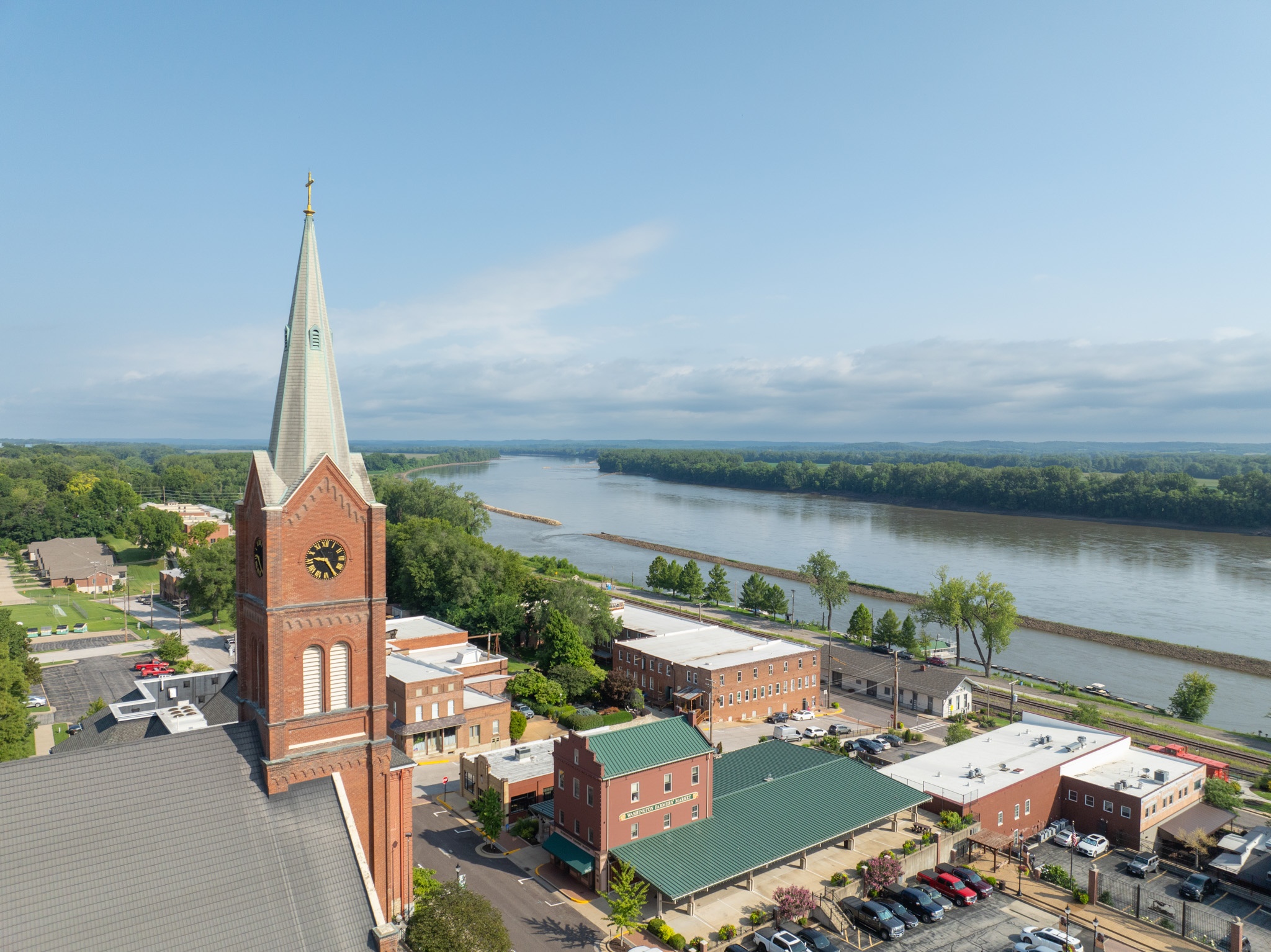
Washington is a small city of roughly 14,000 residents situated on the south bank of the Missouri River in Franklin County, Missouri. Set among the rolling hills roughly 50 miles west of St. Louis, it has a friendly, river-town character and a well-preserved nineteenth-century downtown that draws visitors exploring Missouri's wine country. Washington is often considered a gateway to the surrounding river hills and to the historic German-settled town of Hermann to the south, and its scenic riverfront has made it a popular stop for cyclists on the cross-state Katy Trail.
The city's historic downtown and riverfront are its main draw. Lined with brick buildings, locally owned shops, restaurants, and tasting rooms, the district sits just steps from the Missouri River, and the adjacent Riverfront Park offers walking paths, pavilions, and views of the water. It is roughly a short walk from anywhere in the central area, and visitors often linger at the overlooks to watch barges move along the waterway.
Just a few blocks from the river, the Missouri Meerschaum Company is a longstanding local landmark, producing corn cob pipes for more than a century and offering a small on-site museum and shop. Located in the same industrial corridor along the river, it is one of the more unusual free attractions in the region and typically takes under an hour to visit. The company has been a fixture of Washington since the late 1800s, and the corn cob pipe remains a quirky point of local pride.
South of Washington, the rolling countryside of the Missouri Rhineland opens up, with the historic town of Hermann roughly 30 minutes away by car. Settled by German immigrants in the 1830s, Hermann is known for its stone architecture, riverside vineyards, and a handful of family-run wineries that participate in seasonal tasting events. A bit closer to home, the Shaw Nature Reserve, a 2,400-acre property managed by the Missouri Botanical Garden, is about a 20-minute drive southwest in Gray Summit, offering prairies, glades, and miles of hiking trails through the river-hill landscape.
With its walkable historic core, riverfront setting, and proximity to both St. Louis and the wine country of the Missouri Rhineland, Washington offers short-term-rental owners a flexible base that appeals to weekend cyclists, wine tourists, and travelers seeking a quieter alternative to the city. The mix of small-town charm, outdoor recreation, and easy day-trip access makes the area a natural fit for guests who want to combine a relaxed stay with a wide variety of regional experiences.
Want to know if a property in Washington is a good investment?
Enter an address to get instant revenue potential and comps.