
Seal Cove, Maine
Want to see how Seal Cove compares to other top cities in Maine? Explore all city regulations in Maine. →
Seal Cove, ME
Generally Investor Friendly

STR Regulations for Seal Cove, Maine
Note: “Seal Cove” refers to a village within the Town of Southwest Harbor, Hancock County, Maine. There are no separate published STR ordinances specific to the Seal Cove village; operations are governed by statewide Maine rules and any adopted town rules for Southwest Harbor. The current accessible sources do not document any Southwest Harbor town-level STR licensing or caps. If the town later adopts its own ordinance, it will supersede or supplement state rules.
Overview and Allowability
- Short-term rentals (STRs) are permitted in Seal Cove (Southwest Harbor) to the extent allowed under Maine state law and town ordinances. Based on the available sources, there is no evidence that Southwest Harbor has enacted its own restrictive STR licensing, caps, or mandatory inspections. In contrast, nearby Bar Harbor (a different town on Mount Desert Island) has a comprehensive STR ordinance with a permit system and density caps; Mount Desert rejected its proposed STR ordinance in May 2024.
- At the state level, Maine requires collection and remittance of the 9% Vacation Rental Tax on gross receipts from short-term rentals, and imposes minimal operational restrictions that all STRs must meet (e.g., health and safety, building and fire codes, local zoning).
- The use and operation of STRs must comply with all applicable local zoning, health, building, fire, and municipal rules in effect in Southwest Harbor.
Key sources:
- Bar Harbor’s existing, stricter framework provides a regional contrast. Bar Harbor Story (2024) and The Quietside Journal (2024) document active enforcement and declining permits under Bar Harbor’s system.
- Mount Desert’s rejection of an STR ordinance in May 2024 underscores that not all MDI towns have adopted Bar Harbor-type restrictions. The Quietside Journal.
- Regional comparison: Southwest Harbor lacks caps and is “less restrictive than Bar Harbor.” The Offer Sheet.
What do Airbnb hosts actually earn in Seal Cove?
Seal Cove hosts earn a median $41,577/year with $307 ADR and 72% occupancy.
Top performers pull in $68,930+ per year.
See the full Seal Cove market breakdownHow to Start a Short-Term Rental Business in Seal Cove
Given the absence of documented local restrictions in Southwest Harbor, the pragmatic approach focuses on state-level compliance and general best practices:
-
Confirm zoning and land use
- Verify that your property is in a zoning district that allows short-term rental use and that no HOA covenants, deed restrictions, or neighborhood rules prohibit STRs.
- Check setbacks, lot coverage, parking, and any accessory-use limits.
-
Register for Maine’s Vacation Rental Tax
- Register with Maine Revenue Services (MRS) to obtain a sales/use tax account for the 9% Vacation Rental Tax on gross rental receipts.
- Major platforms (Airbnb/VRBO) generally collect and remit this tax automatically; for direct bookings, you must collect and remit.
- Maintain accurate records for audits and file returns on the schedule established by MRS.
-
Establish safety and habitability standards
- Equip units with functional smoke detectors, carbon monoxide detectors where applicable, fire extinguishers, clearly marked exits, emergency lighting, and a first-aid kit.
- Post emergency information for guests (e.g., address, local contact, emergency numbers).
- Follow any local health and safety codes that apply.
-
Prepare required documentation
- Maintain copies of the property deed/lease, proof of insurance, tax registration, guest communications, cleaning and maintenance logs, and any platform or local listing confirmations that include your STR business details.
-
Create compliant listings
- Ensure listings are accurate and include any required disclosures or numbers if a town later requires them.
- Note minimum stays (if any are set by policy or platform), house rules, and capacity.
-
Set operations and accounting
- Implement a system for taxes, bookings, guest screening, cleaning standards, and local issue resolution.
- Track income and expenses for tax reporting.
Sources:
- Tax registration and 9% Vacation Rental Tax obligations: The Offer Sheet (Bar Harbor guide, citing Maine rules).
- No documented Southwest Harbor caps or permits; recommended operational setup parallels general STR best practices: The Offer Sheet (comparative regional perspective).
Required Documents, Permits, Licenses, and Guidelines
Given no documented town-level STR ordinance for Southwest Harbor (as of the accessible sources), the following typically apply in Seal Cove:
-
State-level requirements
- Maine Vacation Rental Tax registration with Maine Revenue Services.
- Monthly or quarterly filing of the 9% Vacation Rental Tax based on gross rental receipts.
- Proper recordkeeping for tax compliance and potential audits.
-
Local/municipal considerations (Southwest Harbor)
- Business registration or local license (if required by the town for any rental operation). No specific STR licensing was documented in the provided sources; confirm current requirements with the town clerk/assessor.
- Zoning and building/fire code compliance; any required permits for alterations, parking, or life-safety equipment.
- Proof of property insurance and a reliable local contact for guest or emergency needs.
-
Operational postings and notices
- Emergency information sheet posted inside the unit.
- Clear house rules and cancellation policies.
- Documentation of compliance with safety equipment requirements.
-
Documentation management
- Keep lease/deed, insurance, tax IDs, guest logs, inspection records, and all correspondence for tax and compliance audits.
Sources:
- State tax registration and 9% tax obligations: The Offer Sheet.
- Regional context: No caps in Southwest Harbor (vs. Bar Harbor’s caps and inspections), The Offer Sheet; local STR activity trends and enforcement, Bar Harbor Story and The Quietside Journal.
Specific Regulations: City (Town), County, and State
- Town (Southwest Harbor): No specific STR licensing, caps, or mandatory inspections were documented in the provided sources. Confirm any new town actions directly with the town clerk/assessor.
- County (Hancock County): No county-level STR-specific regulations were identified in the provided sources.
- State (Maine): Short-term rentals are subject to the 9% Vacation Rental Tax on gross rental receipts. Operators must register with Maine Revenue Services and comply with all applicable health, safety, and zoning requirements. There are no statewide occupancy caps for STRs, but properties must comply with life-safety codes and local land-use rules.
Regional comparison (illustrative, not governing in Southwest Harbor):
- Bar Harbor: Dual permit system (VR-1 owner-occupied; VR-2 non-owner-occupied), 9% VR-2 cap, minimum stays (VR-1: 2 nights; VR-2: 4 nights), annual inspections, and strict enforcement with fines. Bar Harbor’s VR-2 permits declined from 522 (2022) to 470 (2024). Bar Harbor Story; The Quietside Journal; Bangor Daily News.
- Mount Desert: Voters rejected an STR ordinance in May 2024, leaving Mount Desert with minimal STR-specific rules as of that date. Bar Harbor Story.
- Southwest Harbor: No caps or documented licensing requirements in the provided sources; positioned as less restrictive than Bar Harbor. The Offer Sheet.
Citations:
- Bar Harbor enforcement and penalties for unregistered STRs: Bangor Daily News.
- Bar Harbor regulatory framework and permit counts: The Quietside Journal.
- Regional STR dynamics (including Ellsworth and Southwest Harbor): The Quietside Journal.
- Mount Desert’s 2024 rejection: Bar Harbor Story.
Contact Information
Note: Official town-specific contact details for Southwest Harbor were not included in the provided sources. The generic municipal phone number listed below is from Bar Harbor’s website (Bar Harbor is a different municipality, included only for illustrative municipal contact format).
-
Maine Revenue Services (for vacation rental tax registration and reporting)
- Phone: (207) 624-9595
- Website: www.maine.gov/revenue
- Reference: The Offer Sheet
-
Town of Bar Harbor (illustrative municipal format for STR oversight in a nearby town)
- Phone: (207) 288-4098
- Website: www.barharbormaine.gov
- Note: Bar Harbor has a Code Enforcement Officer who oversees STR permits; Southwest Harbor’s equivalent office may differ. Reference: Bar Harbor municipal website; Bangor Daily News.
Before operating in Seal Cove/Southwest Harbor, confirm any town-specific rules, business licensing, or contact details with the Southwest Harbor Town Clerk or Assessor.
Links to Source Pages
-
Mount Desert rejects short-term rental ordinance (May 8, 2024)
-
Bar Harbor ME Short Term Rental Regulations: Essential Guide
-
Chipping away at the housing crisis, one vacation rental unit at a time (June 30, 2024)
-
More property owners break Bar Harbor’s short-term rental rules (Oct 18, 2024)
-
Town of Bar Harbor Official Website
Key Takeaway for Investors
- Seal Cove (Southwest Harbor) is governed by Maine state STR rules, with no documented local licensing or caps. Operate under Maine’s 9% Vacation Rental Tax, comply with health and safety codes, and confirm any town requirements before launch.
- Monitor Southwest Harbor for future STR ordinances. If adopted, they may introduce permitting, caps, or inspections similar to Bar Harbor’s framework.
- Keep meticulous records and maintain a high standard of safety and guest relations to minimize enforcement risk and protect returns.
Next step
Found a property in Seal Cove?
Paste any address and get estimated revenue, cash-on-cash return, and comparable STR performance in under 5 minutes. 3 free analyses per day.
Free brief
Get the free Seal Cove STR Investment Brief
Revenue data, top neighborhoods, seasonal trends, and the key regulations for Seal Cove, Maine in one email.
Seal Cove
Market Saturation Score
Photos of Seal Cove


Overview of Seal Cove
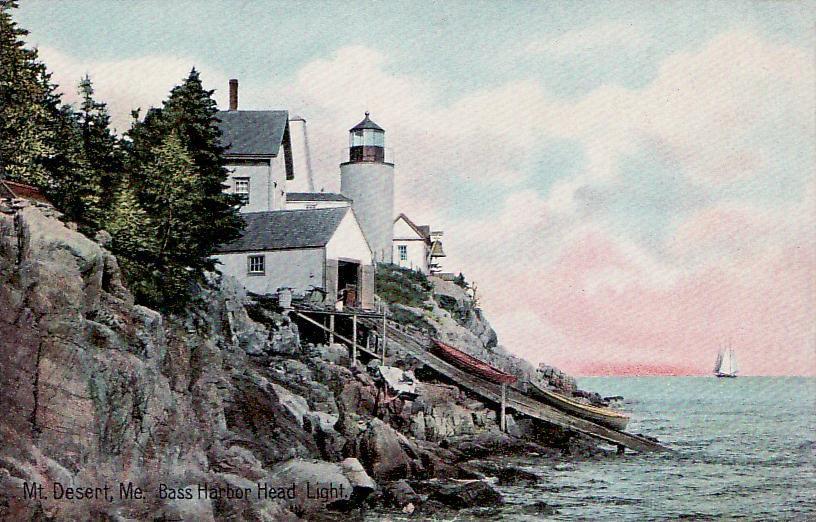
Tremont is a town in Hancock County, Maine, United States. It is located on the southwestern side of Mount Desert Island, known to locals as "the quiet side."Tremont includes the villages of Bass Harbor (or McKinley), Bernard, Gotts Island, Seal Cove and West Tremont. Part of Acadia National Park lies within the town. Bass Harbor is the terminus for the Swan's Island ferry and the Frenchboro ferry. The population was 1,544 at the 2020 census.
Want to know if a property in Seal Cove is a good investment?
Enter an address to get instant revenue potential and comps.