
Cedar Key, Florida
Want to see how Cedar Key compares to other top cities in Florida? Explore all city regulations in Florida. →
Cedar Key, FL
Generally Investor Friendly
STR Regulations for Cedar Key, Florida
Overview: Are Short-Term Rentals Allowed in Cedar Key, FL?
YES - Short-term rentals are explicitly allowed in Cedar Key, Florida. The city has not implemented specific bans or moratoriums on vacation rentals, making it a permitted use throughout most zoning districts within city limits. Cedar Key operates under a framework where STRs are treated as standard business operations requiring appropriate licensing at the state, county, and local levels.
Unlike restrictive jurisdictions such as the Florida Keys, Cedar Key maintains a business-friendly approach to vacation rentals while ensuring compliance with essential safety, tax, and operational requirements. The island's small size (population ~800) and tourism-dependent economy create an environment where responsible STR operations are generally welcomed, provided operators maintain good standing with all regulatory requirements.
This permissive stance makes Cedar Key particularly attractive for investors seeking a regulated but not overly restrictive vacation rental market with authentic Old Florida charm and consistent tourism demand throughout the year.
What do Airbnb hosts actually earn in Cedar Key?
Cedar Key hosts earn a median $26,828/year with $183 ADR and 51% occupancy.
Top performers pull in $39,111+ per year.
See the full Cedar Key market breakdownHow to Start a Short-Term Rental Business in Cedar Key
Step 1: Market Research & Property Selection
- Demographics Analysis: Cedar Key attracts diverse visitors including eco-tourists, fishing enthusiasts, artists, families, and snowbirds seeking mild winter climates
- Seasonal Patterns: Peak seasons run October-May, with summer months experiencing lower demand due to heat and hurricane risk
- Property Considerations: Evaluate proximity to downtown vs. waterfront views, flood zone status, parking availability, and environmental constraints
- Investment Analysis: Compare property values to potential rental income, factoring in hurricane insurance costs and seasonal occupancy variations
Step 2: Zoning & Regulation Compliance Verification
- Zoning Verification: Confirm property zoning allows STR use with Cedar Key Building Department
- Environmental Review: Check proximity to Cedar Key National Wildlife Refuge and associated restrictions
- Flood Zone Assessment: Many island properties require flood insurance and may have elevation requirements
- Deed Restriction Review: Ensure no private covenants prohibit rental activities
- Parking Solutions: Limited street parking requires creative solutions for guest vehicles
Step 3: Legal Structure & Insurance Setup
- Business Entity Formation: Consider LLC structure for liability protection
- Commercial Insurance: Secure comprehensive coverage including $1M+ liability, windstorm, and flood insurance
- Property Acquisition: Complete purchase with STR potential confirmed
- Financing: Ensure lender awareness of intended STR use
Step 4: Permitting & Licensing Process
- State Licensing: Apply for Florida DBPR Vacation Rental License
- Local Licensing: Obtain Cedar Key business license and local business tax receipt
- Tax Registration: Register for all applicable state and local tax accounts
- Safety Compliance: Schedule and pass required inspections
- Documentation: Maintain current copies of all permits and licenses
Step 5: Property Preparation & Setup
- Coastal Renovation: Focus on durability against salt air, humidity, and storm exposure
- Safety Equipment Installation: Smoke detectors, CO detectors, fire extinguishers, emergency lighting, clearly marked exits
- Hurricane Preparedness: Storm shutters, emergency supplies, evacuation plans, elevated utilities
- Guest Experience: Create authentic "Old Florida" atmosphere with local art, vintage fishing gear, cedar wood accents
- Technology Integration: Keyless entry systems, noise monitoring, smart home features
Step 6: Marketing & Operations Launch
- Professional Photography: Highlight waterfront views, wildlife access, local character
- Platform Setup: List on major booking sites with optimized descriptions emphasizing eco-tourism, fishing, arts scene
- Local Partnerships: Connect with tour operators, restaurants, fishing guides for guest referrals
- Operational Systems: Establish cleaning protocols, guest communication procedures, maintenance schedules
- Community Integration: Build relationships with neighbors, participate in local events
Step 7: Ongoing Compliance Management
- Tax Filing: Monthly remittance of all applicable taxes by 20th of following month
- License Renewal: Annual renewals for DBPR and local licenses
- Safety Maintenance: Regular testing and updating of safety equipment
- Regulation Monitoring: Stay informed about changing local, county, and state requirements
- Neighbor Relations: Maintain positive community relationships to avoid complaints
Required Documents, Permits, Licenses, and Guidelines
State of Florida Requirements
1. DBPR Vacation Rental License
- Type: Vacation Rental-Dwelling or Vacation Rental-Condominium
- Application Fee: Starting at $50
- Processing Time: 2-4 weeks
- Annual Renewal: Required with current license display in property
- Categories: Separate licenses required for different property types
- Compliance: Must be renewed annually with continuing education requirements
2. Florida Sales Tax Certificate
- Authority: Florida Department of Revenue
- Registration: Required before collecting rent
- Collection: 6% state sales tax on gross rental receipts
- Filing: Monthly returns due by 20th of following month
- Platform Considerations: Airbnb/VRBO collect automatically but not all local taxes
3. Balcony Inspection Certificate
- Applicability: Properties 3+ stories or balconies 17+ feet above ground
- Certification: Certified inspector required
- Form: DBPR HR-7020 must be filed
- Frequency: Required every three years
- Cost: Variable based on property size and complexity
4. Human Trafficking Training
- Requirement: Annual training for housekeeping and front desk staff
- Authority: Florida Statute 509.096
- Compliance: Documentation of completed training required
- Accessibility: Online training options available through DBPR
Local Requirements (Cedar Key)
1. City Business License
- Authority: City of Cedar Key
- Application: Required before operating any business within city limits
- Contact: Cedar Key City Hall (352) 543-5132
- Email: cityhall@cedarkeyfl.us
- Address: 809 6th Street, Cedar Key, FL 32625
- Renewal: Annual renewal required
2. Local Business Tax Receipt
- Authority: City of Cedar Key
- Purpose: Business tax for operating within city limits
- Fee Structure: Based on gross receipts, varies by business type
- Renewal: Annual renewal with updated financial information
- Documentation: Maintain copies with other business licenses
3. Fire Safety Compliance Certificate
- Authority: Local fire department and building department
- Inspection: Pre-operation safety inspection required
- Equipment: Smoke detectors, CO detectors, fire extinguishers, emergency lighting
- Accessibility: Clear emergency exits and posted evacuation plans
- Maintenance: Regular testing and updating of safety equipment
County Level Requirements (Levy County)
1. Tourist Development Tax Registration
- Authority: Levy County Tourist Development
- Tax Rate: 4% of gross rental receipts
- Application: Required before collecting rent in Levy County
- Filing: Monthly returns using Florida Form DR-15CS
- Contact: (352) 486-5201 for tourist development tax inquiries
2. Levy County Sales Surtax
- Tax Rate: 1% of gross rental receipts
- Application: Register with Florida Department of Revenue
- Collection: Added to state sales tax for total 7% state/county rate
- Filing: Combined with state sales tax returns
Federal Requirements
1. Flood Insurance Documentation
- Authority: National Flood Insurance Program
- Applicability: Properties in FEMA-designated flood zones
- Requirement: Mandatory for properties with federally backed mortgages in flood zones
- Coverage: Consider voluntary coverage for properties outside mandatory zones due to coastal location
2. EIN (Employer Identification Number)
- Authority: Internal Revenue Service
- Purpose: Tax reporting and business identification
- Application: Required for business tax accounts and employee reporting
- Online Application: Available through IRS website
Essential Documentation Checklist
Core Business Documents:
- Florida DBPR Vacation Rental License (current)
- City of Cedar Key Business License
- Florida Sales Tax Certificate
- Levy County Tourist Development Tax Registration
- EIN Documentation
- Commercial Insurance Policy (minimum $1M liability)
Property-Specific Documents:
- Fire Safety Compliance Certificate
- Property Deed or Lease Agreement
- Flood Insurance Documentation
- Building Permits (if renovations completed)
- Elevation Certificate (if in flood zone)
Operational Documents:
- Property Management Agreement (if using management company)
- Emergency Contact Information (local contact able to respond within one hour)
- Guest Registration Records system
- Hurricane Evacuation Plan
- Safety Equipment Maintenance Records
Financial Records:
- Bank account documentation for business operations
- Bookkeeping system for tax reporting
- Expense tracking for business deductions
- Monthly tax filing calendar and procedures
Specific Regulations for Cedar Key, Levy County, and Florida State
City of Cedar Key Regulations
Zoning and Land Use
- Permitted Areas: STRs generally permitted in commercial, residential, and mixed-use zones
- Special Considerations: Properties near Cedar Key National Wildlife Refuge may have additional environmental restrictions
- Historic District: Properties in historic districts may require special approvals for exterior modifications
- Waterfront Properties: Additional environmental compliance required for properties adjacent to Gulf waters
- Density Limits: No specific density restrictions, but parking and infrastructure limitations create practical constraints
Operational Requirements
- Business License: Required for all STR operations within city limits
- Local Business Tax Receipt: Annual renewal based on gross receipts
- Fire Safety: Compliance with local fire codes and safety equipment requirements
- Noise Ordinance: Quiet hours typically 10 PM to 7 AM, important on small island environment
- Parking: Limited street parking requires creative solutions; consider designated guest parking areas
Enforcement and Compliance
- Complaint-Based: Primary enforcement method in small community
- Online Monitoring: City monitors vacation rental platforms for unlicensed operations
- Inspection Authority: City building and fire officials can conduct safety inspections
- Violation Penalties: Local fines starting at $250 per violation, potential license suspension
Levy County Regulations
Tax Structure
- Tourist Development Tax: 4% of gross rental receipts (municipalities cannot levy additional TDT)
- Sales Surtax: 1% added to state sales tax for total 7% state/county rate
- Total Local Tax Rate: 5% (4% TDT + 1% surtax) plus 6% state sales tax = 11% total
- Collection Responsibility: Property owners responsible for registration, collection, and remittance
Registration and Filing Requirements
- Monthly Returns: Due by 20th of following month using Florida Form DR-15CS
- Late Payment Penalties: Subject to interest and penalty charges
- Collection Allowance: 2.5% on first $1,200 if filed timely
- Record Keeping: Maintain detailed records for minimum 3 years
Environmental and Coastal Regulations
- Flood Zone Management: FEMA flood zone compliance required for coastal properties
- Stormwater Management: Compliance with county stormwater management requirements
- Coastal Construction: Florida Department of Environmental Protection permits for certain coastal modifications
State of Florida Regulations
Licensing Requirements
- DBPR License: Mandatory for all vacation rentals regardless of location
- License Categories: Separate licenses for dwellings vs. condominiums
- Annual Renewal: Required with continuing education compliance
- Inspection Requirements: Balcony inspections for qualifying properties every 3 years
Safety and Building Code Compliance
- Florida Building Code: All properties must comply with current building codes
- Life Safety Requirements: Smoke detectors, CO detectors, fire extinguishers mandatory
- Accessibility: ADA compliance required for common areas in multi-unit properties
- Hurricane Standards: Enhanced building codes for coastal properties
Tax and Business Requirements
- Sales Tax: 6% on gross rental receipts
- Registration: Required with Florida Department of Revenue
- Filing: Monthly returns with detailed transaction records
- Business Structure: Income reported on federal and state tax returns
Human Trafficking Prevention
- Annual Training: Mandatory for all staff involved in property operations
- Documentation: Proof of training completion must be maintained
- Compliance: Statute 509.096 requires ongoing education
Advertising and Listing Requirements
- License Display: License number must appear in all advertisements
- Platform Compliance: Must comply with individual platform listing requirements
- Accuracy: All listings must accurately represent property and comply with local regulations
Upcoming Regulatory Changes and Trends
Environmental Protection Enhancements
- Wildlife Refuge Considerations: Increased focus on protecting surrounding ecosystems
- Stormwater Management: Potential new requirements for runoff management
- Coastal Resilience: Building standards may evolve for storm resilience
Infrastructure and Capacity Management
- Parking Solutions: Limited city parking may lead to permit systems or designated areas
- Density Management: Potential future limits to preserve small-town character
- Infrastructure Funding: Tourist development tax adjustments possible for infrastructure improvements
Hurricane Preparedness Standards
- Enhanced Requirements: Potential new standards for storm preparation and guest safety
- Communication Protocols: Mandatory guest notification systems for approaching storms
- Evacuation Planning: Enhanced evacuation planning and guest communication requirements
Contact Information for Local Authorities
City of Cedar Key
Municipal Government
- Phone: (352) 543-5132
- Email: cityhall@cedarkeyfl.us
- Website: cityofcedarkey.org
- Address: 809 6th Street, Cedar Key, FL 32625
- Hours: Monday-Friday, 8:30 AM – 4:00 PM
- Primary Contact: City Hall for business licenses and local permits
- Building Department: Contact through City Hall for zoning and building permits
- Fire Department: Contact for safety inspections and compliance
Levy County Government
Tourist Development Office
- Phone: (352) 486-5131 (main office)
- Tourist Development Tax: (352) 486-5201 (specific tax inquiries)
- Website: levycounty.org
- Purpose: Tourist Development Tax registration and compliance
- Hours: Business hours, contact for specific appointment scheduling
County Administration
- Main Number: (352) 486-5215
- Purpose: General county services and regulatory inquiries
- Planning and Zoning: Contact for county-level zoning questions
- Emergency Management: (352) 486-5215 for hurricane and emergency planning
Florida State Agencies
Department of Business and Professional Regulation (DBPR)
- Phone: (850) 487-1395
- Website: myfloridalicense.com
- Customer Contact Center: 2601 Blair Stone Road, Tallahassee, FL 32399
- Purpose: State vacation rental licensing and compliance
- Hours: Standard state business hours
- Online Services: License applications, renewals, and compliance resources
Florida Department of Revenue
- Phone: (800) 352-3671
- Website: floridarevenue.com
- Purpose: Sales tax registration and compliance
- Local Offices: Contact nearest office for in-person assistance
- Online Filing: Available through department website
Florida Department of Environmental Protection
- Phone: (850) 245-2118
- Website: floridadep.gov
- Purpose: Coastal permits and environmental compliance
- Regional Office: Contact regional office for local environmental inquiries
Emergency and Utility Contacts
Cedar Key Police Department
- Emergency: 911
- Non-Emergency: (352) 543-5111
- Purpose: Public safety, noise complaints, general law enforcement
Cedar Key Fire Department
- Emergency: 911
- Non-Emergency: (352) 543-5575
- Purpose: Fire safety inspections, emergency response, safety code questions
Duke Energy (Electric Utility)
- Customer Service: (800) 700-8744
- Emergency: (800) 228-8485
- Purpose: Electrical service, storm preparation, outage reporting
Cedar Key Water Department
- Phone: (352) 543-5132 (through City Hall)
- Purpose: Water service, hurricane preparedness, service issues
Links to Source Pages
Official Government Sources
- City of Cedar Key Official Website
- Cedar Key Municipal Code (PDF)
- Levy County Government Website
- Florida DBPR License Portal
- Florida Department of Revenue
Industry Analysis and Resources
Next step
Found a property in Cedar Key?
Paste any address and get estimated revenue, cash-on-cash return, and comparable STR performance in under 5 minutes. 3 free analyses per day.
Free brief
Get the free Cedar Key STR Investment Brief
Revenue data, top neighborhoods, seasonal trends, and the key regulations for Cedar Key, Florida in one email.
Cedar Key
Market Saturation Score
Photos of Cedar Key

Overview of Cedar Key
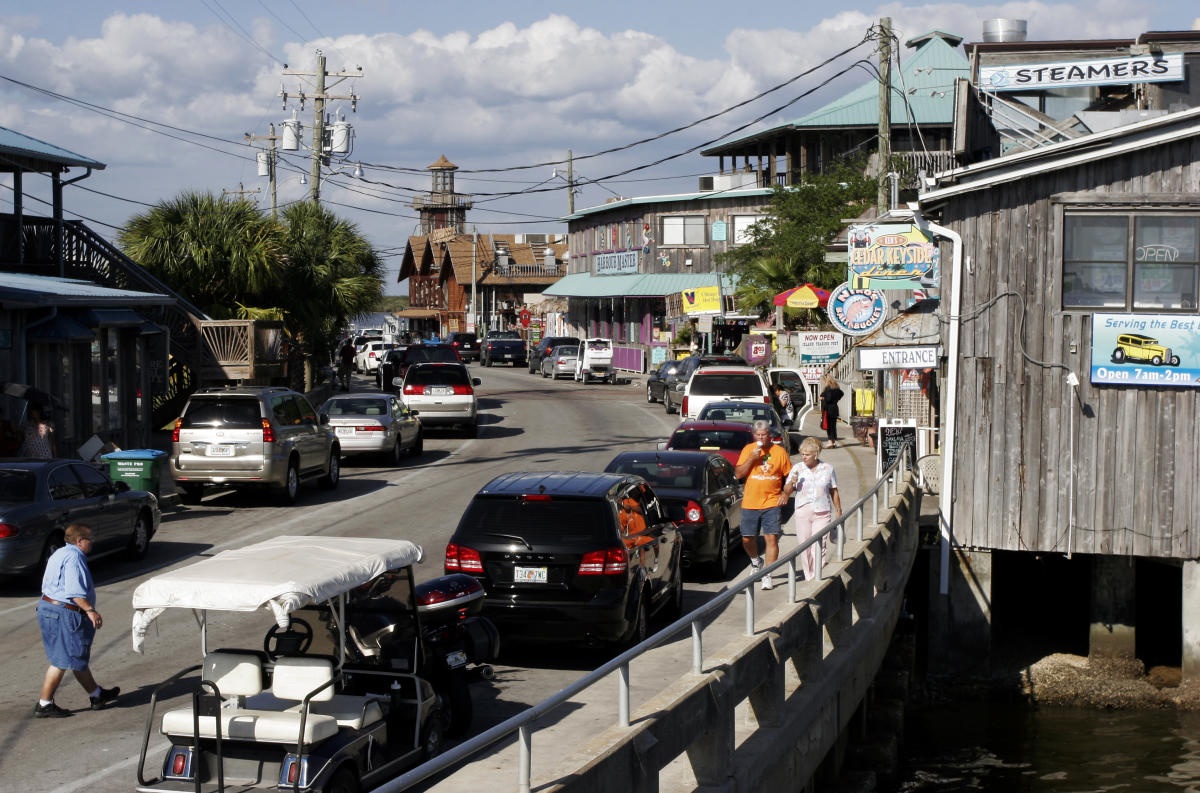
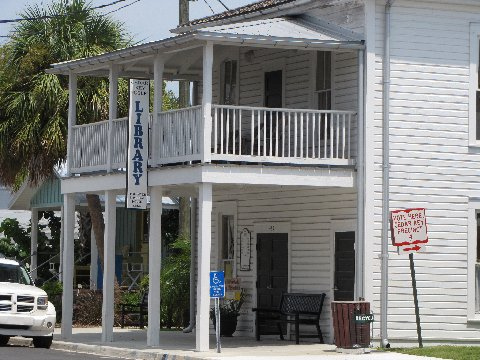
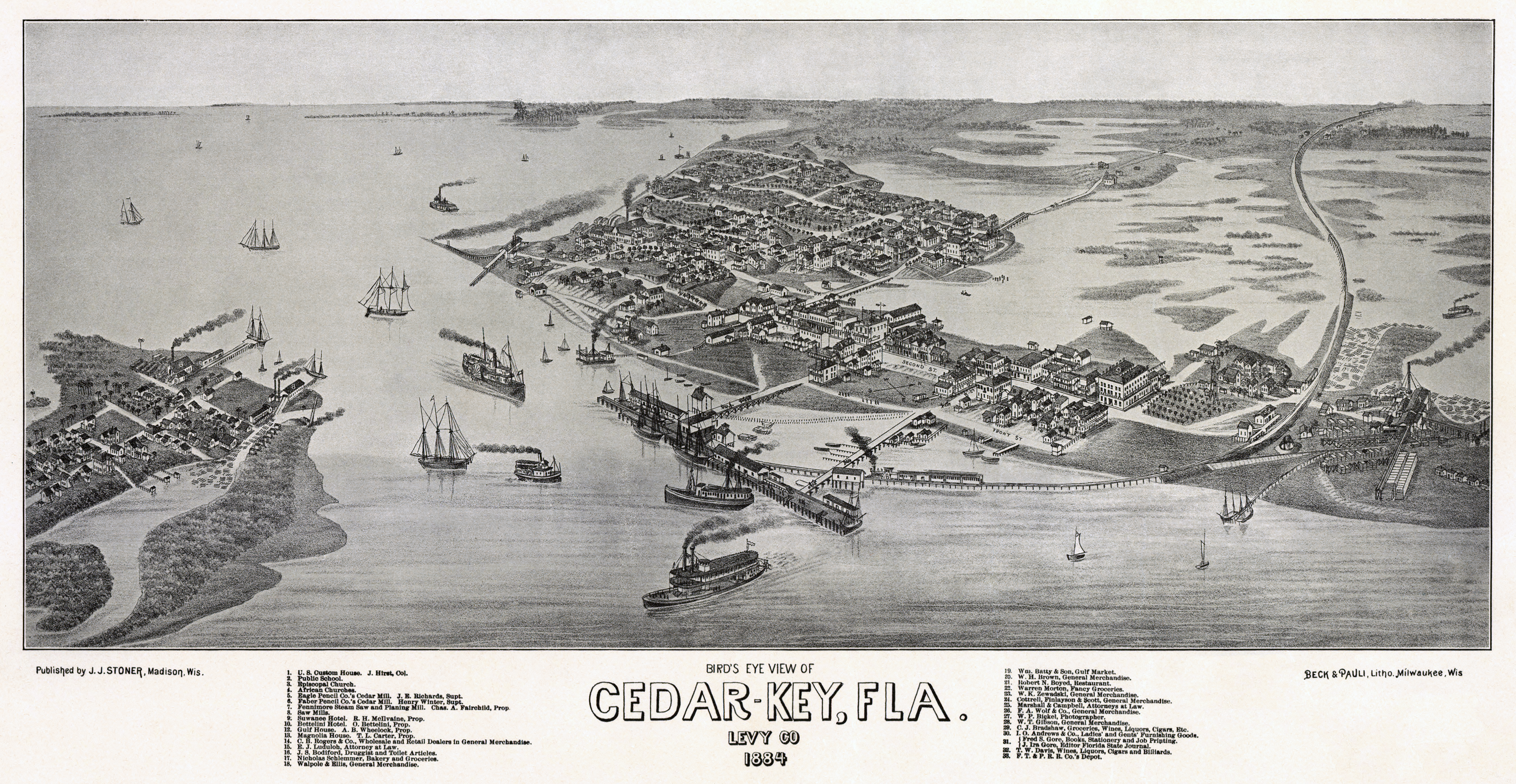
Cedar Key is a small coastal city on the Gulf of Mexico in Levy County, Florida, with a year-round population of roughly 700 residents. Tucked at the end of a string of mangrove-edged keys, it has the feel of an old-Florida fishing village, with weathered clapboard cottages, working docks, and a slow pace that contrasts with the busier beach towns to the north and south. The community has long been associated with commercial fishing, particularly clam harvesting and oyster processing, and the surrounding waters form the heart of the state's largest shellfish-producing bay. Cedar Key sits about 60 miles southwest of Gainesville, the nearest major city, and roughly 2.5 hours northwest of Tampa, making it a natural stop for travelers exploring Florida's Nature Coast.
Just offshore, the Cedar Keys National Wildlife Refuge protects a chain of small, low-lying barrier islands reachable by a short boat ride from the city marina. The refuge is a recognized destination for birdwatchers, paddlers, and photographers, with rookeries, salt marshes, and quiet beaches that feel a world away from the developed Gulf coast. Guided boat tours, kayak rentals, and small ferry services to Atsena Otie, Seahorse, and Snake Key are available seasonally through local outfitters.
Back in town, the Cedar Key Museum State Park preserves the 19th-century home of St. Clair Whitman, one of the area's pioneer settlers, along with Native American artifacts recovered from regional archaeological sites. The small museum offers a concise introduction to the human and natural history of the Cedar Keys, from prehistoric shell mounds to the lumber and railroad era that once made this a busier port.
A short drive east toward Chiefland, about 40 minutes inland, brings visitors to Manatee Springs State Park, where a first-magnitude spring pours clear water into the Suwannee River. The park is popular for swimming, snorkeling, scuba diving, and wildlife watching, and it is one of the most reliable places in Florida to see West Indian manatees during the cooler months. To the north of Cedar Key, the Lower Suwannee National Wildlife Refuge extends the network of protected habitat along the river's lower reaches, with hiking trails, paddling routes, and a corresponding richness of bird life.
Cedar Key's combination of small-town character, protected natural surroundings, and proximity to some of north-central Florida's most distinctive state and national wildlife areas gives it an unusual appeal. For visitors who want a quiet, scenic Gulf coast base with easy access to paddling, wildlife viewing, and historic small-town streets, the city offers a setting that larger beach destinations cannot easily match, and a steady rhythm of seasonal travel that short-term rental owners can plan around with confidence.
Want to know if a property in Cedar Key is a good investment?
Enter an address to get instant revenue potential and comps.