
Carbondale, Colorado
Want to see how Carbondale compares to other top cities in Colorado? Explore all city regulations in Colorado. →
Carbondale, CO
Challenging To Investors
STR Regulations for Carbondale, Colorado
Executive Summary
Short-term rentals ARE ALLOWED in Carbondale, CO, but with significant restrictions and regulatory requirements. The town operates a limited licensing program that allows STRs primarily for owner-occupied primary residences and properties within the Historic Commercial Core (HCC) zone district. Non-owner occupied properties outside the HCC zone are not eligible for new licenses, making Carbondale a restricted STR market with limited expansion opportunities.
What do Airbnb hosts actually earn in Carbondale?
Carbondale hosts earn a median $40,565/year with $316 ADR and 58% occupancy.
Top performers pull in $61,281+ per year.
See the full Carbondale market breakdownOverview: STR Permissibility in Carbondale
Carbondale permits short-term rentals through a structured licensing program established in 2022. STRs are explicitly allowed but heavily regulated, with licenses issued only to:
- Property owners for their primary residence (minimum 183 days/year occupancy)
- Properties located within the Historic Commercial Core (HCC) zone district
The program is intentionally restrictive, with no new licenses available for non-owner occupied properties outside the HCC zone. This regulatory approach aims to balance economic opportunities for residents with community housing concerns.
How to Start a Short-Term Rental Business in Carbondale
Step 1: Determine Eligibility
- Primary Residence Route: Confirm you can establish the property as your primary residence (183+ days/year)
- HCC Zone Route: Verify property location within Historic Commercial Core zone district
- Review HOA/covenant restrictions (town does not enforce private agreements)
Step 2: Complete Online Registration
- Visit the MUNIRevs platform: **carbondale.munirevs.com**
- Click "Go" button for New Users Registration
- Enter email address and follow email instructions
- Create user profile and continue to business profile
- Platform Support: MUNIRevs provides unlimited phone and email support Monday-Friday, 8 AM-5 PM
- Phone: 1-888-751-1911
- Email: str.support@govos.com
Step 3: Submit Required Documentation and Schedule Inspection
- Upload all required documents (see documentation list below)
- Pay applicable fees
- Schedule in-person inspection with Building Department
- Property owner or manager must be present during inspection
Step 4: Ongoing Compliance
- Obtain license number for all advertisements
- Designate local contact person with 24/7 availability
- File monthly tax returns
- Maintain compliance with all operational requirements
Required Documents, Permits, Licenses, and Guidelines
Required Documentation
-
Proof of Ownership
- Deed
- County Assessor's page with applicable identification
- Documents showing controlling ownership in trust or LLC
-
Proof of Primary Residence (if applicable)
- Driver's license
- Voter registration
- Tax returns
- Vehicle registration
-
Life Safety Photos
- Egress windows in each bedroom
- Smoke/CO2 alarms per current building code
- Fire extinguisher near cooking appliances (interior and exterior)
Required Licenses and Permits
- Short-Term Rental License (primary requirement)
- Sales Tax/Lodging Tax License (through same MUNIRevs platform)
Fees Structure
Owner-Occupied Properties:
- $100 per bedroom
- Maximum $400 per license
Non-Owner Occupied Properties:
- $175 per bedroom
- Maximum $875 per license
- Note: New non-owner occupied licenses only available in HCC zone
Inspection Requirements
- In-person inspection required before license issuance
- Property owner or manager must be present
- All life safety requirements must be verified
- Inspection conducted by Building Department staff
Specific Regulations for Short-Term Rentals
Occupancy Limits
- Maximum occupancy: Two persons per bedroom plus two additional persons per property
- Children under age five: Do not count toward occupancy limits
- Example: 3-bedroom property = 8 maximum occupants (6 from bedrooms + 2 additional)
Operational Requirements
-
Local Management Required
- 24/7 designated local contact person
- Must respond within 60 minutes to emergencies/complaints
- Must be able to respond in person as necessary
- Contact information on file with Town
-
Advertisement Requirements
- License number must be displayed in all advertisements
- All platforms must include license information
-
Property Use Restrictions
- No STRs allowed for units part of Community Housing Program
- Community Housing units explicitly ineligible
-
License Transfer
- Licenses are not transferable or assignable
- Issued to specific property owner, not the property itself
Tax Requirements
-
STR Tax Rate: 6% of gross rental price
- Inclusive of all service charges and fees
- Additional to 2% lodging tax
- Additional to 3.5% sales tax
- Total tax burden: 11.5%
-
Filing Requirements
- Monthly filing required
- Due on 20th of month following reporting period
- If 20th falls on weekend/holiday, due next business day
- First filing period: April 2023 (due May 20)
-
Filing Frequency Based on Tax Liability
- Monthly filing: If collecting $300+ in monthly taxes
- Quarterly filing: If collecting $10.01-$299.99 monthly
- Annual filing: If collecting $10 or less monthly
-
Late Filing Penalties
- $25 non-filer charge per missing return
- $10 late filer fee
- 10% penalty on delinquent taxes
- 1.5% monthly interest on unpaid amounts
- No vendor fee allowed
Geographic Restrictions
- Primary residences: Property owner must reside 183+ days annually
- HCC Zone: Only non-owner occupied properties allowed in Historic Commercial Core
- No expansion: No new non-owner occupied licenses outside HCC zone
- HOA/Covenant compliance: Property owner responsible for private restrictions
State and County Regulations
Colorado State Level
The provided content focuses on Carbondale municipal regulations. State-level STR regulations may apply but are not detailed in the source materials.
Garfield County
Garfield County regulations are not detailed in the provided content. Properties within Carbondale town limits follow municipal regulations, not county requirements.
Pitkin County (For Reference Only)
Note: Pitkin County regulations apply only to unincorporated areas, not Carbondale town limits
Unincorporated Pitkin County STR Regulations (for context only):
- License required for STRs in unincorporated areas
- 4-night minimum / 120-night maximum stay requirements
- Historical activity requirement: Property must have STR history between May 11, 2017 - May 11, 2022
- Tiered fee structure based on assessor market value and rental nights
- Platform: SagesGov licensing system
- Contact: STR Line 970-429-1858, STR@pitkincounty.com
Contact Information
Primary STR Licensing Authority
Town of Carbondale
- Address: 511 Colorado Ave, Carbondale, CO 81623
- Phone: 970-963-2733
- Fax: 970-963-9140
- Town Hall Hours: Monday-Friday, 8 AM - 5 PM
Specific Contacts
Town Clerk (STR Tax License)
- Phone: 970-510-1206
- Email: jmarkham@carbondaleco.net
MUNIRevs Platform Support
- Phone: 1-888-751-1911
- Email: str.support@govos.com
- Hours: Monday-Friday, 8 AM - 5 PM
- Platform: carbondale.munirevs.com
Building Department
- Handles STR inspections and life safety compliance
- Contact through main town number: 970-963-2733
Online Resources
- STR License Application: carbondale.munirevs.com
- Town Website: www.carbondalegov.org
- Municipal Code: library.municode.com/co/carbondale/codes/municipal_code
Source Links
-
Carbondale STR License Information: www.carbondalegov.org/i_want_to/apply_for/short_term_rental_license.php
-
Carbondale STR Tax FAQ: carbondalegov.org/departments/finance/short-term_rental_tax-faq.php
-
Carbondale STR Tax Online Filing: carbondale.munirevs.com
-
Carbondale Board of Trustees STR Ordinance Update: carbondalegov.diligent.community/document/3c97026b-451f-4d01-888a-d5f98acf04b6/
-
Pitkin County STR Information (for unincorporated areas reference): pitkincounty.com/1431/Short-Term-Rentals
-
Carbondale Municipal Code: library.municode.com/co/carbondale/codes/municipal_code
Important Note: This guide is based on regulations effective as of the provided source materials. STR regulations are subject to change. Investors should verify current requirements with the Town of Carbondale before making investment decisions. The limited availability of new licenses and restrictive geographic requirements make Carbondale a challenging market for new STR investments.
Next step
Found a property in Carbondale?
Paste any address and get estimated revenue, cash-on-cash return, and comparable STR performance in under 5 minutes. 3 free analyses per day.
Free brief
Get the free Carbondale STR Investment Brief
Revenue data, top neighborhoods, seasonal trends, and the key regulations for Carbondale, Colorado in one email.
Carbondale
Market Saturation Score
Photos of Carbondale


Overview of Carbondale
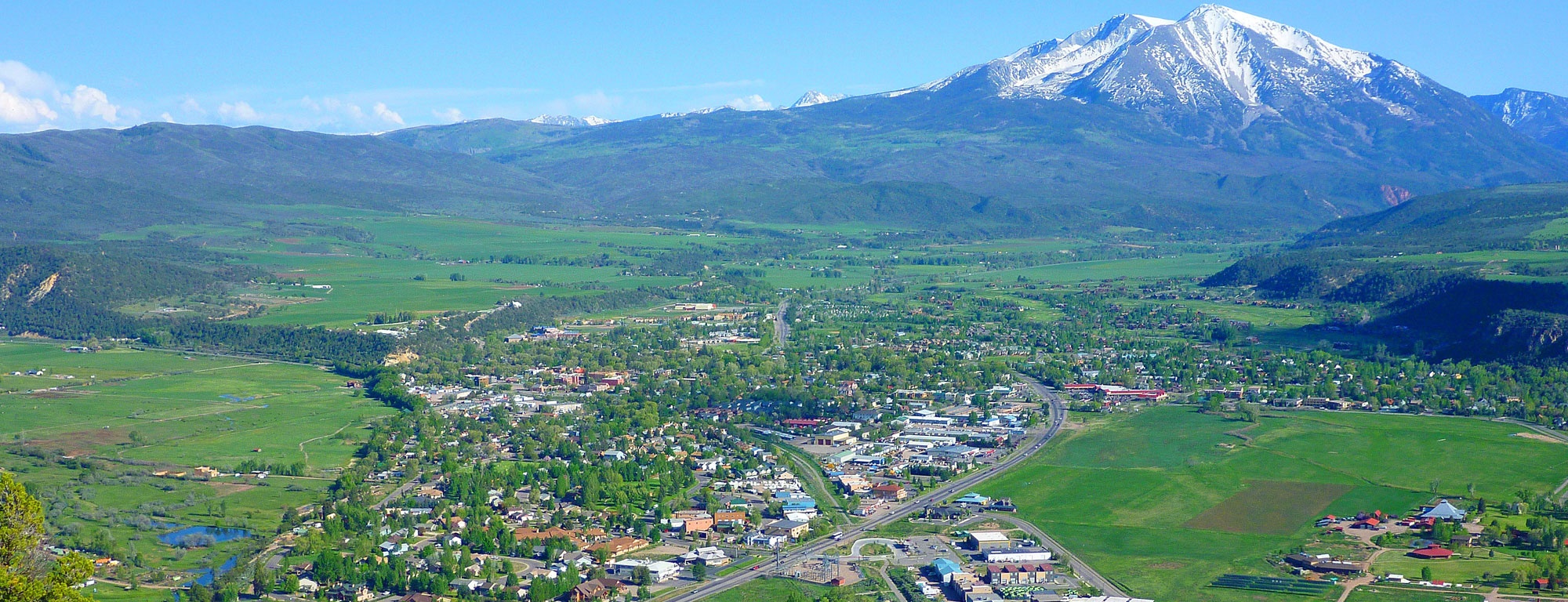
Carbondale sits in the Roaring Fork Valley of western Colorado, in Garfield County, with a population of roughly 6,000 to 7,000 residents. Tucked between the well-known resort town of Aspen to the southeast and the historic hot-springs town of Glenwood Springs to the north, the community has cultivated a laid-back, creative character that blends ranching roots with an active arts scene and an outdoorsy population. It functions as a quieter, more affordable gateway to the wider Roaring Fork Valley, and lies approximately 160 miles west of Denver via Interstate 70.
The first thing most visitors notice on approach is the twin-pyramid silhouette of Mount Sopris, a 12,965-foot peak that rises dramatically just south of town. The mountain dominates the local skyline and offers experienced hikers and climbers a genuine alpine objective, with several trailheads reachable in about 20 to 30 minutes from downtown Carbondale. It has become something of a symbol of the community itself, appearing in local art and on the town's branding.
To the north, Glenwood Springs is roughly a 15-minute drive up the valley and is best known for the historic Glenwood Hot Springs Pool, long promoted as the world's largest hot spring pool, along with the Glenwood Caverns Adventure Park perched in the hills above town. The combination of warm mineral pools, a riverfront downtown, and family-friendly attractions makes Glenwood Springs one of the most-visited day-trip destinations in the region.
Carbondale also sits on the edge of the vast White River National Forest, which covers much of the surrounding mountains and includes the Maroon Bells-Snowmass Wilderness to the southeast. Within about 30 to 40 minutes of town, visitors can access trailheads for hiking, mountain biking, and winter snowshoeing, while the Roaring Fork River winds right through the community and supports fly fishing and tubing in the warmer months. About 30 miles to the southeast, Aspen anchors the upper valley with its world-renowned ski slopes, summer festival calendar, and the high-alpine scenery of the Maroon Bells.
For short-term-rental investors, Carbondale offers a compelling combination of small-town atmosphere, year-round outdoor recreation, and proximity to two of Colorado's most-visited resort destinations. Its position in the Roaring Fork Valley gives it strong appeal in both winter ski season and summer hiking and festival months, while generally offering more affordable accommodation than its Aspen neighbor just up the road. The town functions comfortably as either a destination in its own right or a quieter home base for travelers exploring the wider Aspen-Glenwood corridor.
Want to know if a property in Carbondale is a good investment?
Enter an address to get instant revenue potential and comps.