
Kirkwood, California
Want to see how Kirkwood compares to other top cities in California? Explore all city regulations in California. →
Kirkwood, CA
Generally Investor Friendly
STR Regulations for Kirkwood, California
Overview: STR Status in Kirkwood, CA
Short-term rentals are explicitly allowed in Kirkwood, California, located within Alpine County. Kirkwood operates under Alpine County's comprehensive residential short-term rental regulations (Chapter 18.73). The county has established a structured framework that permits STRs while implementing safeguards to balance tourism with neighborhood integrity. This regulatory environment provides clear pathways for legal operation, making Kirkwood a viable market for STR investment.
What do Airbnb hosts actually earn in Kirkwood?
Kirkwood hosts earn a median $38,184/year with $396 ADR and 41% occupancy.
Top performers pull in $49,028+ per year.
See the full Kirkwood market breakdownStarting a Short-Term Rental Business in Kirkwood
Application Process
Kirkwood STRs operate under Alpine County's permitting system through the Iworq online portal. The process involves:
- Pre-Application Assessment: Verify your property meets zoning requirements and isn't within restricted areas
- Document Preparation: Compile all required forms and supporting documents
- Online Application: Submit through the Iworq system at alpinerentals.portal.iworq.net
- Fee Payment: Pay annual registration fees electronically
- Compliance Verification: Ensure all standards are met before operation begins
Timeline Considerations
Applications can be submitted year-round, but licenses are issued for the period beginning July 1st and concluding June 30th of the following year. Applications made during the year receive prorated licenses.
Required Documents, Permits, and Licenses
Primary Permits and Registrations
1. STR Registration Form
- Official county registration document
- Property-specific details and ownership verification
- Available through Alpine County website
2. Short-Term Rental Standards Compliance Agreement
- Acknowledgment of all regulatory requirements
- Life safety measures commitment
- Operational standards agreement
3. Alpine County Business License
- Required unless managed by licensed property management company
- Business operation authorization
- Annual renewal requirement
4. Transient Occupancy Tax (TOT) Registration
- Tax collection and remittance authorization
- Required unless using licensed property management company
- Annual reporting obligations
Supporting Documentation
5. Property Owner Authorization
- Required if owner's signature not on license registration
- Blanket authorization form available
- Ensures proper legal representation
6. Fictitious Business Name Registration
- Required if business name doesn't include owner's surname
- County clerk filing requirement
- Additional registration cost
Specific Regulations for Short-Term Rentals
Operational Standards
Life Safety Requirements:
- Operating smoke detectors and carbon monoxide detectors per state law
- At least one functioning fire extinguisher in easily accessed location
- 24/7 emergency contact information posted conspicuously
- Compliance with California Fire Code requirements
Property Standards:
- STR may only operate within legally established residential units
- No additional parking beyond residential use requirements
- One non-illuminated sign permitted (maximum 6 square feet)
- Address placard compliance with Chapter 12.04 and California Fire Code
Zoning and Location Restrictions
Prohibited Areas:
- Accessory dwelling units (ADUs) or junior ADUs unless built prior to 2017
- Properties within 100 feet of existing licensed STRs in residential neighborhoods
- East Slope overlay district (limited to 35 total licenses)
Permitted Zones:
- Any zone allowing residential use
- Compliance with all chapter requirements mandatory
- Kirkwood Specific Plan and Bear Valley Master Plan areas exempt from notification requirements
Noise and Nuisance Control
Noise Limitations:
- Compliance with Section 18.68.090 standards at all times
- Three or more noise complaints within 12 months requires approved monitoring system
- Quiet hours: 9 PM to 7 AM, voices kept to average conversation levels
- Emergency contact must respond to nuisance complaints within one hour
Wildlife and Environmental:
- East Slope properties must install wildlife-proof waste receptacles within 6 months
- Solid waste cannot become nuisance or be left unsecured from wildlife
- Outdoor fires limited per Chapter 8.16
- Violations prohibit future outdoor burning except propane grills
Guest Management Requirements
Interior Posting Requirements:
- Managing party name and 24/7 contact number
- Maximum occupancy limits
- On-site parking spaces and seasonal snow removal rules
- Trash pickup schedule and bear box requirements
- Noise and conduct expectations
- County code violation consequences
Pet Regulations:
- Guest pets must comply with Section 6.04.160 confinement requirements
- Wildlife protection measures mandatory
Financial Obligations
Fees and Taxes:
- Annual non-refundable registration fee (amount set by Board of Supervisors)
- Transient Occupancy Tax collection and remittance
- Payment confirmation required by April 1st annually
- Administrative fines for violations ($500-$2,000 plus potential license revocation)
Tax Compliance:
- TOT payment verification by Community Development Department
- Nonpayment constitutes chapter violation
- County enforcement actions available for tax violations
Licensing Limitations and Restrictions
Cap Restrictions:
- East Slope overlay district limited to 35 licenses
- 100-foot buffer requirement from existing STRs
- Properties registered before March 17, 2020, grandfathered if applied before July 1, 2021
License Transferability:
- Licenses non-transferable and tied to specific owner and property
- Automatic expiration upon property sale or transfer
- Personal license valid only for original applicant
Exemptions Available:
- Up to 5 nights per calendar year (TOT still required)
- One bedroom in owner-occupied residence for maximum 3 guests (TOT still required)
Enforcement and Penalties
Progressive Fine Structure
- First violation: Up to $500 administrative fine
- Second violation: Up to $750 administrative fine
- Third violation: Up to $1,000 administrative fine
- Fourth violation: Up to $2,000 fine plus license revocation and future prohibition
Immediate Action Triggers
- Operating without valid license: $2,000 fine plus daily accrual
- Active compliance orders or citations: license denial
- License revocation for fraud, violations, or cessation of use
- Ten-day notice required before license revocation
Successive Violation Definition
Separate events and/or calls within any 24-month period. Legal nonconforming status rescinded upon ownership change, non-renewal, revocation, or cessation.
Contact Information
Primary Authority
Alpine County Community Development Department
- Website: alpinecountyca.gov
- STR Portal: alpinerentals.portal.iworq.net
- Location: Markleeville, CA 96120
- Application System: Iworq Online Permitting System
Payment Processing
ACI Payments, Inc.
- Website: acipayonline.com (product ID: 1086488907570277988557854807330908)
- Purpose: Electronic fee payments for registration and taxes
Additional Resources
- Fire Department: Emergency contact required for each property
- Sheriff's Department: Noise and nuisance enforcement
- Road Conditions: alpinecountyca.gov/176/Road-Department
Source Links
- Alpine County STR Ordinance: www.alpinecountyca.gov/DocumentCenter/View/6876/STR-Code-update_BOS-approved_41624
- County STR Information: alpinecountyca.gov/478/Residential-Short-Term-Rental
- Iworq Application Portal: alpinerentals.portal.iworq.net/portalhome/alpinerentals
- GoSummer Market Analysis: www.gosummer.com/vacation-rental-management/kirkwood-california
- Electronic Payment Portal: www.acipayonline.com/pc_entry_standard.jsp?productId=1086488907570277988557854807330908
Investment Considerations for Kirkwood Market
Market Dynamics
Kirkwood's STR market demonstrates strong seasonality with peak demand during winter ski season (December-February) and summer recreational months (June-August). The area's remote mountain location and world-class ski resort create consistent tourism demand, while the regulatory framework provides clear compliance pathways.
Operational Challenges
The high fire hazard severity zone designation requires enhanced safety measures and potentially higher insurance costs. Wildlife interaction, particularly bear activity, necessitates specific waste management solutions. The 100-foot buffer requirement and East Slope cap of 35 licenses may limit property availability in prime locations.
Financial Planning
Registration fees, compliance costs, and ongoing operational expenses must be factored into investment analysis. The requirement for 24/7 emergency contact availability may necessitate professional management services, particularly for out-of-area owners. Transient Occupancy Tax compliance adds administrative complexity but provides established revenue framework for local government.
This comprehensive regulatory environment, while requiring careful compliance, provides the structured legal foundation necessary for sustainable STR investment in Kirkwood's unique mountain resort market.
Next step
Found a property in Kirkwood?
Paste any address and get estimated revenue, cash-on-cash return, and comparable STR performance in under 5 minutes. 3 free analyses per day.
Free brief
Get the free Kirkwood STR Investment Brief
Revenue data, top neighborhoods, seasonal trends, and the key regulations for Kirkwood, California in one email.
Kirkwood
Market Saturation Score
Photos of Kirkwood

Overview of Kirkwood
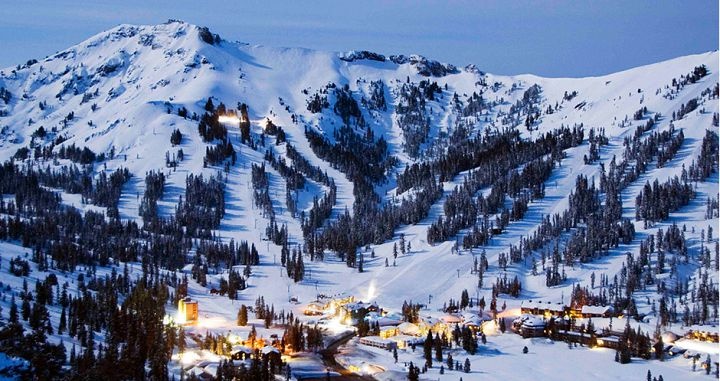
Kirkwood is a small unincorporated resort community tucked into the central Sierra Nevada in Alpine County, California, one of the least-populated counties in the state. With a year-round population of only a few hundred residents, the community swells seasonally with visitors drawn by its high-elevation setting and outdoor recreation. It is best known as the home of Kirkwood Mountain Resort, a major ski area that also draws hikers and mountain bikers in summer. The community sits roughly 35 miles south of South Lake Tahoe and approximately 100 miles southeast of Sacramento, positioned along a scenic stretch of Highway 88 known as the Carson Pass corridor.
The centerpiece of the area is Kirkwood Mountain Resort itself, a sprawling ski and snowboard destination that receives some of the heaviest snowfall in the western United States. The resort offers more than 2,000 acres of skiable terrain and transitions in warmer months to lift-served hiking and mountain biking, making it the primary engine of the local visitor economy in every season.
About 15 miles southeast of Kirkwood, in the small county seat of Markleeville, visitors will find Grover Hot Springs State Park, a well-loved Sierra hot springs destination. The park features a naturally heated swimming pool and a wading pool fed by mineral springs, along with shaded campsites and short nature trails, offering a relaxing counterpoint to the high-alpine activity of the resort itself.
North of Kirkwood, the road climbs through Carson Pass, a roughly 8,600-foot mountain crossing that marks the boundary of the Mokelumne Wilderness. The surrounding area, including the broad meadows of Hope Valley and the shorelines of Caples Lake and Silver Lake right beside the highway, offers some of the most accessible alpine scenery in the Sierra, with fall-color viewing, fishing, and easy trailheads. Lake Tahoe itself is about a 45-minute drive north, opening up the entire South Shore's dining, beaches, and gaming to day-trippers based in Kirkwood.
Kirkwood is a compelling base for short-term rentals precisely because it pairs a true four-season resort with the quiet, unspoiled character of a high-country alpine community. Guests can spend the day on Kirkwood's slopes or trails, soak in hot springs nearby, and still reach Lake Tahoe or Hope Valley in under an hour, all while staying in a setting that feels far removed from the more crowded resort villages to the north.
Want to know if a property in Kirkwood is a good investment?
Enter an address to get instant revenue potential and comps.