
Hopland, California
Want to see how Hopland compares to other top cities in California? Explore all city regulations in California. →
Hopland, CA
Challenging To Investors
STR Regulations for Hopland, California
Purpose: To help investors and operators assess, enter, and remain compliant with short‑term rental (STR) regulations that affect properties in Hopland (Mendocino County). Hopland is unincorporated; Mendocino County has primary zoning and permitting authority. Where local rules are still in development, this guide flags the gap and points you to the authoritative sources to verify current requirements before you invest.
Note on timing and scope: The most critical update is that the County is drafting an Inland STR Ordinance for adoption in 2025. Today, specific STR rules exist for coastal areas and the Town of Mendocino; inland standards are under development and not yet adopted. See “Links to Source Pages” at the end for the specific documents cited.
Overview: Are STRs Allowed in Hopland?
-
Allowed status by area:
- Coastal Zone: Yes, short-term rentals (also called “vacation home rentals” or VHRs) are addressed in Mendocino County’s Coastal Zoning Code (Division II). You must confirm whether STR is a permitted or conditional use in your parcel’s coastal zoning district and comply with any Coastal Development Permit (CDP) requirements and Operating Standards. [Coastal Zoning Code: Division II]
- Town of Mendocino: Yes, STRs are addressed in the Town of Mendocino Zoning Code (Division III). Confirm use status and any local permits/standards. [Town of Mendocino Zoning Code: Division III]
- Inland areas (including Hopland’s inland parcels): The County is drafting an Inland STR Ordinance for adoption in 2025. As of now, no adopted countywide inland STR ordinance or operating standards are posted. [Inland STR Ordinance page]
-
Permitting/Tax touchpoints expected:
- Zoning/use entitlement per area (Coastal CDP; Town standards; inland ordinance pending)
- Transient Occupancy Tax (TOT) registration and monthly returns with the County Treasurer‑Tax Collector
- Business License (if required by County practice) and possibly Fire/Environmental Health clearances, depending on property type and operations
Bottom line: You can likely operate an STR today if your property is in the coastal area or the Town of Mendocino (subject to local standards and any required permits). If your Hopland property is inland (non‑coastal, non‑Town), do not rely on coastal/Town rules for inland parcels; instead, track the 2025 Inland STR Ordinance and confirm with County staff before you launch.
What do Airbnb hosts actually earn in Hopland?
Hopland hosts earn a median $16,156/year with $223 ADR and 24% occupancy.
Top performers pull in $28,570+ per year.
See the full Hopland market breakdownHow to Start an STR Business in Hopland
Step 1 – Determine your parcel’s regulatory “area” (this dictates which rules apply):
- Identify whether the parcel lies within:
- The Coastal Zone; or
- The Town of Mendocino; or
- Inland (unincorporated, non‑coastal, non‑Town). Hopland includes both inland parcels and some coastal parcels near the Russian River; the “Inland STR Ordinance” will apply only to inland areas, while the coastal/Town codes address only those geographies.
- Use Mendocino County tools and maps:
- Zoning Lookup tool (County): County “Zoning Lookup” page (found under “How Do I… Other”). Use parcel APN or address to determine base zoning district and whether the parcel is in the coastal or Town overlay.
- Local Coastal Program maps/plans: See LCP resources under “Links” for coastal identification and any applicable Town Plan maps. [Mendocino Town Plan and Zoning Code; Coastal Element links]
Step 2 – Verify whether an STR/VHR is an allowed use on your parcel:
- Coastal Zone: Consult Division II (Coastal Zoning Code) and confirm STR permitted/conditional status for your coastal zoning district. Expect that a Coastal Development Permit (CDP) will be required for most STR conversions, with possible additional coastal/resource standards. [Coastal Zoning Code: Division II]
- Town of Mendocino: Consult Division III (Town Zoning Code) to confirm STR use status and any local permit requirements. [Town of Mendocino Zoning Code: Division III]
- Inland: No adopted STR ordinance yet. The County has published an “Inland Short-Term Rental (STR) Ordinance (2025)” web page noting the upcoming ordinance and a dedicated STR page. Monitor for draft and adopted text and Operating Standards. [Inland STR Ordinance page; County STR page]
Step 3 – Confirm permit pathways and standards:
- Coastal: Plan for a CDP, including submittal requirements in the coastal code and any Operating Standards for STRs (if codified in Division II or referenced materials). Expect public noticing and coastal consistency review. [Coastal Zoning Code: Division II]
- Town of Mendocino: Confirm whether a Town Use Permit or other local approval applies and review any STR Operating Standards in Division III or adopted Town ordinances. [Town of Mendocino Zoning Code: Division III]
- Inland: Await adoption; do not assume coastal/Town rules carry over to inland parcels.
Step 4 – Register for Transient Occupancy Tax (TOT) and obtain any required business license:
- Register your STR for TOT and set up monthly/quarterly remittance with the Mendocino County Treasurer‑Tax Collector. The business licenses page indicates County business licensing is handled centrally. Confirm whether an STR requires a separate Business License, and whether the TOT registration itself functions as the registration for STR operators.
- Sources and contacts: County Permits & Licenses hub; Treasurer‑Tax Collector for tax administration; business license contact in County Directory. [Business Licenses page; Treasurer‑Tax Collector department page; County Directory]
Step 5 – Safety and compliance clearances:
- Building/Fire: If you propose structural changes or intensified use, a Building Permit may be required. Confirm with the Building Division and local fire authority (e.g., Hopland Fire Protection District) whether any fire clearances or inspections are required.
- Environmental Health: For properties not served by public water/sewer, confirm with Environmental Health whether any onsite water/wastewater constraints or conditions apply to STR guests.
- Insurance and safety equipment: Even where not yet codified for inland areas, industry best practice is to maintain appropriate liability coverage and install/maintain smoke/CO detectors, fire extinguishers, address signage, and emergency contact information.
Step 6 – Operating plan and recordkeeping:
- Draft guest rules addressing occupancy, parking, noise, trash/recycling, and events. Keep logs of bookings and TOT remittances. Track guest communications in case of neighbor issues or code enforcement inquiries.
Step 7 – Launch:
- Publish listings after all entitlements, TOT registration, and any required licenses/inspections are complete. Maintain ongoing compliance with permitting conditions and operating standards. If you are inland and the ordinance is not yet adopted, do not operate until the County confirms your compliance path.
Required Documents, Permits, Licenses, and Guidelines (by Area)
Permitted use verification
- Zoning determination (Coastal/Town/Inland) via County “Zoning Lookup” tool. [Zoning Lookup page]
Coastal Zone
- Coastal Development Permit (CDP) for STR conversion/operation as may be required by Division II. [Coastal Zoning Code: Division II]
- Compliance with Division II STR use and operating standards (if codified); coastal resource protections may add conditions (e.g., hazards, viewshed, parking, signage).
- TOT registration with the County Treasurer‑Tax Collector; confirm Business License requirement. [Business Licenses page; Treasurer‑Tax Collector department page]
- Fire/Building clearances if structural changes or safety upgrades are triggered.
Town of Mendocino
- STR use approval as required under Division III; confirm whether a Use Permit or other local approval applies. [Town of Mendocino Zoning Code: Division III]
- Town operating standards (if any); adherence to parking, signage, and neighbor notice requirements specified in Town code/ordinances.
- TOT registration and any required County Business License.
- Fire/Building clearances as applicable.
Inland (unincorporated Hopland)
- Adopted Inland STR Ordinance (pending 2025). Until adoption, there is no codified set of inland STR rules. Monitor the “Inland STR Ordinance” page and “Short-Term Rentals” page for draft and final standards, permit requirements, and operating rules. [Inland STR Ordinance page; County STR page]
- TOT registration is required for lodging/transient stays; register with Treasurer‑Tax Collector. [Treasurer‑Tax Collector department page]
- Business License may be required; confirm with County business licensing. [Business Licenses page]
- Depending on the adopted ordinance, expect permit requirements, operating standards, and possibly caps/limits or caps on number of STRs.
State-level expectations (for all areas)
- Recording/clearing liens: If you finance with certain State CalHFA or HCD programs, CalHFA may record a Program Execution Agreement (no lien) but not a recorded lien; other programs may record a Notice of Default if conditions are violated—confirm with your lender and program documents.
- Accessible features: Where applicable, follow fair housing accessibility guidance and accommodate reasonable requests.
- Coastal permitting coordination: For coastal areas, ensure consistency with the California Coastal Act and County Local Coastal Program (LCP) policies during any development or changes in use. [LCP resources; Coastal Commission staff report]
Specific Regulations for Short-Term Rentals (City/County/State)
County-level (Mendocino County)
- Today: STR regulations exist only in the Coastal Zone and the Town of Mendocino. Inland rules are under active development for 2025 adoption. [Inland STR Ordinance page; County STR page]
- Coastal Zone (Division II): The Coastal Zoning Code sets use permissions and standards for coastal parcels; expect CDP requirements for STR conversions and operations, with coastal resource protections (hazards, viewshed, public access, parking, signage). [Coastal Zoning Code: Division II]
- Town of Mendocino (Division III): Town-specific zoning controls govern STR use, permits, and standards; review Division III for use status, approval type, parking, signage, and any operating standards. [Town of Mendocino Zoning Code: Division III]
- Taxes/Registration: TOT registration and returns are administered by the County Treasurer‑Tax Collector; licensing handled via the County’s Business Licenses portal. [Business Licenses page; Treasurer‑Tax Collector department page]
- Inland STR Ordinance (2025): Will establish standards for inland areas; the County’s webpage indicates a new web page exists for STRs and that the inland ordinance is forthcoming. Investors should plan for permit pathways, operating standards, and enforcement similar to coastal/Town frameworks. [Inland STR Ordinance page; County STR page]
State of California
- Transient Occupancy Tax: State law enables counties to levy and collect TOT from lodging operators. Operators must register, collect TOT from guests, and remit per local schedule. [Treasury-Tax Collector department page]
- Coastal Act/LCP: In the coastal zone, any development or change in use must be consistent with the Coastal Act and the County’s certified LCP. The Coastal Commission staff report and LCP resources outline the framework for LCP updates and coastal consistency. [LCP resources; Coastal Commission staff report]
- Fair housing and accessibility: While STRs are not subject to ADA as public accommodations, fair housing and reasonable accommodation principles apply; ensure accessible guest communication channels and accommodate reasonable requests when feasible.
- Financing-related notices: Depending on loan programs, recorded liens/notices may apply; confirm with your lender and program documents.
What’s missing for Hopland inland properties today
- There is no adopted inland STR ordinance posted yet. If your parcel is inland, do not assume coastal/Town rules apply. Wait for the 2025 ordinance or consult County staff to confirm interim expectations (if any) before you invest or operate. [Inland STR Ordinance page; County STR page]
Contact Information (Local Authority in Charge of STRs)
Planning & Building Services (PBS) – the lead County department for zoning and permits
- Planning Division (zoning/land use, coastal/Town standards)
- Main Campus Address: 501 Low Gap Road, Ukiah, CA 95482
- Email: webmaster@mendocinocounty.gov
- Phone/Department Directory: Use the County Directory to find Planning & Building Services contact numbers. [County Directory]
- Related PBS portals:
- “Short-Term Rentals” page (see link below) [County STR page]
- Ordinance Updates page (for zoning code amendments and the Inland STR Ordinance) [Ordinance Updates page]
Treasurer‑Tax Collector – TOT registration and administration
- Department Page: Treasurer‑Tax Collector (County Directory listing with phone/email) [Treasurer‑Tax Collector department page]
Business Licenses
- Business Licenses page (for County business licensing, including STR if required) [Business Licenses page]
Code Enforcement
- Code Enforcement Division (for complaints and compliance issues) [Code Enforcement page]
Hopland‑area Fire Protection
- Confirm which fire district serves your parcel (e.g., Hopland Fire Protection District). Contact information is typically available via the County Directory or the district’s official website.
Links to Source Pages
-
Mendocino County Planning & Building Services – Ordinance Updates (Inland STR Ordinance page) www.mendocinocounty.gov/departments/planning-building-services/ordinance-updates
-
Mendocino County – “Short-Term Rentals” web page (new page referenced by the Ordinance Updates page) www.mendocinocounty.gov/departments/planning-building-services/planning-division/short-term-rentals
-
Mendocino County – Permits & Licenses hub (Business Licenses) www.mendocinocounty.gov/business/permits-licenses
-
Mendocino County Treasurer‑Tax Collector department page www.mendocinocounty.gov/government/collections/treasurer-tax-collector
-
County Directory (Contact by Department/Staff) www.mendocinocounty.gov/services/business-directory
-
Coastal Zoning Code – Division II of Title 20 (Municode) library.municode.com/ca/mendocino_county/codes/code_of_ordinances?nodeId=MECOCO_TIT20ZOOR_DIVIIMECOCOZOCO_CH20.308DE_S20.308.035DED
-
Town of Mendocino Zoning Code – Division III of Title 20 (Municode) library.municode.com/ca/mendocino_county/codes/code_of_ordinances?nodeId=MECOCO_TIT20ZOOR_DIVIIIMETOZOCO#TOPTITLE
-
Coastal Element of the General Plan; Gualala Town Plan; Mendocino Town Plan www.mendocinocounty.org/government/planning-building-services/plans/gualala-town-plan www.mendocinocounty.org/government/planning-building-services/plans/mendocino-town-plan-and-zoning
Next step
Found a property in Hopland?
Paste any address and get estimated revenue, cash-on-cash return, and comparable STR performance in under 5 minutes. 3 free analyses per day.
Free brief
Get the free Hopland STR Investment Brief
Revenue data, top neighborhoods, seasonal trends, and the key regulations for Hopland, California in one email.
Hopland
Market Saturation Score
Photos of Hopland
Overview of Hopland
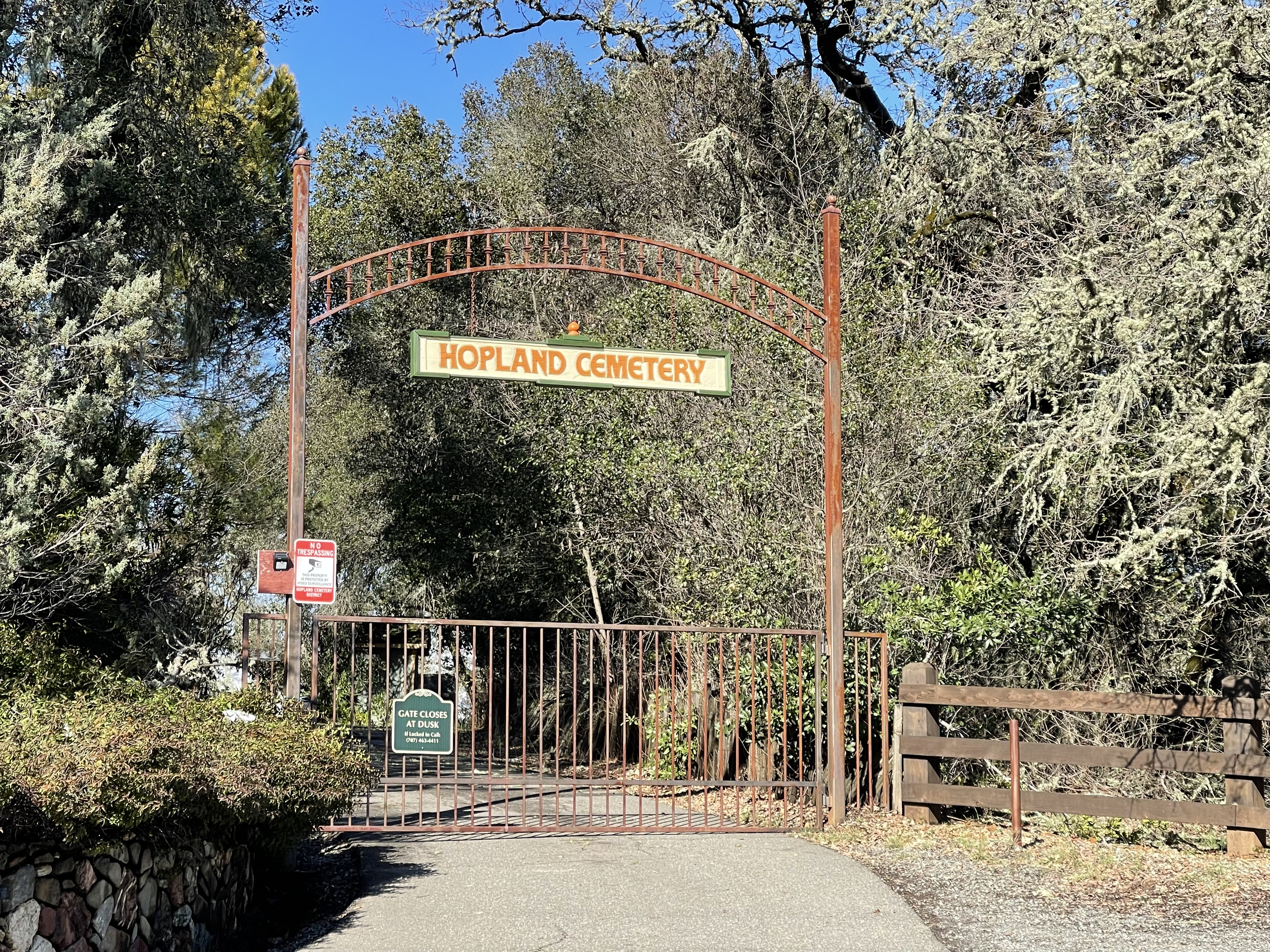
Hopland is a small unincorporated community in Mendocino County, California, situated along U.S. Route 101 in the northern reaches of Sonoma County's wine country borderlands. With a population of roughly 800 residents, the town has a quiet, rural character defined by oak-studded hills, working ranchland, and a handful of tasting rooms, country stores, and roadside inns. It serves as a useful gateway to Mendocino County's wine region, the Russian River corridor, and the redwood forests further west and north. The nearest major city is San Francisco, which sits approximately 100 miles to the south, a drive of just over two hours in light traffic, while Santa Rosa is about an hour south and the county seat of Ukiah lies roughly fifteen minutes to the north.
Just west of the highway, the Solar Living Center is one of Hopland's most distinctive attractions, showcasing sustainable design, permaculture gardens, and renewable energy demonstrations across several acres of grounds that are open to the public. Visitors can wander the demonstration gardens, view solar-powered installations, and attend occasional workshops, making it a stop that appeals to both eco-curious travelers and families passing through the valley.
A short drive northwest on Highway 101 and connecting roads brings travelers into the broader Mendocino County wine region, where rolling vineyards produce notable Pinot Noir, Cabernet Sauvignon, and Rhône-style varietals. Tasting rooms cluster in and around Hopland itself, as well as in nearby Philo, Boonville, and along the Highway 128 corridor that winds west toward the coast. Many of the area's smaller producers welcome visitors for intimate, reservation-based tastings that highlight the region's cool-climate terroir.
Further afield, outdoor enthusiasts find plenty to explore. Hendy Woods State Park, roughly forty-five minutes west along the Navarro River route, protects old-growth redwood groves with shaded hiking trails and a campground. To the north, the Mendocino National Forest offers miles of backcountry roads, seasonal wildflower displays, and access to remote stretches of the Eel River. Closer to town, the Russian River swings past Hopland's eastern edge, providing fishing holes, swimming spots, and picnic areas popular with locals during the warmer months.
For short-term rental owners, Hopland offers a compelling combination of small-town charm and strategic location. Its position along the main north-south route through Northern California's wine and redwood country gives visitors a natural home base for day trips in multiple directions, while its slower pace and scenic setting make it appealing to travelers seeking an alternative to busier wine destinations like Napa or Healdsburg. Whether guests arrive for a weekend of tasting, a redwoods road trip, or a quiet rural retreat, the community's accessibility and surroundings provide a steady mix of reasons to stay.
Want to know if a property in Hopland is a good investment?
Enter an address to get instant revenue potential and comps.