
Guadalupe, California
Want to see how Guadalupe compares to other top cities in California? Explore all city regulations in California. →
Guadalupe, CA
Challenging To Investors
STR Regulations for Guadalupe, California
Overview: Are short‑term rentals allowed in Guadalupe, CA?
Explicit answer: Yes—short-term rentals are allowed in Guadalupe, California, but they are regulated. The City adopted Ordinance No. 2022‑497 (effective after second reading on Jan 25, 2022), which establishes a two‑tier framework:
- Hosted STRs (owner lives on-site between 10 p.m. and 6 a.m.) are permitted subject to registration, business licensing, and Transient Occupancy Tax (TOT) compliance.
- Unhosted STRs (owner not present overnight) are permitted only with an Administrative Use Permit (AUP), are limited to 120 days of operation per calendar year, and must meet enhanced operational requirements (on‑site parking, security cameras, local contact, and stricter quiet/curfew rules).
The City identified 10–12 active STRs at the time the ordinance was adopted and expects growth; the rules aim to control nuisances while preserving the option to operate. The City also notes that a future ban is legally possible, and any such ban would likely include a reasonable wind‑down period to mitigate legal risk.
What do Airbnb hosts actually earn in Guadalupe?
Guadalupe hosts earn a median $44,345/year with $242 ADR and 72% occupancy.
Top performers pull in $64,434+ per year.
See the full Guadalupe market breakdownHow to start a short‑term rental business in Guadalupe
- Decide your operating model:
- Hosted STR: you reside on-site between 10 p.m.–6 a.m. each day of guest stays.
- Unhosted STR: you are not present overnight; you must obtain an AUP.
- Confirm zoning and property constraints with the Planning Department to ensure STR use is compatible with the property’s zoning and any homeowner association or recorded covenants.
- Apply for and obtain a City business license (Finance Department handles licensing and TOT).
- If unhosted, submit an Administrative Use Permit (AUP) application to Planning. Do not launch unhosted operations until the AUP is approved.
- Register your STR with the City as required by the ordinance.
- Set up Transient Occupancy Tax (TOT) collection and remittance. If a hosting platform (e.g., Airbnb/VRBO) collects and remits TOT on your behalf, you may not need to collect separately; confirm with Finance.
- Install required equipment and policies for compliance:
- For unhosted: on‑site parking only; exterior security cameras covering entries; designated local contact; quiet hours and outdoor‑space curfews.
- Build compliant house rules into your listing and guest communications (noise, parking, occupancy, camera disclosure, outdoor-use times).
- Maintain records for permits, business license, TOT filings, guest logs, and any AUP conditions.
- Use the City’s three‑month grace period (from ordinance effective date) to come into full compliance; for current operators, compliance should already be in place as the grace period has passed.
Required documents, permits, licenses, and guidelines
- City business license (Finance Department)
- STR registration with the City (as required by the ordinance)
- Transient Occupancy Tax (TOT) setup; confirm platform collection vs. owner collection
- For unhosted STRs: Administrative Use Permit (AUP) approved by Planning
- Compliance equipment/policies:
- On‑site parking only (unhosted)
- Exterior security cameras monitoring entries (unhosted)
- Designated local contact available to respond to issues (unhosted)
- Quiet hours: 10 p.m.–6 a.m.
- Outdoor‑space curfews: 9 p.m. Sun–Thu; 10 p.m. Fri–Sat (unhosted)
- Operational limits:
- Unhosted STRs: max 120 days of operation per calendar year
- No operator may hold/operate more than one STR within the City
- Grace period: three months from the effective date of the ordinance to achieve compliance (now passed; all operators should be compliant)
Specific regulations (city, county, and state)
City of Guadalupe (Ordinance No. 2022‑497)
- Definition and scope:
- Short‑Term Rental: residential rental for fewer than 30 consecutive days.
- Hosted vs. unhosted distinctions based on overnight presence (10 p.m.–6 a.m.).
- Allowed uses:
- Hosted STRs permitted with registration, business license, and TOT compliance.
- Unhosted STRs permitted only with an approved AUP and subject to operational limits and requirements.
- caps and limits:
- Unhosted STRs: 120 days per calendar year.
- One STR per operator within the City.
- Operational requirements (unhosted):
- On‑site parking only; no street parking for guests.
- Outdoor security cameras monitoring all entries.
- Designated local contact to liaise with law enforcement.
- Quiet hours: 10 p.m.–6 a.m.
- Outdoor‑space use curfews: 9 p.m. Sundays–Thursdays; 10 p.m. Fridays–Saturdays.
- Taxes:
- Collect and remit Transient Occupancy Tax (TOT) unless a hosting platform does so on your behalf.
- Enforcement and future policy:
- The City Council has the authority to tighten or ban STRs in the future. If a ban is enacted, a reasonable wind‑down period is advised to reduce legal risk.
Santa Barbara County context (for comparison)
- In 2017, Santa Barbara County banned short‑term rentals in unincorporated residential areas. Guadalupe is an incorporated city; its rules apply within city limits, and the County ban does not directly govern City operations.
State of California
- Transient Occupancy Tax: California municipalities may levy TOT on STRs; platforms often collect and remit. Hosts must ensure proper registration and tax compliance.
- General health and safety: STRs must comply with state and local fire, building, and safety codes.
- Platform regulations and tax remittance: Platforms such as Airbnb and VRBO are active in the region and frequently handle TOT collection; however, hosts remain responsible for compliance with all City requirements.
Contact information (local authority for STRs)
- City of Guadalupe (General/Admin): 805‑343‑1340 | info@ci.guadalupe.ca.us | cityofguadalupe.org
- City Administrator: 805‑343‑1340 | info@ci.guadalupe.ca.us
- City Clerk: 805‑343‑1340 | info@ci.guadalupe.ca.us
- Finance Department (Business License, TOT): 805‑343‑1340 | info@ci.guadalupe.ca.us
- Planning Department (AUP, zoning): 805‑343‑1340 | info@ci.guadalupe.ca.us
- Building Department (Permits/inspections): 805‑343‑1340 | info@ci.guadalupe.ca.us
- Police Department (non‑emergency): 805‑343‑4311
- Fire Department: 805‑343‑2114
Note: For direct emails beyond the general inbox, consult the City’s website contact listings. Municipal contact information can change; verify before formal filings.
Source links
- Santa Maria Times news coverage of Guadalupe’s STR ordinance: santamariatimes.com/news/local/govt-and-politics/guadalupe-adopts-stricter-rules-for-short-term-rentals/article_64029351-b0aa-5f55-ae4b-8df2af7fe774.html
- City of Guadalupe ordinance page (Ordinance No. 2022‑497): cityofguadalupe.org/ordinance-no-2022-497-regulating-short-term-rentals-1-25-2022/
- Direct PDF of Ordinance No. 2022‑497: cityofguadalupe.org/wp-content/uploads/2022/12/Ordinance-No.-2022-497-Regulating-Short-Term-Rentals-1-25-2022.pdf
This guide is informational and does not constitute legal advice. Investors should confirm current requirements with the City prior to acquisition or operation.
Next step
Found a property in Guadalupe?
Paste any address and get estimated revenue, cash-on-cash return, and comparable STR performance in under 5 minutes. 3 free analyses per day.
Free brief
Get the free Guadalupe STR Investment Brief
Revenue data, top neighborhoods, seasonal trends, and the key regulations for Guadalupe, California in one email.
Guadalupe
Market Saturation Score
Photos of Guadalupe


Overview of Guadalupe
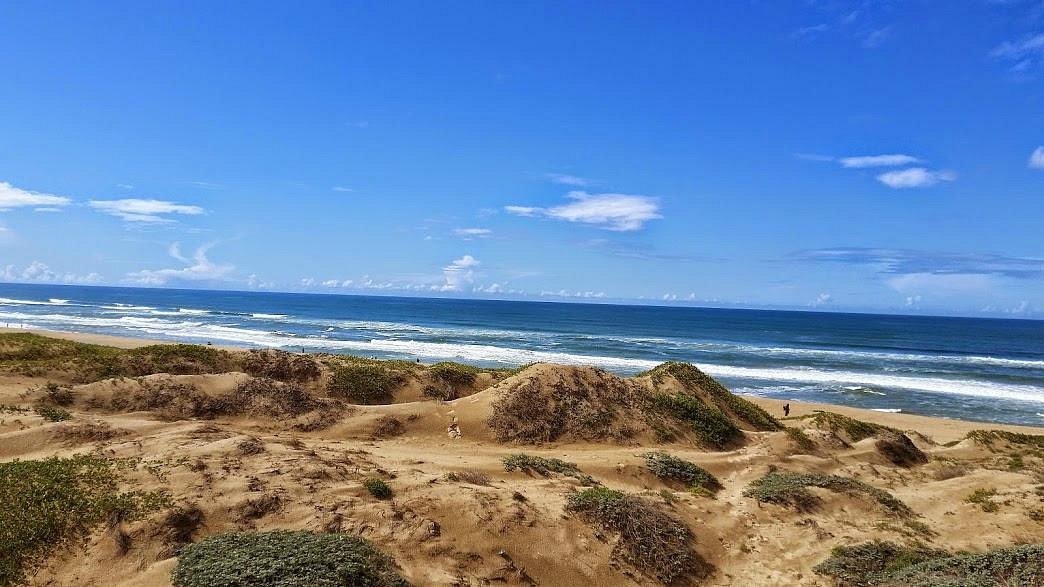
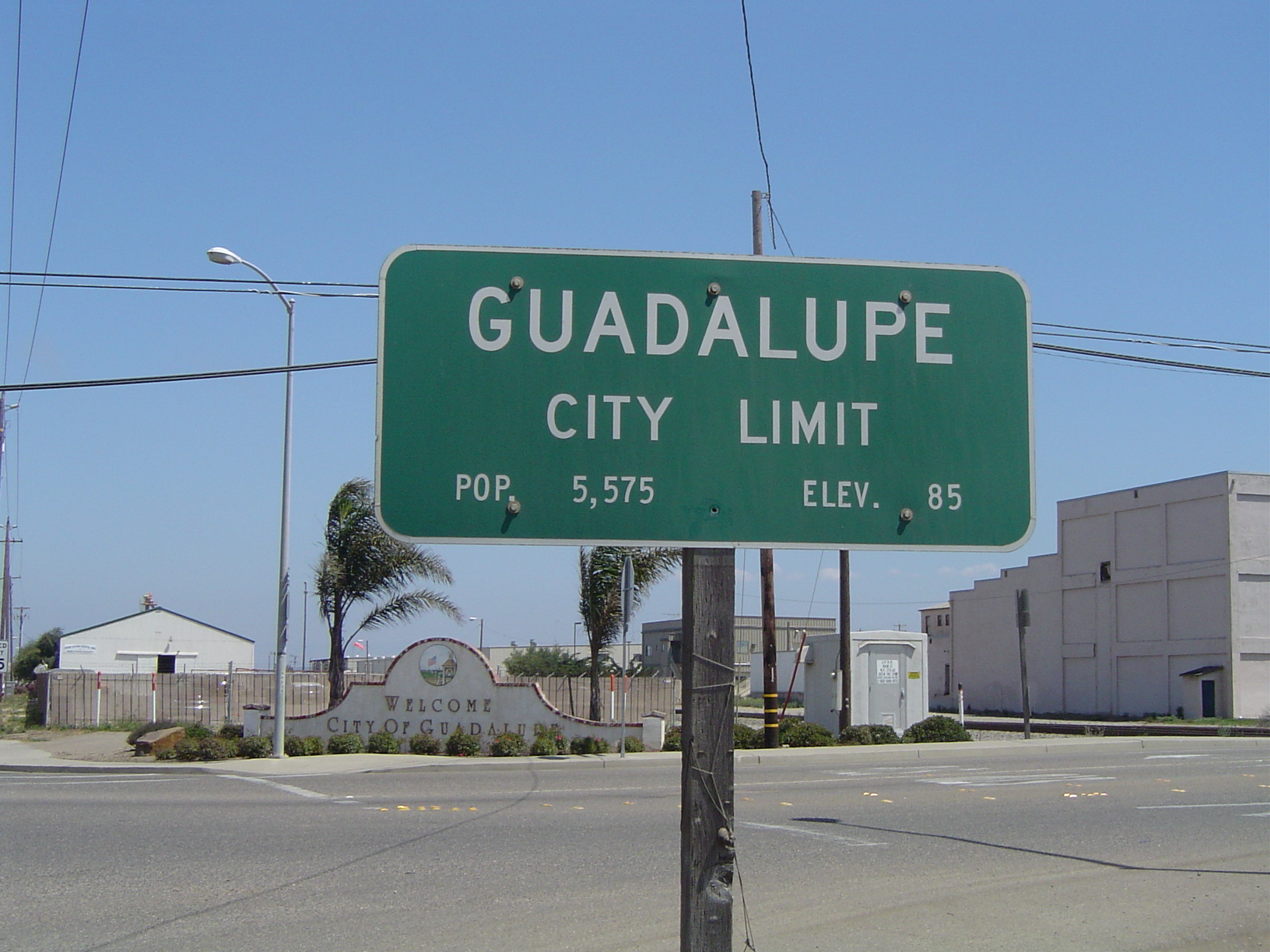
Guadalupe is a small coastal city in Santa Barbara County, California, situated on the state's Central Coast just inland from the Pacific Ocean. With a population of roughly 7,500 residents, it has the feel of a working agricultural town rather than a tourist destination, and its economy has long been tied to farming, particularly vegetables and berries grown in the fertile Santa Maria Valley. The city is best known as a gateway to the Guadalupe-Nipomo Dunes, one of the largest intact dune ecosystems on the West Coast, and it serves as a quieter, more affordable alternative to the busier beach towns of Pismo Beach and Avila Beach to the north. Guadalupe lies approximately ten to twelve miles south of Santa Maria, the nearest sizeable city, and roughly one hundred and fifty miles northwest of downtown Los Angeles, making it a practical stop for travelers road-tripping up or down the Pacific Coast Highway.
Just west of town, the Guadalupe-Nipomo Dunes stretch for miles along the coast and form the centerpiece of the area's natural appeal. The dunes protect a string of rare habitats, including strand vegetation, coastal wetlands, and several seasonal lakes, and the area is home to a wide variety of birdlife. The Guadalupe-Nipomo Dunes Center offers interpretive exhibits, guided walks, and information about the Chumash history of the area. The drive from downtown Guadalupe to the dunes takes only a few minutes, making it easy for visitors to pair a beach day with a nature stop.
A short drive north brings guests to the broader Central Coast wine country around Santa Maria and the Foxen Canyon Wine Trail, where cool marine influences produce highly regarded pinot noir and chardonnay. Vineyards and tasting rooms dot the rolling ranchland between Santa Maria and Los Olivos, and the scenic drive itself is part of the experience. The trip from Guadalupe to the heart of the wine trail is roughly thirty to forty minutes by car.
South of town, visitors will find the historic communities of Lompoc and the surrounding Santa Ynez Valley, while the larger city of Santa Barbara, with its Mission Santa Barbara, waterfront, and State Street, lies approximately seventy miles to the south. Closer in, the Rancho Guadalupe Dunes Preserve and the wide, often uncrowded beaches near the Guadalupe Beach approach offer a sense of open space that has become hard to find elsewhere on the California coast.
For short-term rental investors, Guadalupe offers a compelling combination of small-town character, agricultural authenticity, and proximity to several of the Central Coast's marquee draws. Its location places guests within easy reach of the dunes, the wine country, and the Pacific coast, while remaining a quieter and more affordable base than Pismo Beach or Santa Barbara. That balance of price point, accessibility, and surrounding attractions gives the city steady appeal for travelers seeking a more understated Central Coast experience.
Want to know if a property in Guadalupe is a good investment?
Enter an address to get instant revenue potential and comps.