
Coachella, California
Want to see how Coachella compares to other top cities in California? Explore all city regulations in California. →
Coachella, CA
Generally Investor Friendly
STR Regulations for Coachella, California
Executive Summary: STR Status in Coachella
Short-term rentals ARE explicitly allowed in Coachella, CA. Unlike several neighboring Coachella Valley cities that have banned or severely restricted STRs (such as Rancho Mirage, Cathedral City, and others with moratoriums), Coachella maintains a regulatory framework that permits short-term vacation rental operations. This makes Coachella one of the more viable STR markets within the Coachella Valley for real estate investors.
What do Airbnb hosts actually earn in Coachella?
Coachella hosts earn a median $80,699/year with $718 ADR and 49% occupancy.
Top performers pull in $137,756+ per year.
See the full Coachella market breakdownHow to Start a Short-Term Rental Business in Coachella
Step-by-Step Process
-
Obtain Legal Property Interest: Only individuals or entities with legal interest in the property (as recorded on county records/recorded grant deed) can be listed as owners on STR applications.
-
Apply for STR Permit: Submit a complete STR permit application to the City of Coachella. Note that submitting an application does not grant the right to rent or advertise for rent – you must receive active permit approval first.
-
Register for Transient Occupancy Tax (TOT): Complete TOT certificate application through the city's tax registration system.
-
Set Up Tax Remittance System: Establish monthly reporting and remittance procedures for both TOT and TBID (Tourism Business Improvement District) assessments.
-
Obtain Business License: While not explicitly detailed in the provided content, standard business licensing requirements typically apply.
Important Operational Notes
- No Transferability: STR permits are not transferable to another person, entity, assessor's parcel number, or property owner.
- Permits Run with Owner, Not Property: Issuance of permits does not give vested property rights and does not run with the land.
- Renewal Responsibility: It is the permit holder's responsibility to renew permits before expiration – no automatic renewal notifications are provided.
Required Documents, Permits, Licenses, and Guidelines
Primary Requirements
1. STR Permit
- Required for all short-term rental operations
- Must be active before renting or advertising property
- Non-transferable between owners or properties
2. Transient Occupancy Tax (TOT) Certificate
- TOT rate: 13% of gross rent (voter-approved tax)
- Required for all STRs of 30 days or less
- Certificate must be obtained and displayed
3. Business License
- Required for STR operation (standard business licensing)
Tax Registration and Reporting
TOT/TBID Reporting Requirements:
- Monthly reporting required regardless of whether revenue was generated
- Payments due by the last day of the following month (quarterly payments mentioned in some sections, monthly in others - clarification needed)
- Both TOT (13%) and TBID assessments must be remitted monthly
- Records must be preserved for 3 years for city inspection
Gross Rent Definition: Gross rents include all charges such as:
- Cleaning fees
- Cancellation fees
- Late/early check-out fees
- Pet fees
- Pool heating fees
- Other similar charges associated with rental
Platform Agreements
Hosting Platform Arrangements:
- City has agreements with Airbnb and VRBO to collect and remit TOT directly
- However, operators must still report all gross rents (both direct bookings and platform bookings)
- Hosting platforms do NOT collect or remit TBID assessments
- Operators must use the city's system to report and remit TBID payments
Professional Management
If using a professional host:
- Property owner remains liable for tax collection and payment
- Must ensure professional host reports gross rents monthly
- Must maintain 3-year records for inspection
- Recommended to set platform accounts to collect and remit TOT on your behalf
Specific Regulations for Short-Term Rentals
City-Level Regulations (Coachella)
Permit Requirements:
- Active STR permit required before advertising or renting
- Only legal property owners may apply
- No advertising or renting permitted without active permit
Tax Obligations:
- 13% TOT on gross rental revenue
- Additional TBID assessments
- Monthly reporting and remittance required
- 3-year record retention requirement
Advertising Requirements:
- Must include city permit number in advertisements (standard practice in most California cities, though not explicitly stated in provided content)
Operational Restrictions:
- Standard nuisance and disturbance regulations apply
- Events and gatherings may require separate special event permits
- Noise, parking, and other community standards must be maintained
County-Level Regulations (Riverside County)
The provided content does not include specific Riverside County STR regulations that would apply to properties within Coachella city limits, as Coachella has its own municipal STR framework.
State-Level Regulations (California)
While comprehensive California state STR regulations aren't detailed in the provided content, investors should be aware of:
- California tax obligations beyond local TOT
- Health and safety requirements
- ADA compliance considerations
- Fair housing law compliance
Contact Information for Local Authority
Primary Contacts
Finance Department (TOT/Tax Questions)
- Email: shorttermrentals@coachella.org
- Phone: (844) 306-2041
Code Enforcement (Permit Violations)
- Email: codeenforcement@coachella.org
- Phone: (760) 398-4978
Online Resources
TOT/TBID Reporting and Payment Portal:
STR Complaint Reporting:
City Information:
- Address: 53990 Enterprise Way, Coachella, CA 92236
- Main Phone: (760) 398-3502
- Website: www.coachella.org
Citation Payment:
Municipal Code
Links to Source Pages
Official City Resources
- Coachella STR Homepage
- Short Term Vacation Rental Ordinance
- TOT/TBID Registration System
- STR Complaints Portal
- Citation Payment System
Additional Reference Sources
Investment Considerations and Market Context
Competitive Landscape
Unlike neighboring Coachella Valley cities that have implemented bans or severe restrictions, Coachella represents a relatively open STR market. This creates both opportunities and considerations:
Advantages:
- Legal STR operations permitted
- Established regulatory framework
- Growing tourism market in the region
- Less oversaturation compared to cities like Palm Springs
Considerations:
- Competition may increase as other cities restrict operations
- Tax burden is significant (13% TOT plus TBID)
- Monthly reporting requirements create administrative overhead
- Market conditions can change with regulatory shifts
Due Diligence Recommendations
Before investing in Coachella STR properties:
- Verify current zoning allows STR operations
- Review HOA restrictions if applicable
- Confirm all tax obligations and reporting requirements
- Assess local competition and market demand
- Review insurance requirements and coverage options
- Consider professional management versus self-management
This guide provides a comprehensive foundation for STR investment decisions in Coachella, CA. Given the dynamic nature of STR regulations, investors should regularly monitor city communications and updates to the regulatory framework.
Next step
Found a property in Coachella?
Paste any address and get estimated revenue, cash-on-cash return, and comparable STR performance in under 5 minutes. 3 free analyses per day.
Free brief
Get the free Coachella STR Investment Brief
Revenue data, top neighborhoods, seasonal trends, and the key regulations for Coachella, California in one email.
Coachella
Market Saturation Score
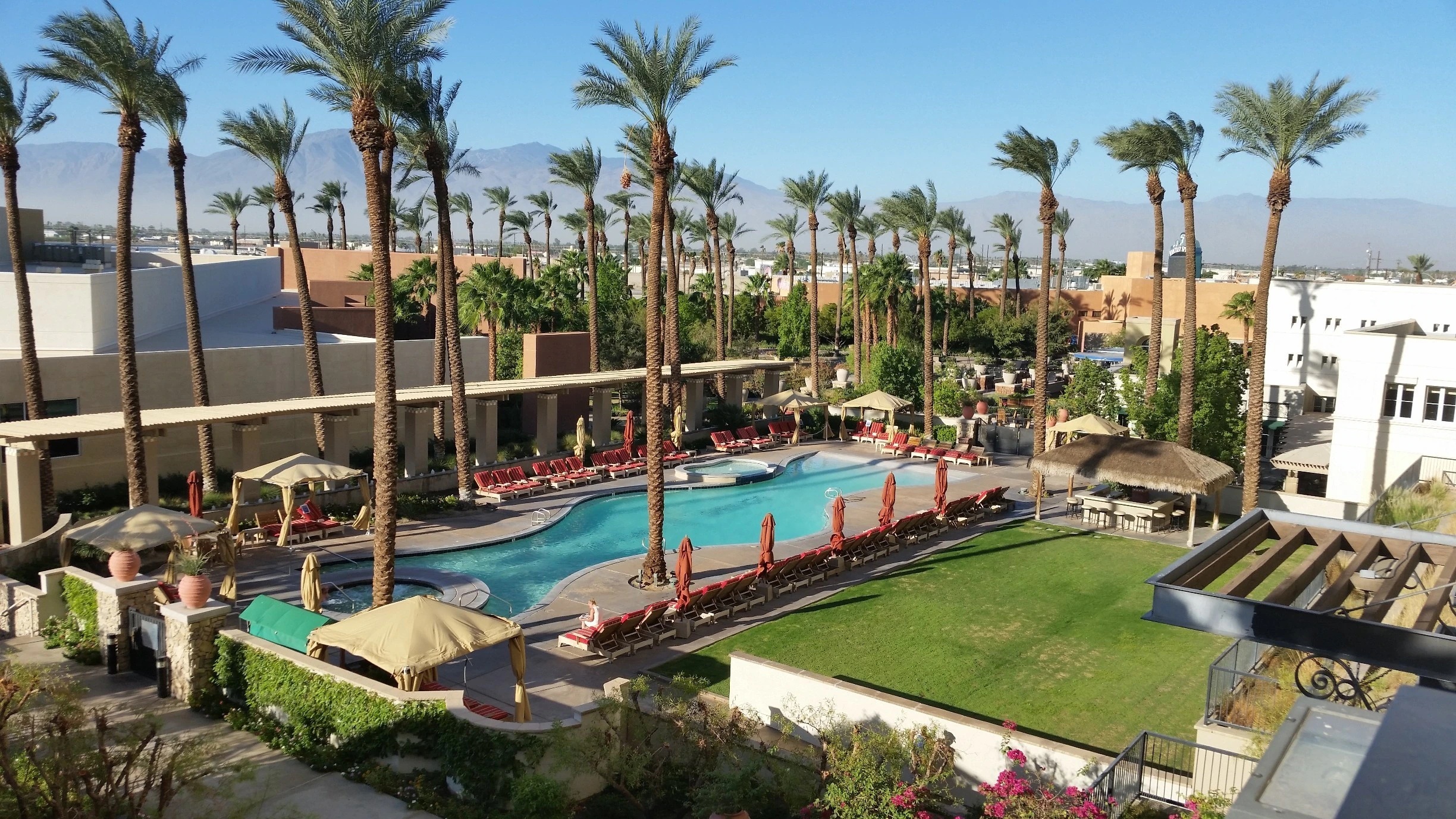
Photos of Coachella

Overview of Coachella
Coachella is a small city of roughly 41,000 people in Riverside County, California, situated in the Coachella Valley at the edge of the Colorado Desert. The city has a predominantly working-class, agricultural character, surrounded by date palm groves, citrus orchards, and grape vineyards that supply much of the valley's produce. Coachella is best known as part of the greater Coachella Valley region and serves as a southern gateway to Palm Springs and the desert resort communities, with the Salton Sea and the agricultural lands of the Imperial Valley lying just to the south. The city lies about 25 miles southeast of Palm Springs and roughly 130 miles east of Los Angeles, accessible via Interstate 10.
About 30 miles south of Coachella, the Salton Sea is California's largest inland lake and one of the most unusual landscapes in the Southwest. A saline, endorheic body of water that rose accidentally in the early 1900s, it is surrounded by the Salton Sea State Recreation Area and offers birdwatching, fishing, and stark, otherworldly shoreline scenery. Its proximity to the Mexican border and the surrounding communities of Bombay Beach and Salvation Mountain make it a frequent stop for travelers exploring the region's offbeat side.
Roughly 30 to 40 miles north of Coachella, Joshua Tree National Park draws visitors year-round with its surreal meeting of two desert ecosystems, where the Mojave and Colorado deserts overlap. The park's namesake trees, massive rock formations, and dark night skies make it a favorite for hiking, rock climbing, stargazing, and photography. The southern entrance near Cottonwood Visitor Center is the most convenient approach for travelers based in Coachella.
About 25 to 30 miles northwest, Palm Springs brings a completely different vibe, with mid-century modern architecture, hot springs, the aerial tramway, and a walkable downtown lined with shops, restaurants, and galleries. The adjacent community of Indio, immediately adjacent to Coachella, hosts the famous music festival at the Empire Polo Club each spring, drawing tens of thousands of visitors to the valley and energizing short-term rental demand across the region during festival weekends.
Coachella is a compelling base for short-term rentals because it sits at the intersection of desert adventure, agricultural heritage, and the broader Coachella Valley tourism economy. Its lower accommodation costs compared to Palm Springs, combined with easy driving access to Joshua Tree, the Salton Sea, Palm Springs, and the festival grounds, make it an attractive option for travelers who want to explore Southern California's desert landscapes while staying in a more affordable and authentic valley community.
Want to know if a property in Coachella is a good investment?
Enter an address to get instant revenue potential and comps.