
Logan, West Virginia
Want to see how Logan compares to other top cities in West Virginia? Explore all city regulations in West Virginia. →
Logan, WV
Generally Investor Friendly
STR Regulations for Logan, West Virginia
Overview: Are Short-Term Rentals Allowed in Logan, WV?
Explicit answer: Yes. Short-term rentals are allowed in the City of Logan, West Virginia. On October 26, 2023, the Logan City Council adopted Ordinance 54, which established a formal set of regulations governing short-term rentals within the city. These rules underwent extensive development and public deliberation prior to adoption. Investors should anticipate a licensing or permit framework for STRs, compliance inspections tied to lodging tax issuance, and specific zoning or placement considerations within the municipal boundaries. Given the deliberate process leading to adoption, the ordinance is likely comprehensive; however, investors should confirm precise requirements directly with city zoning staff.
What do Airbnb hosts actually earn in Logan?
Logan hosts earn a median $16,102/year with $145 ADR and 46% occupancy.
Top performers pull in $29,735+ per year.
See the full Logan market breakdownHow to Start a Short-Term Rental Business in Logan, WV
A practical pathway for investors:
- Confirm zoning and use. The adopted ordinance is built on a zoning effort focused on where STRs may operate within the city. Before proceeding, verify with the Zoning Clerk that your property is in an allowable zone for STR use.
- Apply for the required zoning/STR permit. Submit the application and associated materials to the Zoning Clerk at City Hall (contact details below). If the city uses a third-party consultant (McBride Dale Clarion participated in the rulemaking process), be prepared for consultant review or coordination as part of your permit.
- Complete safety and habitability standards. Anticipate an inspection or documentation review to ensure the property meets the city’s standards for safety, habitability, and neighborhood compatibility before licensing is finalized.
- Register for lodging tax and obtain certificate. Expect to register for the city lodging tax as a prerequisite to receiving the lodging tax certificate that enables STRs to legally operate.
- Establish internal compliance controls. Prepare written house rules, operations manuals, and guest communication protocols to meet the city’s regulatory expectations and mitigate neighbor complaints.
- File and renew on schedule. Submit timely filings, keep proof of licensing on-site (if required), and ensure renewals are secured before the expiration date.
Note on payments: The article does not specify fees. Confirm application, renewal, and inspection fees, and accepted payment methods, with the Zoning Clerk.
Required Documents, Permits, Licenses, and Guidelines
Based on the ordinance and the city’s process:
- Zoning/STR permit application. Complete the city’s application for STRs; the process was developed through a formal zoning initiative that likely defines eligible property types and locations.
- Proof of ownership or legal control. Provide evidence such as a deed, lease, or management agreement demonstrating legal authority to operate the STR.
- Safety and habitability documentation. Expect to demonstrate compliance with basic habitability and safety standards; the city’s inspection regime is tied to the ordinance and lodging tax issuance process.
- Lodging tax registration and certificate. Registration is expected as part of the licensing pathway to receive the lodging tax certificate necessary for operations.
- Business registration and tax identification (if applicable). Inquire whether a separate city business registration or state tax ID is required for lodging operations.
- Agent or local contact information. Keep a local contact (owner or agent) available and registered with the city as required.
- Insurance and loss precautions. While not explicitly required by the article, carry appropriate liability and property insurance tailored to STR operations; this is a best practice.
- Permit to operate and renewals. Anticipate issuance of a city permit and periodic renewal. Keep the permit and certificate available for inspection and guest review where required.
Note: The article does not list the exact forms or fees. Obtain current application materials, checklists, and inspection protocols from the Zoning Clerk.
Specific Regulations for Short-Term Rentals in Logan, County, and State
- City of Logan: Ordinance 54 governs short-term rentals. The city’s process involved zoning placement of STRs, public comment, and consultation with planning professionals. Expect operational rules on safety/habitability and neighborhood impact, along with the lodging tax registration requirement.
- County (Logan County): The source content does not provide county-specific STR rules. Confirm with county officials whether any separate zoning, permitting, or taxation regimes apply.
- State of West Virginia: State law does not impose a separate STR licensing regime. However, general landlord-tenant and consumer protections apply where STRs function under rental agreements. The following resources, drawn from West Virginia sources, describe relevant statewide frameworks:
- Tenant-Landlord Laws & Rights (Hemlane): Overview of security deposits (max two months), return within 60 days, notice requirements, habitability obligations, landlord entry (reasonable notice, typically 24–48 hours), eviction process, fair housing protections, and termination of tenancy.
- Legal Aid of West Virginia: Guidance on renters’ rights, including evictions, bad housing conditions, and deposit issues; offers forms and resources to assert tenant rights.
- West Virginia Legal Services (WVLS) Eviction Guide: Step-by-step overview of eviction procedures, defenses, court process, and timelines.
These statewide protections and procedures are relevant as investors design operations and guest agreements to meet consumer protection standards, particularly when disputes arise.
Contact Information for Local Authority in Charge of STRs
City of Logan (Short-Term Rentals)
- Address: City Hall, 72 E. Main Street, Logan, WV
- Zoning Clerk: Amy Adams (confirm current status with City Hall before contacting)
- Law Director: Abby Saving
- Website (City): Not specified in the provided content
- Phone/Email: Not specified in the provided content
Suggested call-to-action: Call City Hall and ask to be transferred to the Zoning Department or Zoning Clerk to obtain the current STR application, zoning map, inspection requirements, fees, and renewal schedule.
Links to Source Pages
- Council finally adopts new short-term rental rules (Logan Daily News): www.logandaily.com/news/council-finally-adopts-new-short-term-rental-rules/article_3e9cc560-735f-11ee-81bb-53d00fb05d1a.html
- West Virginia Tenant-Landlord Rental Laws & Rights for 2025 (Hemlane): www.hemlane.com/resources/west-virginia-tenant-landlord-law/
- Renters Rights West Virginia (Legal Aid WV): legalaidwv.org/renters-rights-west-virginia/
- Tenant’s Guide to Evictions in West Virginia (WV Legal Services): www.wvlegalservices.org/tenevict.pdf
Notes:
- The Logan Daily News article confirms adoption of STR rules but the accessible copy is partially corrupted, limiting extraction of specific permit details, fees, and application forms. Obtain current, complete materials from City Hall.
- There is no city-specific website listed in the content. Contact City Hall for the authoritative ordinance text, application forms, zoning maps, and the most up-to-date guidance.
Next step
Found a property in Logan?
Paste any address and get estimated revenue, cash-on-cash return, and comparable STR performance in under 5 minutes. 3 free analyses per day.
Free brief
Get the free Logan STR Investment Brief
Revenue data, top neighborhoods, seasonal trends, and the key regulations for Logan, West Virginia in one email.
Logan
Market Saturation Score
Photos of Logan


Overview of Logan
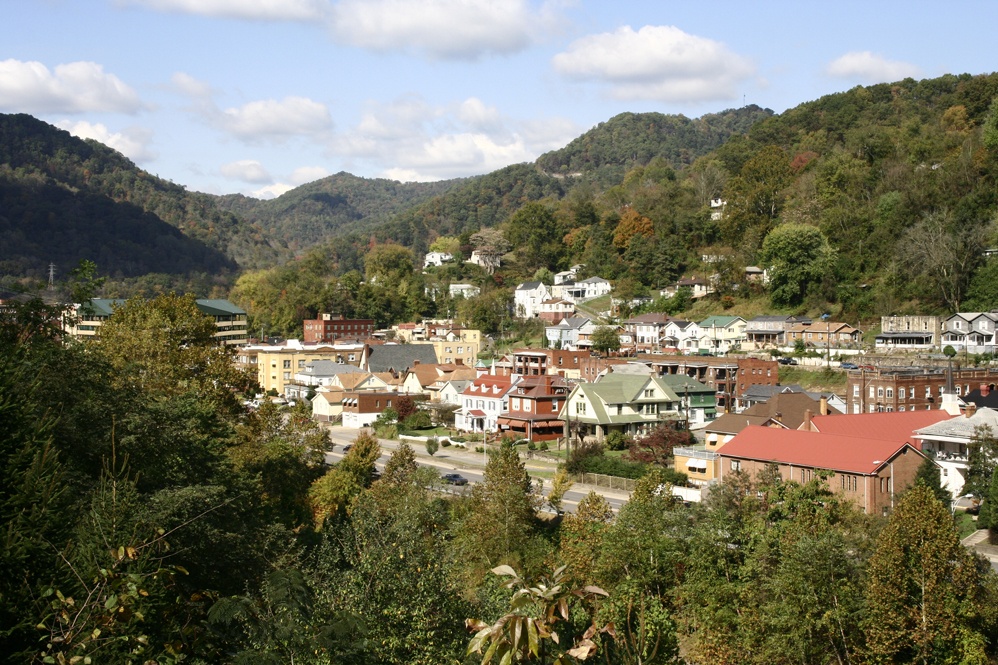
Logan is a small city that serves as the county seat of Logan County, in the southern coalfields of West Virginia. With a population of roughly 1,000 residents, it has the feel of a tight-knit Appalachian community whose identity is rooted in the coal mining heritage of the surrounding mountains. Travelers passing through often treat Logan as a basecamp for outdoor recreation rather than a destination in its own right, since the natural attractions of the region — state parks, trail systems, and river country — sit just minutes from town. It lies approximately 60 miles south of Charleston, the state capital and nearest major city, and is reached via US Route 119 through the rugged hills of southern West Virginia.
Just outside the city limits lies Chief Logan State Park, one of the largest and most-visited state parks in West Virginia. The park offers a hotel and lodge, campground, swimming pool, hiking trails, horseback riding stables, a wildlife exhibit, and the Aracoma outdoor drama staged each summer. It is only a few minutes' drive from downtown Logan, making it a natural anchor for visitors who want a mix of outdoor activity and comfortable lodging.
The region is also home to a major segment of the Hatfield-McCoy Trails, one of the largest off-road ATV and UTV trail systems in the eastern United States. Trailheads and outfitters in and around Logan County give riders access to hundreds of miles of connected trails winding through the Appalachian foothills, and the system draws visitors year-round, with peaks in the warmer months.
For those interested in regional history, the surrounding area is part of the West Virginia Coal Heritage Trail, with small museums, restored coal camps, and overlooks scattered throughout Logan County and neighboring counties. The Hatfield–McCoy feud itself is part of local lore, and the nearby towns of Matewan and Williamson — about an hour to the south — preserve significant sites tied to both the coal wars and the legendary family feud, making them easy day trips from Logan.
Logan is a compelling base for short-term rentals because it sits at the intersection of two of southern West Virginia's strongest tourism draws: the Hatfield-McCoy Trails and Chief Logan State Park. Its position deep in the Appalachian coal country gives visitors an authentic sense of place, while its proximity to larger hubs like Charleston and to a deep bench of outdoor, historical, and cultural attractions gives owners a steady stream of riders, hunters, and heritage travelers to draw from throughout much of the year.
Want to know if a property in Logan is a good investment?
Enter an address to get instant revenue potential and comps.