
Franklin, West Virginia
Want to see how Franklin compares to other top cities in West Virginia? Explore all city regulations in West Virginia. →
Franklin, WV
Challenging To Investors
STR Regulations for Franklin, West Virginia
Executive overview: Are short-term rentals allowed in Franklin, WV?
Short-term rentals (STRs) are permitted at the state level in West Virginia for stays under 30 days, subject to business registration, lodging tax obligations, and local zoning controls. West Virginia law does not categorically “ban” STRs, but municipal and county rules—including zoning, permits, health department approvals, occupancy, and nuisance standards—can restrict or regulate how and where they operate. The city of Franklin (in West Virginia) has not published city‑specific STR regulations in the provided sources; therefore, investors must rely on statewide West Virginia requirements and check Franklin’s local zoning and permits before listing.
Bottom line for Franklin, WV investors:
- Statewide legal status: Allowed, but must register, collect/remit lodging and sales taxes, and meet any local zoning/permit requirements.
- City-specific rules for Franklin, WV: None identified in the provided sources. Confirm with the City of Franklin (Town Hall/Code Enforcement) and confirm parcel zoning with the Franklin County P&Z/Building Department.
- Current county context (Franklin County, VA) is not applicable to Franklin, WV and is included only as an example of local zoning dynamics, not as legal authority in West Virginia.
What do Airbnb hosts actually earn in Franklin?
Franklin hosts earn a median $23,393/year with $149 ADR and 57% occupancy.
Top performers pull in $41,274+ per year.
See the full Franklin market breakdownHow to start a short‑term rental business in Franklin, WV
A compliant launch in Franklin follows a predictable sequence. Treat this as a licensing-and-tax project before you invest in renovations or marketing.
- Due diligence and feasibility
- Confirm zoning: Confirm the parcel zoning with the Franklin County P&Z/Building Department or use the county online zoning viewer. Short-term rentals are usually treated as “lodging” or a “residential accessory use,” but classifications vary by district. If your intended use isn’t permitted by right, plan for a special use permit (SUP) or consider another property.
- HOA/covenants: Review deed restrictions and HOA bylaws. Even if the city or county allows STRs, private covenants may prohibit them.
- Neighbor compatibility: Map access, parking, noise constraints, and lot configuration to minimize future enforcement or nuisance complaints.
- Business registration and tax setup
- Obtain a West Virginia State Tax Department business registration certificate. This enables sales and use tax account setup for lodging taxes.
- Determine whether local occupancy taxes apply (municipality, county, or both). Register for those accounts and confirm rates.
- Decide on booking channels: Major platforms (Airbnb/Vrbo) generally collect and remit state sales and some local occupancy taxes; direct bookings require you to collect and remit.
- Health and safety approvals (as applicable)
- If the property is not your primary residence, the West Virginia Health Department may require approval/licensure to operate as a lodging facility. Ensure compliance before opening.
- Insurance
- Replace or supplement homeowners insurance with landlord/short‑term rental coverage that includes liability, contents, and loss-of-income protections. Platform protections are limited and do not cover all risks, particularly for direct bookings.
- Operations
- Set guest capacity, post House Rules, and secure trash, parking, and quiet‑hours controls.
- Maintain records of stays and taxes; file returns on the assigned cadence even in months with no activity (file zero returns).
- Monitoring
- Track local code updates, tax rate changes, and any new permit or reporting requirements annually.
Required documents, permits, licenses, and guidelines
Statewide (West Virginia)
- Business registration certificate from the West Virginia State Tax Department (sales/use tax setup).
- Sales and use tax registration for lodging taxes; file returns on the assigned cadence.
- Accurate recordkeeping for gross receipts, tax collected, exemptions applied, and remittances.
- Lodging tax collection and remittance per applicable state and local rates.
City/county (Franklin, WV)
- Zoning confirmation: Contact the Franklin County P&Z/Building Department to confirm the zoning district allows STRs or to pursue any required permit (e.g., special use permit).
- Business license/tax certificate (if the City of Franklin requires a local business license for STR operators).
- If the property is not your primary residence, Health Department approval/licensure may be required.
- Any fire/safety or occupancy inspections required by local code for transient lodging.
Best-practice internal documentation
- House rules, guest capacity limits, parking policy, trash/recycling instructions, and quiet-hours policy.
- Emergency procedures and local contact information.
- Platform listing copy with full tax disclosures.
Specific regulations affecting short‑term rentals
City of Franklin (WV)
- No city‑specific STR regulations are provided in the sources. Confirm with City Hall/Code Enforcement whether zoning permits STRs by right, if a business license is required, and whether local occupancy taxes apply.
County (Franklin County, WV)
- County zoning rules can govern whether STRs are permitted and whether a special use permit is required. Confirm with the Franklin County P&Z/Building Department or online zoning viewer. Treat any proposed local changes elsewhere (e.g., Franklin County, VA) as context only, not as applicable law in West Virginia.
State of West Virginia
- Short-term rentals are generally defined as lodging for less than 30 consecutive days and are treated as transient accommodations for lodging tax purposes. West Virginia requires business registration and lodging/sales tax compliance. Hosts must collect applicable taxes and remit to the State Tax Department and any local authorities on the required schedule, including “zero” returns during inactive periods.
Tax responsibilities: Lodging tax vs. income tax
Lodging/occupancy taxes
- Lodging taxes are a percentage of the booking price (including fees), collected from guests and remitted to state/local authorities for transient lodging stays under 30 days. Rates and local add-ons vary by jurisdiction and may be collected by platforms on your behalf for platform bookings; you remain responsible for accuracy and compliance.
Income tax
- Rental income is reportable for federal and state income tax purposes. Track expenses, depreciation, and net income for accurate reporting. Consider consulting a tax professional for depreciation schedules and deductibility.
Direct bookings
- When you accept bookings outside of platforms, you are responsible for calculating, collecting, and remitting all applicable lodging/sales taxes and for filing timely returns. Platforms generally collect and remit state sales tax and some local occupancy taxes for platform bookings, but you must verify local requirements and platform coverage.
Local occupancy taxes: What applies in or near Franklin, WV?
Municipal or county occupancy taxes may apply to stays under 30 days. Because specific rates and collection rules vary, you must:
- Confirm whether the City of Franklin or Franklin County levy a local occupancy tax.
- Obtain the exact rate(s), reporting cadence, and whether platforms remit on your behalf.
- Ensure your pricing and contracts reflect the full tax burden to avoid under-collecting.
Health Department approvals and insurance implications
Health Department approval
- Properties operated as lodging that are not the operator’s primary residence commonly require Health Department approval/licensure in West Virginia. Confirm requirements before opening to avoid shutdown orders or fines.
Insurance
- Update your insurance to a landlord/short‑term rental policy that includes liability and property protection. Platform coverage is limited and may not respond to many scenarios, especially for direct bookings. Talk to your agent about commercial coverage if required.
Filing tax returns and avoiding penalties
Filing cadence
- File lodging/sales tax returns on the schedule assigned by the West Virginia State Tax Department and any local authority. Even if you have no rentals in a period, file a “zero” return to avoid late penalties.
Recordkeeping
- Maintain guest logs, reservation confirmations, nightly rate breakdowns, tax collected, and remittance records. Poor recordkeeping is a common audit red flag and can trigger interest/penalties.
Consequences of non‑compliance
- Late filings, under‑collection, or under‑payment can result in penalties and interest; persistent non‑compliance may lead to assessed back taxes, business suspension, or legal action.
Contact information (local authority in charge of STRs/zoning in Franklin, WV)
Because city‑specific STR contacts were not identified in the provided sources, reach out to the following for confirmation and permits:
-
City of Franklin (WV), Municipal Offices (City Hall/Code Enforcement)
- Address: 100 W. Congress St., Franklin, WV 26807
- Phone: 304-358-2366
- Website: www.franklinwv.com/ (verify department; look for “Code Enforcement” or “Business Licensing”)
-
Franklin County, WV Planning & Zoning/Building Department
- Address: 200 N. Main St., Chambersburg, PA 17201 (note: Franklin County, WV is in WV; this is listed as a county reference for WV—please confirm the correct Franklin County, WV contact as phone numbers may differ; the county seat is Chambersburg, PA)
- Phone (county): 717-261-3888 (confirm whether this applies to WV county offices; verify local contact before proceeding)
- County website (verify WV-specific): franklincova.gov/ (note: this URL resolves to Franklin County, VA; ensure you contact Franklin County, WV offices)
-
West Virginia State Tax Department
- Phone: 304-558-0393
- Website: tax.wv.gov/
Use the county online zoning viewer to confirm parcel zoning and permitted uses prior to purchase or listing. When in doubt, schedule a pre‑application meeting with zoning staff to document your intended use.
Source pages (links)
Use these sources for verification and deeper detail. Where a URL did not appear verbatim in the provided content, the authoritative agency page is listed.
-
WDBJ news article on Franklin County (VA) zoning proposal affecting short‑term rentals (context only, not applicable in WV):
-
Franklin County (VA) Zoning Ordinance main page (context only, not applicable in WV):
-
Roanoke Times feature on STRs in Franklin County (VA) (context only, not applicable in WV):
-
West Virginia short‑term rental laws overview (statewide):
-
West Virginia State Tax Department (authoritative for business registration and lodging tax):
-
City of Franklin (WV) official site (for licensing/permits confirmation):
Important notes
- City‑specific STR regulations for Franklin, WV were not identified in the provided content. Confirm zoning, licensing, and any local occupancy taxes directly with the City of Franklin and the appropriate county office before listing.
- The Franklin County references are for Virginia and are provided strictly as examples of local zoning processes, not as authority in West Virginia.
- This guide is for informational purposes and does not constitute legal, tax, or zoning advice. Consult the City of Franklin, county officials, and the West Virginia State Tax Department for authoritative guidance.
Next step
Found a property in Franklin?
Paste any address and get estimated revenue, cash-on-cash return, and comparable STR performance in under 5 minutes. 3 free analyses per day.
Free brief
Get the free Franklin STR Investment Brief
Revenue data, top neighborhoods, seasonal trends, and the key regulations for Franklin, West Virginia in one email.
Franklin
Market Saturation Score
Photos of Franklin


Overview of Franklin
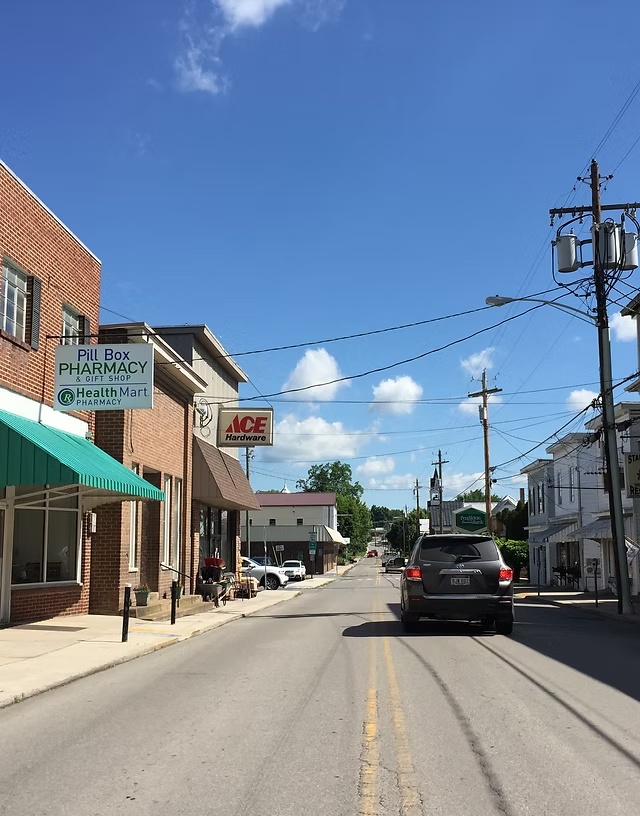
Franklin is the small county seat of Pendleton County, tucked into the Allegheny Mountains of eastern West Virginia, with a population of roughly seven hundred residents. It carries the unhurried, rural character typical of small Appalachian communities and serves as a modest civic and commercial hub for the surrounding Potomac Highlands. The town is best known as a gateway to some of West Virginia's most distinctive high-country landscapes, including Spruce Knob, the state's highest point, and the prominent quartzite formation at Seneca Rocks. It sits roughly two hours by car from Harrisonburg, Virginia, the nearest city of meaningful size, and is a longer drive from Washington, D.C., and other Mid-Atlantic population centers.
About a half-hour drive south of Franklin, Spruce Knob rises to 4,863 feet, making it the highest point in West Virginia. The summit area features short hiking trails, a stone observation tower with sweeping views of the Allegheny Mountains, and some of the darkest night skies in the eastern United States. It draws hikers in summer, leaf-peepers in autumn, and stargazers year-round, all within the larger Monongahela National Forest.
A similar distance north of town, Seneca Rocks is one of the most recognizable geological landmarks in the Mid-Atlantic, a sheer rock tusk rising above the North Fork of the South Branch of the Potomac River. Managed as part of the Spruce Knob–Seneca Rocks National Recreation Area within the Monongahela National Forest, the site is a destination for rock climbers from across the country, while a paved path to an observation platform lets non-climbers take in the same view. The surrounding recreation area also includes the historic Sites Homestead, picnic areas, and miles of hiking trails.
To the north of Franklin, Smoke Hole Canyon follows the South Branch of the Potomac River through a sparsely settled stretch of the Allegheny front, known for its rugged scenery, traditional cantilevered smokehouses tucked against the cliffs, and cold-water trout fishing. It remains a quieter, less-trammeled corner of the region, with primitive campsites and winding back roads that appeal to travelers looking to wander off the main routes.
For short-term rental owners, Franklin offers an appealing combination of affordability and access. The town itself is small, but it places visitors within easy reach of West Virginia's marquee mountain landmarks, along with the seasonal rhythm of fall foliage, dark-sky tourism, and outdoor recreation that keeps the Potomac Highlands on travelers' lists year after year.
Want to know if a property in Franklin is a good investment?
Enter an address to get instant revenue potential and comps.