
Ladysmith, Wisconsin
Want to see how Ladysmith compares to other top cities in Wisconsin? Explore all city regulations in Wisconsin. →
Ladysmith, WI
Generally Investor Friendly
STR Regulations for Ladysmith, Wisconsin
Overview: Are Short-Term Rentals Allowed in Ladysmith, WI?
Yes, short-term rentals are explicitly allowed in Ladysmith, Wisconsin. The legal framework operates at both state and county levels, with Wisconsin's "Right to Rent Law" providing foundational protections for rental properties. At the local level, short-term rentals operate under the Tourist Rooming House (TRH) classification administered by Rusk County Environmental Health.
The key legal foundation stems from Wisconsin's 2017 statewide law, which prohibits any political subdivision (city, village, town, or county) from prohibiting rentals of residential properties for seven consecutive days or longer. However, local jurisdictions can impose reasonable regulations and licensing requirements that don't conflict with state law. In Ladysmith and Rusk County, this translates to a well-defined licensing and regulatory framework under the Tourist Rooming House category.
What do Airbnb hosts actually earn in Ladysmith?
Ladysmith hosts earn a median $18,129/year with $155 ADR and 44% occupancy.
Top performers pull in $24,298+ per year.
See the full Ladysmith market breakdownHow to Start a Short-Term Rental Business in Ladysmith
Initial Planning Phase
The process begins with comprehensive pre-planning to ensure compliance across all regulatory layers. Property owners must first determine the specific zoning requirements and land use restrictions that apply to their property by contacting the appropriate township, village, or city zoning authorities. This initial step is critical because local zoning regulations may require conditional use permits or other approvals before short-term rental operations can commence.
County-Level Requirements
Following initial zoning verification, property owners must engage with Rusk County Land Conservation & Development at (715) 532-2156 to determine if a land use permit must be submitted. This step addresses county-level land use considerations that may impact short-term rental operations, particularly for properties in sensitive areas or those requiring environmental considerations.
Water System Compliance
If the property utilizes a private well, strict compliance with Wisconsin Administrative Code NR812 is mandatory. The well must be constructed, maintained, and operated according to these regulations. Additionally, annual water testing for coliform and nitrates is required, with results evaluated during the annual health inspection. This requirement ensures public health protection and represents a significant operational consideration for rural properties.
Licensing Application Process
The formal licensing process requires completion of the Rusk County Lodging Application, specifically designed for Tourist Rooming Houses. Property owners should obtain this application from the county's Environmental Health division and ensure all sections are completed accurately. The application must be submitted with required license fees before operations can commence.
Inspection and Approval
A mandatory onsite inspection must be scheduled with the Environmental Health Specialist at (715) 532-2299. This inspection evaluates compliance with Wisconsin Administrative Code DATCP 72, which governs Tourist Rooming House operations. The inspection scope depends on the specific nature of the rental property and its amenities. Property owners must provide water sample results, the completed lodging license application, and applicable license fees during this process.
Required Documents, Permits, Licenses, and Guidelines
State-Level Requirements
Wisconsin law mandates that any person maintaining, managing, or operating a short-term rental for more than 10 nights annually must obtain a Tourist Rooming House license from the Wisconsin Department of Agriculture, Trade and Consumer Protection (DATCP). This license costs $110 annually and requires a one-time pre-inspection fee of $300. State licensing represents a baseline requirement that operates regardless of local regulations.
County-Level Licensing
Rusk County issues the local lodging license for Tourist Rooming Houses through its Environmental Health division. The license application requires comprehensive documentation including property details, owner information, and operational plans. Licenses are valid from July 1st of one year to June 30th of the following year, with specific renewal requirements for existing establishments.
Documentation Requirements
Property owners must maintain and provide several key documents:
- Completed Lodging Application for Tourist Rooming Houses
- Water sample test results for coliform and nitrates (if private well)
- Zoning compliance verification from local authorities
- Land use permit documentation from county zoning (if required)
- License fee payment confirmation
Operational Guidelines
The Tourist Rooming House classification imposes specific operational parameters. Properties can rent up to four units (rooms, cabins, etc.) under a TRH license. Properties exceeding this threshold require a hotel license instead. Unlike bed and breakfast operations, Tourist Rooming Houses have no requirement for owner occupancy during rental periods, providing greater operational flexibility for property investors.
Specific Regulations for Short-Term Rentals
State Regulations (Wisconsin)
Wisconsin's Right to Rent Law provides foundational protection for short-term rental operations. Political subdivisions cannot prohibit rentals of residential properties for seven consecutive days or longer. However, local governments can impose reasonable limitations, including:
- Maximum rental day limitations (beyond 180 days annually)
- Requirements that maximum rental days run consecutively within a 365-day period
- Mandatory notification to local clerks before renting operations begin
The state law specifically preserves local authority to regulate rental operations through reasonable ordinances that don't conflict with state provisions. This has resulted in varied local approaches across Wisconsin communities.
County Regulations (Rusk County)
Rusk County's regulations focus primarily on health, safety, and operational standards through the Tourist Rooming House framework. Key provisions include:
- Annual licensing renewal requirement with June 30th expiration date
- Compliance with Wisconsin Administrative Code DATCP 72
- Mandatory water testing for properties with private wells
- Annual health inspections to ensure continued compliance
- Non-transferable licenses requiring new applications upon ownership changes
County regulations emphasize public health protection and operational transparency while maintaining reasonable business operation standards.
Local Regulations (Ladysmith)
The City of Ladysmith's municipal code contains general building, plumbing, electrical, and heating/ventilation codes that apply to all properties, including those used for short-term rental purposes. However, the provided content does not reveal city-specific short-term rental ordinances. Property owners should verify with city authorities regarding any additional local requirements.
Contact Information for Local STR Authorities
Primary Licensing Authority
Rusk County Environmental Health Specialist
- Name: Maggie Huettl, MPH
- Address: 311 E. Miner Ave., Suite C220, Ladysmith, WI 54848
- Phone: (715) 532-2299
- Email: mhuettl@ruskcountywi.us
- General Email: rchhs@ruskcountywi.us
County Zoning Authority
Rusk County Land Conservation & Development
- Phone: (715) 532-2156
- Function: Land use permit determination and zoning compliance verification
Online Services
License Application Payment
- Online payment portal: client.pointandpay.net/web/RuskCounty
- Function: Payment processing for county license applications
Water Testing Information
- Rusk County Water Testing Resources: ruskcounty.org/water
- Function: Information on water testing requirements and procedures
Links to Source Pages
Primary Regulatory Sources
- Rusk County Lodging and Recreation - Main licensing portal and regulatory framework
- Tourist Rooming Houses (TRHs) - Detailed TRH regulations and requirements
- City of Ladysmith Building Code - Municipal building standards
Application and Documentation Links
- Rusk County Permit Application for Lodging - Primary licensing application
- TRH Licensing Guide - Comprehensive regulatory guide
- DATCP Tourist Rooming House Licensing - State-level requirements
Legal and Educational Resources
- Wisconsin State Bar Article on Short-Term Rentals - Legal analysis of state regulations
- Wisconsin Administrative Code ATCP 72 - State regulatory code for hotels, motels, and tourist rooming houses
- Wisconsin Statutes Chapter 97 - Food, lodging, and recreation statutes
This regulatory framework provides a clear pathway for short-term rental operations in Ladysmith while maintaining appropriate health, safety, and community protection standards. Investors should carefully review all requirements and maintain ongoing compliance to ensure successful operations.
Next step
Found a property in Ladysmith?
Paste any address and get estimated revenue, cash-on-cash return, and comparable STR performance in under 5 minutes. 3 free analyses per day.
Free brief
Get the free Ladysmith STR Investment Brief
Revenue data, top neighborhoods, seasonal trends, and the key regulations for Ladysmith, Wisconsin in one email.
Ladysmith
Market Saturation Score
Photos of Ladysmith


Overview of Ladysmith
Ladysmith is a small city in northwestern Wisconsin and serves as the county seat of Rusk County. With a population of roughly 3,000 residents, it has the unhurried, neighborly character typical of rural northern Wisconsin communities, a place where the rhythms of the surrounding forests and rivers still shape daily life. Historically rooted in the lumber industry, Ladysmith today functions primarily as a service hub for the surrounding countryside and as a quiet gateway to the outdoor recreation opportunities that draw visitors to this part of the state. It sits about 120 miles east of Minneapolis–Saint Paul, the closest major metropolitan area, and roughly 250 miles northwest of Milwaukee.
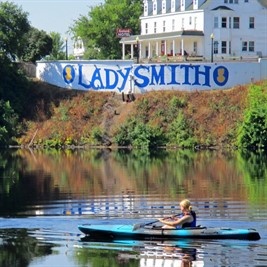
A central geographic feature of Ladysmith is the Flambeau River, which flows through the area and offers some of the most recognized paddling in the Upper Midwest. The river is well known for canoe and kayak trips that wind through a mix of gentle stretches and more remote, forested sections, with the surrounding Flambeau River State Forest providing campgrounds, hiking trails, and access points within a short drive of town. The corridor is popular for tubing and fishing in warmer months and draws visitors from across the region.
To the north and east of Ladysmith lies the Chequamegon-Nicolet National Forest, a vast expanse of public land spanning more than 1.5 million acres across northern Wisconsin. The forest is a year-round draw, with opportunities for hiking, mountain biking, hunting, snowmobiling, and cross-country skiing. Several of its developed trailheads, campgrounds, and scenic byways lie within roughly an hour's drive, making it a major reason travelers base themselves in Ladysmith while exploring the wider region.
Just west of town, the Blue Hills rise above the surrounding landscape and form one of the oldest rock formations in North America, with elevations climbing above 1,700 feet. The area is known for hiking, berry picking, and fall color drives, and it offers a more rugged, quieter alternative to some of the more developed destinations elsewhere in Wisconsin. The proximity of the Blue Hills to Ladysmith makes them an easy half-day excursion for visitors staying in the area.
Ladysmith's appeal as a short-term rental base comes from this combination of small-town affordability and access to genuinely wild surroundings. Visitors who come for the Flambeau River, the national forest, or the Blue Hills often prefer a comfortable, home-like stay over a standard chain hotel, and the city's central position within Rusk County makes it a natural launching point for exploring a part of Wisconsin that remains relatively uncrowded even in peak summer and fall seasons.
Want to know if a property in Ladysmith is a good investment?
Enter an address to get instant revenue potential and comps.