
Oroville, Washington
Want to see how Oroville compares to other top cities in Washington? Explore all city regulations in Washington. →
Oroville, WA
Generally Investor Friendly
STR Regulations for Oroville, Washington
Oroville, WA Short‑Term Rental (STR) Guide for Investors
Overview: Are Short‑Term Rentals Allowed in Oroville?
Short‑term rentals are allowed in Oroville, Washington. As of the latest available guidance, Oroville does not have city‑specific licensing or operating rules for short‑term rentals; operators must comply with Washington State statutes governing short‑term rentals (RCW 64.37) and applicable tax obligations. State law defines a short‑term rental as a lodging use (fewer than thirty consecutive nights) in a dwelling unit that is not a hotel, motel, or bed and breakfast; it does not include owner‑occupied units where fewer than three rooms are rented at any time and the owner resides at least six months per year. In short, you can operate in Oroville, but you must follow Washington’s statewide STR framework, including consumer safety, insurance, and tax collection/remittance.
Key Washington State STR Requirements (apply in Oroville):
- Taxes: Collect and remit all applicable state and local sales and lodging taxes unless your platform does so on your behalf.
- Consumer Safety: Provide guest contact information, carbon monoxide alarm compliance, and post required safety information in each rental unit.
- Liability Insurance: Maintain primary liability insurance of at least $1,000,000 per aggregate for the STR, or use a platform that provides equivalent coverage.
- Platform Obligations: Platforms must register with the Washington Department of Revenue (DOR), inform operators of tax and safety requirements, and provide written notice about potential gaps in personal homeowners insurance for STR use.
Actionable takeaway for investors: Oroville has no local STR license or permit overlay in the content provided. Your primary compliance targets are Washington State statutes (RCW 64.37), the DOR, and any applicable local lodging taxes and business licensing at the county level.
What do Airbnb hosts actually earn in Oroville?
Oroville hosts earn a median $20,661/year with $340 ADR and 46% occupancy.
Top performers pull in $34,760+ per year.
See the full Oroville market breakdownHow to Start a Short‑Term Rental Business in Oroville
Investors considering an STR in Oroville should implement the following sequence:
- Confirm zoning and property eligibility
- Verify with Okanogan County that your property’s zoning and use allow transient lodging (short‑term rental). If your property is owner‑occupied with fewer than three rooms rented at any time and you reside there at least six months per year, it may be exempt from RCW 64.37’s definition of a short‑term rental.
- Register for tax accounts and set up collections
- Washington State sales tax applies statewide. Local sales tax rates vary by location; confirm Oroville’s combined rate through the DOR.
- Washington’s lodging tax (often called “hotel/motel tax”) applies to transient accommodations; the rate is jurisdiction‑specific. Confirm the current rate with the DOR or Okanogan County.
- If you list through platforms (Airbnb, Vrbo), they may collect and remit these taxes for you. If not, you must collect and remit directly.
- Secure required insurance
- Obtain a primary liability policy with at least $1,000,000 aggregate coverage specific to short‑term rental operations. If your platform provides equal or greater primary coverage, that may satisfy the requirement. Confirm exclusions and ensure your personal homeowners policy does not cover STR risk.
- Implement consumer safety requirements
- Ensure carbon monoxide alarms are installed per RCW 19.27.530 and State Building Code Council rules.
- Designate a 24/7 guest contact capable of responding during stays.
- Prepare and post required in‑unit information (see “Required documents” section below).
- Establish a tax remittance workflow
- Coordinate with your platform (if used) to confirm whether taxes are collected on your behalf. If not, register with the DOR and set up remittance for state sales tax and any applicable lodging tax. Maintain monthly records of gross receipts and taxes collected.
- Set operations and compliance
- Maintain a guest screening policy, housekeeping standards, and emergency procedures. Store all required postings in each unit and ensure rapid availability of contact information during guest stays.
Required Documents, Permits, Licenses, and Guidelines
While Oroville lacks a city‑specific STR licensing program in the materials provided, investors should plan on the following:
- State sales tax registration (Department of Revenue): Registration needed to collect/remit state and local sales tax.
- Lodging tax registration/registration number (as required by DOR/local tax administrator): Required to collect/remit lodging taxes.
- Consumer safety postings in each STR unit (per RCW 64.37.030):
- Short‑term rental street address.
- Emergency contact information for police, fire, and emergency medical services.
- Floor plan showing fire exits and escape routes.
- Maximum occupancy limits.
- Operator or designated contact information.
- Carbon monoxide alarm compliance certification (RCW 19.27.530 and State Building Code Council rules).
- Primary liability insurance documentation (minimum $1,000,000 aggregate) or platform coverage equal/greater.
- Business license confirmation with Okanogan County (if county requires general business licensing for lodging operators).
- Platform registration (for hosts): Although platforms must register with the DOR, ensure your listing accounts align with platform compliance notices (e.g., displaying license numbers if later required by local ordinance).
Document retention best practice: Keep copies of safety postings, insurance policies, platform notices, tax registrations, and monthly remittance reports.
Specific Regulations: Oroville (City), Okanogan County (County), and Washington (State)
City of Oroville
- No city‑specific STR licensing or operating rules were identified in the provided materials. Investors should confirm there are no newly adopted ordinances with the City Clerk/Treasurer’s office.
Okanogan County
- County zoning must permit STR use for your property. Confirm transient lodging allowances and any county‑level lodging or business licensing rules.
Washington State (RCW 64.37)
- Taxes (RCW 64.37.020): Operators must remit all applicable local, state, and federal taxes (sales, lodging, occupancy, and other assessments). If a platform collects and remits on your behalf, it must do so correctly.
- Consumer Safety (RCW 64.37.030): Operators must provide guest contact information, ensure CO alarm compliance, and post required safety information in each STR unit. A first violation triggers a warning; subsequent violations are a Class 2 civil infraction.
- Platforms (RCW 64.37.040): Platforms must register with the DOR, inform operators of tax and safety responsibilities, and provide written notice that personal homeowners insurance may not cover STR liability or first‑party losses.
- Liability Insurance (RCW 64.37.050): Operators must maintain at least $1,000,000 in primary liability insurance (aggregate) or use a platform providing equal or greater coverage.
Interpretation guidance for investors: Because Oroville has no identified local overlay, the state framework governs. Confirm the exact local sales and lodging tax rates and any county business licensing through official channels.
Local Authority Contacts and Key State Agencies
Given the limited city‑specific information provided, use these verified contacts:
- City of Oroville (General municipal contact)
- Phone: 509‑476‑2926
- City Hall address: 1308 Ironwood, PO Box 2200, Oroville, WA 98844
- Washington State Department of Revenue (Tax registration, lodging tax questions, platform registration)
- Legislative Hotline (general legislative inquiries): 1‑800‑562‑6000
- TTY: 1‑800‑833‑6388
- Okanogan County (Zoning, business licensing, local tax confirmations)
- Not provided in the content; verify via county website or main line.
Guidance: Contact the DOR to confirm current sales and lodging tax rates applicable to Oroville addresses and to register as needed.
Links to Source Pages and Statutes
- Washington RCW 64.37 — Short‑Term Rentals (definitions, taxes, consumer safety, platforms, insurance): app.leg.wa.gov/RCW/default.aspx?cite=64.37&full=true
- RCW 19.27.530 — Carbon monoxide alarms requirement: app.leg.wa.gov/RCW/default.aspx?cite=19.27.530
- RCW 7.80 — Civil infractions (enforcement for consumer safety violations): app.leg.wa.gov/RCW/default.aspx?cite=7.80
- RCW 82.04.030 — Definition of “Person” (tax applicability): app.leg.wa.gov/RCW/default.aspx?cite=82.04.030
- City of Oroville PROS Plan (contextual city reference; no STR rules provided): oroville-wa.com/wp-content/uploads/corrected-draft-oroville-pros-plan-report-2024-0814-eml.pdf
- Industry overview mentioning Oroville’s lack of local STR laws (no direct regulatory authority): www.checkmaterentals.com/airbnb-management/oroville-washington
Compliance Checklist for Oroville Investors
- Confirm zoning with Okanogan County allows transient lodging.
- Register with the Washington DOR for sales tax (and lodging tax, if applicable).
- Verify whether your platform will collect/remit your taxes; if not, set up direct remittance.
- Obtain/maintain $1,000,000 primary liability insurance (aggregate) or platform coverage.
- Install and maintain carbon monoxide alarms per state rules.
- Post required in‑unit safety information.
- Establish a designated 24/7 guest contact and keep it current in listings and in the unit.
- Monitor local ordinance updates (city/county) and tax rate changes through official sources.
This guide reflects only the content provided. Before investing, confirm current county zoning rules, any newly adopted city ordinances, and exact tax rates with the Department of Revenue and Okanogan County.
Next step
Found a property in Oroville?
Paste any address and get estimated revenue, cash-on-cash return, and comparable STR performance in under 5 minutes. 3 free analyses per day.
Free brief
Get the free Oroville STR Investment Brief
Revenue data, top neighborhoods, seasonal trends, and the key regulations for Oroville, Washington in one email.
Oroville
Market Saturation Score
Photos of Oroville


Overview of Oroville
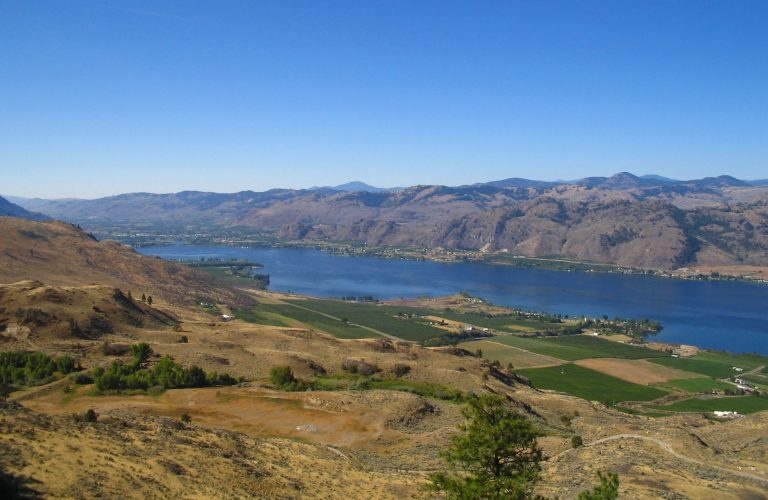
Oroville is a small town nestled in the northern reaches of Okanogan County, Washington, in the Okanogan Highlands near the Canadian border. With a population of roughly 1,700 residents, it has the feel of a quiet rural community surrounded by rolling hills, orchards, and wide-open landscape. The town is best known as a gateway to the cross-border recreation area around Lake Osoyoos and the surrounding Okanogan country, drawing visitors interested in fishing, boating, and exploring the Okanogan Valley's agricultural character. The nearest major city is Seattle, which lies roughly 300 miles to the southwest and requires about a five-hour drive through mountain passes; Spokane is closer at around 180 miles southeast, but the more relevant regional hub is the Okanagan in neighboring British Columbia, with towns like Penticton and Kelowna just a short drive north.
Just north of town, Lake Osoyoos straddles the international border and forms one of the warmest freshwater lakes in Canada and the Pacific Northwest. The U.S. shoreline, accessible from Oroville within about 10 minutes, offers swimming, fishing, and houseboating, and the lake has a long history as a summertime escape for families across the region. Its shallow, warm waters and sandy beaches make it a magnet for visitors crossing in both directions during the warmer months.
South and east of Oroville, the Okanogan National Forest covers a vast swath of mountains, rivers, and pine-clad ridges, providing access to hiking, camping, wildlife viewing, and seasonal hunting. The forest is reached within roughly 30 to 60 minutes from town depending on the trailhead, and it represents a major draw for outdoor travelers who want a quieter, less-crowded alternative to the more famous Cascades parks further west. Anglers in particular make trips here for the forest's trout streams and the tributaries of the Okanogan River.
The town itself sits along the Okanogan River, and the surrounding valley floor is dotted with apple, cherry, and pear orchards that give the area a distinct agricultural rhythm through the year. Spring blossoms, summer fruit stands, and autumn harvests add a layer of small-scale agritourism to the visitor experience, and travelers often pair a stop in Oroville with drives to nearby Tonasket or onward into the Canadian Okanagan, where the wine region around Penticton and Osoyoos lies just across the border. This combination of lake recreation, national forest access, agricultural scenery, and proximity to a renowned Canadian destination gives Oroville a versatile appeal.
For short-term rental owners, Oroville offers a compelling mix of seclusion and access. Its location near an international border crossing, a warm-water lake, and a large national forest positions it as a year-round base for travelers who want a quieter Pacific Northwest experience, while its small footprint means well-appointed rentals can stand out. Visitors who come for the lake, the trails, or the Okanagan's wine country often appreciate a comfortable place to return to on the American side of the line.
Want to know if a property in Oroville is a good investment?
Enter an address to get instant revenue potential and comps.