
Portsmouth, Virginia
Want to see how Portsmouth compares to other top cities in Virginia? Explore all city regulations in Virginia. →
Portsmouth, VA
Generally Investor Friendly

STR Regulations for Portsmouth, Virginia
Overview: Are Short-Term Rentals Allowed in Portsmouth, VA?
Yes—short-term rentals (STRs) are currently allowed in Portsmouth, Virginia, but only within the constraints of Virginia state law. As of the 2025 reporting period, Portsmouth does not have its own local STR ordinance. Under Virginia law, renting a dwelling for less than 30 days is permitted by-right only if the property is the owner’s legal residence (i.e., the owner lives on the property). A business license is not required in Portsmouth at this time. That said, city leaders are actively working to adopt a local STR ordinance in 2025 to address public safety, nuisance, and tax compliance, and to align Portsmouth with neighboring Hampton Roads cities.
Portsmouth’s Commissioner of the Revenue administers a local 1% Short-Term Rental Tax. If your business model results in at least 80% of gross rental receipts coming from rentals of 92 days or less, you must register with the city and collect/remit this 1% tax on all short-term rentals. Separately, Virginia sales tax generally applies to transient lodging at 5.3% and should be collected/remitted as required by state law and Virginia Department of Taxation guidance.
Bottom line: STRs are allowed under state law in Portsmouth (owner-occupied basis only). Local regulations are in development; plan for registration, possible licensing, taxes, and compliance measures consistent with neighboring jurisdictions.
What do Airbnb hosts actually earn in Portsmouth?
Portsmouth hosts earn a median $31,544/year with $164 ADR and 65% occupancy.
Top performers pull in $39,918+ per year.
See the full Portsmouth market breakdownHow to Start a Short-Term Rental Business in Portsmouth
- Confirm eligibility and zoning
- Ensure the property is your legal residence. Under current state law, renting for fewer than 30 days is allowed by-right only if you reside in the dwelling.
- Confirm that the property’s zoning permits residential use and that hosting guests does not create a zoning incompatibility. If uncertain, coordinate with the Planning Department (City Hall) to verify that an STR would be treated as a residential use consistent with owner occupancy.
- Decide your operating model
- Choose between renting entire home (when you’re not present), renting portions while you’re present, or running a traditional B&B. Under current state code, renting the entire dwelling for fewer than 30 days while you are absent is not allowed; staying present is required.
- Set house rules to mitigate nuisance concerns (parking, trash, noise, parties). Portsmouth’s public discussions have emphasized addressing such issues, and future local rules are likely to codify expectations.
- Register for taxes where applicable
- Register with the Commissioner of the Revenue if your STR activity triggers the local Short-Term Rental Tax threshold (≥80% of gross receipts are from rentals of 92 days or less). Complete the city’s Short-Term Rental Certificate of Registration and file/pay the 1% tax on all short-term rentals.
- Register for Virginia sales tax if required for transient lodging and collect/remit the state sales tax on bookings.
- Maintain meticulous records: bookings, receipts, nights booked, guest counts, and tax remittances.
- Build compliance into operations
- Implement check-in identification and quiet hours to reduce public safety concerns.
- Provide off-street parking if possible and share clear parking instructions to neighbors.
- Adopt housekeeping, safety, and emergency protocols; consider signage, phone number visibility, and after-hours contact procedures.
- If operating multiple units or through platforms (Airbnb, VRBO), prepare for future local registration/licensing, inspection, and tax collection mandates under the anticipated ordinance.
- Monitor the evolving local ordinance (expected mid-2025)
- Watch Portsmouth’s Planning and City Council updates for a vote on the STR ordinance. Expect requirements around registration/licensing, occupancy limits, parking, fire safety, insurance, inspections, tax collection, and enforcement (fines, suspensions, revocations).
- Engage in stakeholder input sessions and plan to adapt once rules are adopted.
Required Documents, Permits, Licenses, and Guidelines
Local documents
- Short-Term Rental Certificate of Registration (Commissioner of the Revenue). Required if your STR business meets the 80%/92-day threshold. This is the primary local registration for tax purposes.
- Filing basis: business info, gross receipts, percentage of short-term rental activity, owner attestation under oath.
- If the city subsequently adopts an STR ordinance (anticipated 2025), expect additional local requirements (see “Anticipated Local Regulations” below).
State-level considerations
- Virginia sales tax registration for transient lodging (if applicable). Operators of transient accommodations typically must collect and remit state sales tax at 5.3%; confirm current requirements with the Virginia Department of Taxation.
- Compliance with Virginia Code governing owner-occupied short-term rentals (less than 30 days permitted when the owner resides in the dwelling).
- Observe statewide public safety, health, and nuisance regulations (e.g., noise, disorderly conduct, waste management).
- Building, fire, and life-safety code compliance for any changes to the dwelling; obtain required state/local permits if making structural or system modifications.
Operational guidelines
- Clear guest policies (occupancy, noise, parking, trash, smoking).
- Safety measures (working smoke detectors, CO detectors if applicable, fire extinguishers, posted emergency contacts).
- Neighbor relations (contact information, quiet hours, parking instructions).
- Financial controls (monthly reconciliation of bookings vs. receipts; tax remittances).
Note: Portsmouth currently does not require a separate local business license for STRs; however, legislation under consideration may change this.
Specific Regulations: Portsmouth (Local) and Virginia (State)
Portsmouth (local)
- Short-Term Rental Tax: 1% local tax applies if at least 80% of gross rental receipts are for rentals of 92 days or less. Registration with the Commissioner of the Revenue is required, and operators must collect and remit the tax on all short-term rentals. This tax is separate from the state sales tax.
- No local STR ordinance currently in effect. City Council is developing an STR policy with a target vote by June 2025.
- Zoning clearance: As of 2025 reporting, only six STR operators had obtained zoning clearances. Many listings observed appeared noncompliant with state owner-occupancy requirements. Operators should proactively confirm zoning compatibility, especially in historic districts (e.g., Olde Towne).
Virginia (state)
- Owner-occupied STRs allowed by-right: Virginia law allows renting a dwelling for fewer than 30 days to other parties if the owner lives in the property. A local business license is not currently required in Portsmouth.
- Sales tax: Transient lodging generally incurs Virginia sales tax (currently 5.3%). Operators should register with the state tax agency and remit sales tax where applicable.
- Public safety and nuisance: State statutes and local ordinances address noise, disorderly conduct, and other quality-of-life issues. Portsmouth leaders cite public safety incidents and nuisance concerns (parking, trash, noise) as primary drivers for new local rules.
Anticipated local regulations (subject to adoption)
- Registration/licensing system; permit requirements.
- Occupancy limits and parking standards (e.g., off-street parking).
- Fire safety, insurance, and inspection requirements.
- Tax collection (local and state) and enforcement (fines, suspensions, permit revocations).
- Identification requirements at check-in; potential caps on STR density in certain zones.
Contact Information: Local Authority in Charge of STRs
Commissioner of the Revenue (Tax Registration and Short-Term Rental Tax)
- Address: 801 Crawford Street, Portsmouth, VA 23704
- Phone: (757) 393-8771
- Purpose: Short-Term Rental Certificate of Registration; local 1% short-term rental tax administration.
Portsmouth City Hall (General Information; Planning Department)
- Address: 801 Crawford Street, Portsmouth, VA 23704
- Phone: 757-393-8000 (main line)
- Purpose: Zoning verification, Planning Department, and city administration; monitor for STR ordinance updates.
Note: Future local STR administration may be housed within Planning, Code Enforcement, or another city department once the ordinance is enacted. Confirm any new contact details when the ordinance passes.
Source Pages (Links)
- Portsmouth VA – Short-Term Rental Tax: www.portsmouthva.gov/204/Short-Term-Rental-Tax
- Portsmouth VA – Short-Term Rental Certificate of Registration (PDF): www.portsmouthva.gov/DocumentCenter/View/46/Short-Term-Rental-Certificate-of-Registration-PDF
- The Virginian-Pilot: “Portsmouth looks to join rest of region with short-term rental regulations”: www.pilotonline.com/2025/09/17/portsmouth-short-term-rental/
- Yahoo News (syndicated): “Portsmouth looks to join rest of region with short-term rental regulations”: www.yahoo.com/news/articles/portsmouth-looks-join-rest-region-112300998.html
Practical next steps for investors:
- If operating now, ensure you meet Virginia’s owner-occupancy requirement, and register with the Commissioner of the Revenue if the 80%/92-day threshold applies.
- Collect/remit the 1% Portsmouth short-term rental tax (if registered) and Virginia sales tax where applicable.
- Prepare for a formal local licensing/registration framework likely to be adopted in 2025—build compliance, parking, and safety measures into your business model now to reduce future disruption and costs.
Next step
Found a property in Portsmouth?
Paste any address and get estimated revenue, cash-on-cash return, and comparable STR performance in under 5 minutes. 3 free analyses per day.
Free brief
Get the free Portsmouth STR Investment Brief
Revenue data, top neighborhoods, seasonal trends, and the key regulations for Portsmouth, Virginia in one email.
Portsmouth
Market Saturation Score
Photos of Portsmouth


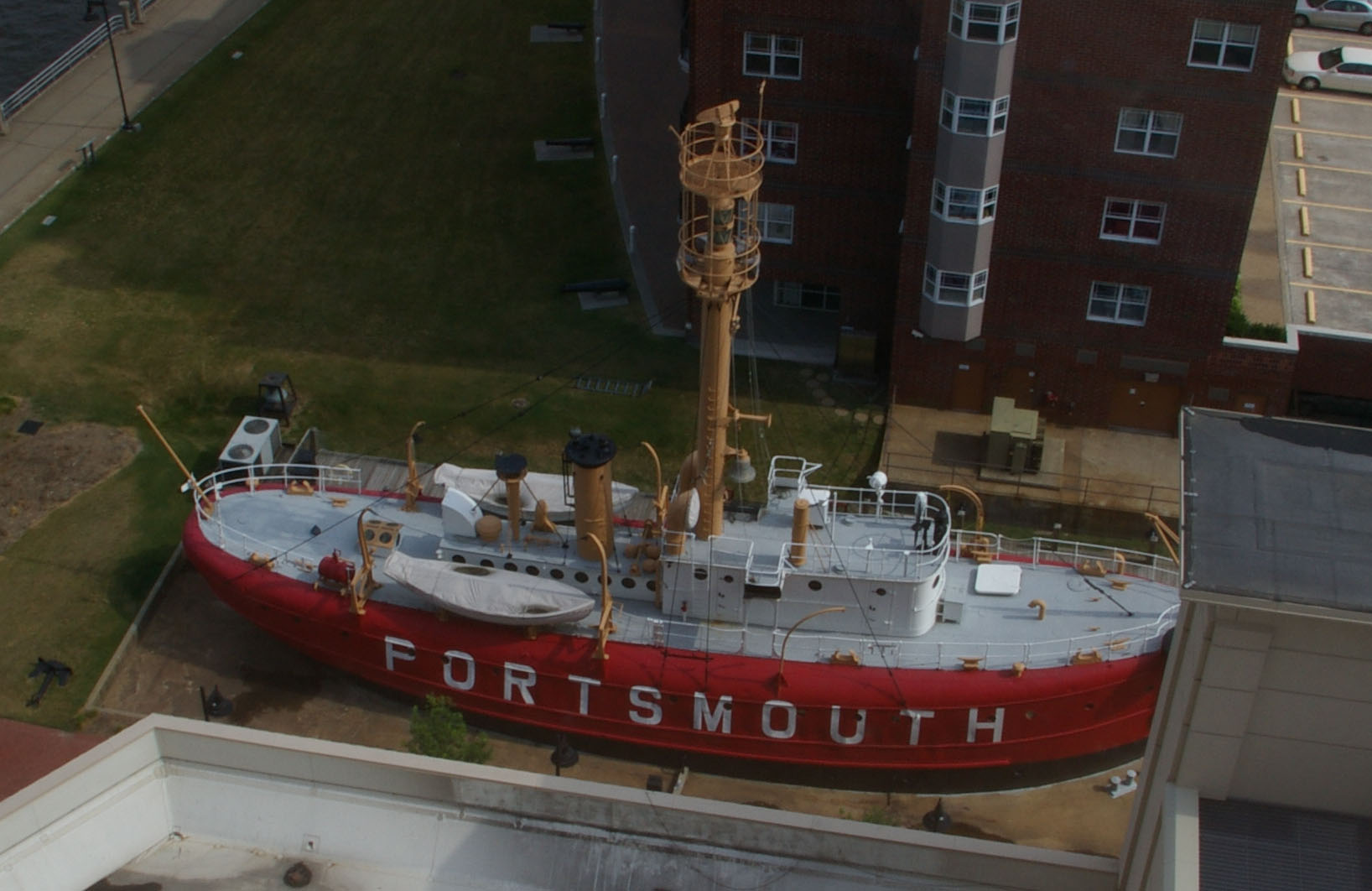
Overview of Portsmouth
Portsmouth, Virginia is an independent city in the Commonwealth of Virginia, situated on the western shore of the Elizabeth River opposite Norfolk. With a population of approximately 95,000, it forms part of the densely settled Hampton Roads metropolitan area along the southeastern Virginia coast. The city carries a working-maritime character shaped by centuries of naval shipbuilding, layered with a leafy 18th- and 19th-century historic core, a walkable riverfront, and a growing arts and dining scene. It is best known as a gateway to the broader Hampton Roads region, including Virginia Beach, the colonial-era sites of the Historic Triangle, and the Atlantic beaches of the Delmarva Peninsula. Portsmouth lies about 20 miles west of Virginia Beach and roughly 90 miles southeast of Richmond, just across the river from downtown Norfolk.
Olde Towne Historic District sits at the heart of Portsmouth and is widely recognized as one of the largest collections of historically significant homes between Alexandria, Virginia and Charleston, South Carolina. The walkable neighborhood features Federal-, Georgian-, and Victorian-era residences, a number of historic churches, and a centuries-old cemetery. It is essentially within Portsmouth itself, just a short walk from the downtown waterfront and a short drive from the city's ferry terminal.
The Norfolk Naval Shipyard, locally referred to as the Portsmouth Naval Shipyard, is one of the oldest continuously operating shipyards in the country, established in 1767. The working yard is not generally open to visitors, but the adjacent Naval Shipyard Museum interprets more than two centuries of naval construction, including the yard's role in every major American conflict from the Revolutionary War forward. It is only a few minutes from Olde Towne.
The Children's Museum of Virginia, located within the Olde Towne district, is one of the largest children's museums in the state, with hands-on exhibits spanning science, engineering, and Tidewater regional history. The museum draws families from across Hampton Roads and is an easy stop for visitors traveling with younger children.
About an hour northwest of Portsmouth, Colonial Williamsburg anchors the Historic Triangle together with Jamestown and Yorktown, offering a reconstructed 18th-century town, living-history interpreters, and extensive grounds. Closer to home, the downtown districts of Norfolk, the Virginia Beach oceanfront, and First Landing State Park are all within roughly a 30-minute drive, giving visitors a wide radius of beaches, museums, and military history from a single base.
Portsmouth appeals to short-term rental investors because it offers the historic character and waterfront of the larger Hampton Roads cities at a more accessible price point, while remaining within easy reach of the region's most popular draws. The combination of an intact historic core, naval heritage tourism, family-friendly museums, and quick access to the Atlantic beaches and colonial sites makes it a flexible home base for travelers exploring southeastern Virginia.
Want to know if a property in Portsmouth is a good investment?
Enter an address to get instant revenue potential and comps.