
Madison Heights, Virginia
Want to see how Madison Heights compares to other top cities in Virginia? Explore all city regulations in Virginia. →
Madison Heights, VA
Generally Investor Friendly

STR Regulations for Madison Heights, Virginia
Executive Overview
Short‑term rentals (STRs) are likely permitted in Madison County subject to zoning and building code compliance. Because STRs are a land use, their permissibility and operational requirements are controlled by the local zoning district of the property, not by a separate stand‑alone STR statute. The Madison County Zoning & Planning Office administers zoning, special permits, variances, floodplain rules, and subdivision compliance. All residential structures, including dwelling units used for STRs, must meet the Virginia Uniform Statewide Building Code (USBC) and, in many cases, the International Residential Code (IRC). A certificate of occupancy and any required inspections must be in place before occupancy. County contacts and procedures are provided below.
Note on scope and limitations: the provided source content does not include Amherst County (where the Town of Madison Heights is located) ordinances, nor does it contain any Amherst County STR rules. This guide uses Madison County zoning and statewide building code sources included in the provided materials. If you are located inside the Town of Madison Heights limits, contact the town directly for zoning and licensing requirements that may differ from Madison County’s unincorporated rules.
What do Airbnb hosts actually earn in Madison Heights?
Madison Heights hosts earn a median $45,398/year with $191 ADR and 76% occupancy.
Top performers pull in $73,595+ per year.
See the full Madison Heights market breakdownHow to Start a Short‑Term Rental Business in This Market
-
Confirm jurisdiction and zoning
- Determine whether the property is inside the Town of Madison Heights (Amherst County) or in the unincorporated area of Madison County. The zoning authority and requirements differ.
- If inside Madison County (unincorporated), the Zoning & Planning Office administers zoning. The GIS parcel viewer can help verify zoning district, parcel boundaries, and floodplain status.
-
Verify building code eligibility
- Ensure the structure meets the Virginia Uniform Statewide Building Code (USBC) and, where applicable, the International Residential Code (IRC). In the provided Virginia‑wide context, many localities and structures (including tiny homes on foundations) follow IRC/USBC standards. Building permit(s) and inspections are required to obtain a certificate of occupancy.
-
Confirm use under zoning
- STRs are a land use; permitted uses and special‑use permits vary by zoning district (e.g., Residential, Business, Agricultural). Confirm that STRs are an allowed use for the specific parcel and district. If not permitted by right, explore special permit options.
-
If in the Town of Madison Heights (Amherst County)
- Obtain Amherst County/Town zoning confirmation and any town business license/registration. The provided materials do not include Amherst County ordinances; contact the town directly.
-
Operational readiness
- After zoning clearance and code compliance (including final inspection and certificate of occupancy), you may market the property as an STR. Ensure any local or state business licensing, taxes, or transient occupancy taxes are addressed per the relevant jurisdiction (town vs. county).
Required Documents, Permits, Licenses, and Guidelines
From the provided sources, the following apply in Madison County (unincorporated). If inside the Town of Madison Heights, the same items may be required plus town‑specific actions.
-
Building Permit and Inspections
- Obtain required building permits before construction, alteration, or change of use.
- Complete all required inspections for structural, electrical, plumbing, and life‑safety systems to ensure compliance with USBC/IRC.
- Secure a Certificate of Occupancy before any occupancy, including STR guests. The provided Virginia tiny‑home context emphasizes building permits, inspections, and a certificate of occupancy for compliance.
-
Zoning Review
- Confirm the zoning district allows STR use (by right or special permit). The County’s Zoning Administrator can advise on allowed uses and special permits.
-
Subdivision and Platting
- For subdivided or divided lots, confirm subdivision ordinance compliance. Any division of land into lots typically requires formal subdivision approval by the Board of Supervisors. Boundary line adjustments and family divisions require Zoning Administrator review and plat approval to verify compliance with zoning and subdivision ordinances.
-
Floodplain Compliance
- If within a floodplain, comply with the County’s Floodplain Ordinance, which restricts or prohibits certain development and regulates modifications that could affect flood heights, velocities, or frequencies. Obtain any required permits and inspections for flood‑related improvements.
-
Business Licensing and Taxation (county/town‑specific)
- The provided materials do not include a Madison County business license or tax regime for STRs. If inside the Town of Madison Heights, contact the town for any business license/registration and transient occupancy tax. For Madison County, contact the Zoning & Planning Office and the County Administrator’s office to confirm licensing, registration, and tax requirements for STRs.
Specific Regulations: City, County, and State
Because the provided materials focus on Madison County zoning and statewide building codes rather than city‑specific STR rules, the details below are at the county and state levels.
-
Madison County Zoning (unincorporated)
- Zoning Administration: The County Planner and Building/Zoning Technician administer and enforce the zoning ordinance. The Planner may issue written compliance orders, initiate legal action, and make findings/conclusions in specific property rights determinations under the ordinance.
- Zoning Districts: Agricultural, Conservation, Residential, Business, and Industrial categories define allowed by‑right and special permit uses. STR permissibility depends on the specific district and whether STRs are treated as a lodging use, home‑based business, or residential use. Check the County zoning ordinance and the Zoning Map & Ordinances.
- Setbacks and Dimensional Standards: The zoning ordinance specifies required building setbacks from property lines and other dimensional controls.
- Special Permits: Certain land uses are only allowed via a special permit; the Zoning Administrator can advise whether an STR use would require a special permit in a given district.
- Board of Zoning Appeals (BZA): If strict application of the zoning ordinance creates unnecessary or unreasonable hardship due to unique physical characteristics of a lot (e.g., setback constraints), a property owner may apply for a variance. Variances cannot authorize uses otherwise prohibited by the zoning ordinance.
- Floodplain Ordinance: Regulates development within floodplains to protect life and property; includes restrictions and permitting requirements for development that may alter flood characteristics.
- Subdivision Ordinance: Divisions of land into lots typically require subdivision plat approval by the Board of Supervisors. Boundary line adjustments and family divisions require Zoning Administrator approval and compliance verification.
-
Statewide Building Codes (USBC/IRC)
- Virginia Uniform Statewide Building Code (USBC) governs residential construction and occupancy statewide.
- International Residential Code (IRC) is referenced in the provided Virginia tiny‑home context for residential structures, including tiny homes on foundations. The typical dimensional parameters cited in that context include a maximum size around 400 square feet and minimum ceiling height of 6 feet 8 inches for tiny homes; exact parameters may vary by code edition and local adoption.
- Inspections and Certificate of Occupancy: Compliance requires building permits, successful inspections, and issuance of a certificate of occupancy prior to any occupancy, including STR guests.
-
City‑Specific STR Rules (Town of Madison Heights)
- The provided materials do not include Amherst County or Town of Madison Heights STR ordinances or business licensing requirements. STR rules inside the Town of Madison Heights may differ from Madison County’s unincorporated rules. Contact the Town directly.
Contact Information (Madison County Zoning & Planning)
Use the following contacts for zoning, building, and related County processes. For Town of Madison Heights issues, contact the Town of Madison Heights/Amherst County directly (not included in the provided sources).
-
Allen Nicholls, Planning & Zoning Administrator
- Email: anicholls@madisonco.virginia.gov
- Phone: (540) 948‑6102
-
Stacy Meredith, Building/Zoning Technician
- Email: permit-tech@madisonco.virginia.gov
- Phone: (540) 948‑6102
-
Zoning & Planning Office
- Physical Address: 410 N Main Street, Madison, VA 22727
- Mailing Address: PO Box 1206, Madison, VA 22727
- Phone: (540) 948‑6102
- Office Hours: Monday–Friday, 8:30 am–4:30 pm
-
Online Resources
- Madison County GIS (parcel boundaries, zoning, flood mapping): see reference below
- Zoning Map & Ordinances, Zoning Application Forms, Board of Zoning Appeals: see reference below
Source Links
- Tiny Home Regulations in Virginia (IRC/USBC overview, permits/occupancy context): www.zookcabins.com/regulations/tiny-home-regulations-in-virginia
- Madison County Zoning & Planning (zoning administration, districts, floodplain, variances, subdivision, contact information): www.madisonco.virginia.gov/198/Zoning-Planning
- Madison County GIS (parcel, zoning, flood mapping): www.webgis.net/va/Madison/
- Zoning Application Forms and Zoning Map & Ordinances: www.madisonco.virginia.gov/403/Zoning-Application-Forms and www.madisonco.virginia.gov/402/Zoning-Map-Ordinances
- Board of Zoning Appeals (variances): www.madisonco.virginia.gov/310/Board-of-Zoning-Appeals
Action note for investors: Because STR permissibility is zoning‑driven and the provided content is county‑focused, confirm with Madison County Zoning & Planning if the property is outside the Town of Madison Heights; otherwise, engage the Town of Madison Heights for town‑specific zoning, licensing, and tax requirements.
Next step
Found a property in Madison Heights?
Paste any address and get estimated revenue, cash-on-cash return, and comparable STR performance in under 5 minutes. 3 free analyses per day.
Free brief
Get the free Madison Heights STR Investment Brief
Revenue data, top neighborhoods, seasonal trends, and the key regulations for Madison Heights, Virginia in one email.
Madison Heights
Market Saturation Score
Photos of Madison Heights

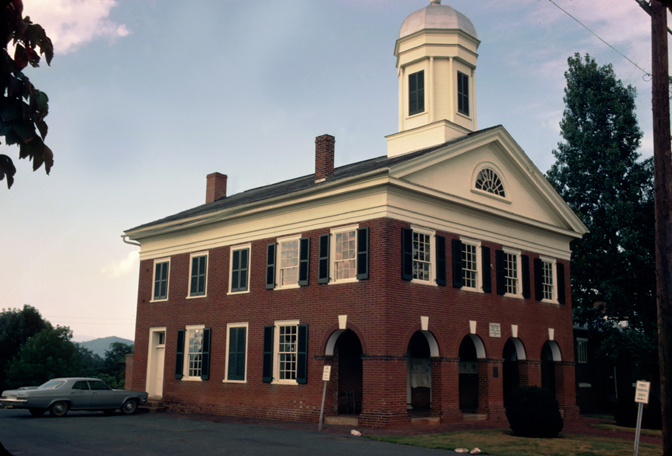
Overview of Madison Heights
Madison is a small, quiet town in the rolling Piedmont of central Virginia, serving as the seat of Madison County. The town itself has only a few hundred residents, while the broader county holds roughly 13,000 people, giving the area a rural and unhurried feel. Surrounded by farmland, horse pastures, and the wooded foothills of the Blue Ridge Mountains, Madison has long served as a gateway to the southern end of Shenandoah National Park and to a swath of Virginia countryside prized for its scenery and historic estates. It sits about 80 miles southwest of Washington, D.C., and roughly 30 miles north of Charlottesville, placing it within easy reach of two major metropolitan areas while retaining a small-town pace.
The biggest draw in the area is Shenandoah National Park, whose southern entrance at Rockfish Gap lies just to the southwest. From Madison, travelers can reach the park's lower sections in about 20 to 30 minutes, where the Skyline Drive begins threading north along the Blue Ridge crest. Hikers come to the Madison County side of the park for Old Rag Mountain, one of Virginia's most popular day hikes, and for the White Oak Canyon and Cedar Run falls trails, where cascading water drops through shaded hollows. In autumn, the park's hardwood forests draw leaf-peepers from across the Mid-Atlantic.
A short drive south brings visitors to [Montpelier](en.wikipedia.org/wiki/Montpelier_(Orange,_Virginia), the lifelong home of James Madison, the fourth U.S. president and the so-called "Father of the Constitution." The estate, located near the town of Orange, is operated as a museum and is roughly a 25- to 30-minute drive from Madison. Its restored mansion, formal gardens, and extensive grounds offer a window into early American political life, and the site's Archaeology Lab occasionally lets visitors observe conservation work in progress.
Closer to town, the countryside of Madison County is dotted with country farms and small family operations that have become part of the local identity. Graves Mountain Farm, set in the foothills just north of Madison, has been a working farm for generations and hosts seasonal festivals, horseback riding, and farm-to-table events that draw visitors from across the region. The nearby Route 29 corridor also leads travelers toward a string of Virginia vineyards and cideries in neighboring Orange and Greene counties, making Madison a convenient base for those touring the Piedmont wine country.
For short-term rental owners, Madison offers an appealing combination: genuine rural character, proximity to a major national park, and easy driving access to both Charlottesville and the D.C. metro area. Guests looking for a quiet country escape with hiking, history, and small-town charm all within a short drive will find the area an attractive alternative to the busier Blue Ridge towns to the south.
Want to know if a property in Madison Heights is a good investment?
Enter an address to get instant revenue potential and comps.