
Arlington, Virginia
Want to see how Arlington compares to other top cities in Virginia? Explore all city regulations in Virginia. →
Arlington, VA
Generally Investor Friendly

STR Regulations for Arlington, Virginia
Overview: Are Short-Term Rentals Allowed in Arlington, VA?
Yes. Short-term rentals are explicitly allowed in Arlington County, Virginia, under the zoning classification “Accessory Homestay.” The County Board adopted regulations on December 10, 2016, with revisions on January 28, 2017. The accessory homestay framework became effective December 31, 2016, and permits property owners (or tenants who use the dwelling as their primary residence) to rent all or part of their home for stays of less than 30 days via platforms such as Airbnb, VRBO, and Craigslist. These rentals are treated as a home occupation, subject to occupancy caps, safety requirements, permit and licensing obligations, and enforcement provisions.
What do Airbnb hosts actually earn in Arlington?
Arlington hosts earn a median $44,811/year with $210 ADR and 77% occupancy.
Top performers pull in $65,536+ per year.
See the full Arlington market breakdownHow to Start a Short-Term Rental Business in Arlington
Below is a practical, compliance-first pathway for investors, hosts, and property managers.
- Confirm Eligibility
- You must occupy the unit as your primary residence (owner or tenant). Arlington’s regulations define primary residence as occupying the dwelling at least 185 days per year.
- The unit must be a legally established dwelling.
- The property must be in a zoning district that allows accessory homestay: single-family residential (R), multiple-family residential (RA), and commercial/mixed-use (C).
- Obtain Your Zoning Permit
- Apply for an Accessory Homestay Permit with the Zoning Administrator.
- File the application with the required contact information for a responsible party available 24/7 and within 30 miles of the property.
- Provide proof of primary residency.
- Pay the filing fee at permit issuance after approval: $63.
- Register for Business Operations and Taxes
- Obtain a business license through the Commissioner of the Revenue (Commissioner of Revenue, Arlington County).
- Register through the Customer Assessment and Payment Portal (CAPP) as required.
- Comply with tax obligations applicable to short-term rentals, including transient occupancy taxes.
- Complete Application and Operational Requirements
- Send neighbor notification letters (abutting, across the street/hall, and immediately above/below in multifamily buildings) describing the accessory homestay operation and providing owner/responsible party contact information. Include proof of certified mail delivery.
- Prepare and post an evacuation plan inside the front door (required for multifamily buildings).
- Ensure all applicable Virginia Uniform Statewide Building Code requirements are met.
- Ongoing Compliance and Renewal
- Maintain required safety equipment (smoke and carbon monoxide detectors; accessible fire extinguisher).
- Adhere to occupancy and guest limits; avoid prohibited commercial uses.
- Cooperate with annual county inspections (at least once per year, with reasonable advance notice).
- Renew the accessory homestay permit upon expiration (valid up to two years).
Required Documents, Permits, Licenses, and Guidelines
Permits and Licenses
- Accessory Homestay Permit (Zoning Administrator; $63 filing fee)
- Business License (Commissioner of the Revenue; for hosting operations)
- CAPP registration (Customer Assessment and Payment Portal)
Documentation to Submit
- Contact details for owner and responsible party (24/7 availability, within 30 miles)
- Proof of primary residency
- Valid Certificate of Occupancy (if applicable)
- Neighbor notification letters and certified mail receipts
- Evacuation plan (for multifamily buildings; posted inside front door)
- Safety equipment verification: working smoke and carbon monoxide detectors; accessible fire extinguisher
Code and Safety Compliance
- Virginia Uniform Statewide Building Code: any sleeping room used for accessory homestay must meet sleeping room requirements when created; the accessory homestay must be allowed under the building code for the subject dwelling
- Posting and access requirements: evacuation plan in multifamily units; annual county inspection access granted to verify compliance
- Signage: prohibited
Operational Guidelines
- Single contract rule: no more than one contract per overnight stay
- No commercial meetings or events (e.g., parties, banquets, weddings, fundraisers) under accessory homestay permits
- Food service: the owner (or agent/contractor) may prepare and serve food/beverages to guests
- Non-resident employees: prohibited from performing work on the premises, except for normal home maintenance (e.g., cleaning, repairs, yard maintenance)
- Detached accessory buildings: prohibited for accessory homestay use
Specific Regulations: Arlington (City/County) and Virginia
Arlington County Accessory Homestay Rules
- Primary residency: required; owner or tenant must live in the unit at least 185 days per year
- Allowed zoning districts: R (single-family residential), RA (multiple-family residential), C (commercial/mixed-use)
- Unit location: only within the main dwelling (may include an approved attached accessory dwelling); detached accessory buildings cannot be used
- Guest limits: maximum of the greater of either 6 overnight guests per night OR 2 overnight guests per night per bedroom
- Single contract per night: only one rental agreement can be active per overnight stay
- Occupancy cap (multifamily buildings): the larger of one unit or 25% of total units in a building may be used for accessory homestay; townhouses, duplexes, semi-detached, and two-family dwellings are not considered multifamily buildings and are not subject to this cap
- Maximum stay for a single lodger: no more than 30 days in one calendar year
- Accessory dwelling interaction: if the property has an approved accessory dwelling, either the accessory dwelling or the main dwelling can be used (not both simultaneously); guest count must be reduced by the number of occupants of the accessory dwelling
- Family/caregiver suites: allowed to be used for accessory homestay
- Safety equipment: smoke and carbon monoxide detectors and a fire extinguisher accessible to all guests are required
- Building code compliance: sleeping rooms used for accessory homestay must meet code; use must be permitted under the building code for the dwelling
- Non-resident employees: prohibited except for standard home maintenance
- Food service: allowed; kitchen use by guests is not regulated by this ordinance
- Commercial meetings/events: prohibited under accessory homestay permits
- Signage: prohibited
- Permits and inspections:
- Accessory homestay permit valid up to two years; owner renews upon expiration
- Annual county inspection access required (with reasonable advance notice)
- Revocation grounds:
- Three or more substantiated complaints within one year
- Failure to comply with accessory homestay requirements or permit conditions
- Refusal to allow county inspectors access
- If revoked, the applicant is ineligible for a new permit for up to two years
State-Level Considerations (Virginia)
- Virginia Uniform Statewide Building Code governs sleeping room standards and building use approvals for accessory homestay operations
- Hosts must comply with state and local tax obligations (e.g., transient occupancy taxes)
- State policy developments and legislative studies in 2016–2017 prompted local jurisdictions like Arlington to adopt structured regulations; hosts should monitor updates from the Virginia Housing Commission’s Short-Term Rental Work Group and the General Assembly
HOA/Condo Governance
- Condominium and homeowners associations may adopt their own rules to prohibit, further limit, or allow short-term rentals consistent with county regulations
Contact Information and Authority
Zoning (Primary Authority for Accessory Homestay Permits)
- Phone: 703-228-3883
- Email: contactzoning@arlingtonva.us
- Website: Short-Term Residential Rentals (Accessory Homestay) — Arlington County Government
Commissioner of the Revenue (Business Licensing and Tax Registration)
- Website: Commissioner of the Revenue — Arlington County Government
Customer Assessment and Payment Portal (CAPP)
- Portal: Customer Assessment and Payment Portal (CAPP)
Building and Code Enforcement
- Department: Community Planning, Housing and Development — Arlington County Government
County Manager’s Office — Constituent Services
- Website: Short-Term Rentals in Arlington County — Constituent Services
Source Links (for verification and further details)
- Short-Term Residential Rentals (Accessory Homestay) — Arlington County Government
- Accessory Homestay Permit Application — Arlington County Government
- Zoning: Accessory Homestay — Adopted Amendment (Dec 10, 2016)
- Zoning: Accessory Homestay — Adopted Revisions (Jan 28, 2017)
- Proposed Zoning Ordinance Amendment — Request to Advertise (Oct 15, 2016)
- County Seeks Input on Short-term Residential Rental Regulations — News Release
- County to Allow and Regulate Short-Term Rentals — News Release
- Short-Term Rentals in Arlington County — County Manager’s Office (Constituent Services)
- Noise Control Ordinance — Arlington County Government
- Commissioner of the Revenue — Arlington County Government
- Customer Assessment and Payment Portal (CAPP)
- Customer Assessment and Payment Portal (CAPP) — Direct Payment Access
This guide synthesizes Arlington County’s adopted accessory homestay regulations and related administrative requirements to help investors and hosts establish and maintain compliant short-term rental operations. Always confirm current requirements with the County’s Zoning Administrator and the Commissioner of the Revenue before filing applications or launching operations.
Next step
Found a property in Arlington?
Paste any address and get estimated revenue, cash-on-cash return, and comparable STR performance in under 5 minutes. 3 free analyses per day.
Free brief
Get the free Arlington STR Investment Brief
Revenue data, top neighborhoods, seasonal trends, and the key regulations for Arlington, Virginia in one email.
Arlington
Market Saturation Score
Photos of Arlington

Overview of Arlington
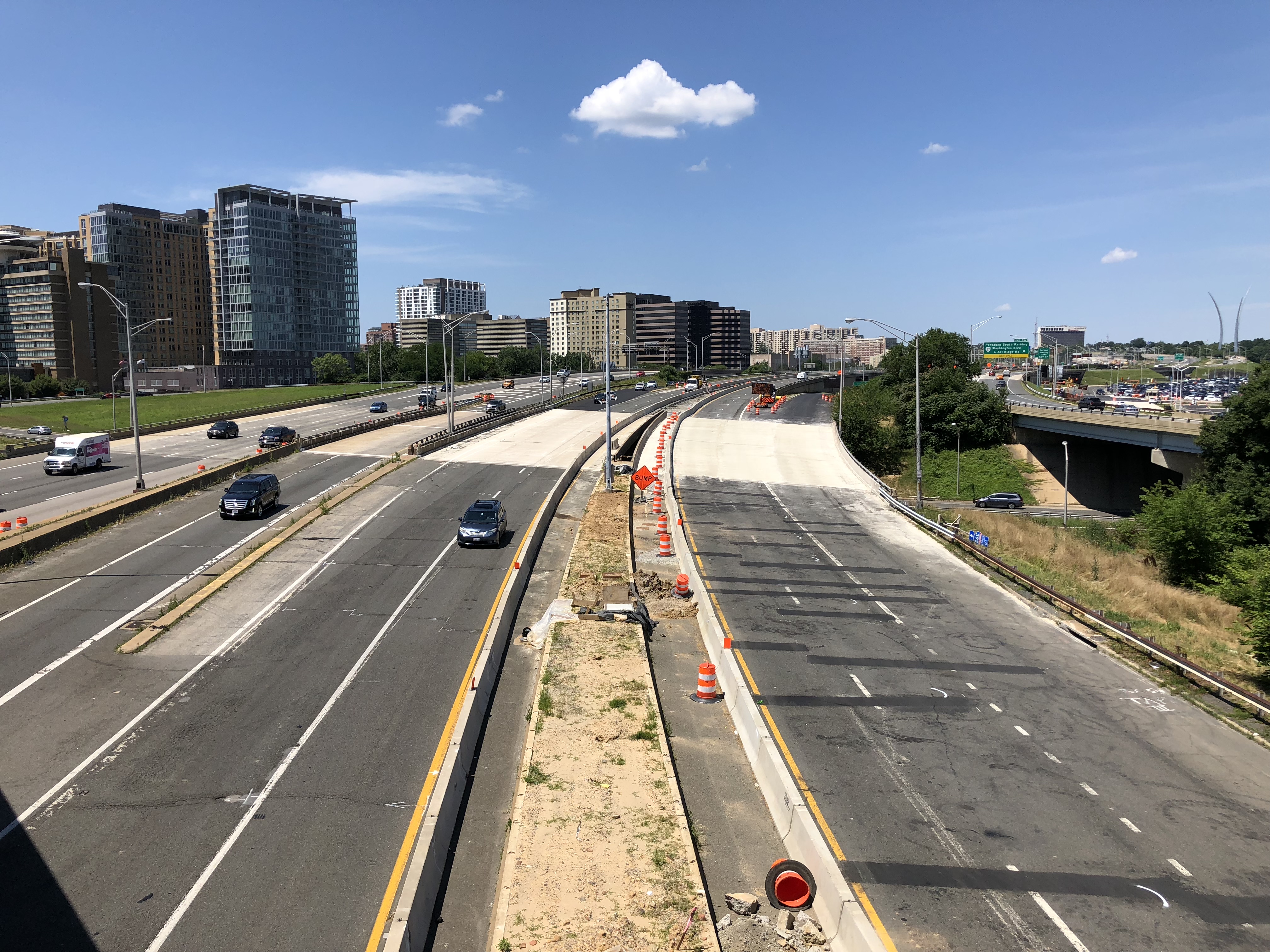
Arlington is an urban county in the Commonwealth of Virginia, situated directly across the Potomac River from the nation's capital. With a population of roughly 235,000, it is one of the most densely populated jurisdictions in the country and is best known for its federal landmarks, its dense skyline of high-rise residences and offices, and its role as a convenient gateway to Washington, D.C., which lies only about three to five miles to the east. The county has a polished, transit-oriented feel, with a young professional population, well-maintained neighborhoods, and a steady flow of government workers, military personnel, and tourists passing through.
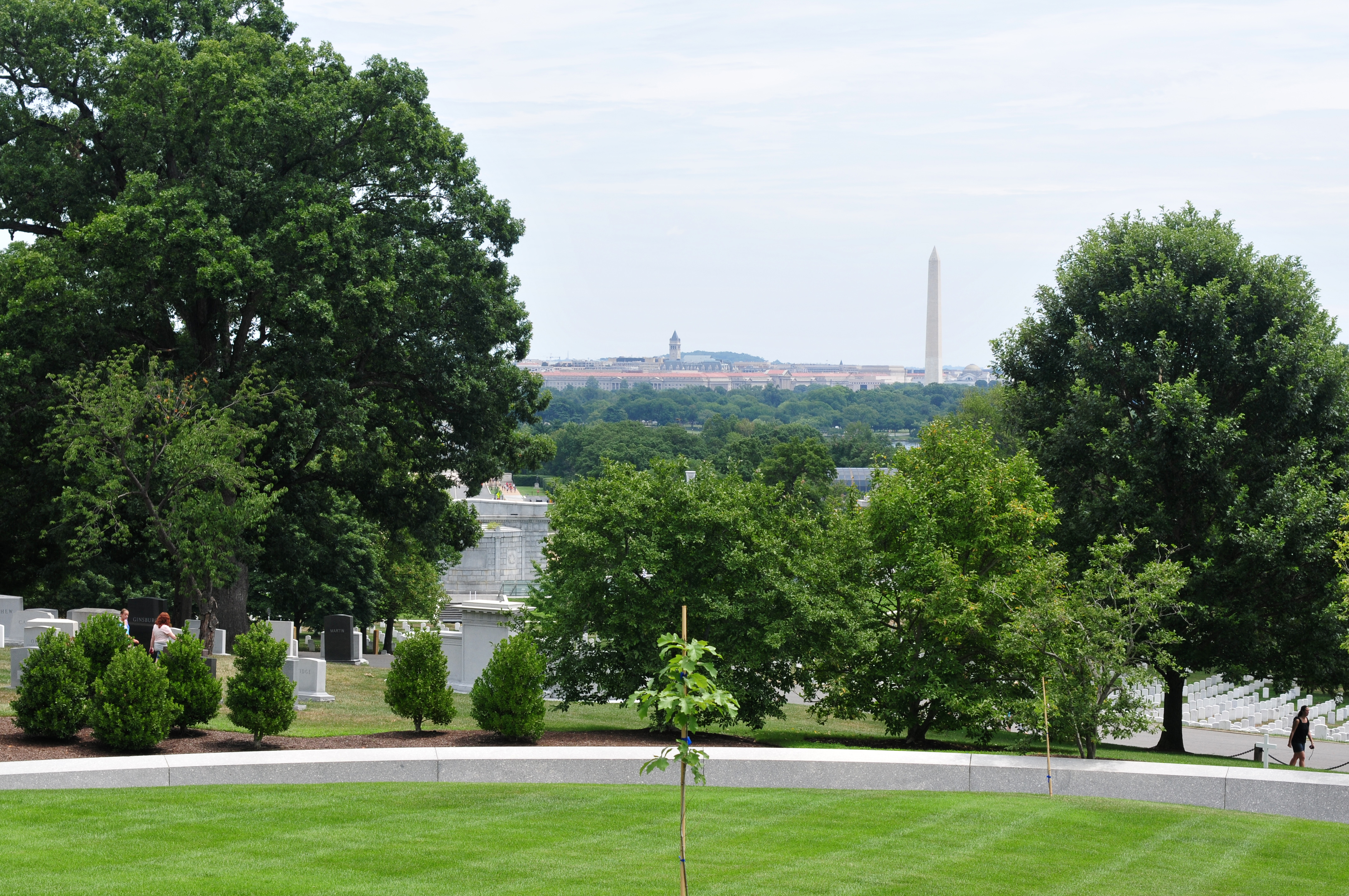
Arlington National Cemetery is the area's most visited landmark, drawing millions of visitors each year to its rolling hills lined with white headstones. Located just across the Potomac from the Lincoln Memorial, the cemetery is the final resting place for many U.S. presidents, service members, and astronauts, and it is also home to the Tomb of the Unknown Soldier, guarded continuously by sentinels. The site is roughly a ten-minute drive from most points in the county, and the adjacent Arlington National Cemetery also offers walking tours that include the Kennedy gravesites and the Arlington House, the former home of Robert E. Lee.
A short distance to the south along the Potomac lies Gravelly Point Park, a small riverside green space that has become one of the region's most popular spots for plane watching. Visitors gather along the shoreline to watch jets take off and land at Reagan National Airport just across the runway, with the Washington skyline as a backdrop. The park is about ten to fifteen minutes from central Arlington, and it connects directly to the Mount Vernon Trail, a popular multi-use path that runs along the river toward George Washington's Mount Vernon estate.
Just across the river to the north, Theodore Roosevelt Island offers a wooded retreat within walking distance of Arlington's Rosslyn neighborhood. The island is a national memorial dedicated to the twenty-sixth president and is accessible via a footbridge from the Virginia side, providing roughly ninety acres of marshland and forest trails. Arlington is also closely tied to the Pentagon, the Department of Defense headquarters located adjacent to the cemetery, and to the cluster of high-rise neighborhoods in Rosslyn, Ballston, and Crystal City that have reshaped the county's skyline over the past several decades.
For short-term rental investors and visitors alike, Arlington's appeal lies in its combination of walkable urbanism, immediate proximity to Washington, D.C., and a roster of nationally significant landmarks within a few miles of nearly every neighborhood. Its reliable transit access, professional traveler base, and steady calendar of government, military, and tourism traffic make it a strong year-round market, while the riverfront trails and memorials add a layer of character that distinguishes it from the capital across the water.
Want to know if a property in Arlington is a good investment?
Enter an address to get instant revenue potential and comps.