
Vernon, Texas
Want to see how Vernon compares to other top cities in Texas? Explore all city regulations in Texas. →
Vernon, TX
Generally Investor Friendly
STR Regulations for Vernon, Texas
- Executive overview: Are STRs allowed in Vernon, TX?
- Yes. Short‑term rentals (rental of a dwelling for periods of 30 days or less, typically booked through online platforms) are not expressly prohibited in Vernon’s zoning code and zoning map.
- The City’s Zoning Regulations establish residential districts (RS‑1, RS‑2, RG) that permit single‑family and multifamily dwellings, and also authorize rooming/boarding house as a permitted use within the RG district. A STR can be operated as:
- A principal “single‑family” residential use (RS‑1, RS‑2),
- A “multifamily dwelling” or “rooming/boarding house” (RG) as applicable,
- A “tourist house/boarding house” under the “principal uses” of multifamily dwellings.
- Vernon has not adopted a city‑specific STR licensing, registration, or occupancy ordinance. Absent more restrictive local rules, an STR must comply with the general zoning, building, health, safety, tax, and parking requirements summarized below.
- Because the Zoning Regulations do not explicitly reference “vacation rentals” or “short‑term rentals,” investors should confirm zoning consistency with the Enforcing Officer (Building Official) and obtain a Building Permit and Certificate of Occupancy for any structural alterations or changes of use.
- How to start a short‑term rental business in Vernon
- Confirm zoning and physical use
- RS‑1 (single‑family detached dwelling) or RS‑2 (single‑family detached dwelling) can host a STR if the dwelling remains primarily residential. RG (general residential) allows duplexes, multifamily dwellings, and rooming/boarding houses; RG is typically the safest zoning district for short‑term lodging operations in a multifamily setting.
- If converting space to dedicated short‑stay lodging or adding rooms, determine whether the project is new construction, alteration, or change of use. For any structural changes or conversion, a Building Permit is required (Article III, Section 301.1).
- Determine whether the use aligns best with “Multifamily Dwelling” or “Tourist House/Boarding House” in the RG district; pursue the appropriate application path and ensure compliance with parking, livability space, and site plan requirements (Article IX, Sections 903.2–903.7).
- Engage city review and obtain permits
- Submit a Building Permit application with a plot plan, accurate dimensions, and any improvements to the Enforcing Officer (Section 301.1). Keep an approved copy on site during construction.
- If altering occupancy or changing use (e.g., to “Tourist House/Boarding House”), secure a Certificate of Occupancy. Non‑conforming use continuation requires a Certificate (Section 601.4.B).
- If deviations from dimensional standards are needed, request a variance or special exception through the Board of Adjustment (Article V). Special exceptions for carports, site plan approvals, and other items may require Planning and Zoning Commission review (Section 703.1.B.2.b; 910.4‑910.5).
- Structural, safety, and site design compliance
- Observe setback, yard, height, and coverage limits for the district:
- RS‑1: min lot 8,000 sf; min frontage 70 ft; max coverage 50% interior, 60% corner; front setback 30 ft; side 5 ft interior/10 ft street side on corners; rear 20% lot depth; height ≤35 ft (Section 901.5).
- RS‑2: min lot 6,000 sf; min frontage 50 ft; max coverage 40%; front setback 25 ft; side 5 ft interior/10 ft street side; rear 20% lot depth; height ≤35 ft (Section 902.5).
- RG: minimum lot 10,000 sf and lot width 100 ft for multifamily; front yard typically 25 ft (35 ft on arterials); side yards 15 ft; rear yard 15 ft; height ≤26 ft; site plan, traffic, parking, and refuse/recreation standards apply (Sections 903.5–903.7).
- Provide off‑street parking and loading:
- Minimum 1.5 spaces per efficiency/1‑bedroom unit and 2 spaces per 2+‑bedroom multifamily unit (Section 708.6).
- Design standards: parking spaces 9 ft x 20 ft; unobstructed access; lighting shielded from adjacent residences; unenclosed surfaces in all‑weather material; screening walls/fences where required (Sections 708.1–708.5).
- Meet livability space, refuse, recreation, and emergency access requirements for multifamily projects (Section 903.7).
- Observe setback, yard, height, and coverage limits for the district:
- Advertising and signage
- Temporary real estate signs up to 12 sf are permitted; must be removed within one week after lease/sale (Section 705.3.D).
- Residential area nuisance standards apply: no exterior evidence of a home occupation beyond one 144‑square‑inch non‑illuminated flat/window sign per street (Section 706.4). For a commercial STR, use signage permitted by the zoning district and avoid glare or confusion with traffic signals (Section 705.4).
- State tax and registration compliance
- Obtain a Hotel Occupancy Tax (HOT) permit through the Texas Comptroller and collect/remit HOT on all taxable stays.
- If operating three or more properties as STRs or renting rooms to unrelated occupants for under 30 days, obtain a Texas state Certificate of Registration and follow the safety and notice requirements under Texas Health and Safety Code Chapter 365. Confirm current thresholds and procedures with the Comptroller or the local fire marshal.
- Ongoing operations and inspections
- STRs in multifamily developments must adhere to site plan conditions, parking counts, and livability standards. Violations are misdemeanors subject to fines ($5–$200 per offense; each day a violation continues is a separate offense) (Section 302.1).
- Changes to structures, parking, or use may require additional permits or Board approval. Variances terminate if conditions are breached or use is abandoned for six months (Section 501.2.B).
- Required documents, permits, licenses, and guidelines
- Building Permit (Article III, Section 301.1)
- Plot plan, building dimensions, lot lines, subdivision info; approved copy must be onsite during construction.
- Certificate of Occupancy
- Required to register a non‑conforming use and to change/confirm occupancy/use (Section 601.4.B).
- Variance/Special Exception (Article V)
- Appeals within 15 days; written notice; Board decisions require four affirmative votes; approval triggers conditions and potential termination on non‑compliance (Section 501.3–501.4).
- Off‑street parking and loading compliance (Article VII, Sections 708.1–708.6)
- Parking counts per use; space design, setbacks, and screening; guest parking (10% of required) for multifamily (Section 903.7.C).
- State registrations
- Hotel Occupancy Tax permit via Texas Comptroller.
- State Certificate of Registration under Texas Health and Safety Code Chapter 365 for STR operations meeting threshold (three or more rentals or short‑stay room rentals). Safety plan and notification obligations may apply.
- Signage
- Real estate temporary signs (≤12 sf) with removal timing; commercial signage per district standards; illumination and residential nuisance constraints (Sections 705.3–705.4).
- Specific regulations by jurisdiction
City of Vernon (municipal)
- Zoning districts:
- RS‑1 (single‑family detached); RS‑2 (single‑family detached); RG (duplexes, multifamily dwellings, rooming/boarding houses).
- AG (general agricultural), C‑C, C‑A/R, C‑G, I‑L, I‑H, C‑F, P‑D, F‑D are established but not typically used for residential STRs.
- Dimensional controls:
- RS‑1/2 front, side, rear yards, height, and coverage limits (Sections 901.5 and 902.5).
- RG multifamily dimensional standards and site plan review (Sections 903.5–903.7).
- Parking and loading:
- Multifamily: 1.5 spaces/eff‑1‑bed; 2 spaces/2+‑bed; guest parking +10%; access design; screening; lighting controls (Sections 708.1–708.6; 903.7).
- Non‑conforming uses:
- Allowed to continue under conditions; Certificate of Occupancy required for registration; changes to conforming uses permitted (Section 601.4).
- Enforcement:
- Misdemeanor; fines $5–$200 per offense; each day a violation persists is separate (Section 302.1).
- Signs:
- Temporary real estate signs; illumination limitations; visibility/traffic safety; residential nuisance standards (Sections 705.1–705.4).
County level (Wilbarger County)
- No county‑specific STR ordinance is provided in the search results; therefore, county rules do not impose additional STR limits beyond state law and the City’s zoning regulations.
State level (Texas)
- Short‑term rentals are permitted statewide; hosts must:
- Register for HOT and remit taxes on taxable stays (Texas Comptroller).
- Obtain a Certificate of Registration under Health and Safety Code Chapter 365 if operating three or more properties or renting rooms to unrelated occupants for fewer than 30 days; comply with fire and safety requirements and tenant notification rules.
- Note: RS districts require residential compatibility; RG and the “rooming/boarding house” category generally accommodate lodging uses.
- If a STR operates as a commercial lodging with multiple rooms rented simultaneously to separate parties, ensure compliance with potential “boarding house” provisions and fire/safety standards.
- Contacts and authorities
- City of Vernon
- Building Official/Enforcing Officer (City Hall).
- Planning and Zoning Commission and City Commission (special exceptions, amendments).
- Board of Adjustment (variances, special exceptions, interpretations).
- City Hall address: 2025 Cecil St., Vernon, TX 76384.
- Wilbarger County
- No specified STR authority in the provided content; see state resources for registration and tax requirements.
- State resources
- Texas Comptroller (Hotel Occupancy Tax permits, guidance): comptroller.texas.gov
- Texas Health and Safety Code Chapter 365 (Short‑Term Rental Certificate, safety requirements): statutes.capitol.texas.gov (search “Health and Safety Code Chapter 365”).
- Source links
- City of Vernon Zoning Regulations (Ordinance No. 1086): www.vernontx.gov/DocumentView.asp?DID=132
Important disclaimers for investors
- No city‑specific STR licensing ordinance is present in Vernon’s zoning code. Investors should obtain written confirmation of zoning and use classification from the Enforcing Officer before purchase or conversion.
- Parking and site design standards can be binding in multifamily developments; non‑compliance can trigger fines or Board actions.
- Verify current state short‑term rental registration thresholds and fee structure with the Comptroller; some requirements changed in recent legislative sessions.
- Consider HOA/POA covenants and restrictions if the property is within a planned development or subdivision with additional private rules.
What do Airbnb hosts actually earn in Vernon?
Vernon hosts earn a median $26,335/year with $121 ADR and 85% occupancy.
Top performers pull in $35,153+ per year.
See the full Vernon market breakdownNext step
Found a property in Vernon?
Paste any address and get estimated revenue, cash-on-cash return, and comparable STR performance in under 5 minutes. 3 free analyses per day.
Free brief
Get the free Vernon STR Investment Brief
Revenue data, top neighborhoods, seasonal trends, and the key regulations for Vernon, Texas in one email.
Vernon
Market Saturation Score
Photos of Vernon


Overview of Vernon
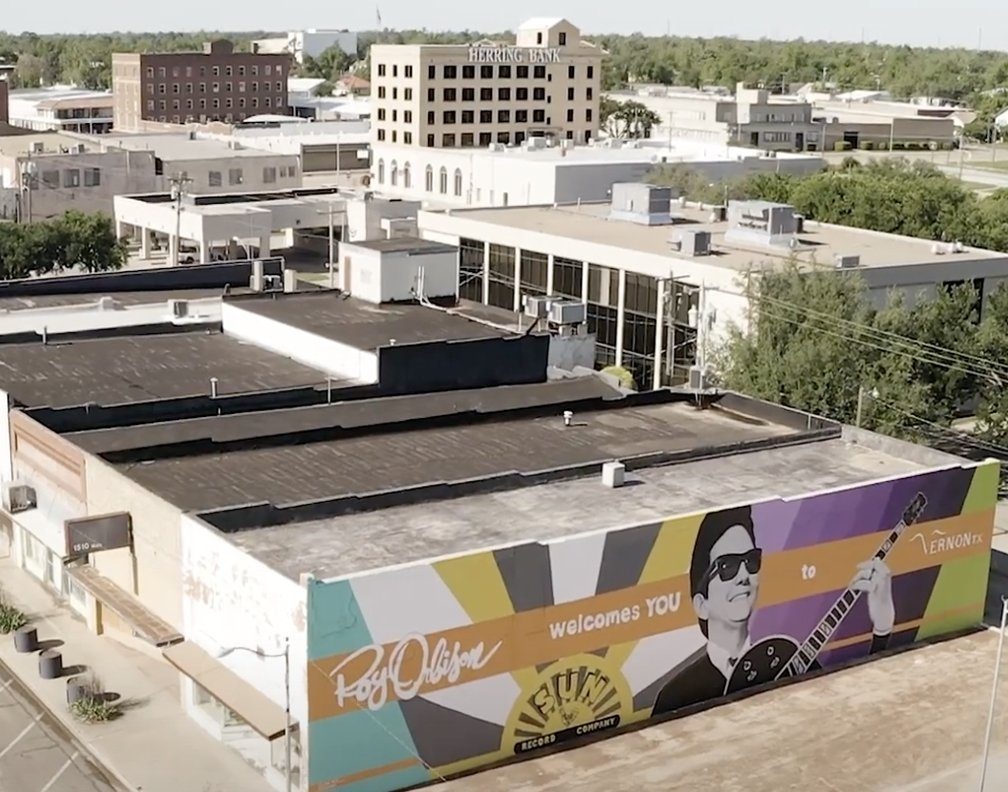
Vernon is a small city in north Texas, serving as the county seat of Wilbarger County. With a population of roughly 10,000 residents, it has the feel of a classic Texas agricultural community, surrounded by wide prairie, working ranches, and small farms. The city carries a strong western and ranching heritage, and it sits along a route that historically connected Texas cattle country to the northern plains. Vernon is perhaps best known for its association with the legendary W.T. Waggoner Ranch, once one of the largest contiguous ranches in the United States, and it functions as a friendly gateway to outdoor recreation on nearby lakes and along the Pease River. It lies about 150 miles northwest of Fort Worth and roughly 50 miles west of Wichita Falls, placing it within a few hours' drive of the Dallas–Fort Worth metroplex while still feeling distinctly rural.
A short drive from Vernon brings visitors to the Red River Valley Museum, a community museum that houses a surprisingly broad collection of regional artifacts, Native American artifacts, pioneer memorabilia, a replica of a pioneer town, and works by the painter Donald Roller Wilson, who lived locally. The museum gives a thoughtful introduction to the natural and cultural history of the rolling Red River country, and it makes an easy afternoon stop right in town.
Just outside Vernon, Lake Kemp and Lake Diversion offer a range of outdoor activities. Lake Kemp, located to the south of the city, is a popular spot for fishing, boating, and birdwatching along the Big Wichita River. Lake Diversion, to the west, provides additional shoreline for casual recreation and a quieter alternative for visitors looking to escape busier Texas reservoirs. Together, the two lakes give Vernon a dual-lake appeal that draws anglers and families from across the region.
History-minded travelers can explore the legacy of the Waggoner Ranch, which was headquartered near Vernon for more than 150 years. Spanning parts of several counties, the ranch became a symbol of the Texas cattle industry and remains an iconic feature of the surrounding landscape. Local museums and historical markers in and around Vernon interpret this ranching heritage, giving visitors a sense of how the area developed alongside the cattle trade that defined north Texas.
Vernon makes a compelling base for a short-term rental because it offers an affordable, unhurried stay with easy access to genuine Texas character. Guests can spend their days exploring museums, fishing on the lakes, taking in the open ranch country, or using the city as a stopping point on longer road trips through the southern plains. With its blend of small-town hospitality, deep ranching roots, and nearby outdoor escapes, Vernon offers an experience that feels both authentic and refreshingly off the typical tourist trail.
Want to know if a property in Vernon is a good investment?
Enter an address to get instant revenue potential and comps.