
Springtown, Texas
Want to see how Springtown compares to other top cities in Texas? Explore all city regulations in Texas. →
Springtown, TX
Generally Investor Friendly
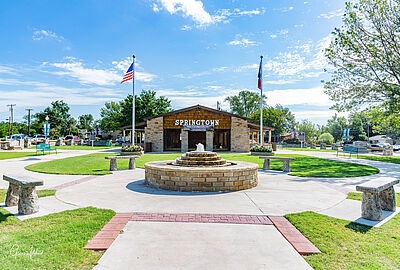
STR Regulations for Springtown, Texas
Overview: Are STRs allowed in Springtown, TX?
Yes. Short‑term rentals are allowed in Springtown, Texas, and the market currently operates under a low regulatory environment. There is no evidence of a city‑specific licensing or registration program in Springtown; investors can list and operate subject to applicable Texas state tax obligations, county rules, and general zoning/building requirements. AirROI’s 2025 market report lists 18 active STRs in Springtown, with a median annual revenue of $22,719, average daily rate near $249, and moderate occupancy (32.5%). See Source: AirROI – Springtown 2025 Report.
What this means for investors: while entry barriers are modest and the regulatory level is classified as “low,” you must still comply with state hotel occupancy tax (HOT) and sales tax rules, any county‑level regulations, standard zoning and nuisance ordinances, and safe‑operation requirements.
What do Airbnb hosts actually earn in Springtown?
Springtown hosts earn a median $28,095/year with $134 ADR and 54% occupancy.
Top performers pull in $35,469+ per year.
See the full Springtown market breakdownHow to Start a Short‑Term Rental Business in Springtown
- Confirm property eligibility and local fit
- Assess zoning and deed restrictions to ensure short‑term lodging is a permitted use. Many Texas cities permit STRs in commercial or mixed‑use districts but restrict them in certain residential districts. Springtown has no published city STR ordinance; confirm with the city secretary that no local licensing or zoning limitations apply to your parcel.
- Consider the guest profile and amenity standards: Springtown’s demand skews toward families and groups (8+ guest capacity listings are common), and the market shows strong preference for entire‑home stays and houses.
- Meet Texas state tax obligations
- Register with the Texas Comptroller to collect and remit:
- Hotel Occupancy Tax (HOT): commonly 9% of room receipts for stays under 30 days (state 6% + local up to 3% if applicable; Springtown itself does not levy a separate city HOT).
- Sales tax: likely applicable on taxable charges (e.g., cleaning fees depending on your tax configuration). The Texas state sales tax rate is 6.25% (local rates can bring the combined rate above 8%).
- File and pay monthly; maintain records for audits.
- Source: Texas Comptroller – HOT guidance.
- County and adjacent municipality checks (if relevant)
- If your property lies near or within an extraterritorial jurisdiction (ETJ) or special districts (e.g., Parker County, Wise County, Azle, Fort Worth), confirm there are no county or adjacent‑city STR restrictions, waste/sewer service rules, or noise/trash ordinances that apply.
- As a regional reference, Fort Worth requires STR registration and HOT collection/remittance through a third‑party portal; Springtown is not under Fort Worth’s system, but this illustrates how nearby jurisdictions can regulate. See Source: Fort Worth – STR program (not a requirement for Springtown).
- Set up operations and guest experience
- Align with Springtown’s demand patterns: optimize for families/groups; target peak months (May/July/October) with pricing and availability; provide essential amenities (TV, reliable WiFi, A/C, parking).
- Adopt operational policies aligned with local norms: a 1‑night minimum is common (61.1% of listings), and a firm cancellation policy is the market standard (55.6%).
- Marketing and listing strategy
- List on platforms such as Airbnb and VRBO (109 vacation rentals found on VRBO for Springtown and nearby areas). See Source: VRBO – Springtown rentals.
- Use dynamic pricing to reflect seasonality: October is the peak revenue month; January is typically the low.
Required Documents, Permits, Licenses, and Guidelines
Because there is no published city‑specific STR licensing ordinance in Springtown, the typical compliance stack is state‑focused:
- Texas state registration:
- Texas Comptroller tax account (sales tax and HOT).
- Texas HOT registration and monthly remittance.
- Business records:
- Guest check‑in logs and reservation data.
- Financial records supporting monthly HOT returns and sales tax remittance (required for audits; retain per Texas law).
- Property/liability coverage:
- STR liability policy (recommended).
- Proof of property insurance (as applicable).
- Safety and operations:
- Smoke/CO detectors compliance, fire extinguishers, safe egress, and basic safety information for guests.
- Zoning and building compliance:
- Verification that STR use is allowed at the property address.
- Trash, noise, and nuisance ordinances (general municipal rules apply).
Note on fort worth context: Fort Worth requires STR registration via Localgov, imposes fees (first‑time $150, renewal $100), and mandates Zoning Confirmation (“success” message) during registration; these requirements do not apply in Springtown. Source: Fort Worth – STR page (reference only).
Specific Regulations: City, County, and State
City of Springtown – No City‑Specific STR Ordinance (as of this report)
- No published city registration or licensing program for STRs.
- Operators must still comply with general city ordinances (e.g., zoning, noise, trash, parking), and any future adopted rules.
- Guidance: Verify with the City Secretary that no city‑level licensing applies to your property.
County Level – Parker County (Springtown’s county)
- No county‑wide STR permit discovered in available sources. County rules are generally limited to property taxes, subdivisions, and health/safety codes.
- Action: Confirm with Parker County that no STR‑specific permits or HOT obligations are imposed at the county level.
State of Texas – Hotel Occupancy Tax (HOT) and Sales Tax
- HOT applies to room receipts for stays under 30 days. State HOT rate is 6%; local HOT can add up to 3% where applicable. Springtown itself does not impose a separate city HOT, but state rules still apply.
- Sales tax applies to taxable charges (e.g., certain cleaning or amenity fees), with a state rate of 6.25% plus local sales tax; confirm your combined rate via the Texas Comptroller.
- Registration: Texas Comptroller. Filing: monthly. Penalties and interest apply for late or non‑remittance.
- Source: Texas Comptroller – HOT.
Zoning Reference (Illustrative – Nearby City: Fort Worth)
- Fort Worth allows STRs in mixed‑use and most commercial/industrial districts; restricts STRs in many residential districts. This is provided for context only and does not bind Springtown operations. Source: Fort Worth – STR page (reference only).
Contact Information (Local Authority in Charge of STRs)
Because Springtown has no dedicated STR licensing office, direct your compliance and registration questions to the following authorities:
-
City of Springtown (General/Zoning/Ordinances)
- Phone: (817) 220‑4834
- Email: springtown@ springtown.com (confirm current email via city website)
- Website: (seek official city site or municipal directory)
- Note: Ask the City Secretary whether any city licensing, zoning, or operational restrictions apply to short‑term rentals.
-
Texas State – Hotel Occupancy Tax (State Comptroller)
- Website: Texas Comptroller – Hotel Occupancy Tax
- For account setup, filings, and state/local rate verification.
-
Parker County Appraisal District (Property taxes)
- Phone: (817) 596‑0079
- Website: Parker County Appraisal District
- Note: County does not administer STR permits; PCAD handles property tax matters.
-
Parker County (General Administration/Ordinances)
- Phone: (817) 594‑6541
- Website: Parker County Official Site
-
Adjacent Jurisdiction Reference (Not applicable to Springtown; for context only)
- City of Fort Worth – Central Revenue Office (STR/HOT program)
- Phone: (817) 392‑6665
- Email: TreasuryRevenue@fortworthtexas.gov
- Website: Fort Worth – Short‑Term Rentals
- City of Fort Worth – Central Revenue Office (STR/HOT program)
Links to Source Pages
- AirROI – Springtown 2025 STR Market Report: AirROI Springtown
- VRBO – Springtown Vacation Rentals: VRBO Springtown
- Fort Worth – Short‑Term Rentals (reference for nearby jurisdiction, not applicable to Springtown): Fort Worth STR program
- Texas Comptroller – Hotel Occupancy Tax: Comptroller HOT guidance
Notes and Disclaimers:
- Springtown’s low regulatory environment is favorable for investors, but operators must still satisfy Texas state tax obligations and any future city/county rules that may be enacted.
- Always verify zoning and legal use with the City Secretary prior to acquisition or listing; real‑time changes can occur at the municipal level.
- Maintain complete records and file HOT/sales tax monthly to avoid penalties and interest.
Next step
Found a property in Springtown?
Paste any address and get estimated revenue, cash-on-cash return, and comparable STR performance in under 5 minutes. 3 free analyses per day.
Free brief
Get the free Springtown STR Investment Brief
Revenue data, top neighborhoods, seasonal trends, and the key regulations for Springtown, Texas in one email.
Springtown
Market Saturation Score
Photos of Springtown


Overview of Springtown
Springtown is a small city in Parker County, Texas, with a population of approximately 3,500 residents. It sits in the rolling prairies of North Texas, offering a quiet, small-town character that contrasts with the bustle of the nearby metroplex. Best known for its friendly community atmosphere and its position as a convenient base for exploring both rural Texas and the attractions of the Dallas–Fort Worth region, Springtown lies roughly 30 miles northwest of Fort Worth, making it an easy drive for visitors who want country charm with city access.
About 20 miles east of Springtown, Eagle Mountain Lake is one of the larger lakes in the Dallas–Fort Worth area, sprawling across the border of Tarrant and Wise counties. The lake is a popular destination for boating, sailing, fishing, and lakeside dining, with several public boat ramps and marinas ringing its shores. Visitors can spend a day on the water and return to Springtown's quieter accommodations in the evening, making the lake a natural complement to a stay in town.
Roughly 20 miles to the south, Weatherford serves as the seat of Parker County and offers a slice of classic Texas heritage. Often called the "Cutting Horse Capital of the World," the city features a historic downtown square anchored by the striking Parker County Courthouse, along with antique shops, cafes, and small boutiques. It makes a low-key but engaging day trip that showcases the regional character of North Central Texas.
Further afield, about an hour and a half south of Springtown, Dinosaur Valley State Park in Glen Rose provides a memorable family-friendly outing. The park is famous for its well-preserved dinosaur tracks embedded in the limestone bed of the Paluxy River, and it also offers hiking trails, camping, and swimming in the river during warmer months. While a longer drive, it adds an unexpected prehistoric element to a North Texas vacation.
Springtown appeals to short-term rental investors and visitors alike because it pairs genuine small-town character with surprising geographic range. Within an hour, guests can reach Fort Worth's cultural attractions, lakeside recreation, or the wide-open ranchland of the surrounding counties, while still enjoying the slower pace, dark skies, and friendly local feel that define the town itself. For travelers seeking a base that feels distinctly Texan yet well-connected to the wider region, Springtown offers a compelling balance.
Want to know if a property in Springtown is a good investment?
Enter an address to get instant revenue potential and comps.