
Robert Lee, Texas
Want to see how Robert Lee compares to other top cities in Texas? Explore all city regulations in Texas. →
Robert Lee, TX
Very Investor Friendly
STR Regulations for Robert Lee, Texas
Overview: Are Short-Term Rentals Allowed in Robert Lee, TX?
Yes, short-term rentals are allowed in Robert Lee, Texas. Based on the provided sources and general Texas law, there is no evidence of city-specific STR bans or permitting requirements for Robert Lee (Coke County). In Texas, municipal and county regulations govern STRs, and absent a local ordinance specifically prohibiting or heavily regulating STRs, they are generally permissible. However, investors must still comply with statewide rules, notably Hotel Occupancy Tax (HOT) registration and collection, and any deed restrictions or property-level limitations. Private covenants, HOA rules, or planned community restrictions can still prohibit STR activity even where city or county law does not. For example, the Sandy Creek Ranch subdivision near Robert Lee explicitly bans “commercial, short term rental, or manufacturing purposes,” making STRs impermissible on those restricted lots. Investors should confirm deed restrictions for each parcel before purchasing or listing.
Reference links to source pages:
- www.ranchenterprisesltd.com/ranches/listings/294
- www.kimberlyhowell.com/san-antonio-short-term-rental-permit/
- austinmonitor.com/stories/2023/08/federal-court-rules-austins-short-term-rental-rules-unlawful/
- www.facebook.com/groups/professionalhosts/posts/24076491865354179/
What do Airbnb hosts actually earn in Robert Lee?
Robert Lee hosts earn a median $23,522/year with $147 ADR and 47% occupancy.
Top performers pull in $33,872+ per year.
See the full Robert Lee market breakdownMarket and Geographic Context
Robert Lee is a small community in Coke County, West Texas, near Lake E.V. Spence. The broader regional STR environment is influenced by state-level policy and municipal frameworks in larger Texas cities. Recent litigation in Austin illustrates evolving judicial scrutiny of city STR ordinances, including issues of retroactivity and the constitutionality of distinctions between owner-occupied and non-owner-occupied STRs. While these decisions do not directly govern Robert Lee, they indicate a trend toward careful drafting of local rules and a reminder that any local STR regulations must pass legal muster. The Austin Monitor article is helpful context for investors to understand that local rules differ widely and can be subject to legal challenge, emphasizing the importance of local verification.
Reference links to source pages:
How to Start a Short-Term Rental Business in Robert Lee, TX
- Confirm zoning and deed restrictions: Verify that the parcel allows STRs. If the property is within a restricted subdivision or community, STRs may be prohibited regardless of city law. The Sandy Creek Ranch covenant expressly bans short-term rentals. For subdivisions, check the recorded covenants and the developer’s restrictions before buying.
- Confirm state tax obligations: Even if no local permits are required, Texas law requires operators to register for and collect Hotel Occupancy Tax (HOT). As of typical practice in Texas, a State HOT registration with the Texas Comptroller is necessary for STR operators who rent lodging for periods of less than 30 days.
- Set up compliance infrastructure: Establish a reliable process for monthly HOT filings with the Comptroller. Create an internal record-keeping system to track occupancy, rental income, and tax remittance. Use a dedicated bank account for rental operations and maintain separate books for state/local taxes.
- Prepare the property and operations: Ensure fire safety (e.g., working smoke and CO detectors), clear evacuation routes, and guest information. While Robert Lee lacks city-specific STR safety rules in the sources, best practice safety measures help minimize liability and guest risk.
- Compliance monitoring: Monitor both city and county updates for any future STR-related ordinances. Given Texas’s evolving STR landscape, local governments may introduce new rules affecting registration, reporting, or operations.
Reference links to source pages:
- www.kimberlyhowell.com/san-antonio-short-term-rental-permit/ (for general Texas STR compliance context, HOT obligations, and enforcement analogies)
Required Documents, Permits, Licenses, and Guidelines
City-specific permits were not found in the provided sources for Robert Lee. Investors should focus on statewide obligations and property-level controls:
- Hotel Occupancy Tax (HOT) registration: Register with the Texas Comptroller to obtain a HOT account. Typically, a Comptroller tax permit (TRRC/TxDMV or similar account number) and a State HOT account are required for lodging operators. Keep the permit number on file and renew as required.
- Monthly HOT filing: File monthly HOT reports and remit taxes due, even if no income was earned. This mirrors practices in larger Texas cities and reflects general state-level compliance expectations.
- Proof of ownership or lease: Maintain documentation of ownership or leasehold interest for the property used as an STR.
- Liability insurance: Maintain liability insurance appropriate for STR operations; this is a standard best practice to manage risk.
- Safety and operational documentation: Maintain a floor plan sketch showing sleeping areas and evacuation routes, and post guest safety instructions on the premises.
- Local regulations documentation: Retain any local filings or correspondence if Robert Lee or Coke County introduces future requirements. Preserve HOA/subdivision rules and covenants if applicable.
Reference links to source pages:
- www.kimberlyhowell.com/san-antonio-short-term-rental-permit/ (hot occupancy tax registration context; documentation and operational requirements)
- www.ranchenterprisesltd.com/ranches/listings/294 (deed restriction prohibiting short-term rentals)
Specific Regulations: City, County, and State
- City (Robert Lee): No city-specific STR ban, permitting regime, or operational restrictions were identified in the provided sources. Investors should confirm with the City Secretary for any new ordinances.
- County (Coke County): No county-level STR-specific rules were identified in the provided sources. Given the absence of county restrictions, operations should follow state-level HOT obligations and property-level controls.
- State (Texas):
- Municipalities cannot impose blanket bans on traditional STRs that meet the statutory definition, though cities can regulate operational aspects (e.g., safety, occupancy).
- STR operators must collect and remit Hotel Occupancy Tax to the Texas Comptroller, with monthly filings and tax remittance.
- City regulations, if enacted, must meet constitutional standards. Recent Texas cases underscore that rules distinguishing owner-occupied versus non-owner-occupied properties can face legal challenges if not carefully drafted.
- Property-level restrictions: As shown in Sandy Creek Ranch covenants, STRs may be prohibited by recorded subdivision covenants. Investors must carefully review and abide by any binding restrictions before purchasing or listing.
Reference links to source pages:
- www.kimberlyhowell.com/san-antonio-short-term-rental-permit/ (hotel occupancy tax obligations; enforcement context)
- austinmonitor.com/stories/2023/08/federal-court-rules-austins-short-term-rental-rules-unlawful/ (constitutional constraints on municipal STR rules)
- www.ranchenterprisesltd.com/ranches/listings/294 (deed restriction prohibiting STRs)
Operational Requirements and Best Practices
Although Robert Lee lacks city-specific STR rules in the provided sources, adopting proven operational standards reduces risk and improves guest experience:
- Safety compliance: Install and maintain smoke and carbon monoxide detectors. Provide clear evacuation maps and ensure safe egress routes.
- Guest communications: Post house rules covering occupancy limits, quiet hours, parking, and noise restrictions to minimize disturbances.
- Local contact: Establish a 24/7 local contact to address guest needs and community concerns promptly.
- TAX compliance: Set up a monthly HOT reporting cadence with the Texas Comptroller. Maintain records supporting each return, and file even in months with no taxable revenue.
- Platform compliance: Where applicable, platforms like Airbnb collect and remit certain taxes. Operators remain responsible for accurate filings and account maintenance.
- Community relations: Proactive communication with neighbors helps preempt complaints, especially in small towns where community standards and expectations strongly influence tolerance of STR activity.
Reference links to source pages:
- www.kimberlyhowell.com/san-antonio-short-term-rental-permit/ (operational and compliance best practices; HOT enforcement practices)
Enforcement and Penalties
Enforcement largely centers on state HOT compliance and local nuisance rules:
- HOT penalties: Failure to register, collect, or remit HOT can lead to fines, interest, and legal action. Maintain diligent monthly filings and pay on time.
- Municipal or county enforcement: If local authorities adopt STR rules or nuisance ordinances, violations can result in fines or other penalties. While not identified in the sources for Robert Lee, investors should expect enforcement of any enacted local standards.
- Deed restrictions: Violating subdivision covenants can lead to civil enforcement by the HOA or developer, including injunctive relief and fines. Do not list properties where covenants prohibit STRs.
Reference links to source pages:
- www.kimberlyhowell.com/san-antonio-short-term-rental-permit/ (penalties for non-compliance and enforcement practices)
- www.ranchenterprisesltd.com/ranches/listings/294 (covenant prohibiting STRs)
Contact Information
Obtain definitive confirmation of any local rules directly from the city or county:
-
Robert Lee City Secretary / City Hall
- Phone: (325) 453-2644
- Address: 601 Main St, Robert Lee, TX 76945
- Website: Not identified in the provided sources; contact the city directly or visit the Coke County website for municipal links.
-
Coke County Clerk
- Phone: (325) 453-2631
- Address: 100 W 10th St, Robert Lee, TX 76945
- Purpose: Deed records, covenants, and any county ordinances that could affect STR operations.
-
Texas Comptroller (Hotel Occupancy Tax)
- Phone: 1-800-252-5555
- Website: comptroller.texas.gov/
- Purpose: State HOT registration, monthly filing instructions, and compliance support.
-
Texas Comptroller Field Office – Abilene (representative contact, general assistance)
- Phone: (325) 676-7519
- Purpose: Local assistance with tax accounts and filings.
Reference links to source pages:
- comptroller.texas.gov/ (Texas Comptroller main site)
- www.ranchenterprisesltd.com/ranches/listings/294 (property reference; not a regulatory contact but demonstrates local covenants)
- www.kimberlyhowell.com/san-antonio-short-term-rental-permit/ (compliance references; not a local contact for Robert Lee)
Links to Source Pages
- Sandy Creek Ranch (Robert Lee area) – Restrictions and Covenants: www.ranchenterprisesltd.com/ranches/listings/294
- San Antonio STR Permit Guide (Texas compliance context and HOT practices): www.kimberlyhowell.com/san-antonio-short-term-rental-permit/
- Federal Court Rules Austin’s Short-Term Rental Rules Unlawful (state constitutional context): austinmonitor.com/stories/2023/08/federal-court-rules-austins-short-term-rental-rules-unlawful/
- Professional Hosts Facebook Group (tool sharing/case-based insight): www.facebook.com/groups/professionalhosts/posts/24076491865354179/
- Texas Comptroller (state HOT and general tax info): comptroller.texas.gov/
Investor Checklist
- Confirm parcel-level rules (covenants/HOAs) before buying; avoid restricted subdivisions.
- Register for Texas Hotel Occupancy Tax; set up monthly filing cadence.
- Prepare safety and guest documentation; post house rules and contact information.
- Maintain accurate records for taxes and operations; use dedicated bank accounts.
- Verify city/county contacts annually for potential ordinance changes.
This guide reflects the provided sources and general Texas STR requirements. Confirm any local or county developments directly with the City of Robert Lee and Coke County before listing or operating a short-term rental.
Next step
Found a property in Robert Lee?
Paste any address and get estimated revenue, cash-on-cash return, and comparable STR performance in under 5 minutes. 3 free analyses per day.
Free brief
Get the free Robert Lee STR Investment Brief
Revenue data, top neighborhoods, seasonal trends, and the key regulations for Robert Lee, Texas in one email.
Robert Lee
Market Saturation Score
Photos of Robert Lee


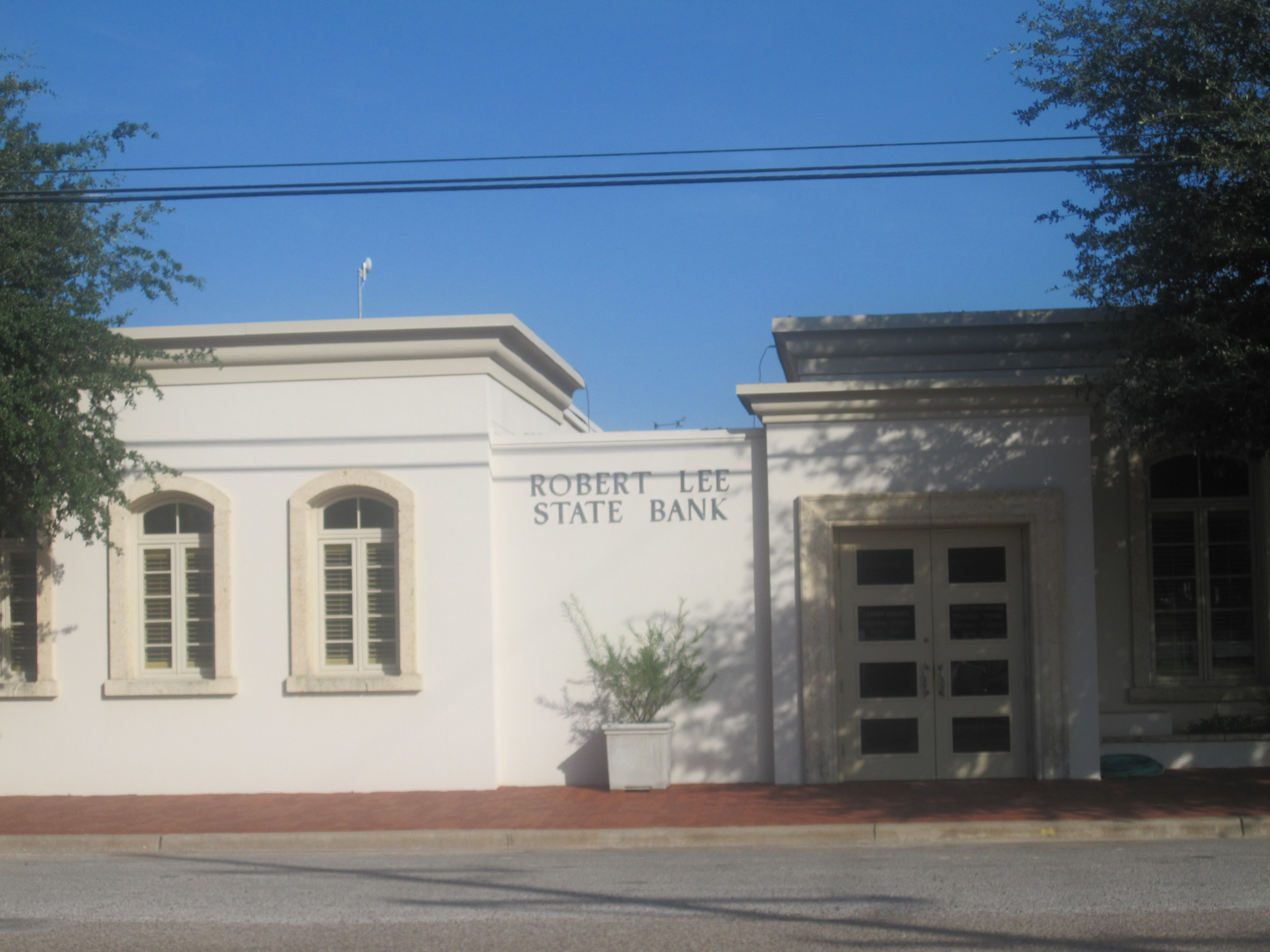
Overview of Robert Lee
Robert Lee is a small West Texas community that serves as the county seat of Coke County. With an approximate population of around 1,000 residents, it has the quiet, slow-paced character of a traditional ranching town, set amid the rolling mesquite and oak-covered hills of the Edwards Plateau transition zone. The town carries the historical name of the famous Confederate general, and its modest downtown, county courthouse, and surrounding ranchland give it the feel of a place where the rhythms of rural Texas still set the daily pace. It is best known as a gateway to some of West Texas's most scenic reservoirs and as a convenient stopover for travelers moving between San Angelo and Abilene. San Angelo, the nearest sizable city, lies roughly 45 miles to the southeast, while Abilene is about 85 miles to the northeast.
A short drive northwest of town, E.V. Spence Reservoir is one of the area's marquee outdoor draws. This large impoundment on the Colorado River is popular for fishing, boating, and shoreline camping, and it is typically only about 25 to 30 minutes from Robert Lee. The lake's wide open water and quiet coves make it a favorite for those seeking an uncrowded West Texas fishing experience, and its position along well-traveled migratory routes also draws birdwatchers in the cooler months.
Just outside the town itself, the Colorado River winds through the surrounding countryside, offering additional opportunities for fishing, kayaking, and riverside picnics. The river's passage through the region has shaped the area's ranching heritage, and the public access points along its banks provide easy entry for visitors who want to spend a day on the water without the crowds of larger reservoirs.
For travelers interested in the broader West Texas landscape, Robert Lee sits within easy striking distance of San Angelo's State Park and cultural attractions, as well as the historic frontier town of Fort Chadbourne, which preserves remnants of a nineteenth-century U.S. Army post. Both destinations can be reached with a roughly hour-long drive, making Robert Lee a useful base for exploring this often-overlooked stretch of central West Texas.
With its small-town character, low-key atmosphere, and proximity to both fishing waters and broader West Texas destinations, Robert Lee offers short-term rental owners a setting that appeals to outdoors-minded travelers, hunters, anglers, and road-trippers looking to experience a quieter, less-touristed side of Texas. Its location between San Angelo and Abilene, combined with access to the reservoirs and ranch country that surround it, makes the town a natural fit for guests who want to slow down and explore a part of the state that still feels firmly off the beaten path.
Want to know if a property in Robert Lee is a good investment?
Enter an address to get instant revenue potential and comps.