
Littlefield, Texas
Want to see how Littlefield compares to other top cities in Texas? Explore all city regulations in Texas. →
Littlefield, TX
Very Investor Friendly
STR Regulations for Littlefield, Texas
Are short‑term rentals allowed in Littlefield, TX?
- The provided sources do not contain city‑specific rules for Littlefield (Lamb County). Under Texas state law, short‑term rentals are generally permitted as transient lodging when operated in a manner consistent with state hotel occupancy tax (HOT) collection and other applicable laws. Investors must collect and remit state HOT (6%) and any applicable local HOT. Absence of a city ordinance does not override the state requirement to collect taxes; it simply means the city has not layered additional rules in the sources provided.
Key implication for investors: operate legally by registering for and remitting HOT and any other state/local taxes, and verify directly with local authorities whether Littlefield or Lamb County requires any permits, inspections, or registration beyond state-level obligations.
How to Start a Short‑Term Rental Business in Littlefield, TX
-
Clarify compliance path
- Confirm there are no local prohibitions by contacting the City of Littlefield and Lamb County; verify whether a zoning/land‑use check is needed.
- Identify the jurisdictional requirements for any local permits or business licenses.
-
Register and collect hotel occupancy tax
- Register with the Texas Comptroller for a Hotel Occupancy Tax certificate (sales tax permit may be required if you provide taxable goods/services).
- Collect Texas HOT at 6% of the gross receipts. Additionally, collect any local HOT if applicable. Note: Several Texas cities and counties levy local HOT; in the provided sources, specific local rates for Littlefield/Lamb County were not identified. If a local HOT applies in your jurisdiction, it must be collected and remitted.
-
Understand sales tax applicability
- You may be responsible for state and local sales tax on taxable ancillary services (e.g., cleaning fees, certain consumables) depending on how they’re bundled and your business model. See Comptroller guidance for taxable vs. non‑taxable charges.
-
Establish reporting cadence and recordkeeping
- File HOT returns and payments as required by the Comptroller (typically monthly/quarterly depending on volume). Maintain accurate guest records, reservation receipts, and tax remittance evidence.
-
Operational safeguards
- Comply with fire/life‑safety, building, and health codes. If your property is in a special flood hazard area, confirm elevation/floodplain requirements with county or local officials.
- If the unit is an accessory dwelling unit (ADU) or similar secondary structure, verify that the property use as lodging is permitted under zoning and deed restrictions.
-
Insurance and risk
- Carry appropriate liability and property insurance. Consider coverage gaps related to STR platforms (e.g., short‑term damage, liability).
-
Platform integration
- Connect your listing to applicable OTA/STR platforms. Ensure guest communications include tax statements and local rules to avoid compliance issues and guest disputes.
What do Airbnb hosts actually earn in Littlefield?
Littlefield hosts earn a median $17,276/year with $108 ADR and 55% occupancy.
Top performers pull in $25,658+ per year.
See the full Littlefield market breakdownRequired Documents, Permits, Licenses, and Guidelines
-
Texas Hotel Occupancy Tax registration
- Texas Comptroller registration for HOT and (if applicable) sales tax permit; obtain a tax exemption certificate for supplies where legally permissible.
-
Local authority confirmations
- Written confirmation from the City of Littlefield and/or Lamb County on any required STR permits, business licenses, inspections, or zoning clearances.
-
Ongoing tax filings
- HOT returns and remittances at the frequency determined by the Comptroller; sales tax returns if applicable.
-
Documentation
- Property ownership/lease documentation; fire/life‑safety compliance records; rental/management agreements; guest logs and receipts; tax collection statements.
State, County, and City Regulations (Focus on Littlefield and Lamb County)
-
Texas state‑level regulations
- Hotel Occupancy Tax: Operators of lodging for periods under 30 days must collect 6% HOT and remit to the Texas Comptroller.
- Reporting: Returns are required periodically; late filings or under‑remittance may incur penalties.
- Local HOT: Local jurisdictions may impose additional HOT; verify if Littlefield or Lamb County has a local HOT and the applicable rate.
- Administrative: Texas state law governs the definition of “hotel” and “occupancy,” tax collection duties, and reporting obligations.
-
County level (Lamb County)
- No county‑specific STR rules were found in the provided sources. County‑level development, building, health, or floodplain requirements may apply indirectly.
-
City level (City of Littlefield)
- No Littlefield‑specific STR ordinance was identified in the provided sources. Contact the city directly to verify whether permits or business licenses are required, and whether zoning or land‑use restrictions limit STR use.
-
Wider Texas context (illustrative, not Littlefield‑specific)
- Texas municipalities vary widely: some cities have registration/permit regimes (e.g., McAllen requires registration and HOT collection), some are considering density caps (e.g., San Antonio), and some have imposed moratoriums or bans in residential areas (e.g., Austin’s non‑owner‑occupied STR restrictions). These are not applicable to Littlefield unless confirmed by local officials.
Local Authority Contacts
-
City of Littlefield, TX
- Website: not identified in provided sources.
- Phone/email: not identified in provided sources.
-
Lamb County (general resources; confirm departments)
- County website: not identified in sources for the specific office. Contact the county courthouse or clerk for direction to the proper department (e.g., tax assessor‑collector for HOT questions).
- Phone/email: not identified in provided sources.
-
Texas state tax authority
- Comptroller of Public Accounts – Hotel Occupancy Tax
- Website: comptroller.texas.gov/taxes/hotel/
- Phone/email: not identified in provided sources.
- Comptroller of Public Accounts – Hotel Occupancy Tax
-
STR‑related state resources
- Texas Hotel & Lodging Association (industry advocacy and updates)
- Phone: 512‑474‑2996
- Email: thla@texaslodging.com
- Office: 1701 West Avenue, Austin, TX 78701
Source Links (as requested)
-
Texas Comptroller – Hotel Occupancy Tax
-
Texas Hotel & Lodging Association – Short‑Term Rental (STR) Update 2018
-
City of Seabrook – Hotel Occupancy Report Form (example municipal reporting document)
-
Harris County – Hotel Occupancy Tax (example county reporting information)
-
ADU regulations in Texas (context on secondary housing; not STR‑specific but relevant to property types)
Practical Notes for Investors
- Because no Littlefield‑specific STR ordinance or permitting framework was found in the provided sources, proceed conservatively: register for state HOT, confirm local tax obligations, and obtain written confirmations from city/county regarding permits and zoning.
- Retain all filings, receipts, and correspondence. Consider quarterly compliance reviews to catch changes in local rules.
- Monitor legislative and municipal updates; Texas cities periodically revise STR policies.
- If you use a property management company, incorporate HOT reporting into your management agreement and require periodic proof of compliance.
This guide is based solely on the provided sources and focuses on Texas law and the lack of identified Littlefield/Lamb County specific regulations. Always verify with local authorities before commencing operations.
Next step
Found a property in Littlefield?
Paste any address and get estimated revenue, cash-on-cash return, and comparable STR performance in under 5 minutes. 3 free analyses per day.
Free brief
Get the free Littlefield STR Investment Brief
Revenue data, top neighborhoods, seasonal trends, and the key regulations for Littlefield, Texas in one email.
Littlefield
Market Saturation Score
Photos of Littlefield


Overview of Littlefield
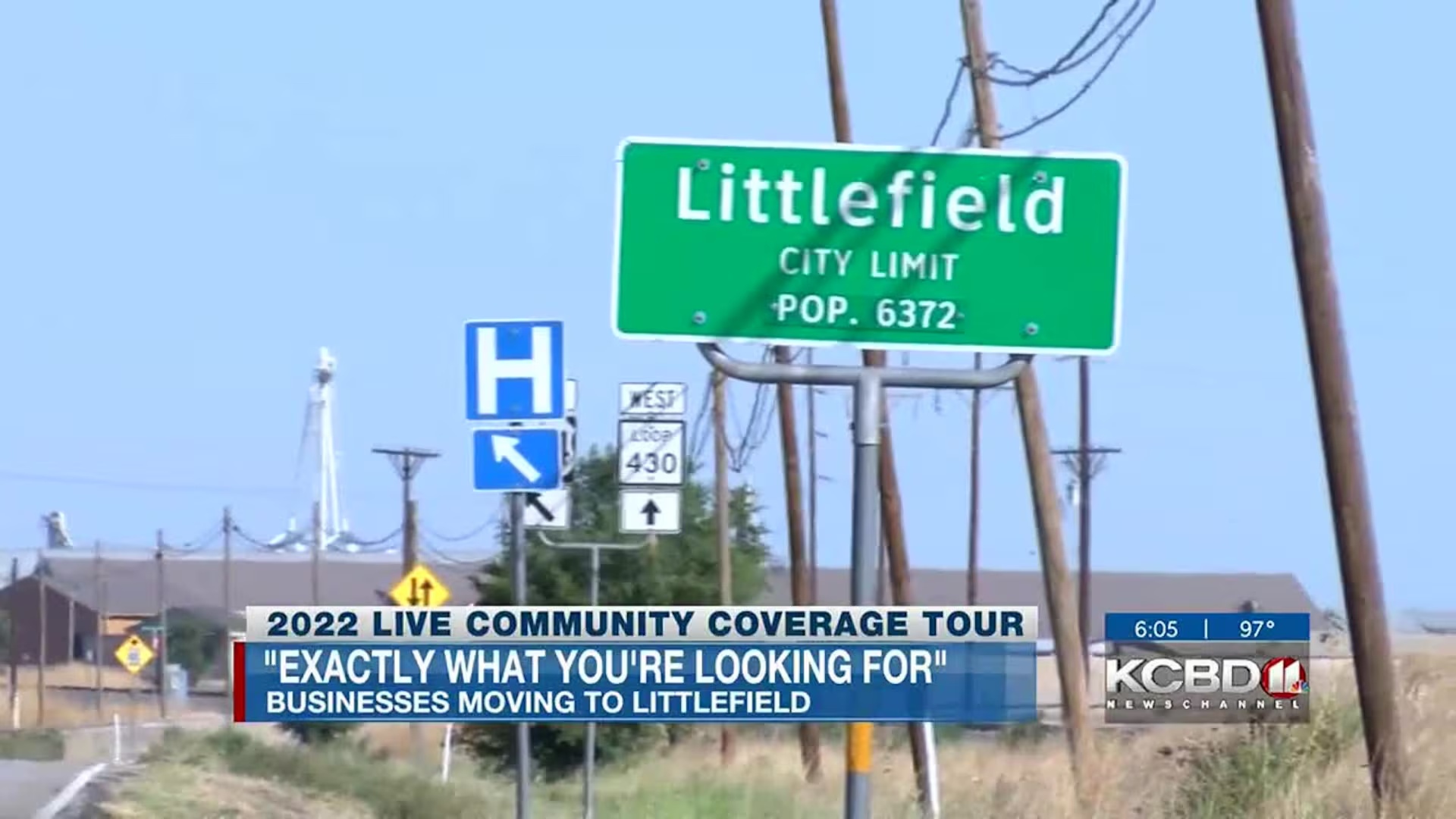
Littlefield, Texas serves as the county seat of Lamb County, sitting on the flat agricultural expanse of the Llano Estacado in West Texas. With a population of approximately 6,000 residents, the city has the feel of a small, close-knit agricultural community surrounded by cotton fields, grain operations, and the wind turbines that have come to define the regional skyline. Littlefield is best known as the boyhood home of outlaw country music legend Waylon Jennings, and it functions as a quiet base for travelers exploring the South Plains. The city lies roughly 35 miles west of Lubbock, the nearest major city and the cultural and commercial hub of the region.
The city's most visible tribute to its famous son is the Waylon Jennings statue and small memorial in downtown Littlefield, which draws country music fans passing through the area. The display celebrates the artist's roots in the community and his rise to international fame, and it has become a popular stop for travelers tracing Jennings's life and legacy through West Texas.
About 35 miles east, Lubbock offers a much broader set of attractions, including the Buddy Holly Center, which honors another West Texas music icon, and the campus of Texas Tech University with its public museums and the National Ranching Heritage Center. The larger city also provides the regional airport, a wide range of dining and shopping, and the cultural amenities that complement a stay in a smaller town like Littlefield.
The surrounding Llano Estacado landscape offers wide-open skies, big-sunset country, and the kind of high-plains outdoor experience that draws visitors to this part of Texas. Reservoirs and recreational waters such as Buffalo Springs Lake, roughly 40 miles east near Lubbock, provide fishing, boating, and lakeside camping within an easy day trip of Littlefield. The open ranchland and agricultural backroads around town also appeal to visitors interested in birding, photography, and the slower rhythms of rural West Texas.
With its affordable small-town setting, its connection to one of country music's most influential figures, and easy access to the larger amenities of Lubbock, Littlefield offers short-term rental investors a distinctive West Texas base. The combination of musical heritage, agricultural scenery, and proximity to a regional hub makes the city a compelling option for travelers seeking a quieter, more thematic alternative to staying in Lubbock itself, particularly those passing through on regional road trips or attending events across the South Plains.
Want to know if a property in Littlefield is a good investment?
Enter an address to get instant revenue potential and comps.