
Levelland, Texas
Want to see how Levelland compares to other top cities in Texas? Explore all city regulations in Texas. →
Levelland, TX
Challenging To Investors
STR Regulations for Levelland, Texas
Scope note and sources: This guide synthesizes the City of Levelland zoning regulations (ARTICLE 9.500), Texas state‑level short‑term rental (STR) law, and related state guidance on hotel occupancy tax (HOT). The only local source provided is the City of Levelland Zoning Regulations (see “Source documents” at the end of this guide). No specific, city‑level “short‑term rental” permit was found in the provided document; the city’s land‑use controls and state law control compliance.
1) Are short‑term rentals allowed in Levelland, TX?
Short answer: Yes, in a limited, specific, and regulated way. Levelland’s zoning code does not have a standalone “short‑term rental” use category. Instead, the city provides a Bed and Breakfast (B&B) use that expressly authorizes overnight/short‑term stays for compensation in single‑family dwellings or duplexes, subject to:
- Zoning district allowances,
- Conditional Use approval by the Zoning Board of Adjustment (ZBA), and
- Development standards for residential uses (parking, yard, signs, accessory buildings, etc.).
In practice, this means:
- You must locate the property in a zoning district where Bed and Breakfast is expressly allowed or conditionally allowed.
- You must obtain conditional use approval from the ZBA.
- The B&B must retain the outward appearance of a single‑family residence or duplex (no commercial signage or exterior alterations that would change the residential character).
- All underlying residential use standards still apply (setbacks, lot coverage, parking, accessory building limits, etc.).
- A separate “Lodging or Boarding House” definition exists for lodging with meals provided to five or more persons, but it is not listed as a permitted or conditional use in any residential district in the provided document and therefore is not an available STR pathway in Levelland unless otherwise adopted by the city later.
Important: Because the city does not have an “STR” category, most transient rentals of a single residential dwelling without Bed and Breakfast approval are not an allowed principal use. Investors should treat B&B as the legal pathway for residential STR operations.
What do Airbnb hosts actually earn in Levelland?
Levelland hosts earn a median $18,084/year with $120 ADR and 71% occupancy.
Top performers pull in $23,065+ per year.
See the full Levelland market breakdown2) How to start a short‑term rental business in Levelland
Step‑by‑step (high level):
- Target a compliant property
- Confirm the subject property is in a zoning district where a Bed and Breakfast is a conditional use (see Section 3 below).
- Verify the structure qualifies as a single‑family dwelling or duplex and remains residential in appearance per the definition.
- Confirm zoning and B&B eligibility
- Use the City’s Zoning Map and zoning ordinance to confirm allowable uses for the parcel.
- Contact Planning & Zoning (see contacts in Section 7) to verify B&B is a conditional use for the specific zoning district and to discuss compatibility criteria and application procedures.
- Apply for Conditional Use Permit (CUP)
- Prepare and submit the application to the Zoning Board of Adjustment. Expect to demonstrate:
- Compatibility with the neighborhood and residential character,
- Compliance with residential dimensional standards,
- Adequate off‑street parking (see Section 4),
- Compliance with accessory building and sign restrictions,
- No adverse impacts (noise, traffic, glare, etc.).
- Comply with state short‑term rental law (SB 472, 88th R.S.)
- SB 472 preempts local STR “registration/permit” ordinances but does not prohibit local zoning. Property owners must:
- Designate a local contact person available 24/7,
- Maintain evidence of registration with the Texas Secretary of State (SOS) and post it at the property or digitally for guests,
- Provide emergency contact info to local authorities,
- Allow inspection for public health/safety if requested by a local authority,
- Maintain compliance with HOAs and deed restrictions,
- Follow applicable state and local tax laws (see Section 5).
- Note: Levelland has not adopted an STR registration ordinance under SB 472. If the city later does, owners must follow that process.
- Tax compliance
- Enroll for Texas HOT via the Texas Comptroller’s web portal for remote/online lodging,
- Collect and remit local and state HOT monthly or quarterly,
- Obtain any local business tax certificate or registration if and as required by the city (verify applicability with the City Tax Office).
- Operations and compliance
- Parking: Provide the minimum residential parking required (two spaces per single‑family dwelling). Guests cannot obstruct alleys or visibility triangles.
- Signage: No commercial signage except allowed nameplates; no offsite signage or electronic displays that cause glare or nuisance.
- Accessory buildings: If you operate guest quarters in accessory buildings, follow the city’s accessory building rules (no commercial activity; limits on plumbing fixtures; maximum height; setbacks; and use as guest quarters must meet ordinance standards).
- Nuisance: Avoid noise, vibration, smoke, dust, odors, glare, or conditions that would be injurious to neighborhood residents.
- Ongoing duties
- Maintain CUP compliance, respond to code enforcement inquiries, and renew any annual permits as required.
- Keep tax filings current.
- Maintain 24/7 local contact information and SOS registration.
3) Zoning district suitability for a Bed and Breakfast (B&B)
Levelland’s zoning ordinance explicitly recognizes Bed and Breakfast only in one district, under a conditional use:
-
SF‑2 Single Family District: “Bed and Breakfast operations, subject to the particular requirements of the board of adjustment.” This is the sole reference in the provided document that explicitly allows Bed and Breakfast operations. SF‑1 does not list B&B as a conditional use.
-
B‑1 Local Business and B‑2 General Business Districts: Hotels or motels are allowed uses in B‑2; however, no specific “Bed and Breakfast” use is listed in the provided business‑district text. Whether B&B would be treated as an “any use conditionally or unconditionally permitted in any of the residential districts” in B‑1/B‑2 is not stated in the provided materials. Investors should confirm with Planning & Zoning whether B&B may be considered under this clause or whether another category (e.g., hotel/motel) would be required.
-
Multi‑Family Districts: No B&B use is listed as a permitted or conditional use in Multi‑1, Multi‑2, Multi‑3, or Multi‑4 in the provided document. An STR model based on renting single multifamily units is therefore unlikely to be allowed absent a separate ordinance amendment.
Practical implications:
- Start with properties zoned SF‑2 if you need a Bed and Breakfast.
- Treat properties in SF‑1, Multi‑Family, or Business districts as requiring explicit zoning confirmation or a different use type (e.g., hotel/motel in B‑2).
- Confirm with the city whether operating a single “entire home” rental in SF‑1 or Multi‑Family as a principal use is allowed (the provided document does not list such an STR use).
4) Required documents, permits, licenses, and guidelines
Local (City of Levelland)
-
Conditional Use Permit (CUP) for Bed and Breakfast in SF‑2
- Application to Zoning Board of Adjustment
- Site plan and supporting documentation demonstrating compliance with residential standards (parking, setbacks, sign limitations)
- Any materials showing mitigation of compatibility concerns (noise, parking management, exterior appearance preservation)
-
Building, health, fire, and life safety
- All residential building code requirements apply
- Life safety and fire code compliance
- Any change‑of‑use plan review by the Building Official
- As applicable: Texas Department of State Health Services lodging establishment permits (for paid lodging that offers lodging to five or more persons in a 24‑hour period)
-
Taxes
- Texas Hotel Occupancy Tax enrollment through the Comptroller (see Section 5)
- Any local business tax or certificate if required (verify with City Tax Office)
-
State short‑term rental law (SB 472, 88th R.S.)
- Designate and make available a local contact person who is available 24/7 and can respond to the property within one hour
- Register with the Texas Secretary of State; maintain proof of registration and post it at the property or digitally
- Provide emergency contact information to local authorities
- Allow inspection for public health/safety upon request
- Maintain compliance with HOA covenants and deed restrictions if applicable
-
Insurance
- Carry appropriate general liability and property coverage for the lodging operation
5) Specific regulations for short‑term rentals in Levelland, the county, and the state
City of Levelland (from Zoning Regulations, ARTICLE 9.500)
- Bed and Breakfast allowed: SF‑2 Single Family District as a conditional use, requiring ZBA approval and Board‑specific requirements.
- Residential character: The exterior must resemble a single‑family dwelling or duplex; no commercial exterior alterations or business signage.
- Density and dwelling unit limits: In SF‑2 (and SF‑1), no more than one dwelling unit per lot applies generally; B&B must be in a single‑family dwelling or duplex. Also, SF‑2 explicitly permits HUD‑Code manufactured homes, modular and ready‑built homes as single‑family; confirm compatibility with B&B if you consider such structures.
- Off‑street parking:
- Single‑family dwellings: Two (2) parking spaces required; driveways may be used.
- Churches, places of public assembly, and schools: Specific ratios defined; not directly applicable to B&B but relevant if you provide event or meeting space.
- For B&B, the ordinance does not specify an additional guest parking ratio beyond the two residential spaces required. Ensure guest parking does not spill into alleys or obstruct visibility triangles.
- Yard and dimensional standards:
- SF‑2 front yard minimum 25 feet; side yard minimum 5 feet; lot width minimum 50 feet; lot area minimum 6,000 square feet (SF‑1 requires 7,500 square feet and 60 feet lot width).
- Overhanging eaves/fireplaces may extend up to 24 inches into a side yard.
- Accessory buildings:
- Commercial activity prohibited in accessory buildings.
- Accessory buildings cannot be used as living quarters except bona fide servants’ quarters; these are not for rent/lease. Guest quarters in accessory structures are therefore constrained—confirm with the Building Official what is allowable for B&B.
- For accessory buildings on lots >1 acre, ZBA special exceptions and additional setbacks/screening may apply.
- Signs:
- Residential nameplates (typically one not larger than two square feet) and temporary signs permitted; business signs are restricted.
- No commercial advertising signs for a B&B unless otherwise authorized under the ordinance; electronic signs must not cause glare or nuisance.
- Nuisance and compatibility:
- No use permitted that is injurious, interferes with safety or reasonable enjoyment of property, or creates dust, smoke, odor, glare, noise, vibration, trash, junk, or conditions constituting a public nuisance at common law.
- Mobile home subdivisions and B&B: Not relevant for B&B in SF‑2 unless specifically approved; otherwise, B&B must occur in a single‑family dwelling or duplex that meets residential standards.
- Bed and Breakfast definition:
- A single‑family dwelling unit or duplex, altered/used for overnight or short‑term occupancy by one or more individuals not the owners, for compensation; exterior must resemble a single‑family dwelling or duplex.
County (Hockley County)
- No specific county-level lodging permitting or zoning rules were provided in the materials. If the property is outside city limits, confirm county requirements for lodging operations with Hockley County.
State of Texas
-
SB 472 (88th Legislature, 2023) – Short‑Term Rental Preemption:
- A “short‑term rental” is defined as housing offered in exchange for compensation for fewer than 30 consecutive days. SB 472 preempts local “registration/permit” ordinances but preserves local zoning and land‑use authority.
- Owner/operator duties:
- Designate a local contact person and maintain 24/7 availability; post or provide the contact to guests and local authorities.
- Register with the Texas Secretary of State; maintain proof; and post evidence at the property or digitally.
- Provide emergency contact information to local authorities and allow health/safety inspections upon request.
- Comply with HOA/deed restrictions.
- Levelland does not appear to have adopted an STR registration ordinance based on the provided document. If it later adopts one, owners must follow it in addition to SB 472.
-
Hotel Occupancy Tax (Comptroller guidance):
- Definitions and taxability: A “Hotel” includes any building in which the public may obtain lodging for fewer than 30 days. Occupancies meeting this definition are generally taxable.
- Registration: Remote sellers (e.g., online platforms) and providers must enroll with the Comptroller, collect HOT, and remit according to filing cadence.
- Local vs state: State HOT is 6% (as of 2023). Many political subdivisions impose additional local HOT; you must identify and collect any local HOT that applies (for the relevant political subdivisions).
- Levelland: It is in Hockley County. Whether Levelland or Hockley County imposes a local HOT was not provided. Check the Comptroller’s local tax database and adopt a conservative compliance posture.
-
Lodging establishment health permits:
- The Texas Department of State Health Services requires certain lodging establishments offering lodging to five or more persons in a 24‑hour period to obtain permits and meet sanitation/life safety requirements. If your B&B offers lodging to five or more persons at the same time, confirm whether DSHS licensing is required.
6) Compliance checklist for Levelland
Next step
Found a property in Levelland?
Paste any address and get estimated revenue, cash-on-cash return, and comparable STR performance in under 5 minutes. 3 free analyses per day.
Free brief
Get the free Levelland STR Investment Brief
Revenue data, top neighborhoods, seasonal trends, and the key regulations for Levelland, Texas in one email.
Levelland
Market Saturation Score
Photos of Levelland
Overview of Levelland
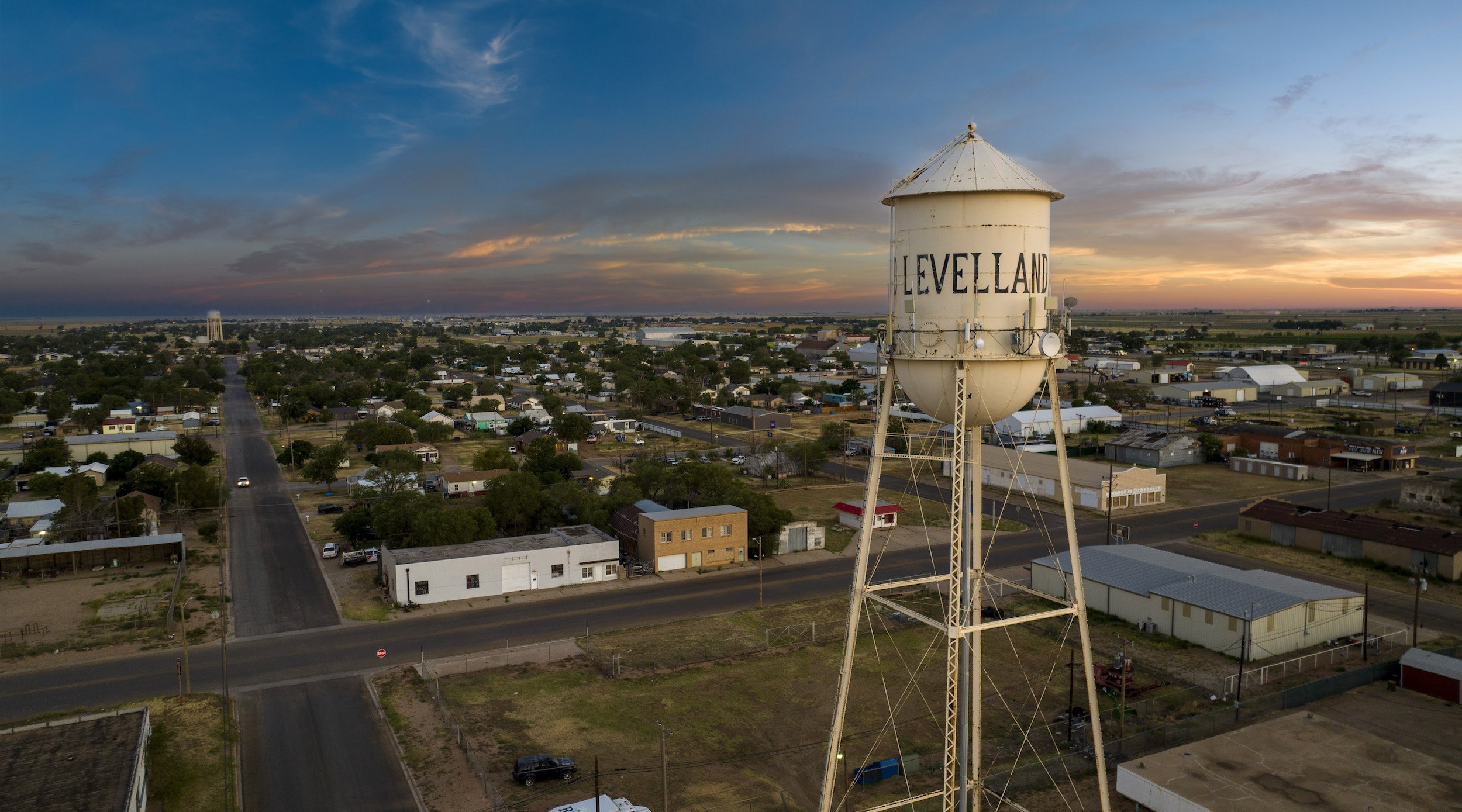
Levelland is a small city in Hockley County, Texas, situated on the South Plains of West Texas, with a population of roughly 13,000 residents. As the county seat of Hockley County, the community carries a quietly self-reliant agricultural character, surrounded by cotton fields, wind farms, and the broad grasslands of the Llano Estacado. It is best known as a regional hub for the surrounding ranching and farming communities, and as the home of South Plains College, a two-year institution that draws students from across the region. Levelland sits approximately 30 miles west of Lubbock, the nearest major city and the cultural and commercial center of the South Plains.
About 30 miles east of Levelland in downtown Lubbock, the Buddy Holly Center celebrates the life and music of the rock-and-roll pioneer who grew up in the city, displaying memorabilia, original instruments, and rotating exhibits. The center anchors a small cultural district that includes the nearby Depot District, a revitalized stretch of restaurants, breweries, and live-music venues in restored brick warehouses. The Buddy Holly Center is roughly a 35- to 40-minute drive from Levelland along US-385 and I-27.
Also in Lubbock, the National Ranching Heritage Center at Texas Tech University is a 27-acre museum and outdoor park dedicated to the ranching history of the American West. Its collection of nearly 50 restored historic structures, from 19th-century dugouts to early 20th-century ranch homes, offers visitors a tangible look at the working landscapes that surround Levelland today. The center is about a 35- to 45-minute drive from Levelland, depending on the route chosen.
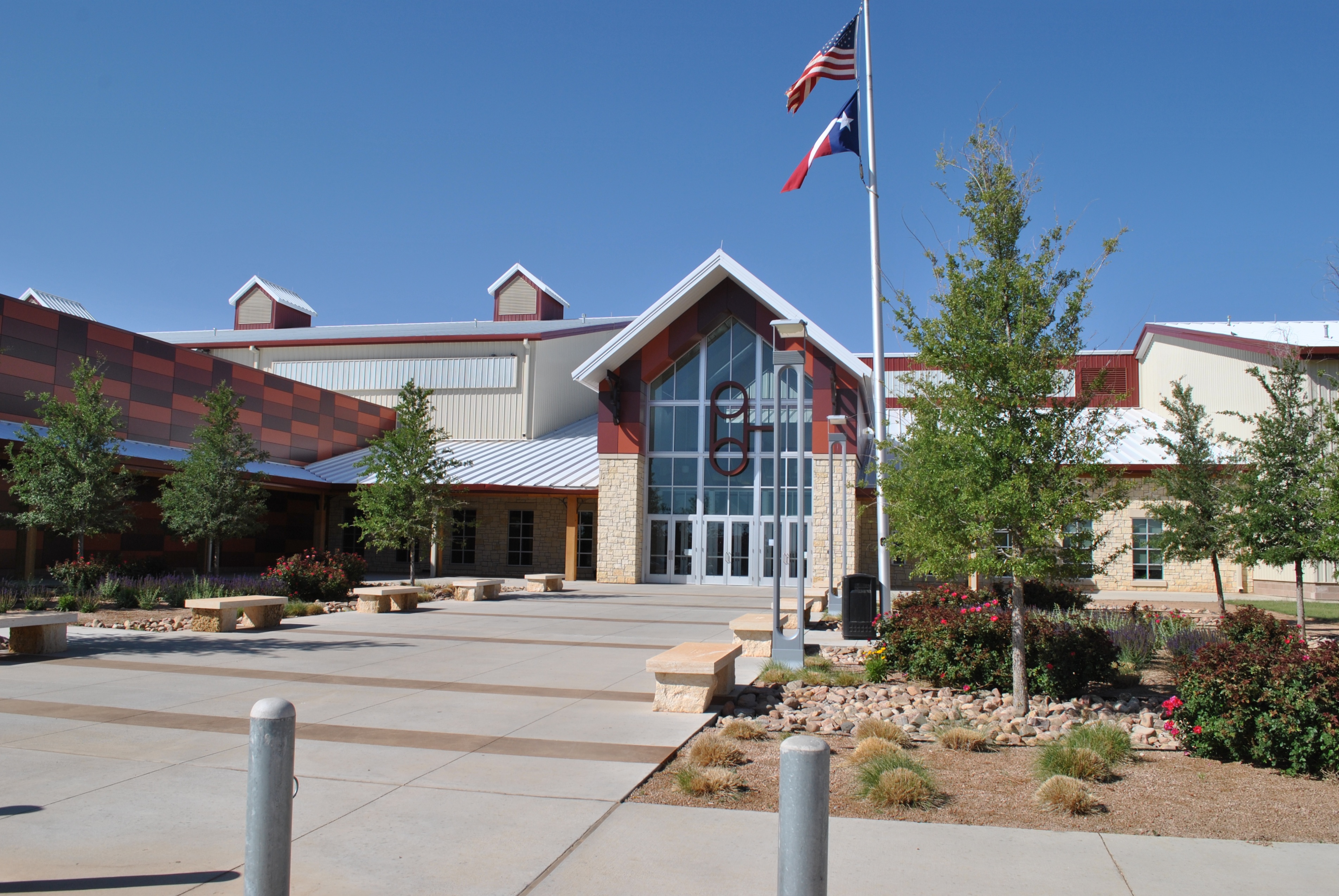
Closer to home, South Plains College anchors the community of Levelland itself, with a campus that hosts cultural events, performances, and athletic competitions throughout the year. The college brings a steady calendar of public programming and student activity to the town, and its tree-shaded green spaces give the surrounding residential streets a small-town collegiate feel.
Levelland appeals to short-term-rental owners because it offers a calmer, more affordable base just outside a major university and regional hub. Visitors passing through for college events, family gatherings, agricultural work, or West Texas road trips can enjoy the relaxed pace and wide-open skies of the South Plains while remaining within an easy drive of Lubbock's museums, restaurants, and the Buddy Holly legacy. Its location at the intersection of US-385 and State Highway 114 also makes it a practical overnight stop for travelers crossing the Llano Estacado between the Permian Basin and the Texas Panhandle.
Want to know if a property in Levelland is a good investment?
Enter an address to get instant revenue potential and comps.