
Grand Saline, Texas
Want to see how Grand Saline compares to other top cities in Texas? Explore all city regulations in Texas. →
Grand Saline, TX
Challenging To Investors
STR Regulations for Grand Saline, Texas
Note on scope and sources: This guide is based strictly on the provided web content. City- or county-specific regulations and contacts for Grand Saline, TX were not present in the search results. Where city-level rules are not available, we present Texas statewide requirements and best practices, with clear citations to the included source pages.
Overview: Are short-term rentals allowed in Grand Saline, TX?
Explicit answer based on the provided content: City-specific STR rules for Grand Saline were not found in the search results. Therefore, it is unknown whether Grand Saline explicitly permits, restricts, or prohibits STRs at the municipal level. Texas statewide context: STRs are broadly permissible but typically require a zoning permit at the local level; stays of 30 consecutive days or less are generally considered “short-term” under Texas state context. Consequently, a Grand Saline STR would likely be classified as a short-term rental if it is rented for 30 consecutive days or less, and hosts should expect to obtain a local zoning/permit and comply with any Texas/local tax obligations. Action for investors: Confirm municipal rules directly with Grand Saline before operating (see Contact Information and State-Level Requirements). (Sources: Proper Insurance state-by-state map; Pacaso Texas qualifier)
What do Airbnb hosts actually earn in Grand Saline?
Grand Saline hosts earn a median $14,601/year with $124 ADR and 41% occupancy.
Top performers pull in $21,855+ per year.
See the full Grand Saline market breakdownHow to start a short-term rental business in this market
-
- Confirm zoning and local eligibility
- Verify whether your property is located within Grand Saline city limits or its extraterritorial jurisdiction (ETJ).
- Determine if short-term rentals are allowed at your property’s zoning designation (e.g., single-family residential).
- Check whether a conditional use permit or special exception is required.
-
- Identify licensing/permitting requirements
- Expect that a local zoning or STR permit may be required under Texas state norms; confirm the exact form of permit with the city.
- Confirm any health/safety inspections and associated fees.
- If the city maintains a registry or certificate-of-occupancy process for STRs, complete it prior to listing.
-
- Establish tax and insurance compliance
- Register for and collect applicable state and local occupancy taxes.
- Report and remit sales and use taxes where applicable.
- Secure specialized STR insurance (property, liability, and revenue coverage) appropriate for short-term rentals; standard homeowner or landlord policies often leave significant gaps. (Source: Proper Insurance)
-
- Designate a local contact
- Many jurisdictions require a local responsible party or property manager who can respond to complaints and compliance issues within set timeframes.
-
- Implement operational standards
- Adopt safety and occupancy standards consistent with Texas norms; install smoke and carbon monoxide detectors, ensure safe egress, and post emergency information.
- Manage noise, parking, trash, and exterior maintenance to meet community standards.
-
- Use proper listing and recordkeeping
- Include permit numbers (if required) on listings.
- Maintain guest logs, receipts, tax filings, and inspection records.
Required documents, permits, licenses, and guidelines
Based on provided sources (no city-specific details for Grand Saline):
-
Texas statewide context
- Short-term rental qualifier: 30 consecutive days or less. (Source: Pacaso Texas qualifier)
- Local zoning permit: Typically required. (Source: Pacaso Texas qualifier)
- Taxes: Expect state and local occupancy/sales tax compliance; remit as required. (Source: Pacaso Texas qualifier; proper state/local procedures not detailed in provided content)
-
Typical Texas city STR prerequisites (norms, not Grand Saline–specific)
- Zoning permit/registration (often online).
- Local business license/occupancy certificate (may be required by some Texas cities).
- Local contact or property manager designation.
- Insurance verification (verify requirements with local authority).
- Inspections (safety/occupancy) and fee payment.
-
Safety and compliance practices (best-practice guidance)
- Functional smoke and CO detectors, posted emergency exits and local contacts, safe occupancy limits, and documented cleaning protocols.
- Specialized STR insurance is strongly recommended to cover gaps left by homeowner or landlord policies. (Source: Proper Insurance)
Note: Because city-specific documents were not identified in the provided content, confirm exact forms and processes with Grand Saline directly.
Specific regulations for short-term rentals: city, county, and state
-
State of Texas (short-term rentals)
- Definition: 30 consecutive days or less is generally considered a short-term rental stay under the Texas qualifier cited. (Source: Pacaso)
- Local requirement: A zoning permit is typically required for STRs. (Source: Pacaso)
-
County (Van Buren County): No county-specific STR regulations were identified in the provided content.
-
City of Grand Saline: No city-specific STR regulations were found in the provided content. You must confirm:
- Whether STRs are permitted in the applicable zoning district(s).
- Permit/registry requirements, local contact rules, and any local occupancy/tax rules.
- Inspection, safety, and operational standards that apply to STRs.
Contact information: Local authority in charge of STRs
No Grand Saline city-specific contacts were present in the provided content. Until you obtain official contacts from the city:
- Do not rely on third-party sites for official permitting or compliance.
- Use city directories and department pages as starting points to locate the Building/Inspections or Planning & Zoning divisions that typically administer STR permits.
Action plan to obtain contacts:
- Visit the City of Grand Saline official website to identify the Building/Inspections and Planning & Zoning departments.
- Request STR zoning verification and permitting requirements, along with local contact and inspection procedures.
Links to source pages
- Short-Term Rental Laws and Regulations by State (Texas section listing cities) — www.proper.insure/regulations/
- Texas short-term rental qualifier (30 days or less; zoning permit typically required) — www.pacaso.com/blog/what-is-short-term-rental
- City of Canton, TX — Code of Ordinances (general ordinance repository example; not Grand Saline) — cantontx.gov/government/code_of_ordinances.php
Important caveats: The Canton code is provided only as a general example of a Texas municipal ordinance repository. It does not apply to Grand Saline and should not be used as a substitute for Grand Saline’s regulations.
Practical next steps
- Confirm zoning and STR eligibility with the City of Grand Saline before acquiring or listing a property.
- Request the city’s STR application packet (permit/registry forms), inspection requirements, fees, and local contact rules.
- Register for any required state/local taxes and set up proper remittance.
- Obtain specialized STR insurance coverage to protect property, liability, and revenue.
- Maintain a compliance folder (permits, inspections, tax filings, guest logs, insurance) and perform periodic internal audits.
Because no city-specific ordinance or contact data for Grand Saline was present in the provided content, these recommendations emphasize Texas statewide norms and best practices. Proceed only after you have verified local requirements with the City of Grand Saline.
Next step
Found a property in Grand Saline?
Paste any address and get estimated revenue, cash-on-cash return, and comparable STR performance in under 5 minutes. 3 free analyses per day.
Free brief
Get the free Grand Saline STR Investment Brief
Revenue data, top neighborhoods, seasonal trends, and the key regulations for Grand Saline, Texas in one email.
Grand Saline
Market Saturation Score
Photos of Grand Saline


Overview of Grand Saline
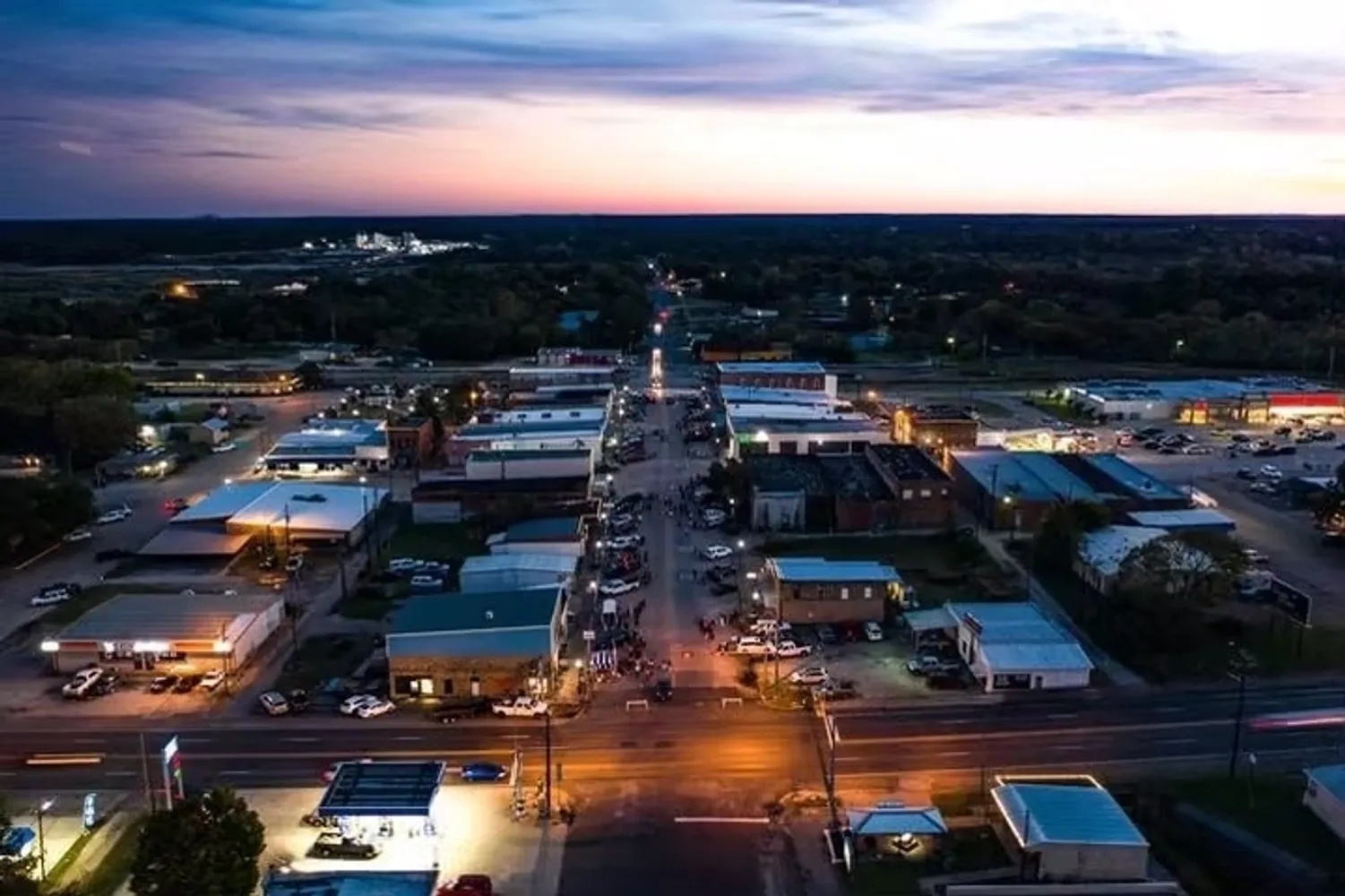
Grand Saline sits in the rolling, pine-dotted landscape of East Texas, in Van Zandt County, with a population of roughly 3,000 residents. The town takes its name from one of the largest salt domes in the United States, and salt has shaped its identity for more than a century. Today it is a quiet, small-town community that welcomes travelers exploring the region's lakes, antique markets, and rural scenery, and it lies about 65 miles east of Dallas, making it an easy drive from the Dallas–Fort Worth metroplex for weekend visitors and day-trippers alike.
The town's most distinctive landmark is the Salt Palace, a small but eye-catching structure in the downtown area built from salt blocks harvested from the local dome. It functions as a visitor center and a tiny museum of local history, offering travelers a quick stop that explains the geology and industry behind Grand Saline's name. It is right in the heart of town, only a few minutes from any short-term rental in the area.
A short drive east brings visitors to Canton, home of First Monday Trade Days, one of the largest and oldest open-air markets in the country. Held on the days leading up to the first Monday of each month, the sprawling event draws thousands of shoppers browsing antiques, crafts, livestock, and food. From Grand Saline, Canton is roughly a 20-minute drive down U.S. Highway 80, which makes Grand Saline a convenient and calmer base for visitors who want market access without the weekend crowds.
Outdoor recreation is also close at hand, with Lake Tawakoni and the surrounding state park lying about 20 to 25 miles to the north. The lake is a popular spot for fishing, boating, and birding along the Sabine River, and the state park offers camping, hiking trails, and shoreline access for day use. Combined with smaller local lakes, public hunting land, and the gentle countryside of the Post Oak Savannah, the area gives nature-oriented guests plenty of reasons to extend their stay.
Grand Saline works well as a short-term rental base because it offers small-town affordability, an easy commute from Dallas, and a varied mix of nearby attractions, from the quirky Salt Palace to the famous Canton trade days and the boating and fishing opportunities at Lake Tawakoni. Visitors get the charm of a real East Texas town with convenient access to the region's biggest draws.
Want to know if a property in Grand Saline is a good investment?
Enter an address to get instant revenue potential and comps.