
Canadian, Texas
Want to see how Canadian compares to other top cities in Texas? Explore all city regulations in Texas. →
Canadian, TX
Very Investor Friendly
STR Regulations for Canadian, Texas
Investor overview
- Are STRs allowed in Canadian, TX? Yes. Short‑term rentals are allowed in Canadian, Texas. There are no statewide prohibitions in Texas and the content you provided does not indicate any city‑specific ordinance for Canadian (the small municipality in Pittsburg County) or for Canadian County. That means STRs operate under general Texas law and local rules that may apply through your city or county (for Pittsburg County, TX). You must still comply with Texas hotel occupancy tax (HOT) rules and any applicable municipal or county ordinances, safety codes, HOA restrictions, and state tax obligations.
Note on “Canadian, TX”
- Canadian, TX most commonly refers to the City of Canadian in Pittsburg County (East Texas). It may also be confused with Canadian County (home to OKC‑metro cities like Yukon, El Reno, Mustang, Piedmont, and others). The links and content you provided do not mention Canadian County or the City of Canadian directly. This guide therefore provides Texas‑wide STR requirements and any Pittsburg County–specific rules that can be inferred from Texas practice; it also explains how to verify and comply with the City of Canadian’s municipal rules if the city has any.
How to start a short‑term rental business in this market
- Confirm property and use
- Verify zoning/deed restrictions for the subject property (residential vs. commercial). Many HOAs and deed‑restricted communities prohibit STRs. If within an HOA, obtain written confirmation of permission (or waiver) before investing.
- If the property is in the City of Canadian, check the city’s official website/municipal code for any local STR licensing, registration, or zoning restrictions. If none are published, proceed under Texas and Pittsburg County requirements and maintain compliance with state taxes and safety codes.
- Texas tax setup (mandatory)
- Hotel Occupancy Tax (HOT): Register with the Texas Comptroller as a lodging provider to collect, report, and remit HOT on stays under 30 days. Most Texas cities and many counties levy HOT in addition to the state’s 6% HOT. Filing cadence is typically monthly, quarterly, or annually depending on your expected tax liability. The Comptroller provides guidance and electronic filing.
- State sales/use tax: If you sell taxable goods or services at the STR (e.g., snacks, toiletries), or receive revenue from property management/cleaning services you provide, you must also register and collect Texas state sales tax (currently 6.25%) if applicable. Keep a separate sales tax number if different from HOT registration.
- Municipal/county permits or registrations (if any)
- City of Canadian: Check whether the city requires any STR registration/permit. If the city has no published STR program, operate under state and county rules and maintain documentation (tax registrations, safety checklist, guest rules) in case of future inquiries.
- Pittsburg County: Texas counties do not require county‑wide STR permits, but they may levy a county HOT (confirm with the Pittsburg County Tax Assessor‑Collector). Pittsburg County is not listed in the content you provided, so you should verify locally if a county HOT applies and register if needed.
- Safety and habitability checklist (best practice)
- Install smoke detectors in bedrooms and common areas; install carbon monoxide detectors where applicable.
- Provide fire extinguishers (accessible and inspected).
- Post emergency contact information and house rules; maintain clear egress and address markings.
- Follow local fire and building codes for occupancy limits and safety equipment.
- Set up operations and compliance
- Insurance: Maintain liability and property coverage appropriate for a short‑term rental business; confirm that your policy covers short‑term guest stays.
- Leases/house rules: Use a short‑term occupancy agreement/VRBO‑style agreement with guests (30 days or less). Include house rules (occupancy, parking, quiet hours, parties, smoking, pets), compliance reminders (city noise/nuisance codes), and HOT tax disclosures if collected by the host.
- Recordkeeping: Retain guest logs, reservation records, tax filings, and communications for the required retention period.
- Launch and monitor
- List on your chosen platforms (Airbnb/Vrbo/Booking.com), ensuring you disclose accurate occupancy limits, amenities, and local rules.
- Establish cleaning/turnover SOPs, noise/party protocols, and guest screening that respects fair housing and platform policies.
- Track filings and deadlines for HOT and any local taxes; monitor city/county notices or code updates.
Required documents, permits, licenses, and guidelines
- Texas HOT registration with the Comptroller (e Texas sales tax registration if selling taxable goods/services)
- City of Canadian STR registration/permit (if applicable; none identified in provided content)
- Pittsburg County HOT registration (if the county levies a local HOT)
- Safety documentation (detector locations, extinguisher inspection records, emergency info posting)
- Insurance policy declarations showing liability/property coverage for STR operations
- Guest occupancy agreement/terms and house rules
- Platform‑specific compliance (display of license/permit number if required by local law; accurate occupancy limits; HOT collection and remittance)
Specific regulations in Canadian, TX (city, county, and state)
- City of Canadian (Pittsburg County): The provided content does not identify city‑specific STR ordinances or licensing. As a practical matter, operate under Texas law and Pittsburg County rules while monitoring city announcements or code updates. If the city later adopts an STR program, expect registration/permit requirements, occupancy limits, noise/nuisance enforcement, and local HOT collection in addition to state HOT.
- Pittsburg County: Confirm whether the county levies a local HOT. If so, you must register with the county tax office and remit the local HOT in addition to state HOT and any municipal HOT. County HOT rates vary; verify the exact rate with the county tax assessor‑collector. The content you provided does not list a Pittsburg County HOT, so direct verification is advised.
- State of Texas:
- STRs are permitted under state law; cities/counties may regulate and tax them.
- Hotel Occupancy Tax: 6% state HOT on lodging for stays under 30 days. Hosts must register, collect, and remit to the Texas Comptroller.
- Municipal/county HOT: Many Texas cities and some counties levy additional HOT; rates vary by jurisdiction (typical combined rates often range from roughly 7% to 15% for the state + local components).
- Tax collection/remittance: Hosts or platforms may collect and remit; you remain responsible for compliance even if a platform assists.
- Safety/health standards: Hosts must comply with applicable fire, building, and health codes, as well as noise/nuisance and public safety ordinances.
- Enforcement: Cities can enforce local ordinances (zoning, noise, occupancy, parking, safety). Violations may result in fines, injunctions, or permit revocation.
Contact information and authoritative resources
- Texas Comptroller of Public Accounts
- Phone: 1‑800‑252‑5555
- Website: comptroller.texas.gov
- Topics: Hotel Occupancy Tax registration/filing; State sales/use tax; local tax rate lookups; forms and instructions
- Pittsburg County Tax Assessor‑Collector
- Confirm if Pittsburg County levies a local HOT and obtain registration instructions.
- City of Canadian (municipal)
- Check the city’s official website or city hall for any STR registrations, permits, or code updates; obtain contact details and clerk/planning contacts directly from the city’s official site.
Links to source pages
- Statewide STR regulation and tax context:
- Texas Comptroller — Hotel Occupancy Tax: comptroller.texas.gov/taxes/hotel
- AllTheRooms — Airbnb Regulations by City (Texas examples; general regulatory overview): www.alltherooms.com/resources/articles/airbnb-regulations/
- Law Office of Bryan Fagan — Short‑Term Rentals in Texas: What Cities Are Cracking Down, and Why?: txprobatelawyer.net/short-term-rentals-in-texas-what-cities-are-cracking-down-and-why/
Practical investor checklist for Canadian, TX
- If Canadian, TX = City of Canadian (Pittsburg County)
- Confirm municipal HOT (city) and county HOT (Pittsburg County) with the respective tax offices.
- Register with the Texas Comptroller for state HOT.
- Review city codes/ordinances for any STR licensing, safety, or occupancy rules (post locally if found).
- Ensure compliance with Texas sales/use tax if you sell taxable goods/services.
- Verify HOA/deed restrictions and obtain written approval if required.
- If you meant Canadian County (OKC‑metro area)
- The provided sources do not identify Canadian County STR rules. There is no statewide ban in Texas. Proceed under Texas state HOT requirements and any local municipal ordinances that apply in the specific city within Canadian County where your property is located (e.g., Yukon, El Reno, Mustang, Piedmont, etc.). Check those cities’ codes or websites for any local STR programs and HOT.
Notes and cautions
- Local rules can change quickly. Monitor your city’s and county’s official websites for new STR ordinances, registration portals, fee schedules, and HOT changes.
- Keep detailed records of all filings, permits, inspections, and communications with taxing authorities.
- If a platform assists with HOT collection, you are still responsible for accurate filing, timely remittance, and compliance with all local laws.
What do Airbnb hosts actually earn in Canadian?
Canadian hosts earn a median $1,987/year with $201 ADR and 17% occupancy.
Top performers pull in $3,015+ per year.
See the full Canadian market breakdownNext step
Found a property in Canadian?
Paste any address and get estimated revenue, cash-on-cash return, and comparable STR performance in under 5 minutes. 3 free analyses per day.
Free brief
Get the free Canadian STR Investment Brief
Revenue data, top neighborhoods, seasonal trends, and the key regulations for Canadian, Texas in one email.
Canadian
Market Saturation Score
Photos of Canadian

Overview of Canadian
Canadian is a small city in the Texas Panhandle that serves as the county seat of Hemphill County, with a population of roughly 2,600 residents. Tucked into the rolling plains where the Canadian River carves its way through bluffs and breaks, the town has a quiet, ranching-rooted character and a striking natural setting that distinguishes it from many of the flatter prairie communities nearby. It sits at the junction of US Highways 60 and 83, about 100 miles east-northeast of Amarillo, the nearest major Texas city, and functions as a gateway to the scenic Canadian River breaks country and the wide-open ranchlands of the eastern Panhandle.
A short drive north of town brings visitors to the Gene Howe Wildlife Management Area, a large state-administered tract of rough canyon country along the Canadian River known for whitetail deer, wild turkey, and a network of rugged two-track roads that attract hunters and wildlife watchers from across the region. The WMA sprawls across the breaks and offers a sense of remote, unfenced Texas that feels far larger than the modest town it surrounds. Official information is available through the Texas Parks and Wildlife Department.
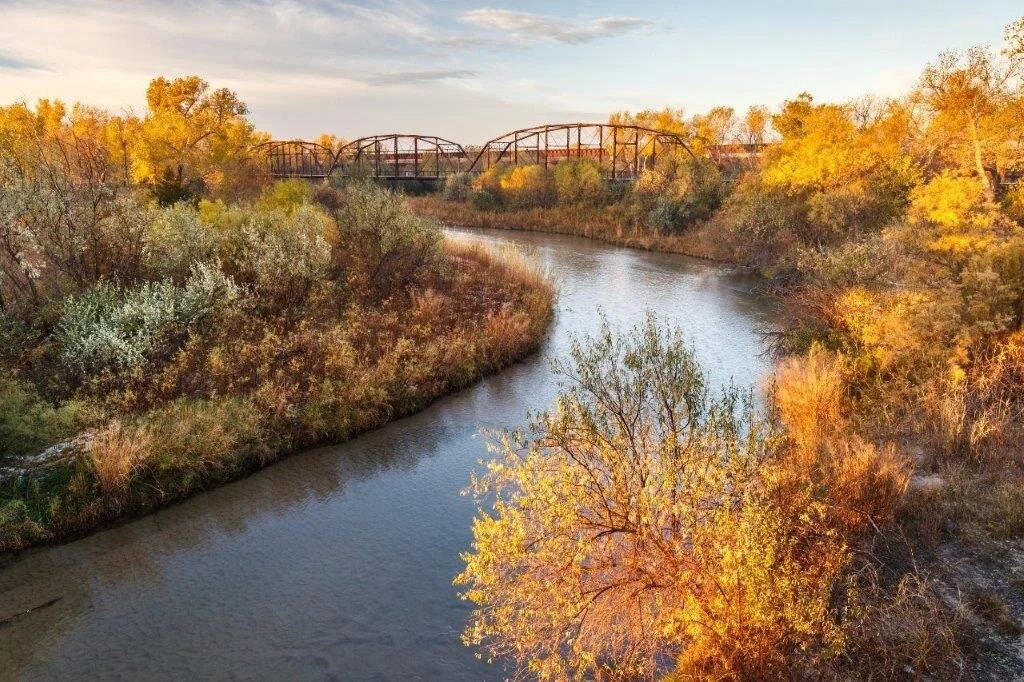
The Canadian River itself is the defining geographic feature of the area, and the red-rock canyon country it cuts through just north and west of town draws visitors for hiking, photography, fishing, and sunset-watching. The town's name comes from the river, not the country, and the river remains a focal point of local identity. Hemphill County, sometimes called the "Deer Capital of Texas" in local tourism literature, attracts hunters each fall and winter, which is one of the strongest seasonal drivers of lodging demand in the area.
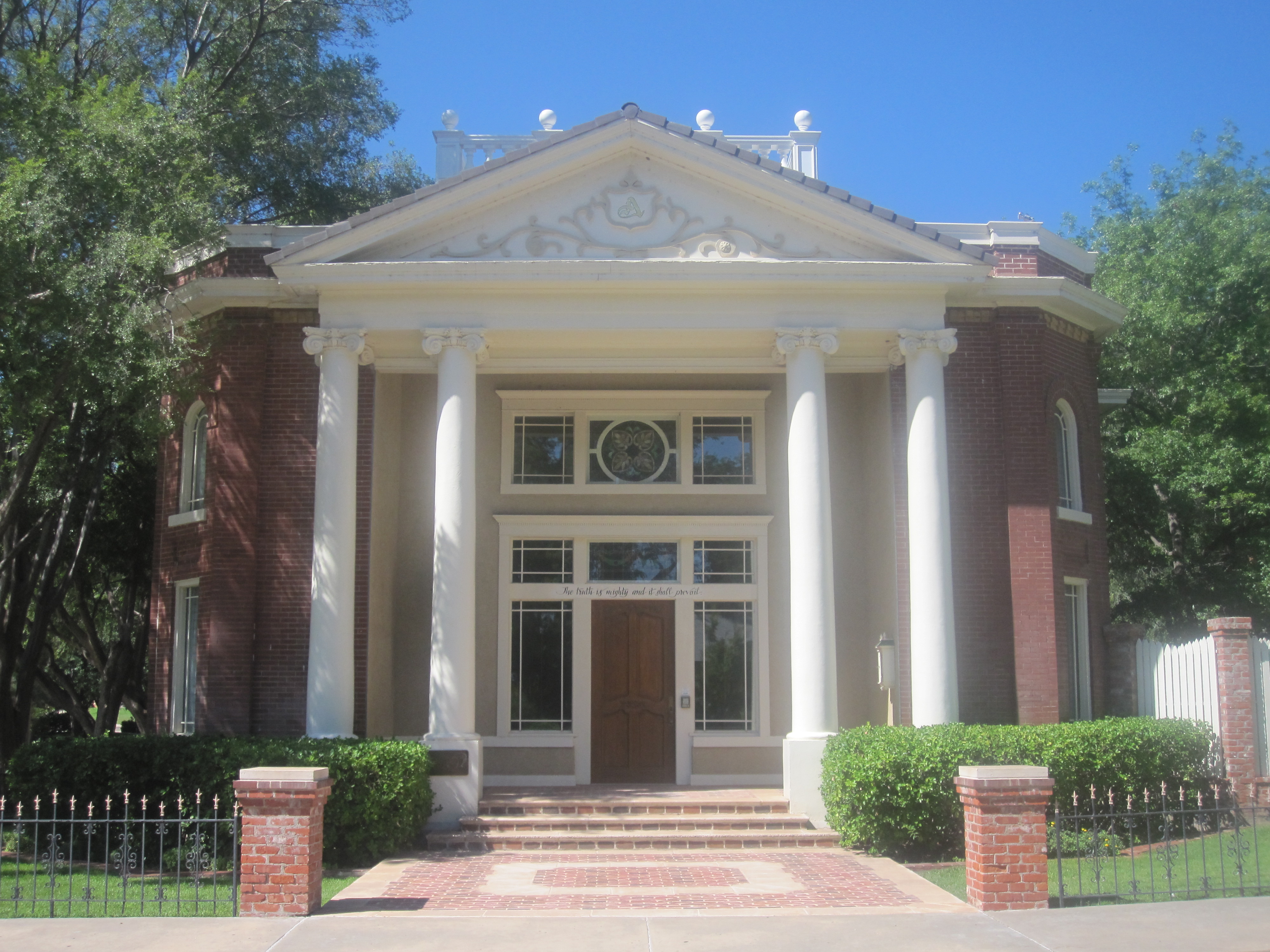
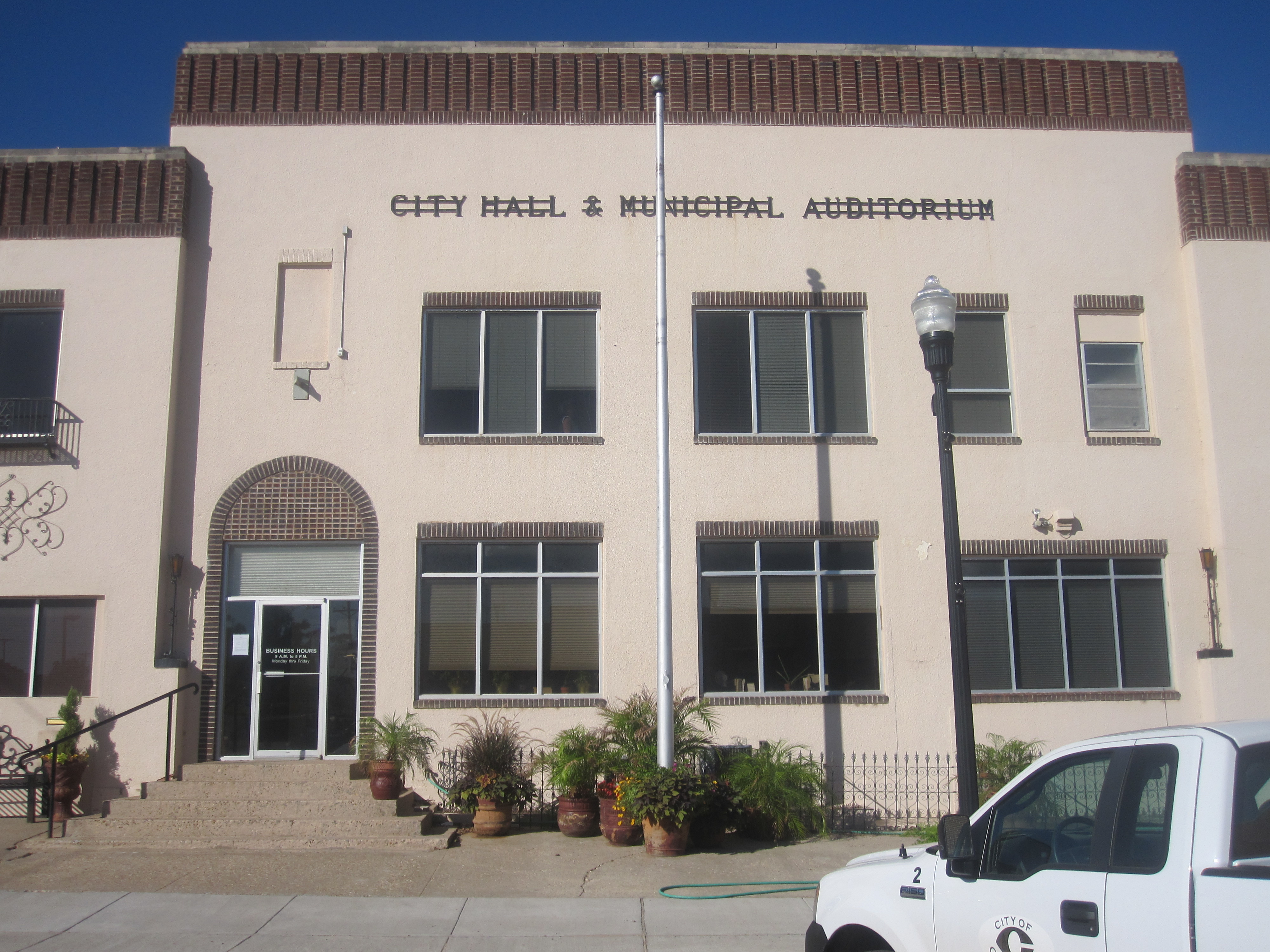
Within town, the Hemphill County Historical Museum and the small downtown district give visitors a sense of the region's ranching and pioneer past, with exhibits on early settlers, oil and gas development, and frontier life on the high plains. The compact downtown, anchored by the historic Roberts-Trowbridge Building and other early-twentieth-century storefronts, is walkable and reflects the modest prosperity the county enjoyed in its early oil-boom years.
For short-term rental investors and visitors alike, Canadian offers a combination of big-sky scenery, outdoor recreation, and small-town character that contrasts with the more crowded Panhandle destinations farther west. Its proximity to Amarillo's airport and the Canadian River's outdoor offerings gives it genuine appeal as a base for travelers seeking quiet, scenery, and hunting season stays in a part of Texas that still feels largely unspoiled.
Want to know if a property in Canadian is a good investment?
Enter an address to get instant revenue potential and comps.