
Bay City, Texas
Want to see how Bay City compares to other top cities in Texas? Explore all city regulations in Texas. →
Bay City, TX
Very Investor Friendly
STR Regulations for Bay City, Texas
Overview: Are Short-Term Rentals Allowed in Bay City, TX?
Yes, short-term rentals are explicitly allowed in Bay City, Texas. The city's Hotel Occupancy Tax FAQ confirms that "all hoteliers, including hosts of short-term rentals, are required to collect and remit Hotel Occupancy Tax," directly acknowledging the legality of STR operations within city limits. This makes Bay City a STR-friendly market with ongoing accommodation tax requirements rather than prohibition or restrictive permitting processes.
What do Airbnb hosts actually earn in Bay City?
Bay City hosts earn a median $21,611/year with $245 ADR and 42% occupancy.
Top performers pull in $35,129+ per year.
See the full Bay City market breakdownHow to Start a Short-Term Rental Business in Bay City, TX
Starting a short-term rental business in Bay City follows a straightforward process:
-
Property Preparation: Ensure your property meets basic safety and habitability standards. While Bay City doesn't appear to have specific inspection requirements for STRs, maintaining properties to standard is recommended for guest satisfaction and potential liability protection.
-
Registration: While Bay City doesn't mandate specific STR registration permits (unlike some Texas cities), you should contact the city to confirm any recent updates to requirements.
-
Tax Registration: Set up your Hotel Occupancy Tax collection and remittance system. This is a mandatory requirement regardless of whether you use a platform or rent directly.
-
Listing Creation: Once tax systems are in place, list your property on platforms like Airbnb, VRBO, or through direct marketing.
Required Documents, Permits, Licenses, and Guidelines
Based on available information, Bay City does not appear to require specific permits or licenses for short-term rentals beyond standard hotel occupancy tax compliance. Key requirements include:
- Hotel Occupancy Tax Registration: Not a specific permit but a tax remittance system you must set up.
- Monthly Tax Filing: Required even in months with zero occupancy.
- Record Keeping: The city retains the right to audit your records, though it doesn't require receipts.
Important Note on Tax Rates: The Bay City Hotel Occupancy Tax rate appears to be missing from available documentation. As a Texas municipality, Bay City can levy up to 9% under Chapter 351 of the Texas Tax Code, but you must confirm the current applicable rate directly with the city.
Specific Regulations for Short-Term Rentals
City-Level (Bay City)
Bay City follows standard Texas municipal hotel occupancy tax requirements:
- Tax Application: Applies to stays of 30 days or fewer
- Tax Base: Applied only to the room rate, not to additional fees (booking, cleaning, pet fees, etc.)
- Tax Remittance: Due on the last calendar day of the month following collection
- Monthly Filing: Required even in months with zero occupancy
- Audit Rights: The city retains the right to audit your records
- Local Tax Collection: Platforms like Airbnb and VRBO do not automatically collect Bay City's local hotel occupancy tax (though they may collect state taxes)
State-Level (Texas)
Texas regulations provide the framework for Bay City's approach:
- State Tax Collection: The Texas Comptroller's Office has agreements with platforms like Airbnb to collect and remit state hotel occupancy taxes.
- Municipal Authority: Chapter 351 of the Texas Tax Code allows municipalities to impose and collect hotel occupancy taxes at rates up to 9%.
- Use Restrictions: Section 351.101 of the Texas Tax Code requires hotel occupancy taxes to be used only for specific tourism-related expenses.
Contact Information
For questions about Bay City hotel occupancy tax or STR operations:
City of Bay City
- Address: City Hall, 1901 Fifth Street, Bay City, TX 77414
- Phone: 979-245-2137
- Email: citysecretary@cityofbaycity.org
- Website: www.baycitytx.gov/
Specific Tax Contact
- Samantha Denbow (Hotel Occupancy Tax contact, as referenced in city FAQ)
Online Resources
- Bay City Online Payments: www.municipalonlinepayments.com/baycitytx
- Bay City Building Department: www.cityofbaycity.org/248/Building-Department
Source Links
- Bay City Hotel Occupancy Tax FAQ: www.baycitytx.gov/faq.aspx?TID=19
- Bay City General FAQ: www.baycitytx.gov/faq
- Texas Hotel & Lodging Association STR Overview: texaslodging.com/short-term-rental-str-update-2018/
Additional Considerations
-
County-Level Information: No specific Matagorda County STR regulations were found in the provided sources. Check with the county directly for any additional requirements.
-
Platform Compliance: Remember that while platforms like Airbnb collect state taxes, they do not automatically collect Bay City's local hotel occupancy tax. You must set up separate remittance for local taxes.
-
Tax Rate Verification: The exact Bay City hotel occupancy tax rate was not available in the sources. Contact the city directly to confirm the current rate before beginning operations.
-
Zoning Considerations: Verify that your property is in an area where short-term rentals are permitted under local zoning regulations. Contact the Building Department at 979-245-0997 or permits@cityofbaycity.org for zoning inquiries.
-
Neighbor Relations: While not a regulatory requirement, maintaining positive relationships with neighbors can help prevent nuisance complaints that might prompt future regulatory changes.
This guide provides a foundation for operating a short-term rental in Bay City, Texas. Given the evolving nature of STR regulations, it's advisable to periodically check with city authorities for any updates to requirements.
Next step
Found a property in Bay City?
Paste any address and get estimated revenue, cash-on-cash return, and comparable STR performance in under 5 minutes. 3 free analyses per day.
Free brief
Get the free Bay City STR Investment Brief
Revenue data, top neighborhoods, seasonal trends, and the key regulations for Bay City, Texas in one email.
Bay City
Market Saturation Score
Photos of Bay City



Overview of Bay City
Bay City sits in the flat, breezy coastal plain of Southeast Texas as the county seat of Matagorda County, with a population of roughly seventeen to eighteen thousand residents. It has the feel of a quiet, workaday South Texas town — wide streets, an easygoing pace, and a strong agricultural and industrial base tied to rice farming, ranching, and petrochemicals. Travelers tend to pass through on their way to the Matagorda peninsula and the Gulf beaches, making the city a convenient inland base for anyone exploring this stretch of the Texas coast. Houston lies about 70 miles to the northeast, and the drive to the Gulf of Mexico shoreline is roughly 30 to 40 miles to the south.
The single biggest draw in the area is Matagorda Bay, one of the largest and most ecologically important estuaries on the Texas Gulf Coast. Fishermen come for redfish, speckled trout, and flounder in the bay's shallow, marsh-lined waters, while birders travel from across the country to see migratory species along the shoreline. Matagorda Beach, at the southern tip of the peninsula, offers a wide, relatively uncrowded stretch of sand and surf about an hour's drive from town.
Just to the northeast of the city, Big Boggy National Wildlife Refuge protects a sizable chunk of the bay's marshes, salt flats, and riparian habitat. The refuge is a favorite stop for birdwatchers, photographers, and paddlers who want to experience the coastal ecosystem away from the busier public beaches. It sits roughly twenty to thirty minutes from downtown Bay City, making it easy to combine with a meal or a fuel stop in town.
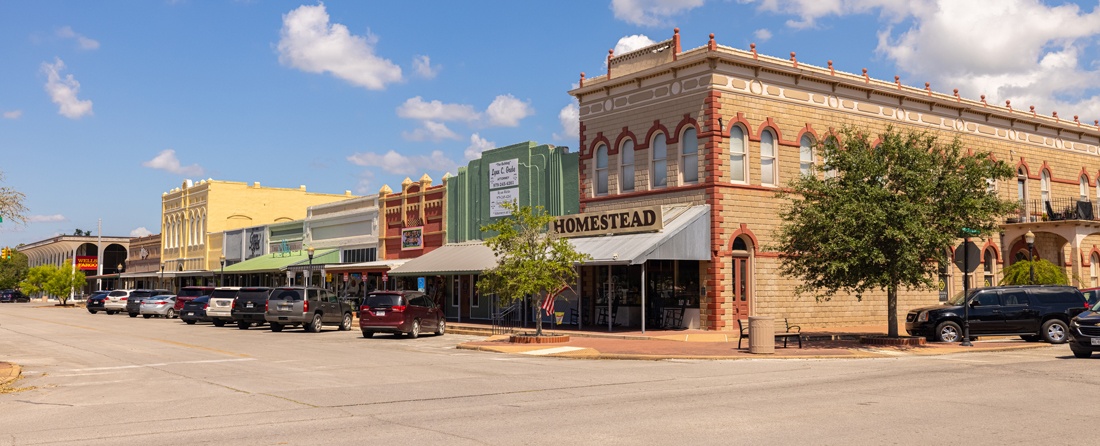
Closer in, the Matagorda County Museum in Bay City itself offers a look at the region's history, from the Karankawa and other early inhabitants through the era of cotton and rice plantations and into the twentieth-century oil and gas boom. The surrounding historic downtown has a handful of older storefronts and civic buildings that hint at the city's nineteenth-century origins, when the area was one of the earliest Anglo settlements on the Texas coast. Visitors can also stop by the Bay City Municipal Park or drive a short distance to local inland lakes for freshwater fishing and picnicking.
For short-term-rental owners, Bay City's appeal comes from the contrast it offers: it remains a small, affordable, low-density town while sitting within easy reach of some of the most scenic and lightly developed shoreline on the Texas Gulf Coast. The combination of birding, fishing, beach-going, and uncrowded refuges draws a steady flow of nature-focused travelers, and the relative lack of large hotel inventory along this stretch of coast leaves room for well-located rentals to capture both weekend road-trippers from Houston and longer-stay visitors chasing the coast's quiet, salt-air rhythm.
Want to know if a property in Bay City is a good investment?
Enter an address to get instant revenue potential and comps.