
Livingston, Tennessee
Want to see how Livingston compares to other top cities in Tennessee? Explore all city regulations in Tennessee. →
Livingston, TN
Challenging To Investors
STR Regulations for Livingston, Tennessee
Overview: STR Status in Livingston, TN
Short-term rentals are allowed in Livingston, Tennessee, but only within a specific regulatory framework that has been recently established. As of September 2021, the city was actively preparing an ordinance to officially allow and regulate Airbnb and similar lodging platforms. While STRs were operating in the city without formal approval (approximately 6 were identified), the city was moving toward a comprehensive regulatory approach that would require proper licensing, inspections, and tax compliance.
What do Airbnb hosts actually earn in Livingston?
Livingston hosts earn a median $16,205/year with $110 ADR and 53% occupancy.
Top performers pull in $23,405+ per year.
See the full Livingston market breakdownHow to Start a Short-Term Rental Business in Livingston, TN
Step 1: Understand the Regulatory Framework
Livingston's STR regulations are designed to balance the benefits of short-term rentals with community safety and neighborhood protection. The city modeled its approach after similar ordinances in Cookeville, Algood, and Sparta, Tennessee.
Step 2: Navigate Zoning and Location Requirements
The Livingston Planning Commission will determine specific zoning areas where STRs are permitted. Prospective operators should:
- Verify that the property is located in an area zoned for STR operations
- Ensure compliance with residential zoning requirements
- Consider potential impacts on neighboring properties
Step 3: Complete Required Inspections and Safety Measures
All STR operators must undergo:
- Fire inspections
- Egress inspections
- Annual safety inspections to ensure tenant safety
Required Documents, Permits, Licenses, and Guidelines
Business License
A city business license is mandatory for all STR operations in Livingston. This license enables the city to:
- Track who is operating in the community
- Ensure compliance with safety standards
- Facilitate revenue collection
Annual Inspections
- Fire safety inspection: Required to ensure proper fire safety measures
- Egress inspection: Required to verify safe exit routes
- Annual inspection: Mandatory ongoing compliance check
Tax Registration and Collection
- Hotel/Motel Tax: 4% of annual gross revenue must be paid to the city
- Tax collection applies to all lodging providers, including STRs
- The tax is assessed on gross revenue, not profit
Specific Regulations for Short-Term Rentals
City-Level Regulations (Livingston)
Safety Requirements
- Fire inspections are mandatory for all STR properties
- Egress inspections are required to verify emergency exit adequacy
- Properties must meet building code safety standards
Licensing and Oversight
- Business license required from the city
- Annual fee structure applies
- City maintains registry of all STR operators for accountability
Grandfathering Provisions
Existing STR operators at the time of ordinance adoption are subject to "grandfathering" provisions:
- Not required to fully retrofit properties to current building codes
- Still required to pay annual fees
- Must comply with ongoing safety standards and inspections
Zoning Restrictions
- Final zoning restrictions determined by Livingston Planning Commission
- STRs may be limited to specific residential zones
- Commercial and industrial zoning restrictions may apply
County-Level Regulations (Overton County)
Based on available information, Overton County implemented hotel/motel tax regulations several years before Livingston, providing precedent for municipal tax authority over lodging facilities. No additional county-specific STR regulations were identified in the provided sources.
State-Level Regulations (Tennessee)
Tennessee state law has been amended to allow municipalities to collect hotel/motel taxes from short-term rental operations. This legislative change enables cities like Livingston to:
- Tax STR revenue at the municipal level
- Regulate STR operations within city limits
- Ensure compliance with state lodging standards
Contact Information for Local STR Authorities
Primary Contact - City of Livingston
Building and Codes Official: Kristian Mansell
- Role: Primary authority for STR safety inspections and building compliance
- Responsibilities: Fire inspections, egress inspections, annual compliance checks
Office: Livingston City Hall
- Address: Livingston, Tennessee (specific address not provided in sources)
- Phone: [Not available in provided sources]
- Email: [Not available in provided sources]
Secondary Contacts
Mayor: Curtis Hayes
- Role: Executive oversight of STR policy implementation
- Responsibilities: Policy direction, ordinance enforcement authority
Livingston Municipal Planning Commission
- Role: Determines zoning locations where STRs are permitted
- Responsibilities: Land use planning, zoning compliance for STR locations
Important Notes for STR Investors
Regulatory Status
The STR regulatory framework in Livingston is still relatively new, with the formal ordinance process beginning in September 2021. Prospective investors should:
- Confirm current status of specific zoning regulations with the Planning Commission
- Verify any updates to licensing requirements and fees
- Stay informed about ongoing policy developments
Market Considerations
- Approximately 6 STRs were operating in Livingston as of September 2021
- Limited competition may indicate market opportunity
- Grandfathering provisions provide transition period for existing operators
Compliance Costs
- Business license fees (amount not specified in sources)
- Annual inspection fees (amount not specified in sources)
- 4% hotel/motel tax on gross revenue
- Potential retrofits for safety compliance (varies by grandfathering status)
Source References
-
UC Now News Report: "Livingston Preparing Ordinance Allowing Air BnB Lodging" - September 14, 2021
- URL: theucnow.com/2021/09/14/livingston-preparing-ordinance-allowing-air-bnb-lodging/
- Content: Official city announcements regarding STR policy development
-
Livingston Municipal Zoning Ordinance: Comprehensive zoning regulations for the City of Livingston
- URL: static1.squarespace.com/static/666c884ca705b277b33b195f/t/66ff1835e7acaa1def82e79a/1727993909962/Livingston+TN+Municipal+Zoning+Ordinances.pdf
- Content: General zoning framework and permitted uses (Note: Specific STR provisions not detailed in provided sections)
Important Disclaimer: This guide is based on information available as of September 2021. STR regulations in Livingston may have evolved since this time. Investors should verify current requirements, fees, and zoning restrictions with local authorities before making investment decisions.
Next step
Found a property in Livingston?
Paste any address and get estimated revenue, cash-on-cash return, and comparable STR performance in under 5 minutes. 3 free analyses per day.
Free brief
Get the free Livingston STR Investment Brief
Revenue data, top neighborhoods, seasonal trends, and the key regulations for Livingston, Tennessee in one email.
Livingston
Market Saturation Score
Photos of Livingston

Overview of Livingston
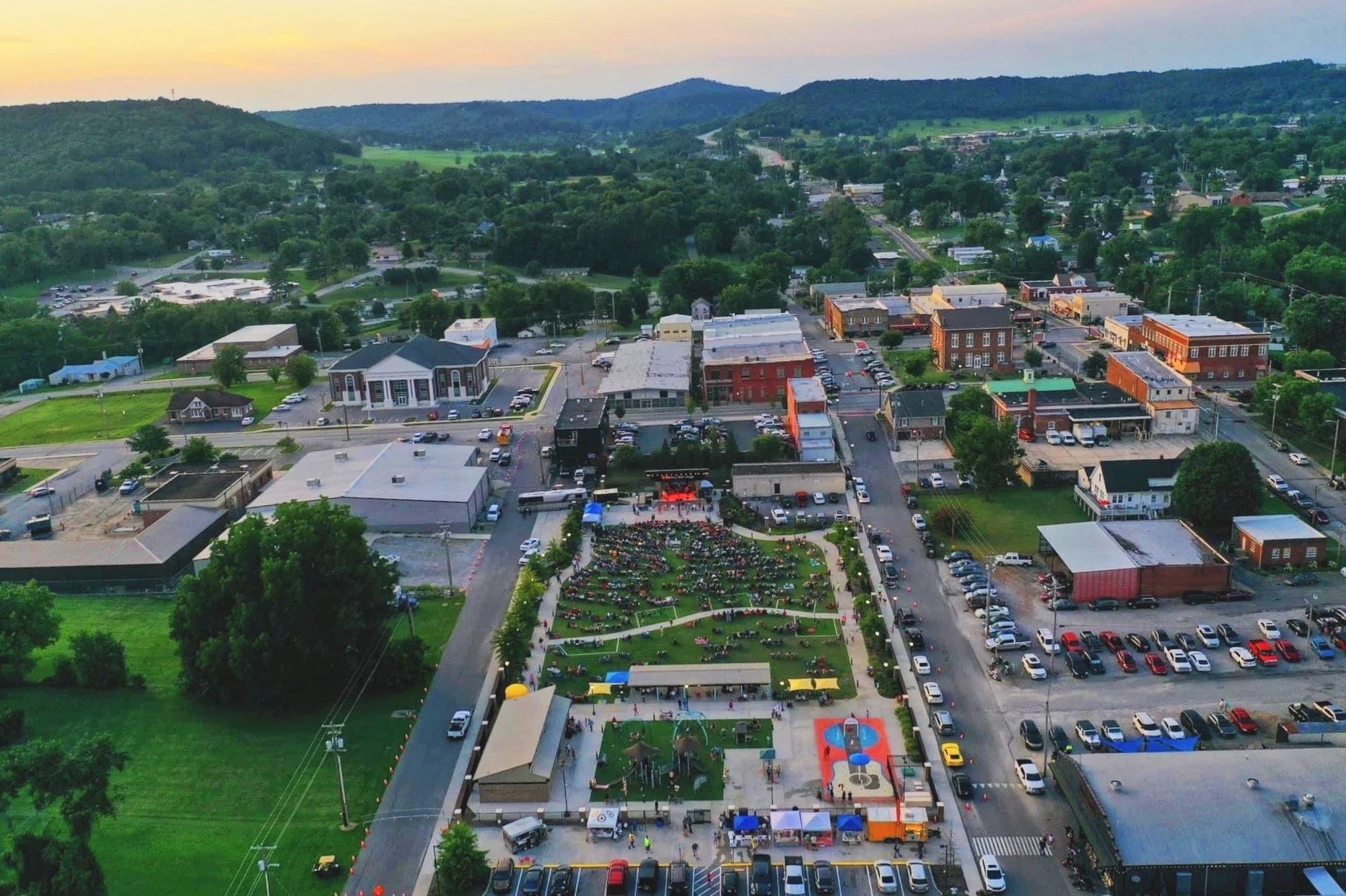
Livingston is a small town that serves as the county seat of Overton County, Tennessee, with a population of approximately 3,500 residents. Tucked into the rolling hills and farmland of the Upper Cumberland region, it has the unhurried character typical of rural Tennessee county seats, with a compact downtown, a historic courthouse square, and the kind of local diners and small businesses that anchor civic life. The town is best known as a convenient base for exploring some of Middle Tennessee's most rewarding outdoor landscapes, particularly the lake country to the north and the state parks that ring the region. It sits roughly 90 miles east-northeast of Nashville, a drive of about an hour and forty-five minutes along Interstate 40, and the larger city of Cookeville is about a half hour to the west.
Just a few miles north of town, Standing Stone State Park offers more than 8,000 acres of Appalachian foothill terrain, with hiking trails, a lake for fishing and paddling, a swimming pool, and rustic cabins set among hardwood and pine forest. The park takes its name from a large upright rock that was a landmark for Cherokee and other travelers in earlier centuries, and visitors today can still hike to the monolith. Its proximity to Livingston makes it an easy half-day or full-day excursion for guests who want to trade small-town quiet for a walk in the woods.
To the north and east, Dale Hollow Lake spreads across the Tennessee-Kentucky border, a deep, exceptionally clean reservoir celebrated for its fishing, houseboating, and scenic bluffs. The lake is roughly a 30- to 40-minute drive from Livingston and surrounds the town of Celina, where visitors can rent pontoon boats, book guided fishing trips, or simply enjoy the quiet coves and rocky shorelines. In warmer months, the lake is one of the busiest recreational draws in the entire region, and its calm water and forested ridges draw repeat visitors year after year.
A bit further afield, the city of Cookeville lies about 25 miles west and provides a fuller range of dining, shopping, and medical services, as well as access to additional outdoor destinations like Cummins Falls State Park and Burgess Falls State Park to the southwest. Together, these resources give visitors a way to combine small-town Tennessee atmosphere with the lakes, forests, and waterfalls that define the Upper Cumberland.
For short-term rental owners, Livingston offers an appealing combination of small-town affordability, a steady flow of outdoor and lake travelers, and a location that places it within easy reach of both Nashville and the broader network of parks and reservoirs that draw visitors to this corner of Tennessee throughout the year.
Want to know if a property in Livingston is a good investment?
Enter an address to get instant revenue potential and comps.