
Greeneville, Tennessee
Want to see how Greeneville compares to other top cities in Tennessee? Explore all city regulations in Tennessee. →
Greeneville, TN
Generally Investor Friendly
STR Regulations for Greeneville, Tennessee
Overview: Are short-term rentals allowed?
- Greene County allows short-term rentals (STRs) in all zoning districts where traditional residential uses are permitted. STRs are defined as properties rented for 30 days or less. A county-level permitting system is now in place following adoption by the Greene County Commission (June 2024), with requirements covering safety equipment, parking, occupancy, and inspections. This guide reflects those county regulations.
- City of Greeneville-specific STR regulations were not provided in the search content. If your property is located within the city limits, contact the City of Greeneville to confirm whether the county framework applies or whether additional/more stringent city rules apply. If no separate city rules are in effect, expect the county requirements to be the operative standard for unincorporated county properties and follow state requirements for all Tennessee STRs.
What do Airbnb hosts actually earn in Greeneville?
Greeneville hosts earn a median $21,288/year with $119 ADR and 63% occupancy.
Top performers pull in $28,584+ per year.
See the full Greeneville market breakdownHow to start a short-term rental business in this market
-
Confirm jurisdiction and zoning eligibility
- Verify whether your property is inside City of Greeneville limits or in unincorporated Greene County. County rules allow STRs in any residential zoning district.
- If inside the city, confirm with the city whether its own STR ordinance or approval is required; if none exists, expect the county/state framework to govern.
-
Secure business licenses and tax registration
- Obtain a Tennessee state business tax registration (as applicable) and county/city business licenses. Many Tennessee markets require both city and county business licenses for STRs.
-
Apply for the Greene County STR permit
- Submit an application to Greene County specifying:
- Number of bedrooms and sleep areas (e.g., den with sleeper sofa).
- Maximum length of stay per visitor.
- Maximum number of visitors permitted at any time.
- Number and location of off‑street parking spaces.
- Location and number of garbage receptacles.
- Location and type of outdoor recreation areas/common spaces.
- Copy of any guest conduct standards/regulations.
- If only part of a structure is rented, provide the number/location of bedrooms/sleep areas and the number of non‑transient residents to determine required parking.
- Be prepared for an inspection by the county’s enforcement officer.
- Submit an application to Greene County specifying:
-
Set up safety and compliance
- Install and maintain:
- Smoke detectors, carbon monoxide detectors, and fire extinguishers.
- Provide off‑street parking per county formulas:
- Entire structure available for rent: minimum two off‑street spaces, or one space per bedroom and sleep area (whichever is greater).
- Partial structure for rent: one space per bedroom and sleep area.
- Install and maintain:
-
Comply with occupancy and access standards
- Align occupancy with your permit details; include visitor caps and maximum length of stay.
-
Complete any state-level requirements (Tennessee STR Unit Act, SB1086)
- Maintain liability insurance of at least $500,000 (or equivalent marketplace coverage).
- Ensure required fire safety equipment is present (e.g., sprinklers, alarms) and operational as required by state/local codes.
-
Taxes and reporting
- Register for and remit hotel/occupancy taxes at the city and county levels (rates vary; confirm with local authorities).
- Collect and remit state and local sales taxes on lodging charges.
- Report rental income on federal and state tax returns; leverage STR‑specific deductions (depreciation, interest, insurance, management, supplies, maintenance, etc.).
-
Prepare for operations
- Adopt and publish guest conduct rules and emergency information.
- Maintain property management or owner/agent contacts reachable within reasonable response times.
- Keep records: permits, licenses, insurance, inspection confirmations, guest logs, and tax filings.
Required documents, permits, licenses, and guidelines
- Greene County STR permit (with detailed disclosures listed above).
- County and city business licenses (and state business tax registration where applicable).
- Proof of ownership; proof of residency if required by local practice.
- Insurance verification showing liability coverage of at least $500,000 (unless marketplace coverage is available and meets statutory thresholds).
- Site plan and floor plan indicating bedrooms, sleep areas, parking, garbage/recycling locations, and any outdoor common spaces.
- Guest conduct/house rules document (minimum recommended; required in county application).
- State-level STR compliance (Tennessee STR Unit Act, SB1086): equipment, liability coverage, and any inspection/testing protocols imposed by state or local code.
Specific regulations (Greene County, and Tennessee statewide)
- Definition: Short‑term rental means renting a property for 30 days or less.
- Zoning: STRs are a permitted use in all zoning districts where residential uses are allowed; zoning is not restricted by the new county rules.
- Safety equipment: Provide and maintain smoke detectors, carbon monoxide detectors, and fire extinguishers in operating order.
- Parking:
- Entire structure available for rent: minimum two off‑street spaces, or one space per bedroom and sleep area, whichever is greater.
- Partial structure available for rent: one space per bedroom and sleep area.
- Permitting: STR operators must obtain a Greene County permit specifying bedrooms/sleep areas, maximum occupancy, maximum stay, parking locations, garbage areas, outdoor recreation/common spaces, and guest conduct standards.
- Inspections: The county’s enforcement officer may inspect properties to verify compliance with applicable regulations.
- Statewide (Tennessee STR Unit Act, SB1086):
- Maintain at least $500,000 in liability insurance (unless marketplace coverage meets statutory equivalent).
- Ensure fire sprinklers, smoke alarms, and carbon monoxide alarms are present as required.
- Occupancy and maximum length of stay: Governed by your Greene County permit (and, if inside city limits, any applicable city rules).
- Taxes: Hotel/occupancy tax at city and county levels; state and local sales tax on lodging; standard property and income tax obligations.
- If inside the City of Greeneville: City-specific requirements were not included in the provided content; confirm directly with the City of Greeneville to ensure adherence to any municipal ordinance.
Contact information (for Greene County enforcement and permitting)
- Greene County Planning & Zoning (permitting/enforcement)
- Website: greecoplanning.org
- Phone: Not provided in source content. Contact via website or general county channels for the Planning Department.
- Greene County Mayor’s Office (policy/administration)
- Website: greenecountytn.gov
- Phone: Not provided in source content.
- City of Greeneville (municipal questions if your property is within city limits)
- Website: greenevilltn.gov (not provided in source content; confirm via local search or Greene County contacts).
Note: Because direct phone/email contacts were not contained in the provided content, use the listed websites or the Greene County general line to reach the appropriate offices.
Source pages (for verification)
- Greene County Planning Commission endorses regulations for short-term rentals: www.greenevillesun.com/news/local_news/county-planning-commission-endorses-regulations-for-short-term-rentals/article_db665988-12f1-11ef-9c16-277f89b97395.html
- Greene County Commission adopts resolution to regulate short-term rental properties: www.wjhl.com/news/local/greene-co-commission-adopts-resolution-to-regulate-short-term-rental-properties/
- Tennessee Short-Term Rental Laws (statewide overview): www.gosummer.com/post/tennessee-short-term-rental-laws
Investor notes
- Unincorporated county properties: County rules govern; follow permitting, safety, and parking requirements precisely.
- City of Greeneville properties: Confirm whether the city has its own STR ordinance or defers to county/state requirements. If the city requires a municipal permit in addition to county requirements, obtain both.
- Keep current with code updates and inspection schedules. If you operate inside city limits without a separate city STR ordinance, maintain county and state compliance and monitor for city action.
Next step
Found a property in Greeneville?
Paste any address and get estimated revenue, cash-on-cash return, and comparable STR performance in under 5 minutes. 3 free analyses per day.
Free brief
Get the free Greeneville STR Investment Brief
Revenue data, top neighborhoods, seasonal trends, and the key regulations for Greeneville, Tennessee in one email.
Greeneville
Market Saturation Score
Photos of Greeneville


Overview of Greeneville
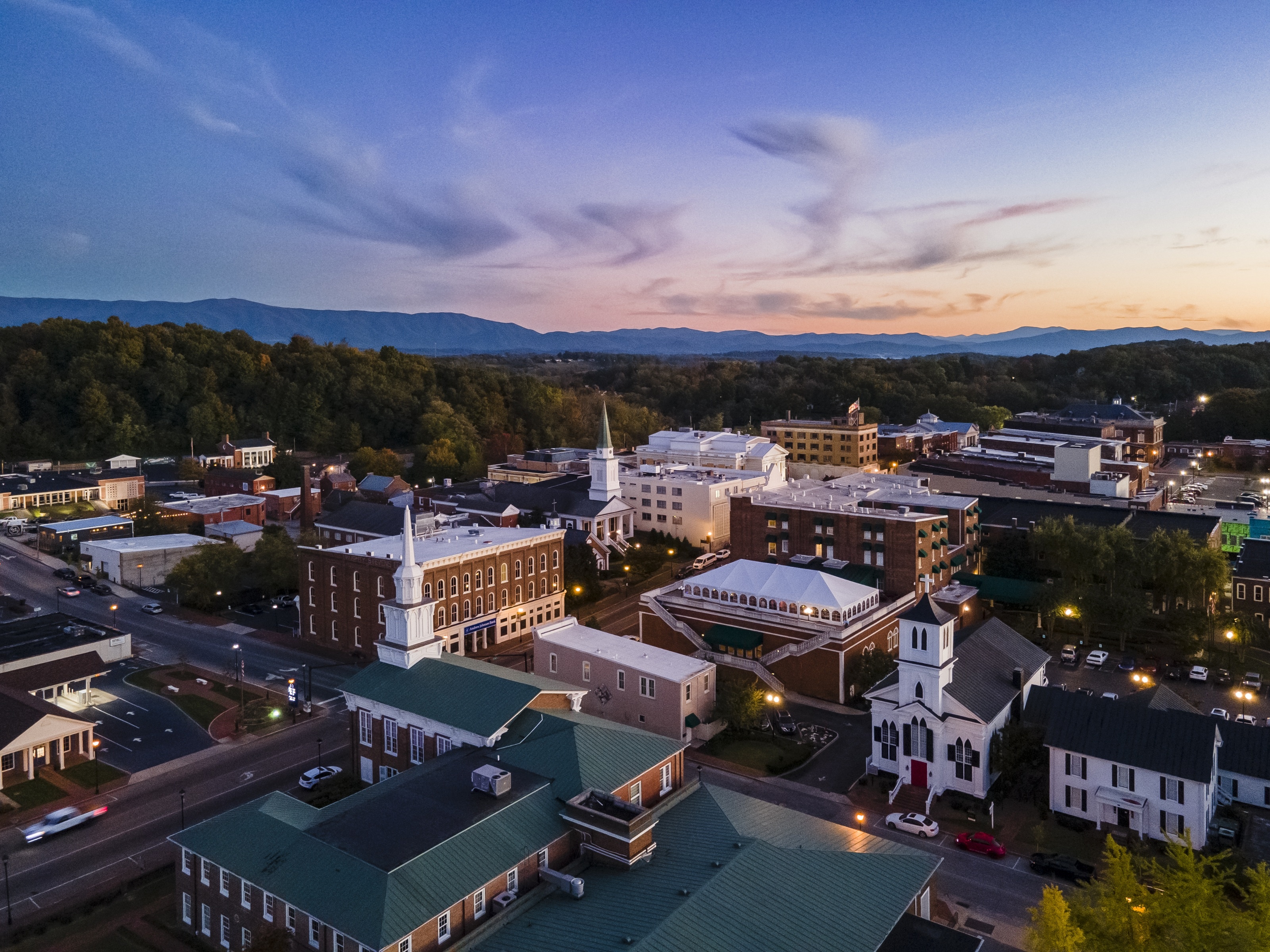
Greeneville is a small historic city in northeastern Tennessee, serving as the seat of Greene County in the foothills of the Appalachian Mountains. With a population of approximately 15,000 residents, it carries the easygoing pace of a small Southern town layered with deep American history. Greeneville is best known as the home of Andrew Johnson, the 17th President of the United States, and as a former capital of the short-lived State of Franklin in the 1780s. It also functions as a gateway to the surrounding Appalachian landscape, including access points to the Great Smoky Mountains. The city sits roughly 70 miles northeast of Knoxville, the nearest major metropolitan area, and within easy driving distance of the Tennessee–North Carolina border.
The Andrew Johnson National Historic Site preserves the homestead, tailor shop, and burial place of the 17th president, offering a thoughtful look at his rise from tailor to the nation's highest office. The site sits within walking distance of downtown Greeneville and is operated by the National Park Service, with a visitor center, museum exhibits, and ranger-led tours available throughout the year.
Just a short drive northwest of town, Davy Crockett Birthplace State Park commemorates the legendary frontiersman, congressman, and Alamo defender who was born nearby along the Nolichucky River in 1786. The park includes a replica log cabin, a small museum, picnic areas, and access to the river corridor, making it a popular stop for families. It lies roughly 15 to 20 minutes from the Greeneville town center.
The town of Jonesborough, often cited as Tennessee's oldest town, sits about 20 miles northeast of Greeneville and is a popular day trip for visitors. Founded in 1779, it features a well-preserved historic downtown with the International Storytelling Center, restored antebellum homes, and the National Storytelling Festival held each October. The brief drive passes through rolling farmland and along the Nolichucky River.
The Great Smoky Mountains National Park, the most-visited national park in the United States, lies roughly 60 miles south of Greeneville and is reachable in about an hour and a half by car. Its northern gateways near Gatlinburg and Pigeon Forge open up vast stretches of old-growth forest, scenic drives, and hundreds of miles of hiking trails, making the park a natural complement to a stay in Greeneville.
Greeneville's blend of presidential and frontier history, walkable downtown, and proximity to the Nolichucky River and the Great Smoky Mountains gives it a dual appeal for travelers. History-minded visitors come year-round to explore its preserved sites, while outdoor enthusiasts use the city as a quieter, more affordable base for accessing river corridors, state parks, and the national park. For short-term rental owners, that mix of year-round heritage tourism and seasonal outdoor travel offers a steady rotation of guest motivations in a setting that feels both rooted in the past and close to the natural wonders of the southern Appalachians.
Want to know if a property in Greeneville is a good investment?
Enter an address to get instant revenue potential and comps.