
Cleveland, Tennessee
Want to see how Cleveland compares to other top cities in Tennessee? Explore all city regulations in Tennessee. →
Cleveland, TN
Generally Investor Friendly
STR Regulations for Cleveland, Tennessee
Overview: Are Short-Term Rentals Allowed in Cleveland, TN?
Yes, short-term rentals are explicitly allowed in Cleveland, Tennessee. The city has enacted a regulatory framework that permits short-term rental operations while imposing requirements to ensure responsible hosting. Cleveland defines short-term rentals as residential properties partially rented for less than 30 continuous days, including units listed on vacation platforms like Airbnb and Vrbo.
The city has taken a measured approach to STR regulation, focusing on operational standards rather than geographic restrictions. According to Cleveland's Planning Director Robert Varnell, the ordinance "does not regulate where the short-term rentals operate but how they operate." This means investors can operate STRs in most residential zones, provided they meet the city's operational requirements, safety standards, and tax obligations.
The Cleveland City Council passed this regulatory framework on October 23, 2023, with the city planning to contact approximately 80-90 existing STR operators within city limits to ensure compliance.
What do Airbnb hosts actually earn in Cleveland?
Cleveland hosts earn a median $23,023/year with $142 ADR and 55% occupancy.
Top performers pull in $34,217+ per year.
See the full Cleveland market breakdownHow to Start a Short-Term Rental Business in Cleveland, TN
Launching a compliant short-term rental business in Cleveland requires following both state and local requirements. Here's the step-by-step process:
Step 1: Business License Acquisition
Before applying for any STR-specific permits, you'll need to obtain:
- Bradley County business license
- City of Cleveland business license
These foundational licenses are mandatory prerequisites for all commercial operations in Tennessee.
Step 2: Property Eligibility Assessment
Verify your property's compliance with:
- Zoning requirements (most residential zones allow STRs)
- Building code standards
- Safety requirements (smoke detectors, carbon monoxide alarms, fire extinguishers)
Step 3: Insurance Coverage
Secure liability insurance with minimum coverage of $500,000 unless your listing platform provides equivalent coverage. This is both a state requirement and essential protection for your investment.
Step 4: City STR Permit Application
Submit a formal application to the City of Cleveland for an operating permit. The city will conduct a life-safety inspection as part of this process.
Step 5: Tax Registration
Register for and begin collecting:
- Cleveland hotel/motel tax (4%)
- Bradley County lodging tax (7%)
- State and local sales tax
Step 6: Operational Setup
Establish systems for:
- Guest screening and management
- Noise and nuisance prevention
- Emergency response procedures
- Local contact information posting
Required Documents, Permits, Licenses, and Guidelines
Licenses and Permits
State Requirements:
- Tennessee does not issue statewide STR permits, but you must comply with the Tennessee Short-Term Rental Unit Act (SB1086)
Local Requirements:
- Bradley County Business License
- City of Cleveland Business License
- Cleveland STR Operating Permit ($300 fee)
- Annual renewal required for all licenses and permits
Required Documentation
Typical application requirements include:
- Personal identification (two forms showing proof of residence)
- Federal EIN and Social Security Number or ITIN
- Proof of ownership or lease agreement
- Proof of residency (for owner-occupied properties)
- Site plans and floor plans showing all rooms, doors, windows, and safety equipment locations
- Insurance certificates evidencing minimum $500,000 liability coverage
- Detailed ownership and contact information
- Notarized affidavits confirming information accuracy
Safety and Compliance Requirements
Mandatory Safety Equipment:
- Fire sprinklers (state requirement)
- Smoke alarms in all sleeping areas
- Carbon monoxide detectors on every habitable floor
- Fire extinguishers (minimum 5-pound capacity)
Building and Safety Compliance:
- Life-safety inspection by city officials
- Compliance with local building and fire codes
- Compliance with health and safety regulations
Specific Regulations for Short-Term Rentals
City-Level Regulations (Cleveland)
- Permit Fee: $300 for STR operating permit
- Permit Duration: Annual (365 days from issuance)
- Inspection Requirement: Life-safety inspection mandatory
- Nuisance Prevention: Must ensure no negative impacts on surrounding properties
- Local Contact: Must post name and phone number of responsible local party
County-Level Regulations (Bradley County)
- Business License: Required for all commercial operations
- Lodging Tax: 7% on all short-term rentals
- Zoning Compliance: Must comply with county zoning ordinances
State-Level Regulations (Tennessee)
Under the Tennessee Short-Term Rental Unit Act (SB1086):
- Insurance Requirement: Minimum $500,000 liability coverage
- Safety Equipment: Fire sprinklers, smoke alarms, carbon monoxide alarms
- Definition: Residential dwelling rented for less than 30 continuous days
- Business License: Required from county and city
- Tax Obligations: State and local sales tax, hotel/motel tax
Occupancy Limits:
- Maximum Occupancy: Generally limited to 2 guests per bedroom + 4 additional guests (maximum 12 total)
- Age Requirements: Principal renters must be 21+ years of age
- Rental Restrictions: Cannot rent to more than one party at a time
Operational Requirements:
- Noise Compliance: Must abide by applicable noise restrictions
- Waste Management: Must comply with waste management provisions
- Parking: Must provide appropriate parking spaces
- RV/Trailer Restrictions: No recreational vehicles, buses, or trailers visible on street or property
Tax Obligations
Cleveland Hotel/Motel Tax: 4% (approved May 2023, expected to generate ~$460,000 annually) Bradley County Lodging Tax: 7% Combined Lodging Tax: 11% total State and Local Sales Tax: Approximately 9.25%-9.75% Income Tax: Federal and state income tax applies to rental income
Contact Information for Local Authority
City of Cleveland - Planning Department
- Director: Robert Varnell
- Phone: 423-472-5041 (Cleveland Daily Banner contact)
- Website: clevelandtn.gov
- Address: 2075 N. Ocoee St., STE B, Cleveland, TN 37311
Bradley County Government
- Phone: 423-728-7100
- Website: bradleycountytn.gov
Tennessee Department of Revenue
- Website: tn.gov/revenue
- STR Information: tn.gov/revenue/for-businesses/for-hospitality-industry/short-term-rental-units.html
Source Pages and References
-
Cleveland Daily Banner - STR Tax Article: Short-term rentals in Cleveland subject to hotel/motel tax
-
StaySTRa Market Analysis: Cleveland, Tennessee Short-Term Rental Market Overview
-
Tennessee State Legislation: Tennessee Short-Term Rental Unit Act (SB1086)
-
iGMS State Regulations: Airbnb Regulations by State
-
SummerOS State Guide: Tennessee Short Term Rental Laws
Important Notes for Investors:
- Regulations can change; always verify current requirements with city officials
- Consider consulting with local legal counsel specializing in STR regulations
- Factor the 11% combined lodging tax into your financial projections
- Ensure your property insurance covers commercial short-term rental operations
- Consider hiring a local property manager familiar with Cleveland regulations
This guide provides a comprehensive foundation for navigating Cleveland's STR regulatory environment. Success in this market requires thorough compliance with all applicable regulations while maintaining professional guest relations and community standards.
Next step
Found a property in Cleveland?
Paste any address and get estimated revenue, cash-on-cash return, and comparable STR performance in under 5 minutes. 3 free analyses per day.
Free brief
Get the free Cleveland STR Investment Brief
Revenue data, top neighborhoods, seasonal trends, and the key regulations for Cleveland, Tennessee in one email.
Cleveland
Market Saturation Score
Photos of Cleveland


Overview of Cleveland
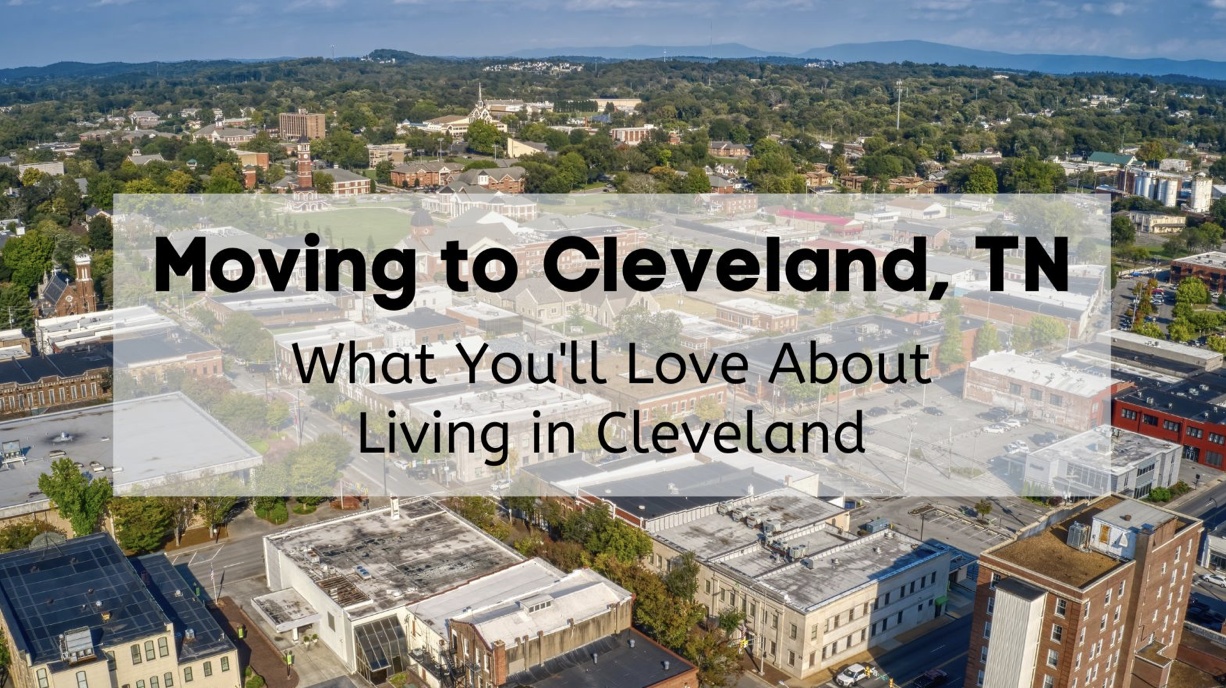
Cleveland, Tennessee is the county seat of Bradley County, set in the rolling foothills of the Appalachians in the southeastern corner of the state. With an estimated population of around 47,000, it has the feel of a sizeable small town while still functioning as the commercial and civic hub for the surrounding region. Cleveland is best known as a gateway to outdoor recreation in the Cherokee National Forest and along the Ocoee and Hiwassee rivers, and it carries an additional layer of identity as the home of Lee University, a private liberal arts college that gives the town a notable college-town rhythm. The city sits about 30 miles northeast of Chattanooga, roughly a 35- to 40-minute drive via I-75, putting the attractions of a mid-sized city within easy reach while keeping Cleveland in a quieter, more scenic setting.
One of the biggest draws in the area is the Ocoee River, located roughly 20 to 30 minutes east of Cleveland. The Ocoee is one of the most popular whitewater rafting destinations in the Southeast, and it famously hosted the slalom events during the 1996 Summer Olympics. The river draws rafters, kayakers, and spectators from across the region during the spring and summer release season, and the surrounding gorge scenery makes it a year-round draw for hikers and mountain bikers as well.
Just south of the city, Red Clay State Park preserves the site of the last seat of Cherokee government east of the Mississippi River before the forced removal of the Cherokee people on the Trail of Tears. The park, about a 15-minute drive from downtown Cleveland, includes a reconstructed council house, walking trails, and interpretive exhibits that explain the political and cultural history of the Cherokee Nation in the years leading up to removal. It is the only state park in Tennessee situated on the historical homeland of the Cherokee.
To the east, the Cherokee National Forest sprawls across more than 650,000 acres of the southern Appalachians, with multiple access points within about 30 minutes of Cleveland. Visitors come for hiking, waterfalls, trout fishing, and scenic drives along routes like the Cherohala Skyway, which connects Tennessee and North Carolina through some of the most remote terrain in the region. Together with the Ocoee and the Hiwassee rivers, the forest gives Cleveland an unusually rich outdoor offering for a town of its size.
Cleveland is a compelling base for short-term rentals because it pairs a calm, walkable downtown and a steady university population with quick access to some of the most distinctive outdoor and historical attractions in eastern Tennessee. Travelers who want whitewater rafting, mountain scenery, and Cherokee history can reach all of it in under an hour, while Chattanooga's restaurants, museums, and the Tennessee Aquarium are close enough for a day trip. That combination of small-town comfort and big-region access makes Cleveland well suited to guests looking for variety in a single stay.
Want to know if a property in Cleveland is a good investment?
Enter an address to get instant revenue potential and comps.