
Spartanburg, South Carolina
Want to see how Spartanburg compares to other top cities in South Carolina? Explore all city regulations in South Carolina. →
Spartanburg, SC
Generally Investor Friendly
STR Regulations for Spartanburg, South Carolina
Executive overview
- Are STRs allowed in the City of Spartanburg? Yes, but only in specific zones: STRs are prohibited in all residential zones and allowed only in downtown/commercial zones or mixed-use areas where hotels/motels are permitted. Sources emphasize Spartanburg’s restrictive stance and the necessity to operate in “commercial corridors” or the central business district. If you are outside city limits (unincorporated Spartanburg County), no city zoning rules apply; you would still need a local business license and must comply with county/state obligations.
- State baseline: South Carolina delegates STR regulation to local jurisdictions. Statewide, STRs are defined as rentals for fewer than 30 consecutive days. State requirements include: commercial general liability insurance with at least $1 million per occurrence, and tax remittance for sales and accommodations taxes (unless platforms remit state taxes on your behalf).
- Taxes: Expect a combined 10% effective rate in Spartanburg City—7% state (5% sales + 2% accommodations) plus 3% Spartanburg County local accommodations tax.
- Current status: The City’s initial 2022 zoning change limiting STRs to commercial/downtown areas has not yet been codified in the City’s Code of Ordinances; enforcement is active on a zone-based interpretation. Always verify with Planning and Building Inspections before acquiring or operating a property.
- Investor implication: The most investable opportunities are in downtown Spartanburg and commercial corridors. Residential-only zones are effectively closed to STR operations unless you pursue alternative strategies or a material change in regulations.
- Regulatory scope and responsibilities
State level
- Delegated authority model: South Carolina empowers municipalities and counties to regulate STRs through zoning, permits, and local rules.
- Definition: STR is any residential property offered for fewer than 30 consecutive days.
- Insurance requirement: Minimum $1,000,000 commercial general liability per occurrence (statewide baseline).
- Taxes: State collects 5% sales tax and 2% accommodations tax (combined 7%). Platforms like Airbnb remit state taxes automatically; you must still remit local taxes.
City of Spartanburg (city limits)
- Zoning-based prohibition in residential areas; allowed in downtown and commercial/mixed-use zones (similar to hotels/motels).
- Treated operationally like hotels/motels for zoning purposes.
- Business license required.
- Active enforcement and zoning-based communications from city staff.
Spartanburg County (unincorporated areas)
- City zoning does not apply.
- County accommodations tax applies at 3% (same as city remittance baseline).
- County-level STR permits or additional restrictions were not described in the sources. Investors must rely on state requirements and county tax obligations unless local rules are introduced later.
- How to start an STR business in Spartanburg
Within the City of Spartanburg
- Confirm zoning eligibility
- Verify the property is in an allowed zone (downtown or commercial corridor; mixed-use areas with hotel/motel equivalency).
- Prohibited: all residential zones (e.g., R-15, R-12, R-8 single-family, R-8 general residential, R-6 general residential).
- Secure a business license
- Annual license required from the Business Licensing Office.
- Fees calculated by classification and gross receipts; check the current business license ordinance.
- Certificates and inspections (as applicable)
- Certificate of Occupancy may be required.
- Comply with building/fire codes; verify if initial inspections are needed.
- Register for taxes
- State sales (5%) and accommodations (2%) tax; platform may collect state-level automatically.
- Local Spartanburg County accommodations tax (3%)—typically owner-remitted monthly.
- Insurance
- Obtain commercial general liability insurance with at least $1M per occurrence (state requirement).
- Operational setup
- Safety equipment (smoke/CO detectors, fire extinguishers), adequate parking, occupancy limitations, and posting of permits/business license.
- Listing and compliance
- Include business license and permit details in listings; maintain guest records; post emergency contacts and house rules.
Unincorporated Spartanburg County
- Licensing and permits
- Obtain any required local business license; confirm whether county issues any STR-specific permits (not described in sources).
- Zoning
- Confirm county zoning/use allowances (e.g., “lodging” use) and any site-specific constraints.
- Insurance and taxes
- Same as statewide requirements; 3% county accommodations tax applies.
- Inspections and safety
- Adhere to state/local safety codes; verify building/fire requirements.
- Required documents, permits, licenses, and guidelines
City of Spartanburg
- Business License (annual)
- Zoning Verification confirming allowed zone status
- Certificate of Occupancy (as required)
- South Carolina tax registration (for accommodations tax)
- Insurance proof: commercial general liability policy (≥$1M per occurrence)
- Safety compliance (smoke/CO detectors, fire extinguishers)
- Parking plan/evidence of adequate parking
- Site and floor plans (if requested)
- Emergency contact information and house rules for guests
Spartanburg County (unincorporated)
- Business License (local)
- Tax registration (state and county accommodations tax)
- Insurance proof as above
- Zoning/use verification for “lodging” or similar use
- Safety compliance and inspections (as applicable)
Statewide
- Tax registration with South Carolina Department of Revenue (SCDOR)
- Commercial general liability insurance (≥$1M)
- Safety equipment and compliance with applicable building/fire codes
Renewals and timelines
- Business licenses renew annually (fees based on gross receipts).
- Tax remittance is typically monthly; coordinate filing dates with SCDOR.
- Specific regulations (City of Spartanburg, Spartanburg County, State of SC)
City of Spartanburg: zoning and operational rules
- Allowed zones
- Downtown
- Commercial corridors
- Mixed-use areas where hotels/motels are permitted
- Prohibited zones
- All residential zones (R-15, R-12, R-8 single-family/general, R-6 general residential)
- Operational equivalence
- STRs treated like hotels/motels for zoning purposes (use classification and parking/safety expectations)
- Business license
- Required for all STR operations within city limits
- Enforcement
- Active; zoning violations can trigger cease-and-desist orders and fines
Spartanburg County: accommodations tax
- County local accommodations tax: 3% on gross receipts, remitted by host (same rate applies whether inside or outside city limits for local tax purposes)
State of South Carolina: statewide baseline
- STR definition: fewer than 30 consecutive days
- Insurance: minimum $1M commercial general liability per occurrence
- Taxes
- State sales tax: 5%
- State accommodations tax: 2% (7% combined)
- Local/county accommodations tax: up to 3% where applicable
- Taxes and financial obligations
State taxes
- State sales tax: 5%
- State accommodations tax: 2%
- Total: 7% remitted to the State (platforms may collect automatically)
Local taxes
- Spartanburg County accommodations tax: 3% (owner remits)
- Total effective STR tax in Spartanburg: 10%
Filing and remittance
- Platforms: Airbnb/Vrbo collect state taxes automatically in many cases; verify platform coverage and settings.
- Owner responsibility: Remit local accommodations tax and any additional local taxes monthly/quarterly as required.
- Exemptions (illustrative, vary by jurisdiction): renting fewer than 15 days/year in a primary residence, renting fewer than six rooms while present, and rentals ≥90 consecutive days may qualify for certain exemptions (verify with local authorities/SCDOR).
- Safety and compliance
- Safety equipment: smoke detectors, fire extinguishers, carbon monoxide detectors, emergency evacuation information
- Building/fire codes: comply with city/state codes and occupancy limits
- Parking: provide adequate off-street parking as required
- Inspections: potential initial occupancy and periodic inspections; some jurisdictions require annual safety verification
- Contacts for Spartanburg STRs
City of Spartanburg – Planning Department
- Phone: (864) 596-2068
- Address: P.O. Box 1749, Spartanburg, SC 29304
- Website: www.cityofspartanburg.org
City of Spartanburg – Business Licensing Office
- Location: 187 W Broad Street, Spartanburg, SC
- Phone: via main city line (confirm current routing on city website)
- Website: www.cityofspartanburg.org
City of Spartanburg – Building Inspections/Electronic Plan Review
- Portal: gopost-spartanburg.eplansoftreview.com
- Note: used for permits/inspections coordination
Spartanburg County – General Administration
- Phone: (864) 596-2500
- Website: www.spartanburgcounty.org
South Carolina Department of Revenue (SCDOR) – Accommodations Tax
- Phone: (803) 898-5970
- Email: AccommodationsTax@dor.sc.gov
- Website: dor.sc.gov
- Source links (where available)
- City of Spartanburg – Electronic Plan Review portal: gopost-spartanburg.eplansoftreview.com
- Century 21 Blackwell blog (overview of STRs in Greenville & Spartanburg): www.century21blackwell.com/blog/short-term-rentals-greenville-spartanburg-whats-legal-and-whats-not/
- Summer (statewide SC STR guide; includes Spartanburg notes): www.gosummer.com/post/south-carolina-short-term-rental-laws
- Home Team Luxury Rentals (SC STR law overview, includes Spartanburg): hometeamluxuryrentals.com/blog/south-carolina-airbnb-laws
- The Offer Sheet – Spartanburg STR detailed guide: local.theoffersheet.com/legal/spartanburg-sc/
- Practical investor strategy in Spartanburg
- Focus on downtown and commercial corridors
- Target mixed-use and commercially zoned properties that can support hospitality use.
- Expect higher acquisition costs but potentially stronger pricing power due to limited permitted supply.
- Verify before you buy
- Confirm zoning and permitted use with the Planning Department and obtain written confirmation.
- Review any deed/HOA restrictions and building/fire code implications.
- Operational readiness
- Budget for compliance: insurance (≥$1M liability), licensing, taxes (10% effective), and potential inspections.
- Standardize safety and operations: smoke/CO detection, fire extinguishers, parking, occupancy limits, and guest communications.
- Monitoring
- Track the City’s comprehensive plan updates for potential changes to STR rules.
- Assess state-level legislation that could alter local authority or establish additional baselines.
Important notes
- Regulatory clarity: As of the latest sources, Spartanburg’s 2022 zoning direction has not been codified in the City’s Code of Ordinances; enforcement is active based on zone-based interpretation. Investors should seek confirmation from Planning and Building Inspections before purchasing or listing.
- This guide is informational and not legal or tax advice. Consult a local attorney, tax advisor, and city officials to verify current requirements before operating an STR.
What do Airbnb hosts actually earn in Spartanburg?
Spartanburg hosts earn a median $26,937/year with $130 ADR and 74% occupancy.
Top performers pull in $32,950+ per year.
See the full Spartanburg market breakdownNext step
Found a property in Spartanburg?
Paste any address and get estimated revenue, cash-on-cash return, and comparable STR performance in under 5 minutes. 3 free analyses per day.
Free brief
Get the free Spartanburg STR Investment Brief
Revenue data, top neighborhoods, seasonal trends, and the key regulations for Spartanburg, South Carolina in one email.
Spartanburg
Market Saturation Score
Photos of Spartanburg


Overview of Spartanburg
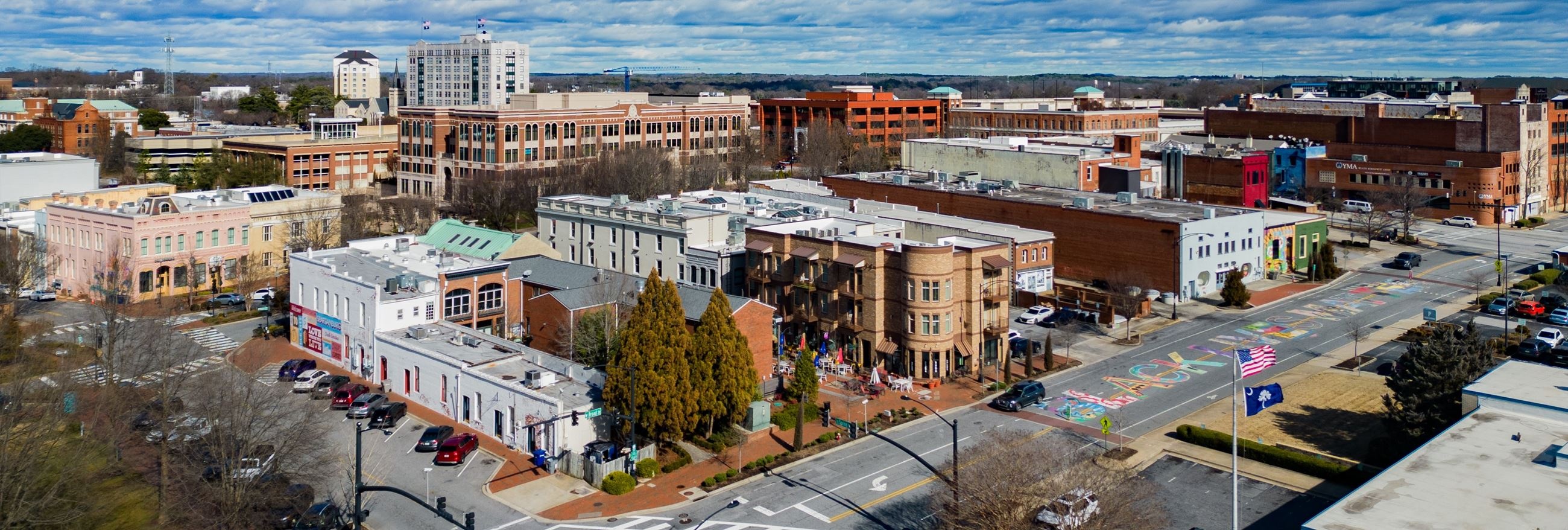
Spartanburg is a mid-sized city in the northwestern corner of South Carolina, serving as the seat of Spartanburg County and a cultural and economic hub for the surrounding Upstate region. The city proper is home to roughly 37,000 residents, while the broader Spartanburg metropolitan area counts well over 300,000 people. It carries a friendly, college-town-meets-industrial-heritage feel, anchored by long-running textile traditions and a revitalized downtown lined with locally owned restaurants, breweries, and galleries. Spartanburg is also well known as a gateway to the Blue Ridge Mountains and as the home of BMW's North American manufacturing plant. It sits about 30 miles northeast of Greenville and roughly 75 miles southwest of Charlotte, with both cities reachable in well under an hour and a half by car.
A short drive south of downtown, Croft State Park offers more than 7,000 acres of woodlands, lakes, and bridle trails, with camping, horseback riding, hiking, and fishing roughly 15 minutes from the city center. The park sits on land that once served as a World War II training base, and its mix of pines, rolling terrain, and quiet Lake Craig makes it a favorite for day visitors and overnight campers alike.
About 30 miles northwest of Spartanburg, Table Rock State Park anchors the southern edge of the Blue Ridge Mountains, drawing hikers, photographers, and leaf-peepers with its distinctive granite summit, the towering Carrick Creek Falls, and miles of trails connecting to the larger Foothills Trail system. Drive time is generally around 50 minutes, and the park's mountain lodge and cabins make it a natural pairing with a Spartanburg-based stay.
To the northeast, Cowpens National Battlefield preserves the site of a pivotal 1781 Revolutionary War victory, with a visitor center, walking trail, and ranger programs located about 25 minutes from downtown. The site offers a contemplative complement to the outdoor recreation nearby and tends to resonate with history-minded travelers passing through the region.
Back in town, the Hatcher Garden and Woodland Preserve provides an accessible six-acre escape of walking paths, ponds, and native plantings just minutes from the city center, while the nearby Morgan Square area continues to serve as a gathering point for concerts, farmers' markets, and the city's growing food scene. Together, these draws position Spartanburg as a comfortable, well-connected base for short-term rentals, with both mountain escapes and city amenities within easy reach.
Want to know if a property in Spartanburg is a good investment?
Enter an address to get instant revenue potential and comps.