
Murrells Inlet, South Carolina
Want to see how Murrells Inlet compares to other top cities in South Carolina? Explore all city regulations in South Carolina. →
Murrells Inlet, SC
Generally Investor Friendly
STR Regulations for Murrells Inlet, South Carolina
Overview: Short-Term Rental Allowance in Murrells Inlet
Short-term rentals ARE ALLOWED in Murrells Inlet, South Carolina. The community operates under Georgetown County's regulatory framework rather than having its own municipal ordinances, creating a more streamlined regulatory environment compared to neighboring coastal communities. Georgetown County considers short-term rentals (properties rented for less than 30 days) as a type of residential use and does not require special permits for their operation, making it an attractive market for STR investors.
Murrells Inlet offers exceptional potential for STR investors who understand the coastal Carolina market. With year-round appeal, reasonable regulations, competitive property prices, and proximity to major attractions like the famous MarshWalk boardwalk, Brookgreen Gardens, and pristine beaches, it remains one of the Grand Strand's most promising vacation rental markets for 2025 and beyond.
What do Airbnb hosts actually earn in Murrells Inlet?
Murrells Inlet hosts earn a median $37,029/year with $244 ADR and 56% occupancy.
Top performers pull in $61,458+ per year.
See the full Murrells Inlet market breakdownHow to Start a Short-Term Rental Business in Murrells Inlet
Essential Steps for Launch
Step 1: Market Research & Property Selection
- Research neighborhoods for tourism appeal and rental restrictions
- Consider proximity to MarshWalk, beaches, and major attractions
- Evaluate seasonal demand patterns and pricing opportunities (average 55% occupancy rate, $353 daily rate, $38,080 monthly revenue)
- Analyze comparable properties and competitive landscape
Step 2: Regulatory Compliance Check
- Verify Georgetown County zoning allows STRs
- Check for HOA or PUD restrictions (some communities may impose restrictions despite county allowances)
- Research specific community regulations
- Confirm flood zone status and insurance requirements
Step 3: Property Acquisition & Setup
- Purchase property or secure owner authorization
- Design with coastal vacation appeal in mind
- Install appropriate safety equipment (smoke detectors, carbon monoxide detectors, fire extinguishers)
- Create outdoor entertainment spaces (decks, fire pits, waterfront access)
Step 4: Business Setup & Licensing
- Apply for Georgetown County business license
- Register for South Carolina tax accounts (State Department of Revenue)
- Secure appropriate insurance coverage ($1M+ recommended)
- Establish business banking accounts
- Set up tax collection systems
Step 5: Operations Launch
- Create compelling listings highlighting coastal attractions
- Develop professional photography showcasing waterfront views
- Establish cleaning and maintenance protocols
- Create comprehensive guest guides to local attractions
- Implement keyless entry and guest communication systems
Step 6: Ongoing Compliance & Growth
- File taxes timely and maintain accurate records
- Renew business license annually
- Stay updated on any regulation changes
- Build relationships with neighbors and community
- Monitor performance and optimize for maximum returns
Required Documents, Permits, Licenses, and Guidelines
County-Level Requirements
Georgetown County Business License
- Required from Georgetown County for all short-term rental operations
- Application typically requires property ownership documentation, contact information, and basic business information
- Annual renewal required (fees vary based on gross receipts)
- Process generally takes 2-3 weeks from application to approval
Tax Registration
- Must register with South Carolina Department of Revenue for state accommodations tax collection
- Register with Georgetown County for local accommodations tax collection
- Required for both state and local accommodations taxes
State-Level Documentation
Under South Carolina's Vacation Rental Act, operators must maintain:
- Written rental agreements for all bookings
- Guest registration records (keep guest information including names and phone numbers for at least two years)
- Tax collection and remittance documentation
- Property disclosure requirements during any property sales
Property Tax Considerations:
- Primary residences rented 15-72 days annually: Maintain 4% residential assessment
- Primary residences rented under 14 days annually: Maintain 4% residential assessment with tax exemptions
- Investment properties: Subject to 6% commercial assessment rate
Insurance Requirements
While Georgetown County doesn't mandate specific insurance coverage, comprehensive STR insurance is highly recommended:
- Commercial general liability insurance ($1M+ recommended)
- Short-term rental property coverage
- Business income protection
- Guest-caused damage coverage
- Flood insurance (often required in coastal areas)
Coastal-Specific Safety Considerations
Recommended Safety Equipment:
- Smoke detectors on each level and in bedrooms
- Carbon monoxide detectors near fuel-burning appliances
- Fire extinguishers in kitchen and common areas
- Clearly marked emergency exits
- Emergency contact information posted
- Address visible from street for emergency services
Additional Coastal Safety Considerations:
- Hurricane evacuation information and emergency plans
- Beach safety guidelines for guests
- Wildlife awareness (alligators, snakes in marshy areas)
- Water safety equipment for waterfront properties
Specific Regulations for Short-Term Rentals
Georgetown County Regulations
Georgetown County maintains a relatively permissive regulatory environment for short-term rentals:
- No Special Permits Required: Short-term rentals are treated as residential use
- No Occupancy Restrictions: County does not impose guest limits
- No Minimum Stay Requirements: Operators can set their own minimum stay policies
- Zoning Flexibility: STRs are typically allowed in residential zones, commercial zones, mixed-use areas, and coastal residential developments
Potential Community-Level Restrictions
Individual communities within Georgetown County may impose additional restrictions through:
- HOA covenants and restrictions
- PUD development agreements
- Neighborhood-specific guidelines
- Some communities may restrict short-term rentals despite county allowances
State-Level Regulations
South Carolina Vacation Rental Act Requirements:
- Properties rented for less than 90 days fall under vacation rental definitions
- Mandatory written rental agreements for all bookings
- Required property disclosures during sales transactions
- Compliance with state tax collection requirements
South Carolina House Bill H.3253 (monitor for changes):
- Proposes to prohibit local governments from completely banning short-term rentals
- Would impose financial penalties on municipalities that restrict rental operations
- Provides greater statewide protection for short-term rental operators
Tax Obligations
State Taxes:
- South Carolina Sales Tax: 6% on gross rental receipts
- State Accommodations Tax: 7% on gross rental receipts
- Sales Tax: 6% on applicable services and amenities
Local Taxes:
- Georgetown County Accommodations Tax: 3% on gross rental receipts
- Georgetown County Hospitality Tax: 2% on prepared food/beverages (if providing meals)
Tax Reporting Deadlines:
- Taxes should be remitted to the Georgetown County Finance Department by the 20th of each month for the prior month's total collections
- Filing frequency depends on collection amounts:
- Monthly: When average tax exceeds $50 per month
- Quarterly: When average tax is $25-$50 per month
- Annually: When average tax is less than $25 per month
Fire Safety and Building Code Compliance
Properties must maintain compliance with:
- South Carolina Building Code requirements
- Local fire safety ordinances
- Smoke detector and carbon monoxide detector requirements
- Emergency egress standards
Contact Information for Local Authorities
Georgetown County Business Licensing
- Phone: (843) 545-3177
- Website: gtcounty.org
- Email: info@gtcounty.org
- Purpose: Business license applications and renewals
Georgetown County Planning & Zoning
- Phone: (843) 545-3058
- Address: 129 Screven Street, Georgetown, SC 29440
- Primary Authority for Short-Term Rentals
Georgetown County Tax Services
- Phone: (843) 545-3002
- Contact: Beth Elliott at 843-545-3002 or belliott@gtcounty.org
- Purpose: Accommodations tax questions and compliance
South Carolina Department of Revenue
- Phone: (803) 898-5970
- Email: AccommodationsTax@dor.sc.gov
- Website: dor.sc.gov
- Purpose: State accommodations tax registration and remittance
Murrells Inlet Tourism Information
- MarshWalk: marshwalk.com
- Visit Myrtle Beach: visitmyrtlebeach.com
Links to Source Pages
- STR Profit Map - Murrells Inlet Regulations: www.strprofitmap.com/regulations/SC/murrells-inlet
- FirstService Residential - South Carolina Short-Term Rentals: www.fsresidential.com/south-carolina/news-events/articles/what-are-south-carolina-short-term-rentals/
- The Offer Sheet - Murrells Inlet STR Regulations: local.theoffersheet.com/legal/murrells-inlet-sc/
- Proper Insurance - South Carolina Airbnb Laws: www.proper.insure/regulations/south-carolina-airbnb-laws/
- RedAwning - Murrells Inlet Market Overview: www.redawning.com/pm/market-overview/murrells-inlet-south-carolina
Important Considerations for Investors
Due Diligence Requirements
- Community Covenant Review: Thoroughly examine all HOA or PUD restrictions before investing
- Insurance Gap Analysis: Ensure coverage adequately protects against short-term rental-specific risks
- Tax Compliance Setup: Establish systems for proper tax collection and remittance
- Local Market Analysis: Understand seasonal demand patterns and competitive landscape
Risk Management Strategies
- Maintain comprehensive guest screening procedures
- Implement property monitoring and maintenance protocols
- Establish 24/7 guest communication systems
- Create detailed house rules and guest guidelines
- Develop relationships with local service providers
- Budget for higher property tax assessments on investment properties
- Account for all applicable state and local taxes
- Plan for seasonal revenue fluctuations
- Consider professional property management costs
Market Performance Indicators
Murrells Inlet's STR market demonstrates strong fundamentals:
- Average 55% occupancy rate
- $353 average daily rate
- $38,080 monthly revenue potential
- 8% growth in active listings over the past year
- High demand during seasonal seafood festivals and events
- Consistent bookings during spring and fall fishing seasons
Enforcement and Compliance Notes
Enforcement Approach:
- Georgetown County employs complaint-based enforcement (primary method)
- Business license renewal audits
- Tax collection compliance reviews
- Coordination with state tax authorities
Common Violations:
- Operating without required business license
- Tax collection and remittance failures
- HOA violation complaints
- Noise or parking complaints from neighbors
- Failure to maintain local contact availability
Penalties:
- Fines starting at $100 per day for unlicensed operation
- Business license suspension or revocation
- Tax liens for unpaid accommodations taxes
- Legal action for repeated violations
Future Outlook
The regulatory outlook remains positive for STR investors in Murrells Inlet:
- Continued County-Level Management: Georgetown County expected to maintain primary regulatory authority
- Potential Tax Structure Updates: Possible adjustments to local accommodations tax rates as tourism grows
- Environmental Considerations: Increased focus on marsh preservation and sustainable tourism
- Infrastructure Investment: County discussions about improving roads and utilities to support tourism growth
- Technology Integration: Potential movement toward online business licensing and tax filing systems
Disclaimer: Short-term rental regulations are subject to change, and this guide reflects information available as of the current date. Always verify current requirements with Georgetown County officials, review community-specific restrictions, and consult with legal and tax professionals before making investment decisions. The regulatory landscape for short-term rentals continues to evolve, and staying informed about local, county, and state-level changes is essential for successful operations.
Next step
Found a property in Murrells Inlet?
Paste any address and get estimated revenue, cash-on-cash return, and comparable STR performance in under 5 minutes. 3 free analyses per day.
Free brief
Get the free Murrells Inlet STR Investment Brief
Revenue data, top neighborhoods, seasonal trends, and the key regulations for Murrells Inlet, South Carolina in one email.
Murrells Inlet
Market Saturation Score
Photos of Murrells Inlet

Overview of Murrells Inlet
Murrells Inlet is an unincorporated coastal community and census-designated place in Georgetown County, South Carolina, situated along a natural saltmarsh estuary that opens onto the Atlantic Ocean. With a population of roughly 7,500 to 8,000 residents, it carries the unofficial title of the "Seafood Capital of South Carolina" and has long drawn visitors for its working waterfront, marshside dining, and access to the broader Grand Strand coastline. Located about twelve miles south of Myrtle Beach, Murrells Inlet offers a noticeably quieter, more laid-back alternative to the busier resort hubs to the north, while still functioning as a convenient base for exploring the Lowcountry's beaches, gardens, and historic sites.
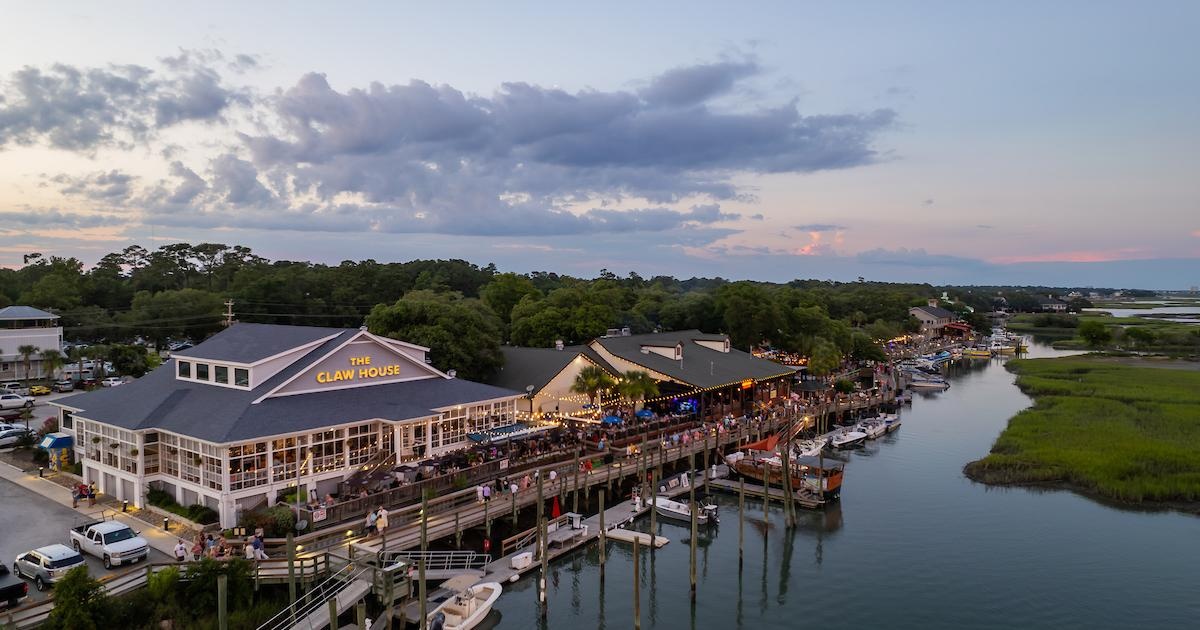
The community's signature attraction is the Murrells Inlet MarshWalk, a wooden boardwalk that winds along the inlet's edge and connects a string of waterfront restaurants, bars, and fishing docks. Visitors can stroll past shrimping boats, watch dolphins working the creeks at sunset, and dine on the local catch just steps from the water. The MarshWalk is the social heart of the inlet and an easy walk from most of the area's accommodations.
Just a few miles south of town lies Huntington Beach State Park, one of the most beloved parks on the South Carolina coast. The park combines three miles of unspoiled beach with a freshwater lagoon, maritime forest, and the haunting ruins of Atalaya, the winter home of sculptor Anna Hyatt Huntington. Roughly a ten-minute drive from the inlet, it is a popular spot for surf fishing, birding, and swimming, and it pairs naturally with a visit to the adjoining gardens.
A short drive further south brings guests to Brookgreen Gardens, a sprawling 9,100-acre property that blends a major American sculpture garden with a lowcountry wildlife preserve and zoo. Visitors can wander among works by leading twentieth-century sculptors, ride through the historic rice fields on a guided tour, and observe alligators, red wolves, and native waterfowl. It is consistently ranked among the top attractions in the region and tends to draw guests across multiple days.
Murrells Inlet makes a compelling base for short-term rentals precisely because it threads the needle between the high-energy resorts of Myrtle Beach to the north and the slower, more historic communities of Pawleys Island and Georgetown to the south. Visitors get genuine waterfront character, easy beach access, a celebrated food scene, and proximity to major cultural and natural attractions, all without the crowds of the larger resort strips. That balance of convenience, scenery, and variety is exactly the combination that tends to perform well in a vacation-rental market.
Want to know if a property in Murrells Inlet is a good investment?
Enter an address to get instant revenue potential and comps.