
Mc Clellanville, South Carolina
Want to see how Mc Clellanville compares to other top cities in South Carolina? Explore all city regulations in South Carolina. →
Mc Clellanville, SC
Challenging To Investors
Local STR Agent
Local STR Agent
STR Regulations for Mc Clellanville, South Carolina
McClellanville, SC Short-Term Rental Regulatory Guide (2025)
Overview: Short-term rentals (STRs) are allowed in McClellanville, but only as conditional uses subject to specific zoning approvals and business licensing. There is a town-wide cap on the number of STR business licenses, and several operational conditions apply. This guide synthesizes the Town’s proposed zoning amendments and adopted supplemental standards to help investors understand what is permitted, how to obtain approvals, and what ongoing compliance looks like.
Note on timing: The regulations summarized here are based on draft zoning ordinance amendments prepared in 2025 and reflected in Planning Commission and staff recommendations to Town Council. Investors should verify adoption status and current requirements with the Town.
Are STRs Allowed in McClellanville?
Yes. Vacations (Short-Term) Rentals are permitted as conditional uses in several zoning districts, subject to business licensing and operational conditions. In Residential zoning districts, STRs are allowed only when the owner resides on the property. STRs are subject to a hard cap on the number of business licenses that may be issued annually, and STRs must comply with occupancy, septic capacity, parking, noise, trash, and management requirements.
In addition to STRs, Bed and Breakfast Homes and Inns are separately regulated as home occupations (Homes) or commercial uses (Inns), each with their own set of conditions and a shared annual license cap.
References:
- Article 3, §3.5.3 (Vacation (Short-Term) Rentals) — draft amendments (2025)
- Section 5.2.3 (Residential District: Conditional Uses)
- Section 5.3.3 (Village Commercial District: Conditional Uses)
- Section 5.4.5 (Highway Commercial District: Conditional Uses)
- Section 3.6.2 (Noise standards)
What do Airbnb hosts actually earn in Mc Clellanville?
Mc Clellanville hosts earn a median $23,221/year with $166 ADR and 43% occupancy.
Top performers pull in $29,984+ per year.
See the full Mc Clellanville market breakdown →How to Start a Short-Term Rental Business in McClellanville
A step-by-step process to obtain approvals and launch:
- Confirm zoning eligibility
- Identify your parcel’s zoning district.
- Confirm STRs are allowed as a conditional use in that district:
- Residential (R): allowed only if owner resides on the property.
- Village Commercial (VC): allowed.
- Highway Commercial (HC): allowed (administrative design review may apply).
- Marine Commercial (MC): not listed in the draft amendments; staff recommended adding STRs as a conditional use (verify status with the Town).
- If your parcel is in a subdivision with covenants/restrictions that prohibit commercial uses, this may affect eligibility (see cap calculation note in regulations).
- Secure required documents
- Proof of ownership or authorization to apply.
- Federal employer tax filing number (EIN).
- Contact information for a 24-hour manager who can physically respond within 60 minutes to emergency notices from the Town.
- Septic capacity documentation (number of bedrooms the system is permitted/approved to serve).
- Off-street parking plan showing adequate spaces for all vehicles, watercraft, and trailers.
- Trash service confirmation aligning with the Town’s contract for excessive garbage and containment.
- Submit applications and obtain approvals
- Zoning permit application for a Vacation (Short-Term) Rental as a conditional use.
- Business license application and annual renewals (license terminates upon property transfer; non-transferable).
- For Residential districts, provide proof that the owner will reside on the property.
- Ensure your site plans and lease templates comply with all supplemental standards (noise, events, occupancy).
- Operationalize the STR
- Limit occupancy: no more than two occupants per 120 square feet of shared bedroom area, plus one additional occupant for each additional 60 square feet of shared bedroom area, not to exceed 12 occupants in any dwelling.
- Tie occupancy to septic capacity evidence provided in the application.
- Include required lease provisions:
- Noise compliance with Section 3.6.2(b).
- Event limitation: events may not exceed twice the STR’s occupancy limit without a temporary event permit.
- Tenant acknowledgment of rules and limits.
- Maintain a 24/7 manager contact; ensure response capability.
- Post noise level notice on the premises (as required by lease provisions referencing §3.6.2(b)).
- Ensure ongoing trash service and adequate off-street parking.
- Track license caps and renewals
- The Town limits the total number of business licenses issued annually across STRs and Bed & Breakfast establishments to 5% of housing units.
- Business licenses require annual renewal and terminate upon property transfer (non-transferable).
- Existing STRs with valid licenses at the time of the 2025 amendments are permitted to operate until the license expires or upon transfer.
References:
- Article 3, §3.5.3 (Vacation (Short-Term) Rentals) — draft amendments
- Sections 5.2.3, 5.3.3, 5.4.5 (district-specific conditional use allowances)
- Section 3.6.2 (Noise standards)
Required Documents, Permits, Licenses, and Guidelines
Documents and approvals required for STR operation:
- Zoning approval for a Vacation (Short-Term) Rental (conditional use).
- Business license application with:
- Ownership proof or authorization.
- EIN (federal employer tax filing number).
- 24-hour manager contact and emergency response capability.
- Compliance with local revenue collection requirements (Town, Charleston County, State).
- Septic capacity documentation (permitted bedroom count).
- Off-street parking plan (vehicles, watercraft, trailers).
- Trash removal contract compliance confirmation.
- Lease agreement terms that:
- Require tenants to comply with noise standards (§3.6.2(b)).
- Limit events to no more than twice occupancy without a temporary event permit (§3.4.5(c)).
- Post noise level notice on the premises.
- Annual renewal of the business license; license terminates upon property transfer and is non-transferable.
Additional guidelines:
- Noise limits (measured at the property line):
- Low-density residential: 60 dB (7 a.m.–7 p.m.); reduced by 10 dB (7 p.m.–7 a.m.). Peak noises may be up to 10 dB above continuous limits.
- Temporary events require a separate permit under §3.4.5(c); any event exceeding the STR’s occupancy limit requires both the STR’s event restriction acknowledgment and a temporary event permit.
- STRs must maintain compliance with parking, trash service, and septic capacity at all times.
References:
- Article 3, §3.5.3
- Section 3.4.5(c) (Temporary Events)
- Section 3.6.2 (Noise)
- Section 12.4.5(e) (public notices — website posting in lieu of newspaper)
Specific Regulations: Zoning, Occupancy, Caps, and Operational Standards
Zoning allowances by district:
- Residential (R): Vacation Rentals are a conditional use only when the owner resides on the property.
- Village Commercial (VC): Vacation Rentals are a conditional use.
- Highway Commercial (HC): Vacation Rentals are a conditional use; administrative design review may apply for alterations/modifications or additions to existing site improvements.
- Marine Commercial (MC): Not listed in the draft amendments; staff recommended adding STRs as a conditional use (verify status).
Operational requirements:
- Business license required; annual renewal; terminates upon property transfer; non-transferable.
- 24-hour manager must be able to physically respond within 60 minutes to emergency notifications from the Town.
- Occupancy capped at 2 occupants per 120 square feet of shared bedroom area plus 1 occupant for each additional 60 square feet of shared bedroom area; maximum 12 occupants in any dwelling.
- Occupancy must not exceed septic system capacity as documented in the application.
- Off-street parking required for all vehicles, watercraft, and trailers.
- Trash service must align with the Town’s contract for excessive garbage and containment.
- Lease provisions must:
- Mandate noise compliance with §3.6.2(b).
- Prohibit events exceeding twice occupancy unless a temporary event permit is obtained.
- Require acknowledgment by tenants.
- Noise standards apply at the property line; see the table in Section 3.6.2.
License cap:
- Business licenses for Vacation Rentals (and Bed & Breakfast Homes/Inns) are collectively limited annually to no more than 5% of housing units in Town, excluding units within subdivisions/development subject to private covenants restricting commercial use.
- Existing STRs with valid licenses at the time of the 2025 amendments may continue to operate until the license expires or upon transfer.
Bed & Breakfast distinctions (for investors considering B&B formats):
- Bed & Breakfast Home: considered a home occupation; owner must reside on-site; at least 50% of floor area dedicated to guest rooms must remain as the owner’s residential quarters; guest register required; limited food service to registered guests; subject to 5% cap.
- Bed & Breakfast Inn: more commercial; requires on-site owner or manager with decision-making authority; full-time management when occupied; may host events up to sleeping capacity and up to ten gatherings per year under Temporary Events standards; limited food service to registered guests and on-prem events; subject to 5% cap.
References:
- Article 3, §§3.5.2 and 3.5.3
- Sections 5.2.3, 5.3.3, 5.4.5
- Section 3.6.2 (Noise)
- Section 3.4.5(c) (Temporary Events)
State-Level Overlay: South Carolina Vacation Rental Act (for context)
While not a local zoning tool, the South Carolina Vacation Rental Act governs certain aspects of rental continuity during property sales. Key points for investors:
- Vacations of less than 90 days are governed by the Act.
- Upon sale, the buyer takes title subject to:
- Existing guest rental agreements (reservations).
- The existing rental management agreement between owner and rental agent.
- Seller disclosure requirements:
- Disclose existence of the management agreement and reservations.
- Provide buyer’s contact information to the management company within 14 days of contract ratification.
- Notify management company that the property has sold and been recorded within 14 days of closing.
- Buyer obligations:
- Honor all rentals for 90 days from deed recording.
- If rentals are not desired after 90 days, direct the rental agent to notify affected renters; deposits must be returned within 45 days of deed recording.
Note: Local STR rules (conditional use zoning, occupancy, septic, caps, noise, etc.) apply in addition to the Vacation Rental Act.
Reference:
- South Carolina Vacation Rental Act (SC Code §§27-50-210 et seq.); summarized for investors at: www.dietercompany.com/south-carolina-vacation-rental-act/
Contact Information for Local Authority
Primary contact for zoning and business licensing:
- Town of McClellanville — Town Hall
- Address: 405 Pinckney Street, McClellanville, SC 29451
- Website: www.mcclellanvillesc.org
- Phone: Not specified in the provided materials. Contact via the Town website for current numbers and the Planning/Zoning Administrator.
- Planning Commission and Zoning Administrator:
- Meetings and public notices are posted on the Town’s website in lieu of newspaper publication under §12.4.5(e).
- Meeting schedules and agendas: consult the Town’s website and meeting minutes.
Investors should confirm current contacts, business license application procedures, and plan submittal requirements directly with the Town.
Source Pages and Links
Primary Town documents ( ordinance drafts, memoranda, and recommendations ):
- www.mcclellanvillesc.org/wp-content/uploads/2025/09/memorandum.pdf
- www.mcclellanvillesc.org/wp-content/uploads/2025/09/Article-3-Draft-revision-082525_corrected.pdf
State-level context:
Practical guidance for investors:
- Before acquisition or licensing, confirm the zoning district, whether STRs are a conditional use, and whether a subdivision covenant restricts commercial use.
- Prepare your septic capacity documentation early; this ties directly to permitted occupancy.
- Designate and validate a 24/7 manager with a documented ability to respond within 60 minutes.
- Build compliant lease templates that include noise provisions, event limits, and required notices.
- Track the 5% cap and annual renewals; licenses terminate on transfer and are non-transferable.
- Engage with the Planning Commission and Town Council proceedings for Marine Commercial district STR allowances, as staff recommended adding them as a conditional use.
Next step
Found a property in Mc Clellanville?
Paste any address and get estimated revenue, cash-on-cash return, and comparable STR performance in under 5 minutes. 3 free analyses per day.
Free brief
Get the free Mc Clellanville STR Investment Brief
Revenue data, top neighborhoods, seasonal trends, and the key regulations for Mc Clellanville, South Carolina in one email.
Mc Clellanville
Market Saturation Score
Photos of Mc Clellanville

Overview of Mc Clellanville
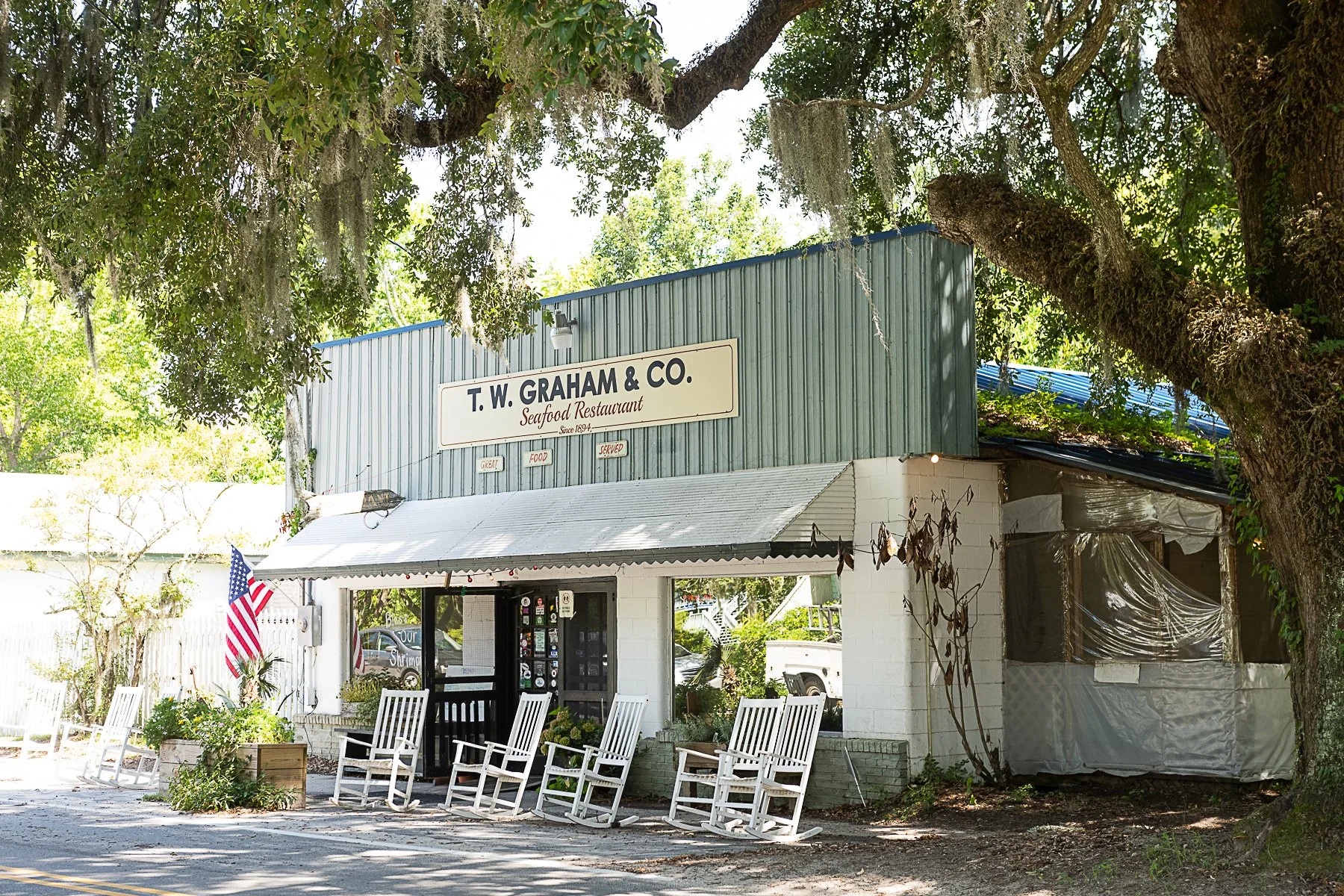
McClellanville is a small fishing town in rural Charleston County, South Carolina, United States. The population was 605 at the 2020 census. It is situated on the Atlantic coast, on land surrounded by Francis Marion National Forest, and has traditionally derived its livelihood from the Atlantic Ocean and coastal marshes by fishing, shrimping and oystering. McClellanville is part of the Charleston-North Charleston-Summerville metropolitan area and the Charleston-North Charleston Urbanized Area.
Want to know if a property in Mc Clellanville is a good investment?
Enter an address to get instant revenue potential and comps.