
Hollywood, South Carolina
Want to see how Hollywood compares to other top cities in South Carolina? Explore all city regulations in South Carolina. →
Hollywood, SC
Challenging To Investors
STR Regulations for Hollywood, South Carolina
Note on scope: The provided content does not include Town of Hollywood, SC‑specific short‑term rental rules. This guide therefore provides South Carolina state‑level requirements that apply to Hollywood, plus county context (Berkeley County) and city‑level examples from nearby Charleston for comparative insight only. Always verify the latest local rules with the appropriate authority before listing.
Overview: Are short‑term rentals allowed in Hollywood, SC?
Yes—short‑term rentals are allowed in Hollywood, SC. There is no evidence of a Town of Hollywood–specific STR ordinance in the provided material. As a result, STRs in Hollywood are governed by state law and county rules; hosts must still obtain a business license, register for taxes, and comply with safety and general land‑use requirements. For context, nearby Charleston has a robust, zone‑based STR regime with permits, occupancy limits, and inspection requirements; Hollywood does not share Charleston’s city‑specific STR overlay or permit categories. See Sources for the Charleston ordinance and permit system for illustration only.
What do Airbnb hosts actually earn in Hollywood?
Hollywood hosts earn a median $25,496/year with $169 ADR and 53% occupancy.
Top performers pull in $34,519+ per year.
See the full Hollywood market breakdownHow to start a short‑term rental business in Hollywood, SC
A practical, step‑by‑step sequence for investors and operators:
- Confirm zoning and land use
- Verify that STR use is permissible at your property’s address. In South Carolina, zoning is local. Even where state law allows STRs, individual municipalities or counties may restrict STRs in certain zoning districts. Charleston’s rules (permits, overlays, occupancy caps) are a nearby example; Hollywood does not have the same rules in the provided content.
- Obtain a local business license
- Statewide guidance: most SC municipalities require a local business license before operating an STR; many bases of issuance are gross revenue, and renewals are typically annual. Because Hollywood appears to be an unincorporated community within Berkeley County for licensing purposes, you should apply for and maintain the appropriate local business license through Berkeley County or the governing authority that issues licenses in this area. Confirm application procedures, fee calculation, and renewal cadence with the issuing authority before listing.
- Register for and remit taxes
- State sales tax (5.0%) and state accommodations tax (2.0%) apply to most STR transactions. You must also register with the South Carolina Department of Revenue (DOR) for sales and accommodations tax. Depending on your location and the jurisdictional rate, you may have a Local Option Sales Tax (typically 1.0%) and other local taxes. Confirm the current rate and reporting cadence with SC DOR.
- County accommodations tax, if applicable
- Many SC counties impose a county accommodations tax (up to 3.0%). Whether this applies in Berkeley County should be confirmed with the county treasurer or finance department. If applicable, register with the county and collect/remit the local accommodations tax along with state taxes.
- Safety and insurance
- Install and maintain required safety devices consistent with SC law and local codes (e.g., smoke alarms, carbon monoxide detectors where applicable). Carry comprehensive STR insurance that includes property damage and liability coverage. Maintain documentation for inspections and claims.
- Operating controls
- Establish occupancy limits appropriate to your property and any HOA or lease restrictions. Provide guests with a house manual, emergency contacts, and parking instructions. Retain guest logs as required by applicable laws. If you engage a property manager, ensure their license and compliance with state regulations.
- Recordkeeping
- Keep complete records of bookings, guest information, revenues, taxes collected and remitted, and correspondence with regulators for at least the statutory period (typically three years or more). Maintain a process for timely renewals of licenses and tax registrations.
- Marketing
- Before listing online, complete the steps above. Ensure your listing clearly discloses any occupancy limits, parking rules, and quiet hours. Avoid advertising features or capacities that would exceed legal occupancy.
Required documents, permits, licenses, and guidelines
- Local business license application (Berkeley County or applicable issuer)
- Tax registration with the SC Department of Revenue (sales tax, state accommodations tax)
- County tax registrations if county accommodations tax applies (Berkeley County)
- STR insurance policy (property and liability)
- Safety devices compliance (smoke/CO detectors where applicable)
- Guest logs and house manual (emergency contacts, parking, house rules)
- Zoning confirmation from local planning/zoning authority
- Records of taxes collected and remitted (state and local)
- Documentation supporting gross revenue for annual business license renewal (if required by issuer)
Fees vary by jurisdiction and are usually revenue‑based for business licenses. Charleston’s example shows a business license base fee plus a per‑$1,000‑of‑expected‑income fee; this is provided for context only and does not govern Hollywood.
Specific regulations at city, county, and state levels
State level (South Carolina)
- Definition: Short‑term rentals in South Carolina are commonly defined as renting a dwelling for less than 30 consecutive days. The South Carolina Vacation Rental Act uses “less than 90 days” for its provisions; see that Act for buyer/seller obligations on active rentals in a sale. Investors should understand both contexts.
- Vacation Rental Act: If an STR property with active bookings sells, the buyer typically takes title subject to the existing rentals and the management agreement for a defined period, and the Act imposes specific disclosure and notification duties on buyer and seller. Investors planning to buy or sell should consult the full statutory text or counsel.
- Taxes: State sales tax (5.0%) and state accommodations tax (2.0%) are standard. Many jurisdictions also levy a Local Option Sales Tax (often 1.0%) and may add county/city accommodations taxes.
County level (Berkeley County context)
- The provided sources do not list a specific accommodations tax rate for Berkeley County. County accommodations taxes are common in SC (up to 3.0%). Confirm whether Berkeley County imposes a local accommodations tax and obtain current rates and registration instructions from the county treasurer/finance department.
City level (Hollywood, SC)
- The provided material contains no Hollywood‑specific STR ordinance or licensing rules. As a result, town‑level zoning and permit overlays (like Charleston’s Short‑Term Rental Overlay Zone and Category 1–3 residential permits) do not apply to Hollywood.
Comparative illustration (Charleston only; not applicable to Hollywood)
- Charleston requires an STR permit (with categories and overlays), caps occupancy (commonly four unrelated adults for residential STRs), and conducts inspections. Charleston’s total accommodations tax can be significant (e.g., up to ~14% in some combinations). This is provided as a benchmark of an SC city with robust STR rules; it does not directly control STR operations in Hollywood.
Taxes and assessments commonly applicable in South Carolina
- State Sales Tax: 5.0% (remitted to SC DOR)
- State Accommodations Tax: 2.0% (remitted to SC DOR)
- Local Option Sales Tax: often 1.0% (where applicable; remitted via SC DOR)
- County Accommodations Tax: up to 3.0% (where applicable; remitted to county)
- City Accommodations Tax: up to 3.0% (where applicable; remitted per city instructions)
- Income taxes: Federal and state income tax on net rental income
- Property taxes: Assessed by county auditor based on property class and use
Note: The combined rate varies by jurisdiction. Charleston’s example shows totals around 12–14% depending on county/city rates; Hollywood’s rate will depend on county and any applicable local option taxes.
Contact information
South Carolina Department of Revenue (tax registration and reporting)
- Phone: 803‑898‑5000
- Website: dor.sc.gov
Berkeley County (business licensing and accommodations tax—confirm applicability and contacts)
- County seat: Moncks Corner
- Website: berkeleycountysc.gov
- Note: If Berkeley County does not issue the local business license for this area, contact the applicable municipal authority that does; confirm with the county administrator/treasurer if necessary.
Charleston, SC (for reference only; not Hollywood’s authority)
- Citizen Services Desk: 843‑724‑7311
- Address: 80 Broad Street, Charleston, SC 29401‑0304
- Website: charleston‑sc.gov
- Short‑Term Rental Permit Information: charleston‑sc.gov/shorttermrentals
Town of Hollywood (no dedicated STR contact is identified in the provided sources)
- Contact the Town Hall or the applicable planning/zoning office to confirm zoning and any local licensing requirements. If Hollywood does not issue business licenses, the license is likely issued by Berkeley County or the appropriate municipal authority for the area.
Important compliance reminders for Hollywood investors
- Start with zoning: Confirm STRs are an allowed use at your property before you invest or list.
- License before listing: Obtain and maintain the local business license through the correct issuer.
- Register and collect taxes: Enroll with SC DOR (sales and state accommodations tax). If a county accommodations tax applies, register with the county and collect accordingly.
- Keep records: Maintain guest logs, receipts, and remittance records for the required retention period.
- Maintain safety and insurance: Install and test required detectors; carry comprehensive STR insurance.
- Renewals: Track renewal deadlines for business licenses and tax registrations.
- Sales and the Vacation Rental Act: If you buy or sell an STR with active reservations, follow the Act’s notification and continuity requirements.
Sources and further reading
- South Carolina short‑term rental overview and state tax summary:gosummer.com/post/south-carolina-short-term-rental-laws
- South Carolina Vacation Rental Act summary:dietercompany.com/south-carolina-vacation-rental-act
- City of Charleston STR ordinance and permit pages (illustrative of an SC city with a comprehensive STR regime):
- Charleston Short‑Term Rental Ordinance overview: charleston‑sc.gov/2529/Short-Term-Rental-Ordinance
- Charleston Short‑Term Rental Permit Information: charleston‑sc.gov/shorttermrentals
- Proper Insurance STR regulations index (SC citations):proper.insure/regulations (South Carolina listings reference Summerville, Charleston, and Mount Pleasant as cities with STR rules)
Investors should verify the latest state and county rules directly with SC DOR and the county authority before listing, as rates and local procedures can change.
Next step
Found a property in Hollywood?
Paste any address and get estimated revenue, cash-on-cash return, and comparable STR performance in under 5 minutes. 3 free analyses per day.
Free brief
Get the free Hollywood STR Investment Brief
Revenue data, top neighborhoods, seasonal trends, and the key regulations for Hollywood, South Carolina in one email.
Hollywood
Market Saturation Score
Photos of Hollywood
Overview of Hollywood
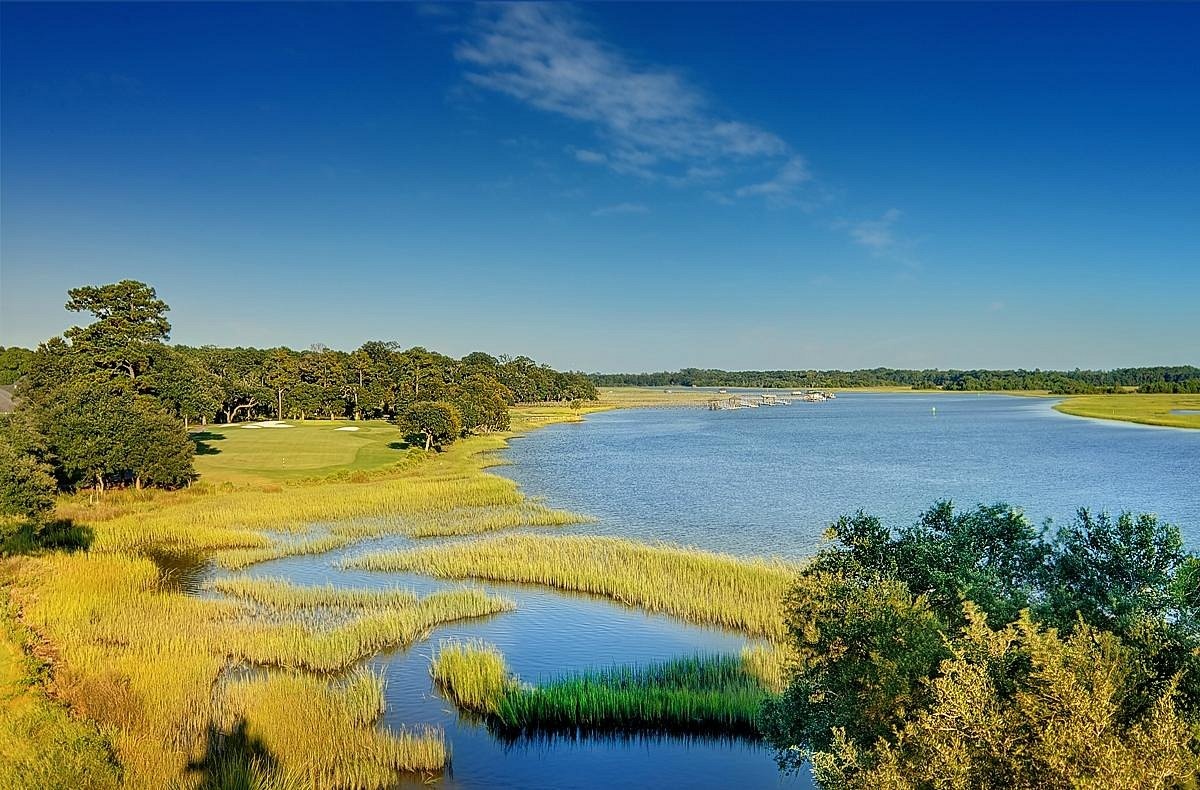
Hollywood is a small Lowcountry town in Charleston County, South Carolina, with a population of roughly 4,700 residents. Tucked between tidal marshes and the inland sea islands, the community has a quiet, rural character defined by live oaks draped in Spanish moss, tidal creeks, and the unhurried pace typical of South Carolina's coastal plain. It sits about 25 miles southwest of downtown Charleston, serving as a peaceful inland base from which visitors can explore both the historic heart of the Lowcountry and the barrier islands to the south.
Roughly 30 minutes to the northeast, Charleston is the marquee draw for any stay in the region. One of America's most photographed cities, Charleston offers a walkable historic district of pastel antebellum houses, the open-air City Market, Fort Sumter in the harbor, and the Battery promenade, along with a nationally recognized food scene rooted in Lowcountry and Gullah-Geechee traditions. The drive into the city along Highway 17 or Savannah Highway passes through classic Lowcountry scenery, including marsh views and roadside stands selling peaches and boiled peanuts.
A closer cultural stop is Middleton Place, a National Historic Landmark and former rice plantation on the Ashley River, about 20 minutes north of Hollywood. The site is best known for its terraced gardens, considered among the oldest landscaped gardens in America, as well as preserved plantation outbuildings, a stable yard with heritage breeds, and a house museum. Visitors can tour the grounds, watch costumed craft demonstrations, and walk down to the river for sweeping views of the marsh.
To the south, Botany Bay Plantation Heritage Preserve and Wildlife Management Area on Edisto Island lies roughly 35 to 40 minutes from Hollywood. The 4,600-plus-acre preserve protects a striking mix of maritime forest, tidal marsh, and shell-strewn beaches along the North Edisto River. Several short trails, including the Bache Maybank Trail, lead visitors through canopies of oaks to isolated stretches of coastline that feel a world away from the busier resort beaches.
A bit further out on Edisto Island, Edisto Beach State Park is about 45 minutes southwest of town. The park offers a quiet, family-friendly stretch of Atlantic beach, shaded live oak trails, a campground, and access to the Scott Creek salt marsh for crabbing, shrimping from a public dock, and kayaking. Its uncrowded shoreline and moss-draped paths make it a favorite for travelers seeking the coast without the bustle of the larger resort islands.
Hollywood's appeal for short-term rentals lies in this balance: the town offers a genuine, low-key Lowcountry setting with room to spread out, while keeping Charleston, historic plantations, protected coastal preserves, and quiet beaches all within an easy day trip. It is well suited to guests who want scenic Lowcountry immersion by day and the option of world-class dining, culture, and history by night.
Want to know if a property in Hollywood is a good investment?
Enter an address to get instant revenue potential and comps.