
Cleveland, South Carolina
Want to see how Cleveland compares to other top cities in South Carolina? Explore all city regulations in South Carolina. →
Cleveland, SC
Challenging To Investors
STR Regulations for Cleveland, South Carolina
Note on scope: No Cleveland-specific short‑term rental ordinance was found in the provided sources. This guide therefore relies on South Carolina’s statewide framework and general STR compliance practices. If your property is in unincorporated Cleveland (South Carolina), county requirements may still apply. Always verify with your local county/municipal zoning office before investing.
Overview: Are Short-Term Rentals Allowed in Cleveland, SC?
Yes—short‑term rentals are legal in South Carolina, but operationally they are governed by local zoning and permitting rules. The state leaves most STR regulation (zoning, caps, permits) to cities and counties. Because no Cleveland-specific STR rules are available in the provided sources, treat any STR use as permitted by default under state law, subject to local zoning and any county requirements (if applicable). Before purchasing or listing, confirm zoning with the local planning/zoning authority and obtain any required permits or business licenses.
Sources:
- State delegation model and baseline state requirements for South Carolina: Century 21 Blackwell guide (2025) (www.century21blackwell.com/blog/short-term-rentals-greenville-spartanburg-whats-legal-and-whats-not/)
What do Airbnb hosts actually earn in Cleveland?
Cleveland hosts earn a median $24,614/year with $149 ADR and 53% occupancy.
Top performers pull in $35,164+ per year.
See the full Cleveland market breakdownHow to Start a Short‑Term Rental Business in Cleveland, SC
- Confirm Land Use/Zoning
- Determine whether STRs are a permitted use on your parcel. Use the local GIS/zoning map or contact the planning/zoning office. If no Cleveland-specific map exists, rely on county resources or consult the planning department.
- Typical constraints include: residential vs commercial zones; minimum stay limits (often <30 days); owner-occupancy requirements; and caps on the number of STR units.
- Secure Required Permits and Licenses
- Short‑Term Rental Permit (if required by local jurisdiction).
- Business License (municipal or county).
- Occupancy Permit/Certificate of Occupancy (often required for safety).
- Post-permit display numbers on listings as required by local code.
- Obtain Liability Insurance
- Statewide baseline in South Carolina: commercial general liability policy with at least $1,000,000 per occurrence. Consider additional coverage (property, loss of rental income, and umbrella) given STR-specific risks.
- Set Up Tax Registration and Collection
- Register with the South Carolina Department of Revenue (DOR) for sales and accommodations taxes.
- Collect and remit:
- State sales tax (typically 5%).
- State accommodations tax (2%).
- Any local accommodations tax that applies (rates vary by jurisdiction).
- Many platforms (e.g., Airbnb) collect state taxes automatically; confirm whether local taxes are platform‑collected and, if not, collect and remit them yourself by the required deadline (commonly monthly, e.g., by the 20th).
- Safety and Building Compliance
- Install required safety devices (smoke detectors, carbon monoxide detectors where applicable, fire extinguishers).
- Comply with any applicable building, fire, and life‑safety codes; some municipalities require annual inspections.
- Provide parking, signage, and trash/Noise rules as directed by local ordinance.
- Local Filing and Ongoing Compliance
- File all required documents (proof of ownership, site/floor plans, parking plan, affidavit).
- Maintain records for audits and renewals.
- Monitor local ordinance updates—South Carolina enables local rules, and regulations change frequently.
Source for state/municipal baseline: Century 21 Blackwell guide (www.century21blackwell.com/blog/short-term-rentals-greenville-spartanburg-whats-legal-and-whats-not/)
Required Documents, Permits, Licenses, and Guidelines (Baseline)
Core documentation commonly required by municipalities/counties:
- Proof of property ownership or lease authorization
- Site plan and floor plan
- Parking plan/arrangement
- Occupancy/Certificate of Occupancy (where applicable)
- Business License (municipal/county)
- Short‑Term Rental Permit (if required)
- Liability Insurance Certificate (≥ $1M commercial general liability)
- Compliance Affidavit (acknowledgment of rules)
- Tax registration setup (sales and accommodations taxes)
- Safety compliance confirmation (smoke/CO detectors, extinguishers)
Sources:
- Century 21 Blackwell guide (www.century21blackwell.com/blog/short-term-rentals-greenville-spartanburg-whats-legal-and-whats-not/)
- Mashvisor overview on general STR licensing workflow (www.mashvisor.com/blog/short-term-rental-license/)
- Proper Insurance STR regulations map and insurance baseline (www.proper.insure/regulations/page/4/)
Specific Regulations for Short‑Term Rentals in This City, County, and State
City (Cleveland, SC)
- No Cleveland-specific STR ordinance is available in the provided sources. Treat STRs as permitted under state law but verify zoning and any municipal permit/business license requirements before proceeding.
County (Greenville County example for unincorporated areas)
- If your property lies within an unincorporated area of a South Carolina county, expect:
- Zoning verification via the county GIS.
- STR permit via the county eTrakit system (typical fee around $40).
- Business license and standard compliance documents (ownership proof, plans, parking, liability insurance).
- Processing typically within several days.
- Taxes typically mirror state + county accommodations tax.
State (South Carolina)
- Statewide requirements and delegation:
- Local authority to regulate: municipalities and counties can impose zoning restrictions, caps, and permits.
- Insurance requirement: at least $1,000,000 commercial general liability per occurrence.
- Tax obligations: collect and remit state sales tax (5%) and state accommodations tax (2%); plus any local accommodations tax.
- 2025 update: Senate Bill S.442 clarified and strengthened statewide requirements while preserving local authority.
- State-level STR regulations and insurance baseline: Proper Insurance (www.proper.insure/regulations/page/4/)
- South Carolina cities with active ordinances include Summerville, Charleston, and Mount Pleasant—illustrating local variation within the state.
Sources:
- Century 21 Blackwell guide (www.century21blackwell.com/blog/short-term-rentals-greenville-spartanburg-whats-legal-and-whats-not/)
- Proper Insurance STR regulations map (www.proper.insure/regulations/page/4/)
Contact Information (Phone, Email, Website) for the Local Authority
Because Cleveland-specific contacts are not provided in the sources, use this structured approach:
- City of Cleveland (if incorporated): Contact the City Hall or Planning/Zoning Department for zoning confirmation and business license/STR permitting requirements.
- Cleveland County/Regional Authority: If Cleveland is unincorporated or under county jurisdiction, contact the County Planning/Zoning and the County Business License Office.
For South Carolina state-level tax and business registration:
- South Carolina Department of Revenue (DOR)
- Website: dor.sc.gov/
- Phone: Contact via DOR website; phone numbers vary by unit. Use online “Contact” page for the appropriate division.
Note: Contact information varies widely by jurisdiction. If no city-specific details are available in the provided content, rely on county/state contacts and verify all requirements with your local authority.
Links to Source Pages
- State-level STR regulations and insurance baseline: Short-Term Rental Regulations Map (South Carolina), Proper Insurance (www.proper.insure/regulations/page/4/)
- South Carolina STR rules and local examples (Greenville/Spartanburg; local taxes, permits): Century 21 Blackwell (www.century21blackwell.com/blog/short-term-rentals-greenville-spartanburg-whats-legal-and-whats-not/)
- General guidance on licensing workflow for STRs: Mashvisor (www.mashvisor.com/blog/short-term-rental-license/)
- Local permitting examples and tools: Greenville County eTrakit (referenced in the Century 21 Blackwell guide; confirm via County website)
Investor takeaway: In South Carolina, STRs are permitted by default under state law, but local zoning and permitting rules control operational viability. Because no Cleveland-specific STR ordinance is available in the provided sources, treat the market as governed by statewide rules and any county or municipal overlays that may apply. Confirm zoning, obtain required permits and licenses, carry adequate insurance, and set up tax collection and remittance before listing. For cities/counties that do regulate, expect a permit (often via an online portal), a business license, occupancy verification, and compliance with local safety codes—costs and timelines are typically modest but non-negotiable.
Next step
Found a property in Cleveland?
Paste any address and get estimated revenue, cash-on-cash return, and comparable STR performance in under 5 minutes. 3 free analyses per day.
Free brief
Get the free Cleveland STR Investment Brief
Revenue data, top neighborhoods, seasonal trends, and the key regulations for Cleveland, South Carolina in one email.
Cleveland
Market Saturation Score
Photos of Cleveland

Overview of Cleveland
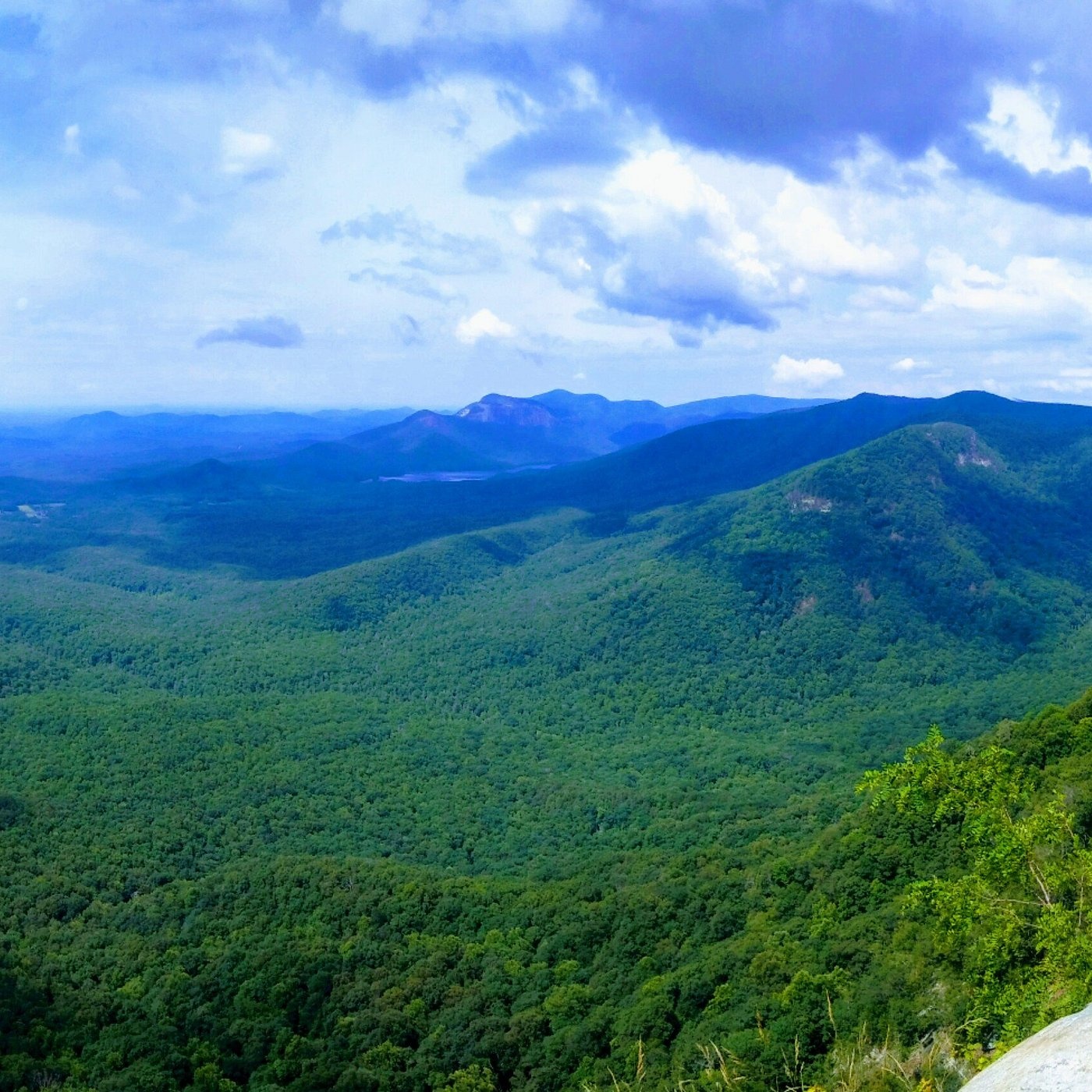
Cleveland is a small unincorporated community nestled in the northern corner of Greenville County, in the upstate region of South Carolina. With a population of only a few hundred residents, the community has the unhurried, rural feel of a mountain hamlet, framed by the wooded ridgelines of the Blue Ridge foothills. Cleveland has long served as a quiet gateway for travelers heading into the high country of northern Greenville and Pickens counties, where waterfalls, hiking trails, and scenic overlooks draw visitors year-round. It sits roughly 25 to 30 miles north of Greenville, the nearest major city, and about 60 miles south of Asheville, North Carolina, giving visitors two distinct urban centers within an easy drive.
Just minutes from town, Table Rock State Park is one of the area's marquee outdoor destinations. Straddling the South Carolina mountains between Sassafras Mountain and the Pinnacle, the park offers a large lake, miles of hiking trails, a historic lodge, and campgrounds. Hikers often use Cleveland as a jumping-off point for the strenuous climb to the Table Rock summit, and the surrounding trail network includes the popular Pinnacle Mountain and Carrick Creek loops. The drive from the community to the park's main entrance is only a few miles, making it a natural fit for day-tripping guests.
A short drive further north brings visitors to Caesars Head State Park, perched along the Blue Ridge Escarpment and best known for its dramatic overlook of the mountain and Piedmont country below. The park connects via the Rim of the Gap hiking trail to Jones Gap State Park, creating a long-distance corridor through the Mountain Bridge Wilderness. Within Caesar's Head itself, the Symmes Chapel, often called "Pretty Place," is an open-air wooden chapel that has become one of the most photographed settings in the Carolinas. The overlook and trailhead are typically within about 20 to 30 minutes of Cleveland by car.
A bit to the south, the city of Greenville offers a polished urban counterpoint to the surrounding wilderness, with its walkable downtown, Falls Park on the Reedy, and a lively restaurant scene along Main Street. Travelers looking for a smaller-town feel often detour to Travelers Rest, a short drive south of Cleveland, where a growing collection of breweries, cafés, and outdoor outfitters caters to hikers and cyclists exploring the Swamp Rabbit Trail.
For short-term-rental owners, Cleveland's appeal lies in its combination of small-town tranquility and proximity to some of the most celebrated outdoor scenery in the Carolinas. Guests can spend the day on mountain summits or waterfall trails, then return to a quieter base removed from the busier resort towns, with Greenville's dining and Asheville's arts scene both within reach for a day trip.
Want to know if a property in Cleveland is a good investment?
Enter an address to get instant revenue potential and comps.