
Andrews, South Carolina
Want to see how Andrews compares to other top cities in South Carolina? Explore all city regulations in South Carolina. →
Andrews, SC
Generally Investor Friendly
Local STR Agent
Local STR Agent
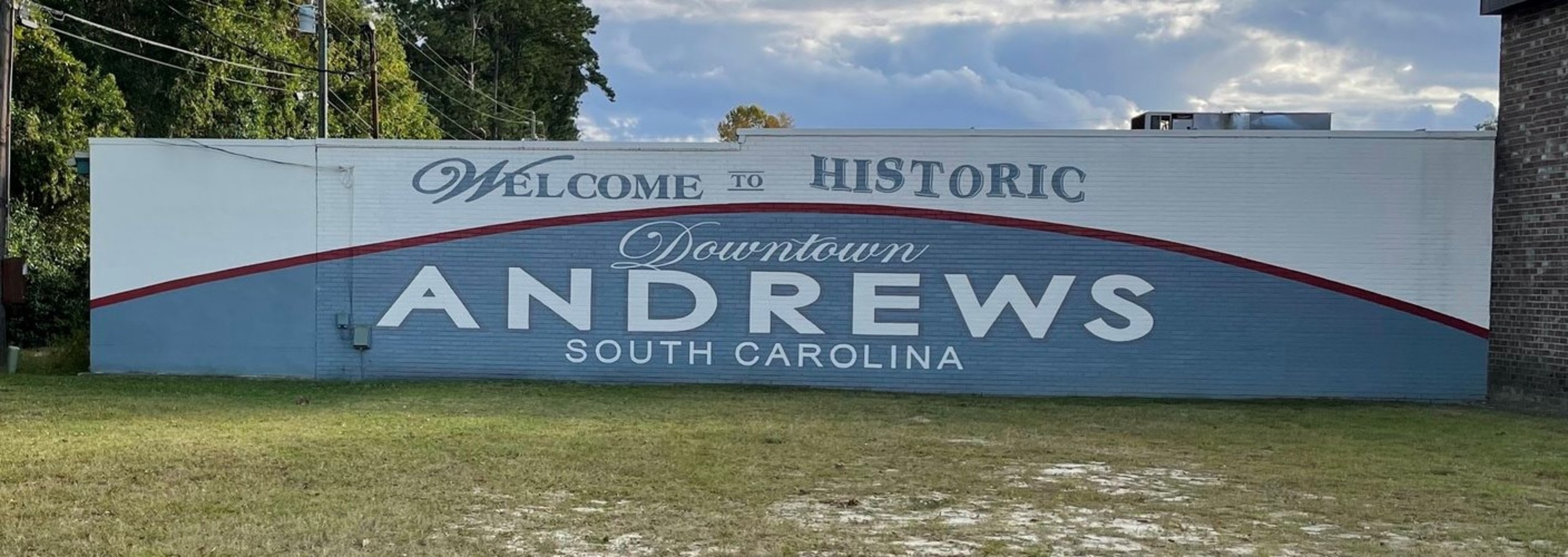
STR Regulations for Andrews, South Carolina
Overview: Are short‑term rentals allowed in Andrews, SC?
Yes—short‑term rentals are lawful in South Carolina and, by extension, Andrews, SC, subject to state law and any local rules the Town of Andrews or Georgetown County may adopt. The South Carolina Vacation Rental Act already governs “vacation rentals” (rentals fewer than 90 days). In 2025, the General Assembly passed S.442, which:
- Defines “short‑term rental” as fewer than 29 consecutive days (state‑wide definition).
- Explicitly authorizes municipalities and counties to enact or enforce ordinances that regulate—or even prohibit—short‑term rentals.
- Imposes statewide requirements (e.g., a responsible local representative, liability insurance, taxation, and business licensing).
- Extends the pre‑existing vacation‑rental transfer obligations from 90 to 180 days.
Andrews has not provided local STR‑specific content here; therefore, investors must plan under South Carolina law and confirm any Town or County rules directly with local authorities before listing or operating a property.
Key takeaway: STRs are allowed, but local governments can restrict them. Confirm local rules and permits before investing.
What do Airbnb hosts actually earn in Andrews?
Andrews hosts earn a median $24,613/year with $119 ADR and 70% occupancy.
Top performers pull in $32,291+ per year.
See the full Andrews market breakdownHow to start a short‑term rental business in Andrews, SC
Use this step‑by‑step approach to ensure you meet state requirements and are ready for local rules:
-
Confirm zoning and local rules
- Verify with the Town of Andrews and Georgetown County whether STRs are a permitted use on your property, and whether permits, caps, or a local representative are required. S.442 enables both registration/permitting and the potential for prohibition.
- If your property is in a private community (e.g., an HOA), confirm their STR rules and approval requirements (these govern regardless of municipal allowance).
-
Assemble required documents
- Vacation Rental Agreement (written, signed; acceptance evidenced by signature, payment, or possession).
- Vacation Rental Management Agreement (if using a property manager/broker).
- Responsible local representative appointment and contact details (state‑level requirement under S.442 for any STR).
- Business license documentation (STR operation is a commercial use under S.442; see Section “Specific regulations” below).
- Insurance: Maintain commercial general liability or valid endorsement with minimum $1,000,000 aggregate limits (S.442).
- Tax registrations: Sales/use tax and local accommodations tax (if applicable) for “retailers/sellers” of transient lodging; understand accommodations intermediary rules if using platforms.
-
Register or obtain a local permit (if required)
- If Andrews or Georgetown County adopts an STR ordinance, apply for any required registration or permit before listing.
- Designate and keep a responsible local representative on file with current contact information.
-
Set up your financial operations
- Trust accounts for guest funds: If managed by a licensed broker/property manager, hold guest payments in a trust account consistent with SC Real Estate Commission rules.
- Bookkeeping: Track gross proceeds, platform fees, cleaning/maintenance, insurance, taxes, and depreciation.
-
Prepare the property and operations
- Safety and comfort: Working smoke/CO detectors, safe egress, hot water, reliable Wi‑Fi, and clean turnovers.
- Guest communications: Check‑in instructions, house rules, local emergency contacts, and 24/7 contact for issues.
- Record‑keeping: Save executed agreements, guest communications, and incident logs to manage compliance and disputes.
-
Launch and monitor
- Publish listings on your chosen channels; ensure all required disclosures are present.
- Monitor local policy changes; renew registrations/permits and insurance as required.
- Comply with pre‑existing bookings and transfer obligations if you buy or sell a property with active reservations.
Required documents, permits, licenses, and guidelines
At a minimum, investors should assemble and maintain:
-
Vacation Rental Agreement
- Must be written; valid upon tenant’s signature, payment, or possession.
- Include terms for advance payments and refunds; advanced payments may be nonrefundable if clearly stated.
-
Vacation Rental Management Agreement
- Required if a licensed property manager/broker is engaged.
- Governs marketing, bookings, guest services, and financial handling.
-
Responsible local representative
- Must be designated by the property owner and maintain current contact information; municipalities can require a nearby representative (as determined locally).
-
Business license
- STR operation is a commercial use; a business license is required per S.442, unless the rental’s gross proceeds are wholly excluded from federal gross income under IRC 280A(g).
-
Insurance
- Maintain commercial general liability insurance or a valid endorsement to a residential policy with minimum $1,000,000 aggregate limits.
-
Tax registrations and compliance
- Sales/use tax: Imposed on gross proceeds of transient accommodations at 7%; the property is a “retailer” of lodging.
- Accommodations intermediary: If you use platforms that charge or collect amounts from guests, they may be taxed and required to collect/remit as “accommodations intermediaries.”
- Local accommodations tax: May apply; remit per local requirements.
-
Safety and emergency
- Ensure compliance with applicable building/fire safety rules; follow state evacuation orders when issued.
-
Community rules
- Follow HOA/POA covenants (e.g., Palmetto Dunes policies on registration, passes, noise, and occupancy—even though Palmetto Dunes is not in Andrews, it illustrates how HOAs govern STRs).
Specific regulations for short‑term rentals: state, county, and city
State of South Carolina
-
Vacation Rental Act (SC Code §27‑50‑210 et seq.)
- Applies to rentals fewer than 90 days (existing statutory definition).
- Written vacation rental agreements are required; acceptance evidenced by signature, payment, or possession.
- Trust accounts for guest funds when using a licensed broker/manager.
- Transfer of title obligations: Existing reservations must be honored for up to 90 days after deed recording; refunds due if reservations start after the 90‑day window.
-
2025 Act (S.442) – Key changes (effective upon Governor’s approval)
- Definitions
- Short‑term rental: Fewer than 29 consecutive days (state‑wide definition).
- Responsible local representative: Individual designated by owner to ensure compliance and accept service of process (distance/requirements set by local government).
- Residential dwelling: Standard residential property used as a home or sleeping place.
- Local regulatory authority
- Municipalities and counties may adopt ordinances to regulate or prohibit short‑term rentals, including caps, density limits, separation requirements, zoning exclusions, inspections, and permit suspension/revocation.
- Insurance
- Commercial general liability policy or endorsement with minimum $1,000,000 aggregate limits required at all times the property is marketed/operated as a short‑term rental.
- Business license
- Operation is a commercial use; business license required unless gross proceeds are wholly excluded under IRC 280A(g).
- Taxation and intermediaries
- Sales/use tax applies to transient accommodations (7%).
- “Accommodations intermediary” definition; platforms facilitating rentals must comply with tax collection/remittance.
- Clarifies that transient lodging is retail sales; subject to sales/use tax.
- Vacation rental transfer period
- Extends the period for honoring pre‑existing bookings to 180 days after deed recording (amends §27‑50‑250(A) to replace “ninety” with “one hundred eighty”).
- Exemptions
- Does not apply to lodging regulated under Title 45 (e.g., hotels/motels with front desk/central phone/housekeeping), timeshare accommodations, or weekly/monthly rentals under the Residential Landlord and Tenant Act.
- Definitions
Georgetown County and Town of Andrews
- No local STR‑specific regulations are provided in these sources.
- Confirm with Town of Andrews and Georgetown County whether an STR ordinance is in place (permitting, caps, or prohibition) and how registration, caps, or representative requirements apply.
Note: In the absence of city‑specific rules, state law governs.
Contact information for local authority in charge of STRs
-
Town of Andrews (official authority for local rules within town limits)
- Phone: Not provided in the sources
- Email: Not provided in the sources
- Website: Not provided in the sources
- Mailing Address: Not provided in the sources
- Note: Call the Town’s main line and ask for Planning/Zoning or the Town Clerk to confirm STR rules, permits, and any fees.
-
Georgetown County (official authority for unincorporated areas)
- Phone: Not provided in the sources
- Email: Not provided in the sources
- Website: Not provided in the sources
- Note: County administration or planning/zoning can advise on whether County STR regulations apply outside town limits.
Guidance to investors: Verify whether Andrews requires a permit/registration, a local representative, fee schedules, and any caps or zoning restrictions before listing. Keep records of all communications and approvals.
Source pages
- South Carolina Vacation Rental Act (statutory text)
- S.442 (2025) Short‑Term Rentals – introduced bill text
- Attorney’s legal interpretation of the Vacation Rental Act
- Vacation rental guidance and market context
- Community policy example (not in Andrews; illustrates HOA/POA governance)
Practical investor advice: Start under state rules, then align with any Town/County ordinances as they arise; consult a SC‑licensed attorney for local application and transaction structuring.
Next step
Found a property in Andrews?
Paste any address and get estimated revenue, cash-on-cash return, and comparable STR performance in under 5 minutes. 3 free analyses per day.
Free brief
Get the free Andrews STR Investment Brief
Revenue data, top neighborhoods, seasonal trends, and the key regulations for Andrews, South Carolina in one email.
Andrews
Market Saturation Score
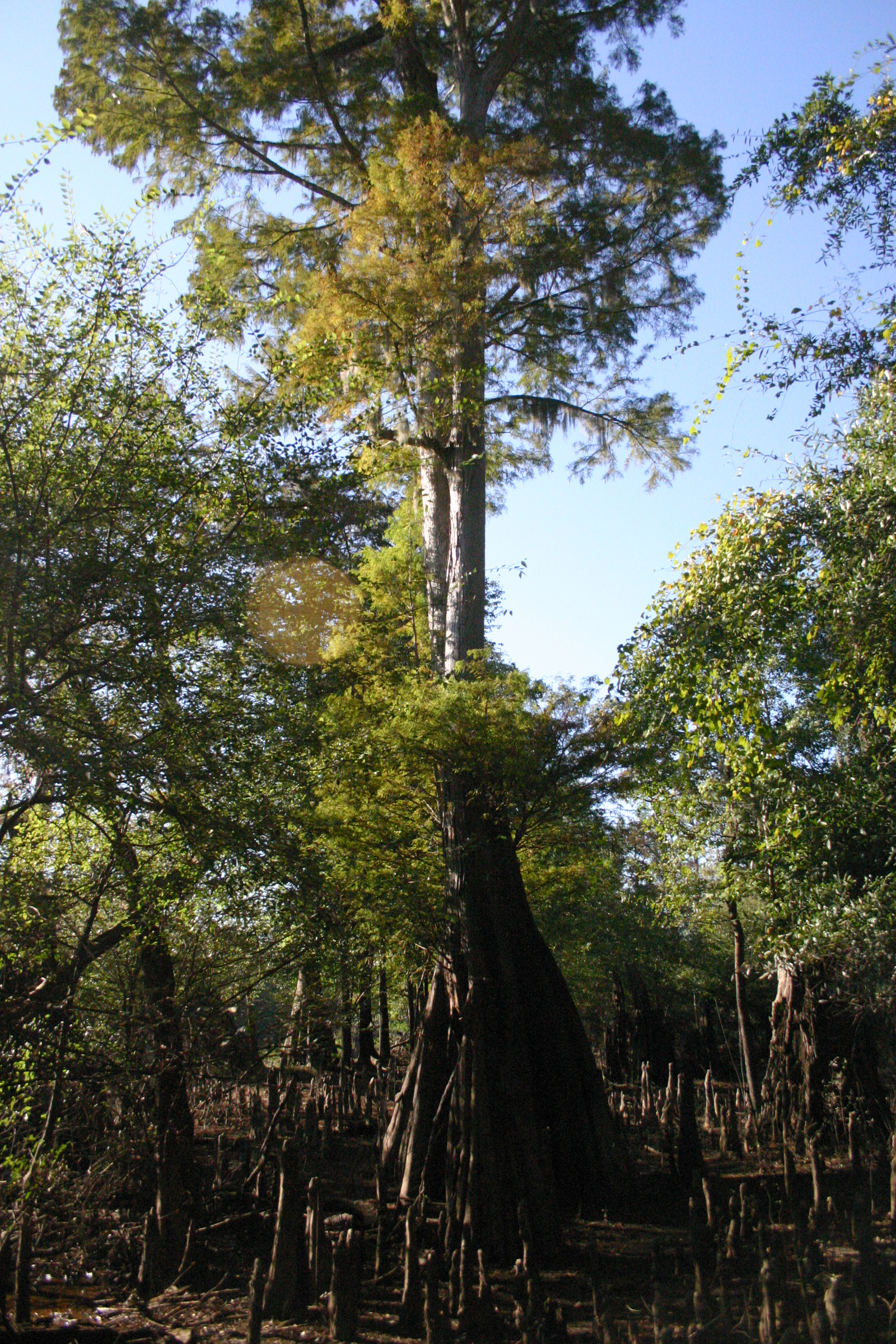
Photos of Andrews

Overview of Andrews
Andrews is a small, lowcountry town in Georgetown County, South Carolina, set amid the swamps, pine forests, and tidal riverways of the state's coastal plain. With a population of roughly 2,800 residents, it has the unhurried feel of a traditional Southern community, where the Waccamaw River and surrounding waterways shape daily life. The town is best known as a quiet gateway to South Carolina's Hammock Coast, a stretch of salt marshes, barrier islands, and historic plantations that draws visitors looking for a slower, more natural alternative to the busier Grand Strand. Andrews sits about 35 miles southwest of Myrtle Beach, the nearest major city, with Georgetown roughly 15 to 20 miles to the east along US-521.
Just east of Andrews, the historic port city of Georgetown offers a walkable waterfront, centuries-old live oaks, and a downtown lined with boutiques, seafood restaurants, and antebellum architecture. Visitors can stroll the Harborwalk along the Sampit River, tour the Kaminski House Museum, or take a riverboat cruise through the surrounding estuaries. The drive from Andrews to downtown Georgetown typically takes around 25 minutes, making it an easy day trip for guests looking for a blend of small-town history and waterfront dining.
A short drive further east along the coast brings travelers to Huntington Beach State Park, a 2,500-acre preserve known for its undeveloped shoreline, marsh boardwalks, and the elegant Atalaya, the former winter home of sculptor Anna Hyatt Huntington. The park is a favorite for shelling, birdwatching, and surf fishing, and it sits about 30 miles from Andrews. Nearby, Brookgreen Gardens sprawls across several thousand acres of former rice plantations and offers one of the country's largest collections of American figurative sculpture, set among formal gardens, native animal habitats, and a Lowcountry zoo. The gardens are roughly 25 miles from Andrews and are a major draw for visitors spending a week or more in the region.
Outdoor recreation surrounds the town, with the Francis Marion National Forest extending to the north and east. The forest offers hiking, horseback riding, hunting, and paddling on the Black and Wambaw creeks, all within about a 20-minute drive of Andrews. Closer to town, the Waccamaw River and its tributaries invite kayakers and anglers chasing redfish, flounder, and freshwater bass. For guests willing to drive a bit farther, Pawleys Island and Litchfield Beach are roughly 30 minutes east, offering some of the most laid-back stretches of coastline in the state.
Andrews appeals to short-term rental investors because it offers genuine value and authenticity just inland from one of the Southeast's most visited coastal corridors. Guests can spend the day on a crowded beach, exploring manicured gardens, or wandering a historic downtown, then return to a quieter, more affordable home base surrounded by river, forest, and marsh. With Myrtle Beach's attractions close enough for occasional trips but far enough to escape the noise, Andrews works well as a year-round destination that balances Lowcountry scenery, outdoor adventure, and easy access to the coast.
Want to know if a property in Andrews is a good investment?
Enter an address to get instant revenue potential and comps.