
Las Piedras, Puerto Rico
Want to see how Las Piedras compares to other top cities in Puerto Rico? Explore all city regulations in Puerto Rico. →
Las Piedras, PR
Generally Investor Friendly
STR Regulations for Las Piedras, Puerto Rico
Overview: Are Short-Term Rentals Allowed in Las Piedras, PR?
Yes—short-term rentals are allowed in Las Piedras, PR. Puerto Rico’s statewide framework permits STRs so long as hosts comply with the Commonwealth’s occupancy tax and related requirements. Las Piedras does not appear to have city-specific STR rules; therefore, investors must follow Puerto Rico’s state-level regulations and any federal and county requirements that apply. Any property rented for fewer than 90 consecutive days is treated as a short-term rental under Puerto Rico law.
Under this framework, the Commonwealth’s Tourism Company (Empresa de Turismo) enforces lodging tax collection, host registration, and basic health and safety compliance for STRs. For Las Piedras operators, the primary obligations center on collecting and remitting the room occupancy tax, registering hosts/properties, and meeting minimum health and safety standards.
What do Airbnb hosts actually earn in Las Piedras?
Las Piedras hosts earn a median $18,142/year with $139 ADR and 60% occupancy.
Top performers pull in $38,273+ per year.
See the full Las Piedras market breakdownHow to Start a Short-Term Rental Business in Las Piedras
- Determine whether the use qualifies as an STR: If you rent the property to guests for fewer than 90 consecutive days, it is an STR under Puerto Rico law. Rents of 90 days or more generally fall into long-term rental treatment and are not subject to the STR tax regime.
- Classify your unit type: Common STR categories include entire home/apartment, private room, shared room, and hotel room. Most Las Piedras investors operate entire-home or apartment listings.
- Register with the Puerto Rico Tourism Company: Hosts must register and comply with the company’s host registry and property requirements, which are designed to level the playing field with traditional lodging.
- Collect the room occupancy tax: Charge guests the required occupancy tax on short-term stays and remit to the Puerto Rico Tourism Company. The tax is 7% of the room rate.
- Implement basic health and safety measures: Comply with the Tourism Company’s standards and provide essential guest information (e.g., emergency contact, housekeeping instructions, noise and trash guidelines). Where applicable, ensure fire safety and hazard protections.
- Prepare for tax filings and audits: Maintain accurate guest logs, receipts, and remittance records. Expect that the Tourism Company will audit for tax compliance.
- Consider insurance and local municipal fees: Although not specified in the provided sources as STR-specific, you should evaluate general liability/property insurance and any local business/fee obligations.
- Platform strategy: Listing on platforms such as Airbnb or VRBO is common. However, platform listing does not substitute for legal compliance; you must register and collect taxes independently of platform obligations.
Required Documents, Permits, Licenses, and Guidelines
- Host/property registration with the Puerto Rico Tourism Company (required to operate legally).
- Room occupancy tax collection and remittance at 7% of the room rate (mandatory for all STRs).
- Guest recordkeeping: maintain reservation and guest data sufficient to substantiate tax remittance and compliance.
- Health and safety standards: provide emergency information, adhere to safety and hygiene rules, and maintain conditions consistent with tourism lodging regulations.
- Business records: retain booking records, receipts, tax remittances, and correspondence with the Tourism Company.
- If offering an entire home/apartment or managing multiple listings: maintain documentation supporting compliance with host registry, tax obligations, and any applicable insurance and safety measures.
Note: The sources indicate the Tourism Company’s role in host registry and property health/safety requirements, but they do not provide a link to a specific municipal license portal for Las Piedras. Where city-specific requirements are absent, state-level obligations control.
Specific Regulations for Short-Term Rentals in Las Piedras (City), County, and State
- City (Las Piedras): No city-specific STR ordinance or licensing rule appears in the provided sources. Operate under Puerto Rico’s statewide framework.
- County/Municipality level: The context is Puerto Rico’s municipal structure. No Las Piedras-specific STR controls—such as caps, zoning restrictions, or day limits—are presented. Operators should confirm no local ordinances have been enacted after the dates of the referenced materials.
- State (Puerto Rico):
- Definition of STR: Rents shorter than 90 consecutive days are treated as short-term rentals.
- Room occupancy tax: 7% of room charges must be collected and remitted to the Puerto Rico Tourism Company (Act 272 of 2003, as amended).
- Host registry and compliance: Hosts must register, comply with health and safety standards, and maintain records. The Tourism Company enforces these obligations, particularly to address competitive impacts on traditional lodging.
- Federal and other considerations:
- Income reporting: Rental income is generally subject to federal income tax. Consult a tax professional for reporting requirements.
- Insurance: While not explicitly mandated by the cited sources, adequate property and liability coverage is prudent.
- Other regulatory context: The provided policy research (2014–2020) documents the rapid growth and concentration of STRs, associated impacts on housing affordability, and the need for stronger local controls in some jurisdictions. This contextual evidence underscores the importance of compliance and proactive community engagement.
Enforcement and Compliance Oversight
- Puerto Rico Tourism Company: The Tourism Company administers host registry, tax collection, and basic health and safety enforcement for STRs across the Commonwealth. This is the primary regulatory contact for STRs in Las Piedras.
- Monitoring and audits: The Tourism Company tracks compliance and may audit hosts for accurate tax collection and remittance. Failure to remit or register can trigger penalties and enforcement actions.
- Compliance best practices: Use verifiable recordkeeping, ensure accurate tax collection on each booking, and keep property standards consistent with tourism requirements. If operating multiple listings, ensure each property and host registration is current.
Contact Information (Local Authority in Charge of STRs)
- Puerto Rico Tourism Company (Empresa de Turismo)
- Role: Host registry, lodging tax enforcement, and property health and safety compliance for STRs.
- Website: pr.gov (common gateway for Commonwealth agencies); specific STR portal links were not provided in the sources.
- Phone and email: Not provided in the sources. Investors should verify current contact details through the Puerto Rico government portal or the Tourism Company’s official communications.
- Recommended action: Contact the Tourism Company to confirm host registration steps, tax remittance procedures, and any updated guidance specific to STR operations.
Source Links
- Short-term rental regulations overview (Puerto Rico): www.lodgecompliance.com/states/puerto-rico
- Las Piedras-specific jurisdiction page (regulations listing): www.lodgecompliance.com/local-jurisdiction/las-piedras-municipality-pr
- Research report on STR impacts and regulatory context in Puerto Rico: grupocne.org/wp-content/uploads/2022/12/2022.12.12-The-Impact-of-Short-Term-Rentals-in-Puerto-Rico-2014-2020.pdf
- Community and policy recommendations related to STR displacement (2023): www.hispanicfederation.org/images/pdf/REPORT_Short-Term-Rentals_v1.pdf
Investor note: The sources establish statewide requirements (host registry, 7% occupancy tax) but do not provide Las Piedras–specific licensing procedures or contacts. Confirm current municipal or Tourism Company guidance before launching operations. If you are an investor considering multiple properties or professional hosting, consider aligning your operations with emerging best practices around licensing, data reporting, and community safeguards.
Next step
Found a property in Las Piedras?
Paste any address and get estimated revenue, cash-on-cash return, and comparable STR performance in under 5 minutes. 3 free analyses per day.
Free brief
Get the free Las Piedras STR Investment Brief
Revenue data, top neighborhoods, seasonal trends, and the key regulations for Las Piedras, Puerto Rico in one email.
Las Piedras
Market Saturation Score
Photos of Las Piedras


Overview of Las Piedras
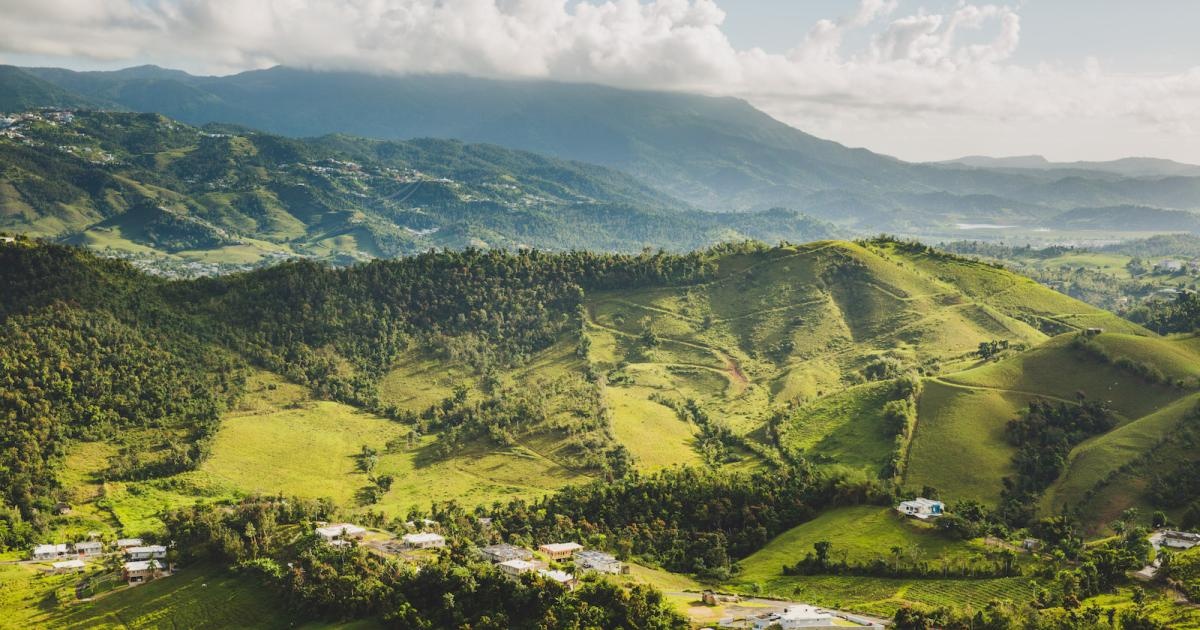
Las Piedras is a small municipality set in the eastern interior of Puerto Rico, tucked into the island's central-eastern corridor between the foothills of the Sierra de Cayey and the Caribbean lowlands to the south. Home to roughly 35,000 residents, it carries the laid-back pace of a traditional Puerto Rican town while functioning as a practical base for travelers exploring the island's less-touristed eastern half. The municipality takes its name from the rocky outcrops that historically dotted the surrounding terrain, and its compact downtown centers on a quiet plaza shaded by mature trees. Las Piedras lies approximately 30 miles southeast of San Juan, with the drive typically taking close to an hour via the highways that connect the capital to the eastern region.
One of the most compelling draws within easy reach is El Yunque National Forest, the only tropical rainforest in the United States National Forest System. About a 40-minute drive northeast of Las Piedras, El Yunque draws visitors with its moss-draped tabonuco trees, cool mountain streams, and waterfalls such as La Mina and Juan Diego. Beyond its natural appeal, the forest is a culturally significant place tied to the legacy of the Taíno people, whose petroglyphs can still be found in some of its rivers. For guests who want a full day among the trees without staying in the busier gateway towns, Las Piedras offers a quieter, more affordable alternative.
Just a short drive east, the lowlands and coastline of the Humacao area open up a different side of eastern Puerto Rico. The road from Las Piedras descends in roughly 15 to 20 minutes toward the coastal plain, where small fishing communities, mangrove-lined inlets, and stretches of public beach give the area a relaxed, local feel. Nearby natural areas along the southeastern shore — including the island of Caja de Muertos visible on clear days and the wildlife refuges fringing the coast — provide accessible options for kayaking, wildlife watching, and slow afternoons by the water.
Back in town, the heart of Las Piedras revolves around its central plaza and the historic Catholic church that anchors the surrounding blocks. Small comedores, panaderías, and family-run establishments give the area an unhurried, neighborly rhythm that contrasts with the resort zones farther east. The town also sits close to the Carretera Central, Puerto Rico's historic mountain road, which winds through coffee country and connects several of the island's traditional highland communities.
Las Piedras appeals to short-term rental owners because it combines the affordability and authenticity of a small interior town with quick access to some of eastern Puerto Rico's most sought-after experiences. Guests can spend a morning hiking in El Yunque, an afternoon on the nearby coast, and an evening dining in a town that still feels distinctly local — all from a single, well-placed home base.
Want to know if a property in Las Piedras is a good investment?
Enter an address to get instant revenue potential and comps.