
Uniontown, Pennsylvania
Want to see how Uniontown compares to other top cities in Pennsylvania? Explore all city regulations in Pennsylvania. →
Uniontown, PA
Unfriendly To Investors
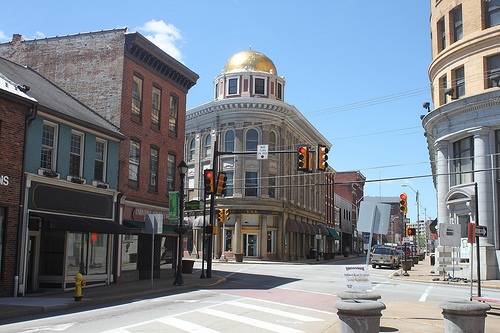
STR Regulations for Uniontown, Pennsylvania
Overview
- Are STRs allowed in Uniontown, PA? There is no explicit Uniontown STR ordinance identified in the most recent statewide review (August 2024) of Pennsylvania’s third-class cities. This means short‑term rentals are not clearly permitted as a stand‑alone use in Uniontown. Under Pennsylvania case law (Slice of Life, 2019; and 2024 lower-court applications), purely transient commercial use is prohibited in residential zoning unless the local ordinance expressly authorizes it. In practice, investors should assume STRs are prohibited in residential districts unless the Uniontown zoning code specifically allows them. If you intend to operate in a commercial or mixed‑use zone, confirm whether the property’s use category (e.g., tourist home, boarding house, lodging) is permitted or requires a special exception/variance.
- Bottom line: Plan on “not allowed” in residential zoning and obtain explicit zoning confirmation for any commercial‑zone operation before committing capital.
How to Start a Short‑Term Rental Business in Uniontown
- Confirm the local zoning position and permissible districts.
- Review the Uniontown zoning map and ordinance to determine whether any short‑term lodging use (e.g., tourist home, transient lodging, bed‑and‑breakfast, boarding house) is permitted or conditional in any district.
- If no STR‑specific authorization exists, consider pursuing a text amendment to add “transient lodging” or “short‑term rental” as a permitted/conditional use in a specific district, or apply for a use variance if the use is similar to an already recognized lodging category.
- Be mindful that the city can regulate STRs (permits, inspections, limits) even if it allows them, and litigation risk exists if you proceed without clear authorization.
- Decide on the operating model and tax posture.
- Homestay (owner‑present; renting rooms while living on‑site) vs. vacation rental (owner‑absent; renting the entire dwelling).
- If using booking platforms (Airbnb, VRBO), understand that the platform may collect/remit some taxes, but hosts are still ultimately responsible for tax compliance.
- Secure licenses/permits and comply with state/federal rules.
- Register for Pennsylvania Sales, Use & Hotel Occupancy Tax (SUHOT) if you will collect/ remit taxes yourself (do this even if you rely on a booking platform, to avoid gaps).
- Complete IRS and PA personal income tax filings for rental income and expenses.
- Consider a rider or separate policy for STR liability; many homeowner policies exclude home‑based business activity.
- Establish safety and guest‑service protocols.
- Follow lodging/safety code guidance for smoke/CO alarms, egress, and basic life safety where applicable.
- Maintain accurate guest records for at least two years (name, address, phone, email, check‑in/out dates, and all occupants).
Required Documents, Permits, Licenses, and Guidelines Local (Uniontown, City level)
- Zoning compliance: Verification that the use is permitted or obtains a variance/special exception.
- If Uniontown enacts a future STR registry/permit program (monitor city code), you would expect:
- Short‑Term Rental/Transient Lodging Permit application
- Owner/property manager information and 24/7 contact details
- Proof of liability insurance (minimum coverage likely)
- Safety inspection checklist (smoke/CO alarms, egress, fire safety)
- Guest‑record‑keeping requirements (two‑year retention)
- Cap on occupants and quiet‑hours/noise controls
- Registration fee and annual renewal
- Building/fire/health inspections may be triggered depending on the lodging classification.
County (Fayette County)
- No county‑wide STR‑specific regulation identified. County role is typically limited to property taxation and human services; zoning is municipal.
State (Pennsylvania)
- Hotel Occupancy Tax and Local Hotel Taxes:
- State SUHOT: 6% on short‑term lodging.
- Bookings through platforms are typically collected/remitted by the platform; if you rent directly, register for SUHOT and collect/remit yourself.
- Additional local hotel taxes apply depending on county:
- Allegheny County: currently 7% (scheduled to revert to 5% no later than Aug 31, 2027).
- Philadelphia County: 8.5% local (1% tourism/marketing; 1.5% hospitality/promotion).
- Second Class A counties (Bucks, Delaware, Montgomery): up to 5%.
- Third Class counties: up to 5%, with certain exceptions (e.g., Erie with a convention center at 7%).
- Fourth through Eighth Class counties: 2–5% depending on population; some counties have no tax.
- Personal Income Tax (PA): Net rental income is business income. You can deduct ordinary and necessary expenses; PA PIT rate is 3.07% (2024–2025). If you rent the property fewer than 15 days and use it as a home, no rental income is reported; otherwise, report on Schedule E and divide expenses between personal and rental use.
- Housing/Lodging Code (Title 48): Pennsylvania’s transient lodging definitions and protections cover lodging establishments; STRs that advertise to the public for stays under 30 days fall within this framework. Maintain order, ensure guest safety, and keep records.
- Landlord‑Tenant Act (1951): Provides the general lease framework; longer than three‑year leases must be in writing.
- Planned Communities/HOAs: Review community declarations and covenants; some communities have attempted to restrict STRs via bylaws, but recent case law limits enforcing bylaws that conflict with recorded declarations.
Federal
- Federal income tax on rental income and expenses (IRS Publication 527). Note the 15‑day rule for personal use and how to apportion expenses when both personal and rental use occur.
Specific Regulations Applicable to Uniontown, County, and State
- City of Uniontown: No explicit STR ordinance identified. STRs are likely prohibited in residential districts absent express authorization. If operating in a commercial zone, confirm that the use (tourist home/boarding house/transient lodging) is permitted or obtain appropriate approvals.
- Fayette County: No county‑wide STR ordinance; county matters are generally limited to property tax and public health/social services.
- State of Pennsylvania: STRs are subject to state lodging definitions, state hotel tax, local hotel taxes, and local zoning. Municipalities retain police powers to regulate STRs through zoning and permitting.
Contact Information (Local Authority in Charge of STRs)
- City of Uniontown
- Phone: (724) 437‑9951
- Address: 45 W. Main Street, Uniontown, PA 15401
- Website: uniontownpa.gov
- Uniontown Zoning Office (verify contact details with the City)
- Likely within the Planning/Zoning Department
- Fayette County Planning Commission
- Phone: (724) 430‑1210
- Website: www.fayettecountypa.org
- Pennsylvania Department of Revenue (SUHOT/Home‑sharing)
- Website: www.pa.gov/agencies/revenue/resources/tax-types-and-information/sales-use-and-hotel-occupancy-tax/home-sharing.html
- SUHOT Registration: Sales, Use & Hotel Occupancy Tax account setup through the Department of Revenue
Links to Source Pages
- The Short‑Term Rental Industry in Pennsylvania (Staff Study, March 2025) [PDF]: jsg.legis.state.pa.us/resources/documents/ftp/publications/2025-03-17%20Short-term%20Rental%20Web%203.17.25.pdf
- City of Uniontown Official Website: uniontownpa.gov
- Fayette County Official Website: www.fayettecountypa.org
- PA Department of Revenue — Home‑sharing/Third‑party Broker Rentals (SUHOT): www.pa.gov/agencies/revenue/resources/tax-types-and-information/sales-use-and-hotel-occupancy-tax/home-sharing.html
- County Hotel Tax Rates and Contact Information (CCAP): www.pacounties.org/getmedia/607608ac-4f1d-44e9-93c3-5fc2f1f747d0/Hotel-Tax-Rates-and-Contacts.pdf
Notes and Practical Next Steps
- Given the lack of a city‑level STR ordinance, treat Uniontown as “not clearly permitted” in residential areas; pursue zoning verification and, if appropriate, a text amendment or variance.
- Implement tax compliance (SUHOT and any applicable local hotel taxes), guest‑record‑keeping, and basic safety measures immediately.
- Review any HOA or planned community covenants for restrictions, and check fire/safety requirements before listing.
- Maintain an inspection and compliance file (permits, insurance, guest records) to demonstrate good‑faith compliance if questioned.
What do Airbnb hosts actually earn in Uniontown?
Uniontown hosts earn a median $21,026/year with $139 ADR and 43% occupancy.
Top performers pull in $37,845+ per year.
See the full Uniontown market breakdownNext step
Found a property in Uniontown?
Paste any address and get estimated revenue, cash-on-cash return, and comparable STR performance in under 5 minutes. 3 free analyses per day.
Free brief
Get the free Uniontown STR Investment Brief
Revenue data, top neighborhoods, seasonal trends, and the key regulations for Uniontown, Pennsylvania in one email.
Uniontown
Market Saturation Score
Photos of Uniontown


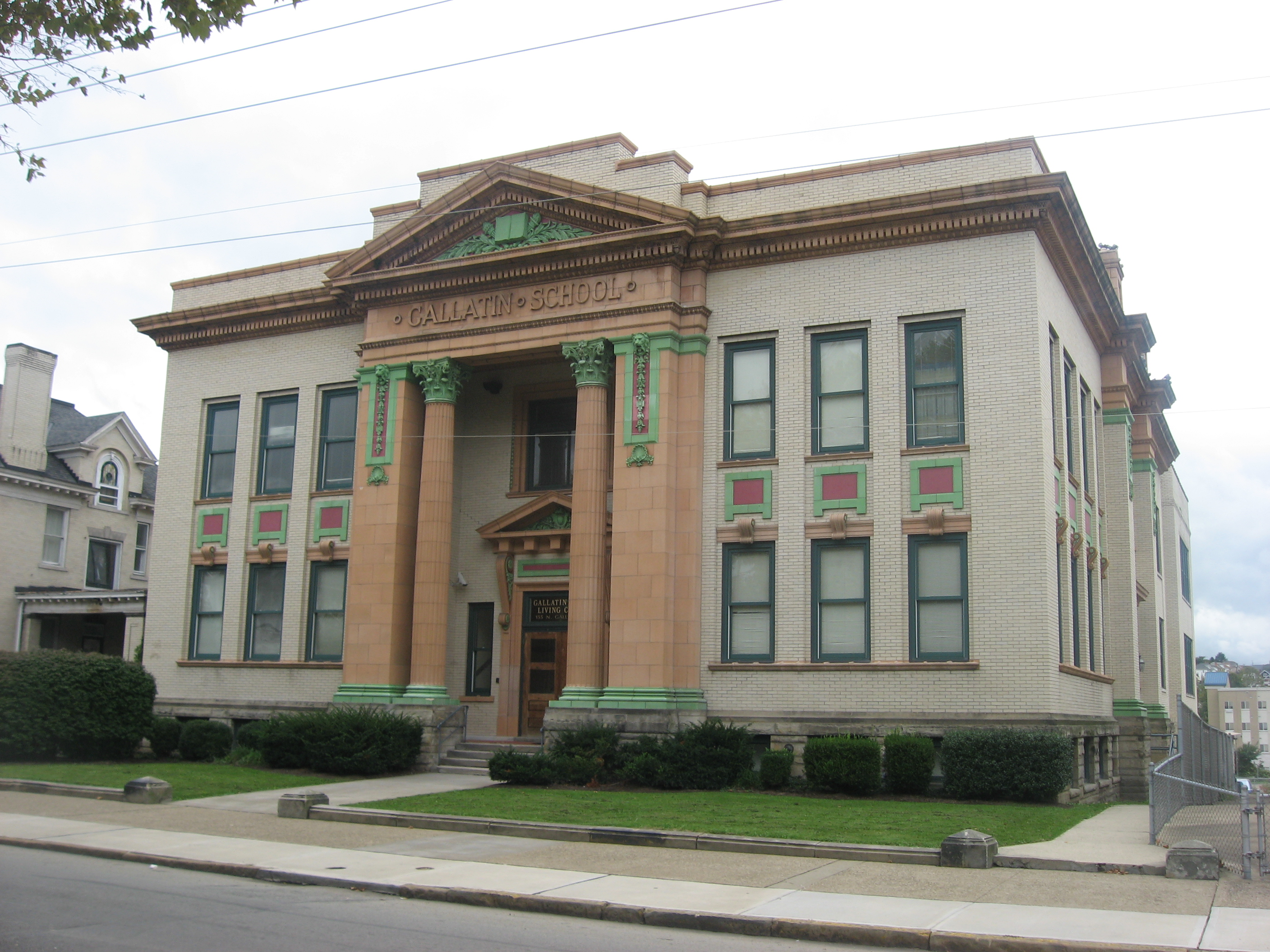
Overview of Uniontown
Uniontown is a small historic city in southwestern Pennsylvania, serving as the seat of Fayette County. With a population of roughly 10,000 residents, it has the feel of a traditional Appalachian county seat — a compact downtown ringed by Victorian-era homes and surrounded by the rolling, forested ridges of the Laurel Highlands. The city is best known as a gateway to one of the most popular outdoor and architectural destinations in the eastern United States, drawing visitors heading to Frank Lloyd Wright's masterpiece at Fallingwater, the whitewater of the Youghiogheny River, and a string of state parks and historic sites scattered through the surrounding hills. Uniontown sits approximately fifty miles southeast of Pittsburgh, just off Interstate 76 (the Pennsylvania Turnpike), making it a natural overnight stop for travelers exploring the region.
Just a short drive southeast of Uniontown lies Fort Necessity National Battlefield, the reconstructed 1754 frontier fort where a young George Washington lost the opening battle of the French and Indian War. The site, about fifteen miles from the city, includes a small museum, the entrenchments of Washington's original position, and a scenic drive that passes through the forest of the Mount Washington Tavern, a former stop on the National Road.
A similar distance east, near the village of Mill Run, is Fallingwater, the celebrated Frank Lloyd Wright house cantilevered over a waterfall on Bear Run. The home and its grounds are open for guided tours and consistently draw architecture enthusiasts from around the world, making it one of the most-visited cultural attractions in western Pennsylvania. The Frank Lloyd Wright-designed Kentuck Knob is also located nearby and offers another option for design-focused visitors.
To the east of Uniontown, Ohiopyle State Park centers on the Youghiogheny River and is one of the most popular outdoor recreation areas in the state. The park is known for its Class III whitewater rapids, the 150-foot Cucumber Falls, and an extensive network of hiking and biking trails, including sections of the Great Allegheny Passage, a 150-mile rail-trail connecting Pittsburgh to Washington, D.C. Ohiopyle is roughly a half-hour drive from Uniontown, depending on traffic through the small towns along Route 381.
Uniontown makes a compelling base for short-term rentals precisely because it sits at the crossroads of so many distinct draws: Revolutionary-era history, world-class architecture, river-based adventure, and a scenic long-distance trail. Visitors who book a stay in or near the city can spend one morning touring Fallingwater, the next afternoon rafting the Youghiogheny, and a third day walking a battlefield, all while returning each evening to a quiet, affordable small city with a strong sense of place. For travelers seeking the Laurel Highlands without the lodging premiums of resort towns farther into the mountains, Uniontown offers a well-located and characterful alternative.
Want to know if a property in Uniontown is a good investment?
Enter an address to get instant revenue potential and comps.