
Ligonier, Pennsylvania
Want to see how Ligonier compares to other top cities in Pennsylvania? Explore all city regulations in Pennsylvania. →
Ligonier, PA
Challenging To Investors
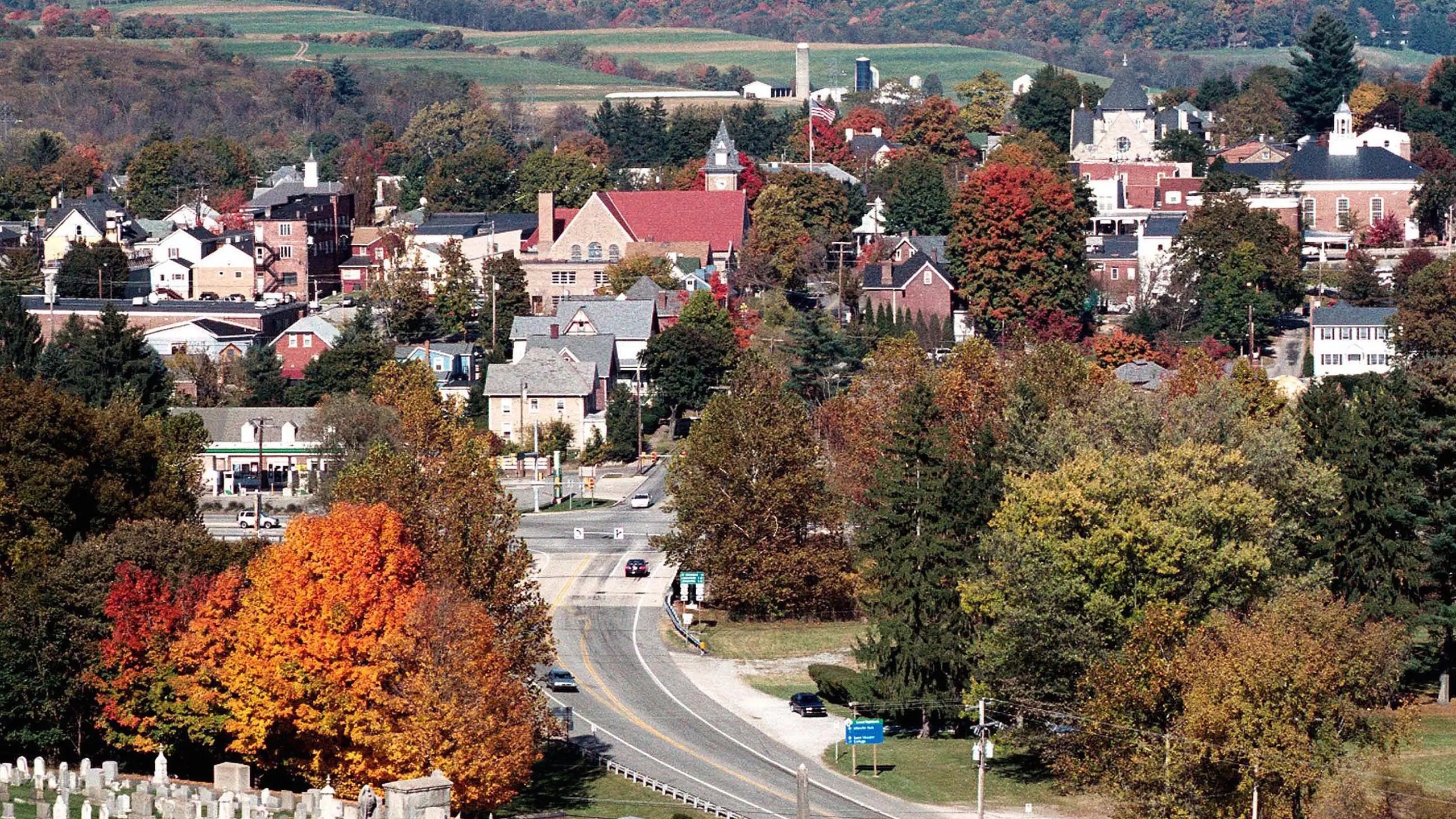
STR Regulations for Ligonier, Pennsylvania
Overview: Are STRs allowed?
- Explicit answer: Yes—Short‑Term Rentals are explicitly allowed in Ligonier Township (Ligonier Township Ordinance No. 2024‑OR‑01, Section 4: Short‑Term Rental Units). The township has adopted a permitting and operational regime for STRs.
What an STR is (Ligonier Township definition)
- Short‑Term Rental: Any Dwelling Unit utilized as a single‑family residence rented for overnight lodging for a period of thirty (30) days or less.
- Exclusions: Hotels/motels/inns, bed and breakfasts, boarding houses, group homes, resorts, and camps are not regulated under this STR article (they are covered elsewhere in the zoning code).
Where STRs are permitted (zoning eligibility)
- Permitted in the following zoning districts:
- A‑1 (Agricultural)
- R‑1 (Rural Residential)
- R‑2 (Suburban Residential)
- C‑1 (Neighborhood Commercial)
- V (Village)
- Use note: Each separate Dwelling Unit used as an STR requires its own zoning occupancy permit. For two‑family or multi‑family structures, only those units operated as STRs need permits; other units are unaffected.
How to start an STR business in Ligonier Township
- Confirm zoning eligibility
- Confirm the subject property is in A‑1, R‑1, R‑2, C‑1, or V.
- Verify that the intended use remains consistent with the neighborhood character (see standards below).
- Secure sewage capacity and bedroom count
- The number of bedrooms in an STR cannot exceed the number approved on the property’s sewage permit.
- If no sewage permit is on record, the STR is limited to three (3) bedrooms unless documentation acceptable to the Township demonstrates a different historical bedroom count. A dye test may be required to confirm on‑site system adequacy.
- Identify your Person in Charge
- Designate a Person in Charge who resides or has an office within approximately 30 miles of the STR property and who can act as the owner’s legal agent.
- Notify the Township in writing within 14 days of any change in the Person in Charge.
- Prepare and submit a Zoning Occupancy Permit application
- Application must include:
- Owner’s name, address, phone, email, and 24‑hour number (or the managing agent’s contact with written authorization to accept service on the owner’s behalf).
- Name, address, and 24‑hour phone of the managing agency/agent/local contact person (Person in Charge).
- For multi‑unit buildings: total units in the structure and how many are used as STRs.
- A diagram or photo showing the location and number of on‑site parking spaces.
- Attestation that the required in‑unit notice will be posted (see Posting requirement below).
- Total bedrooms and maximum number of guests.
- Copies of the current Westmoreland County Hotel Room Tax Certificate and Pennsylvania Sales Tax License.
- Submit the application to the Township/Zoning & Code Enforcement Officer.
- Pay any applicable fees.
- Operating compliance
- Post the required in‑unit notice (see Posting requirement below).
- Enforce guest behavior standards and respond promptly to disturbances.
- Manage parking, trash, and noise.
- Maintain current County and State tax licenses.
- Renew the Zoning Occupancy Permit annually and update the permit if any conditions/standards change.
Required documents, permits, licenses, and guidelines
- Zoning Occupancy Permit for an STR (Ligonier Township)
- Issued to the property owner only (non‑transferable).
- Valid for one (1) year from issuance, or until any regulated conditions change; must be renewed annually and when conditions change.
- Separate permit required per Dwelling Unit operated as an STR.
- In‑unit posting requirement (inside the dwelling, on or adjacent to the front door):
- Name and 24‑hour phone of the owner or the managing agency/agent/property manager/local contact authorized to accept service for the owner.
- 911 address.
- Maximum number of occupants permitted and maximum number of day guests at any one time.
- Maximum number of vehicles allowed on the property and the requirement that all guest parking must be on the property (not in or along any private, community, or public street right‑of‑way, and not on lawns or vegetated areas).
- Trash pick‑up day and a statement that trash and refuse may not be left or stored outside except in proper receptacles.
- Notification that occupants/guests may be cited and fined for disturbances or violations of Township Code (including parking and occupancy limits).
- Taxes and registrations:
- Westmoreland County Hotel Room Tax Certificate (current).
- Pennsylvania Sales Tax License (current).
- Sewage system capacity and bedroom limits:
- Number of bedrooms cannot exceed sewage permit approval.
- If no permit is on record, default limit is three (3) bedrooms unless otherwise documented and verified; dye test may be required by the Sewage Enforcement Officer.
Operational standards and restrictions (what you can and cannot do)
- Parking:
- Overnight and day‑guest parking must be on available parking areas on the STR property.
- Parking in any public street right‑of‑way or on lawns/vegetated areas is prohibited.
- Noise and behavior:
- Occupants/guests must not engage in disorderly conduct or create unreasonable noise or disturbances.
- Owners must use best efforts to ensure compliance and promptly address violations when notified.
- Exterior appearance:
- The STR must not have any exterior appearance indicating a change of use from surrounding uses.
- Fireworks and floating lanterns:
- Prohibited.
- Subleasing:
- Prohibited.
- General STR standards:
- Guests and vehicles counts must be posted and enforced.
- Trash must be managed and pick‑up schedules observed.
- The owner must respond to Township or resident complaints and correct issues quickly.
- Consequences:
- Violations of the STR standards are grounds for revocation of the Zoning Occupancy Permit by the Zoning & Code Enforcement Officer.
Application timing and legacy compliance
- Existing STRs: Owners of STRs operating at the time of adoption had six (6) months to apply for a Zoning Occupancy Permit for each STR they own.
Zoning, building, and related township considerations
- Zoning compliance: The STR must comply with the Ligonier Township Zoning Ordinance overall (the STR article should be read together with other township ordinances; interpret them consistently wherever possible).
- Permits:
- Zoning Occupancy Permit: Required for each STR unit (annual renewal).
- Building/electrical/mechanical permits: May be required for any construction or modification, but those are governed by the Uniform Construction Code and township building regulations (separate from the STR occupancy permit).
- Stormwater and environmental:
- The STR must comply with all applicable Ligonier Township stormwater, floodplain, and other environmental regulations, as would any residential use.
County‑level requirements (Westmoreland County)
- Hotel Room Tax:
- You must obtain and maintain a current Westmoreland County Hotel Room Tax Certificate.
- The County Treasurer administers the hotel tax program; contact the Westmoreland County Treasurer for registration, returns, and compliance.
- The County also administers the Local Services Tax (LST) and may administer the Earned Income Tax (EIT) through its tax collection department depending on your structure and residency; confirm tax registration and collection responsibilities with Westmoreland County’s tax office.
State‑level requirements (Commonwealth of Pennsylvania)
- Sales Tax:
- Obtain and maintain a current Pennsylvania Sales Tax License for taxable rentals (overnight lodging is generally taxable).
- Register, file, and remit through the Pennsylvania Department of Revenue.
- Transient Vendor Certificate (if applicable):
- If renting out furnished accommodations for less than 90 days to the same occupant, Pennsylvania requires registration as a transient vendor (often combined with Sales Tax registration).
- Local tax considerations:
- Earned Income Tax (EIT) and Local Services Tax (LST) may apply depending on where you live and your business structure; confirm registration and withholding with the Westmoreland County tax office or the applicable state/local tax authority.
- Sewage and on‑site systems:
- STR bedroom counts and any on‑site sewage constraints are administered locally, but must comply with PA DEP sewage regulations. The Township’s Sewage Enforcement Officer may require testing to confirm the on‑site system can handle the STR use.
Local contacts
- Ligonier Township
- Zoning/Code Enforcement Officer (for Zoning Occupancy Permit applications, renewals, and violations)
- Address: 1 Municipal Drive, Ligonier, PA 15658
- Hours and staff directory: see the Township’s official website (municipal offices are typically open on weekdays)
- Ligonier Township – Sewage Enforcement Officer
- For bedroom‑sewage capacity determinations and any dye testing requirements
- Westmoreland County Treasurer’s Office
- Hotel Room Tax registration and reporting
- Pennsylvania Department of Revenue
- Sales Tax and Transient Vendor registration and filings
Helpful resources and source documents
- Ligonier Township Zoning Ordinance (Ordinance No. 2024‑OR‑01), Section 4: Short‑Term Rental Units
- Defines STRs, Person in Charge, permitted zones, permit requirements, posting standards, operations, and enforcement
Notes and cautions for investors
- Applicability: This guide addresses Ligonier Township regulations. If your property is in Ligonier Borough (a separate municipality), borough‑specific rules apply; verify the correct jurisdiction before investing or permitting.
- Annual obligations: The Zoning Occupancy Permit must be renewed annually and updated whenever STR conditions change (owner, contact, bedrooms, parking layout, etc.).
- Enforcement: Violations can lead to permit revocation. Maintain a local point of contact, post and enforce house rules, and respond promptly to complaints.
- Capacity and sewage: Confirm sewage capacity with the Sewage Enforcement Officer early; this can limit bedroom count and guest capacity.
- Taxes and records: Keep your County hotel tax certificate and PA sales/transient vendor registrations current; maintain records to support renewals and any Township verification.
This guide is based on the Ligonier Township ordinance text provided and reflects the township’s current STR framework as of the date of adoption of Ordinance 2024‑OR‑01. Investors should confirm any updates or amendments and verify county/state tax obligations before operations.
What do Airbnb hosts actually earn in Ligonier?
Ligonier hosts earn a median $30,591/year with $169 ADR and 56% occupancy.
Top performers pull in $40,812+ per year.
See the full Ligonier market breakdownNext step
Found a property in Ligonier?
Paste any address and get estimated revenue, cash-on-cash return, and comparable STR performance in under 5 minutes. 3 free analyses per day.
Free brief
Get the free Ligonier STR Investment Brief
Revenue data, top neighborhoods, seasonal trends, and the key regulations for Ligonier, Pennsylvania in one email.
Ligonier
Market Saturation Score
Photos of Ligonier

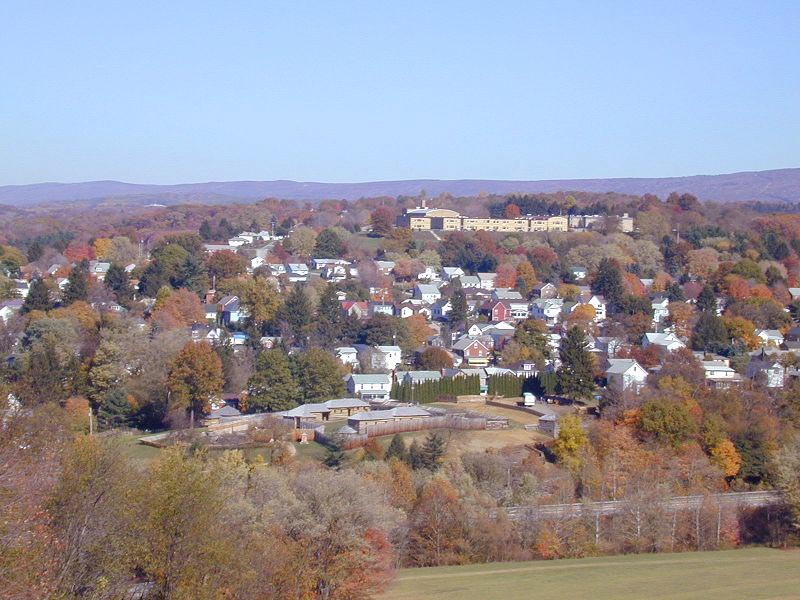

Overview of Ligonier
Ligonier is a small historic borough in Westmoreland County, set in the Laurel Highlands of southwestern Pennsylvania. With a population of roughly 1,600 residents, the town has a quiet, walkable character defined by its diamond-shaped town square lined with locally owned shops, cafes, and inns. It is best known as a charming base for exploring the surrounding Laurel Highlands, and it sits approximately fifty miles east of Pittsburgh, or roughly an hour's drive via the Pennsylvania Turnpike and US Route 30.
Fort Ligonier stands at the heart of the town's story. A reconstruction of the earthen-and-timber fort that the British built in 1758–1759 during the French and Indian War, the site functions today as a museum with artifacts, a reconstructed fortification, and a gallery dedicated to George Washington, who served here as a young officer. It is located right in town within easy walking distance of the Diamond, and more information is available through Fort Ligonier.
A short drive south of Ligonier brings visitors to one of the most celebrated pieces of American architecture. Fallingwater, the country house Frank Lloyd Wright designed in the 1930s for the Kaufmann family, is about twenty-five miles away near the village of Mill Run. Tours of the cantilevered house and its grounds are typically booked in advance, and the site draws architecture enthusiasts year-round.
Just outside the borough, Idlewild & SoakZone offers a family-friendly counterpoint to the area's historical and architectural attractions. Long promoted as one of the oldest operating amusement parks in the United States, it features wooden roller coasters, a storybook forest for younger children, and a separate waterpark complex. It is roughly a ten-minute drive from the town square, in neighboring Westmoreland County countryside.
A few minutes west of Ligonier in the tiny community of Laughlintown, the Compass Inn Museum preserves a restored 1799 stagecoach stop along the Philadelphia-Pittsburgh Pike. Operated by the Ligonier Valley Historical Society, the site includes the original inn building, a barn, a blacksmith shop, and costumed interpreters demonstrating early-nineteenth-century travel and trade.
Ligonier is a compelling short-term-rental market because it offers a rare combination of small-town character and proximity to some of Pennsylvania's most distinctive destinations. Visitors can spend a morning walking the Diamond and touring Fort Ligonier, an afternoon at Fallingwater or Idlewild, and an evening back in town at a tavern or inn, all without long daily drives. The steady appeal of architecture tourism, family amusement-park trips, and autumn leaf-season visits to the Laurel Highlands gives the market a broad and resilient draw.
Want to know if a property in Ligonier is a good investment?
Enter an address to get instant revenue potential and comps.