
Lewistown, Pennsylvania
Want to see how Lewistown compares to other top cities in Pennsylvania? Explore all city regulations in Pennsylvania. →
Lewistown, PA
Challenging To Investors
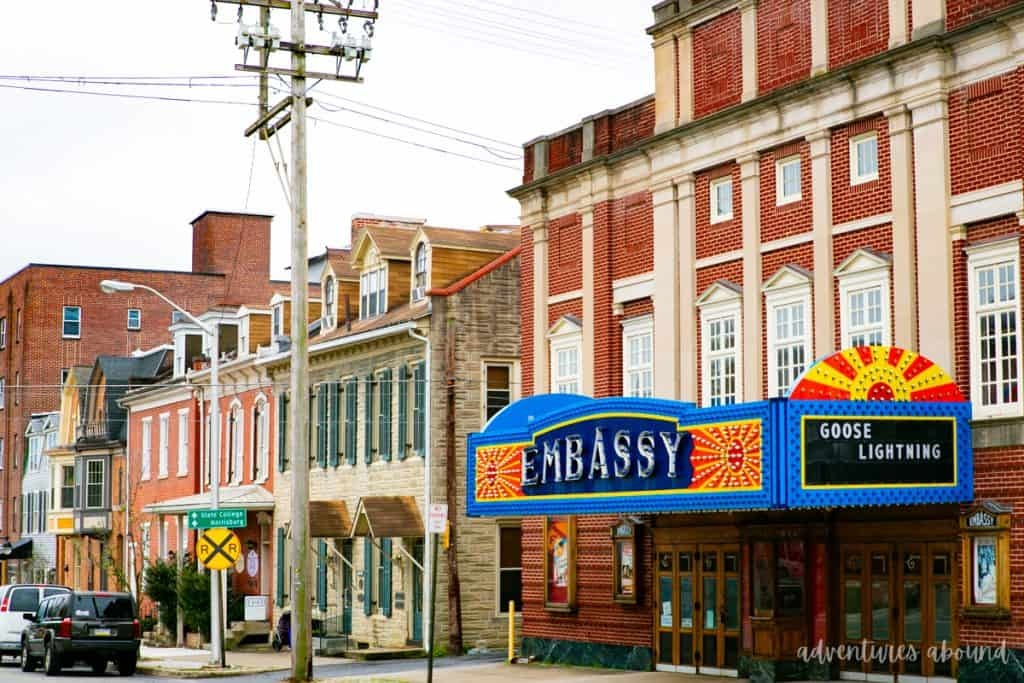
STR Regulations for Lewistown, Pennsylvania
Overview: Are STRs allowed in Lewistown, PA?
Yes. Short‑term rentals are allowed in the Borough of Lewistown. The borough’s Residential Rental Unit Registration and Regulation Ordinance defines “residential rental unit” broadly as any structure in the Borough that is occupied by someone other than the owner in exchange for value (money or services). The ordinance does not set a minimum rental duration and does not exclude short‑term arrangements (e.g., rentals under 30 days) from its coverage. Therefore, short‑term rentals fall within the scope of the Borough’s residential rental unit rules and must comply with registration, licensing, inspection, safety, insurance, and management obligations.
Important caveats:
- The ordinance does not use the term “short‑term rental” or “Airbnb.” Investors should confirm with the Codes Enforcement Office that their intended operation (e.g., nightly rentals, transient stays, hosted home‑sharing) is captured under the Borough’s residential rental definition.
- Hotels, motels, hospitals/nursing homes, rooming/boarding houses, and certain federally subsidized properties are exempt from licensing; however, typical STRs operated by private owners will not qualify for these exemptions and must obtain a license.
Sources:
- Lewistown Borough Residential Rental Unit Registration and Regulation (Proposed Ordinance No. 2015‑____)
- Borough of Lewistown Frequently Asked Questions (FAQ)
What do Airbnb hosts actually earn in Lewistown?
Lewistown hosts earn a median $26,233/year with $166 ADR and 46% occupancy.
Top performers pull in $35,029+ per year.
See the full Lewistown market breakdownHow to Start a STR Business in Lewistown
Lewistown treats STRs like any other residential rental. The startup sequence is straightforward but exacting, and it must be completed before you begin renting:
- Confirm eligibility and define your use
- Ensure the property is a “residential rental unit” under Borough law and that you will operate it for value.
- Confirm that you do not qualify for any licensing exemptions (hotels/motels, boarding houses, etc.).
- If you will not live in the Borough or within 30 miles, designate a Manager who lives/has an office within 30 miles and is your agent for notices and operational obligations.
- Register the property with the Codes Enforcement Office
- Initial registration is required within 90 days of the effective date of the ordinance, or within 30 days of conversion to a rental, first rent, or first occupancy—whichever occurs first.
- Maintain and update registration information (owner contact, manager contact, property address, maximum occupancy, number of occupants, current tenant names/addresses).
- Apply for an annual Occupancy License before renting
- Submit the Borough’s application form and pay the license fee. The license is valid for one year (July 1–June 30) and must be renewed annually.
- Attach required documents at application and renewal.
- Obtain and maintain insurance
- Secure fire and casualty insurance of at least $50,000 (Basic Form Perils).
- If your insurer will not write $50,000 due to property value, provide a letter from the insurer stating the maximum amount they will write; your policy must be at least that amount.
- Provide the Borough with a copy of the policy and annually with a Certificate of Insurance upon license renewal (and upon request).
- Install safety equipment and prepare for inspection
- Install smoke alarms (outside sleeping areas, in sleeping rooms, and on each story, including basements).
- Install carbon monoxide detectors as required by law/ordinance.
- Prepare for Borough inspections: life/safety and exterior conditions are checked (e.g., electrical panel box, wood‑burning appliances, hot water safety, outlets/GFCI, interior walls/floors, house number, unit number on entrance door, windows/doors, entranceways).
- Comply with tenant/occupant onboarding and recordkeeping
- Provide required disclosures to occupants (owner and manager contact information).
- Use the Borough’s addendum summarizing tenant covenants and obligations.
- Maintain an up‑to‑date tenant list (name, unit address, contact info) and submit it to the Codes Office within 10 days of tenant registration/change.
- Manage occupancy and peace
- Do not exceed the maximum occupancy shown on the license.
- Prevent disruptive conduct; be prepared to respond to Disruptive Conduct Reports and file corrective action plans.
- Maintain a current list of occupants and provide updates within 10 days.
- File taxes and manage revenue
- Collect and remit state and local lodging taxes, and any sales tax where applicable. Pennsylvania does not have a statewide STR‑specific license; tax obligations are driven by state statutes and local tax ordinances.
- Retain records and consult the PA Department of Revenue for home‑sharing/third‑party broker guidance.
- Renew annually
- Renew your license before July 1 each year; keep your insurance current, update tenant lists, and respond to triennial inspections.
Required Documents, Permits, Licenses, and Guidelines
The following checklist consolidates Borough‑level requirements and state considerations:
- Borough registration
- Property address, owner name(s)/address(es)/phone(s), manager information (if applicable), maximum occupancy, current number of occupants, current tenant names/addresses.
- Annual Occupancy License
- Application form; license valid July 1–June 30; fee set by Resolution/Costs & Fees Schedule (FAQ references a proposed fee of $36 per year).
- Insurance
- Fire and casualty policy (minimum $50,000 Basic Form Perils, or lesser amount supported by insurer letter).
- Certificate of Insurance annually at license renewal and upon request.
- Safety installations
- Smoke alarms in required locations (see “Safety Requirements” below).
- Carbon monoxide detectors as applicable by law/ordinance.
- Inspection
- Permit Borough inspections once every three years (by ward on a rotating schedule).
- Comply with any re‑inspection requirements for violations.
- Tenant management documentation
- Disclosure of owner/manager contact information.
- Borough addendum with tenant covenants and obligations.
- Up‑to‑date tenant/occupant list provided to Codes Office within 10 days of registration or change.
- Taxes (state and local)
- State and local lodging taxes; sales tax when applicable.
- No statewide STR license; tax obligations governed by PA statutes and local ordinances.
Specific Regulations: City (Borough), County (Mifflin), and State (Pennsylvania)
A. Borough of Lewistown (City-Level)
- Applicability
- Applies to all “residential rental units” within the Borough; occupancy in exchange for value triggers registration and licensing. The ordinance covers long‑term and, by definition, short‑term rentals.
- Registration
- Initial registration within 90 days of ordinance effective date, or within 30 days of conversion to a rental, first rent, or first occupancy—whichever first occurs.
- Notify the Codes Office within 72 hours of purchase/transfer of a rental property; update registration within 10 days of any change.
- Manager requirement
- If the owner does not reside in the Borough or within 30 miles, a Manager residing/office within 30 miles is required. The Manager is the Borough’s point of contact and agent for service of process.
- Licenses
- Required for each unit; annual term July 1–June 30.
- License fee is set by resolution (e.g., $36/year proposed in FAQ). Fees are assigned ledger numbers and audited publicly.
- License indicates maximum occupancy and cannot be issued if unpaid fines/fees exist.
- Inspections and compliance
- Borough inspects all residential rental units once every three years on a ward‑based schedule (postcard notice typically 45–60 days prior).
- Life/safety items and exterior conditions inspected; inspection report must be signed by the owner/manager and all tenants at the time of inspection.
- Noncompliance triggers a Notice of Violation, re‑inspection, and required corrective action plans; failure to cure can lead to fines and discipline.
- Safety requirements
- Smoke alarms on the ceiling or wall outside each sleeping area; in each sleeping room; on each story including basements and cellars (not crawl spaces or uninhabitable attics).
- Carbon monoxide detectors installed per law/ordinance.
- Insurance requirements
- Fire and casualty coverage of at least $50,000 (Basic Form Perils); if unavailable due to valuation, provide insurer letter documenting maximum coverage.
- Provide policy copy and Certificate of Insurance annually and upon request.
- Penalties (selected)
- Operating without a license: fine not less than $1,000 per day.
- Failure to register: $500 per day.
- General owner violations: $200 first offense; $300 second; $500–$1,000 and up to 90 days imprisonment for third.
- Occupant violations: $100 first; $300 second; $500 third (each day is a separate offense).
- Borough may pursue municipal liens for repairs, with 10% administrative cost.
- Discipline and enforcement
- Discipline ranges from formal warning to non‑renewal, suspension, or revocation of license.
- Appeal rights to Board of Building Appeals within 30 days.
- Confidentiality
- Tenant names/addresses are confidential and may be shared only with specified Borough departments; protected by court order if applicable.
- Scope
- Ordinance applies only within the Borough of Lewistown (not Granville Township or Derry Township).
B. Mifflin County
- The provided sources do not contain county‑specific STR regulations applicable to Lewistown. Contact Mifflin County government offices to confirm any additional county‑level tax or safety requirements.
C. Pennsylvania (State-Level)
- Licenses/permits
- Pennsylvania does not impose a statewide short‑term rental license or permit. Municipalities (like Lewistown) regulate rental licensing and local compliance.
- Taxes
- Home‑sharing/STRs are subject to state and local lodging/occupancy taxes, and potentially sales tax depending on the nature of the services and local rates.
- Hosts may be required to register for and remit state and local taxes; consult the PA Department of Revenue for current requirements for home‑sharing/third‑party broker rentals.
Safety Requirements
- Smoke alarms (mandatory for all residential rental units)
- Outside each separate sleeping area and in each sleeping room.
- On each story of the dwelling unit, including basements and cellars (not crawl spaces or uninhabitable attics).
- Carbon monoxide detectors (mandatory, where applicable)
- Install per applicable law/ordinance; coordinate with the Codes Office to confirm locations and compliance standards.
- Fire and casualty insurance
- Minimum $50,000 Basic Form Perils; if unavailable due to valuation, submit insurer letter indicating the maximum insurable amount.
- Provide Borough with policy copies and an annual Certificate of Insurance.
- Inspection focus
- Electrical safety (panel box, outlets including GFCI within 4 feet of water sources), wood‑burning appliances, hot water heater safety, interior conditions (holes in walls/flooring), exterior conditions (house number, unit number, broken windows/doors, entranceways).
- Emergency preparedness
- Maintain fire extinguishers and first‑aid kits; ensure clear egress and visible addressing; consider a guest emergency information card.
Taxes and Business Compliance
- State lodging/occupancy taxes
- Hosts must collect and remit state lodging taxes and any local lodging taxes. Rate structures vary by jurisdiction; consult the Pennsylvania Department of Revenue for current requirements and registration protocols.
- Sales tax
- Depending on services offered and local statutes, sales tax may apply. Maintain accurate records of gross receipts and remittances.
- Audit readiness
- Maintain detailed records of bookings, guest stays, tax collections, and remittances. Borough registration and license records must be kept current and are subject to annual auditing.
Contact Information (Local Authority in Charge of STRs)
- Codes Enforcement Office, Borough of Lewistown
- Address: Lewistown Borough Municipal Building, 2 East Third Street, Lewistown, PA 17044
- Phone: 717‑248‑1361
- Website: lewistownborough.com
- Notes: The Codes Enforcement Office administers residential rental registrations, licensing, inspections, and enforcement under the ordinance.
Source Links
- Borough of Lewistown — Residential Rental Unit Registration and Regulation (Proposed Ordinance No. 2015‑____): lewistownborough.com/wp-content/uploads/2012/04/Proposed-Ordinance.pdf
- Borough of Lewistown — Residential Rental Registration & Licensing FAQ: lewistownborough.com/wp-content/uploads/2012/04/FAQ.pdf
- Pennsylvania Short‑Term Rental Laws (state‑level overview; municipalities regulate locally): www.hyatus.com/vacation-rental-property-management/pennsylvania-short-term-rental-laws/
Practical Notes for STR Investors
- Confirm short‑term rental status with the Codes Enforcement Office. Because the ordinance does not define “short‑term rental” or reference Airbnb, secure written guidance indicating that nightly or transient rentals are included in the Borough’s definition of “residential rental unit.”
- Start with a compliance audit. Review your property against the Borough’s inspection checklist, upgrade life/safety equipment, and document improvements.
- Codify your operations. Embed Borough addendum language in your leases, maintain current tenant/occupant lists, and establish protocols to prevent disruptive conduct.
- Budget conservatively. Account for the annual license fee, potential re‑inspection fees, insurance premiums, and Borough fines for noncompliance.
- Monitor tax obligations. Register for state/local lodging tax accounts, implement a reliable collection/remittance process, and retain audit‑ready records.
By following these steps and maintaining proactive engagement with the Codes Enforcement Office, STR investors can operate in Lewistown with confidence, mitigate compliance risk, and create a defensible, sustainable short‑term rental business.
Next step
Found a property in Lewistown?
Paste any address and get estimated revenue, cash-on-cash return, and comparable STR performance in under 5 minutes. 3 free analyses per day.
Free brief
Get the free Lewistown STR Investment Brief
Revenue data, top neighborhoods, seasonal trends, and the key regulations for Lewistown, Pennsylvania in one email.
Lewistown
Market Saturation Score
Photos of Lewistown


Overview of Lewistown
Lewistown is a small borough in central Pennsylvania, the county seat of Mifflin County, with a population of roughly 8,000 residents. Nestled in the scenic ridge-and-valley country of the central Appalachians, where the Juniata River cuts a broad path between long parallel ridges, the town carries a quiet, working-class character shaped by its nineteenth-century canal and railroad heritage. It serves as a convenient gateway to the outdoor recreation, scenic byways, and historic iron-furnace country of Mifflin and Huntingdon counties, and sits approximately sixty miles northwest of Harrisburg, the nearest major city and the Pennsylvania state capital.
Just south of Lewistown, in the neighboring ridges, Greenwood Furnace State Park preserves a former nineteenth-century ironmaking community within a quiet mountain setting about a twenty-minute drive from the borough. Visitors come to hike the trails surrounding the park's lake, tour the historic village site, and explore the remains of the charcoal-iron industry that once thrived in the region.
About a half-hour south of town, in the small community of Rockhill Furnace, the East Broad Top Railroad offers one of the most distinctive rail experiences in the eastern United States. The narrow-gauge steam line, a National Historic Landmark dating to the 1870s, runs seasonal excursion trains through the Aughwick Valley and is a notable draw for rail enthusiasts and families looking for a memorable afternoon.
Closer to home, the Juniata River itself winds past Lewistown and is popular with anglers chasing smallmouth bass and with paddlers running the moderate rapids during spring snowmelt. The riverfront and adjacent green spaces give the borough an outdoor amenity that belies its modest size, and a short drive west opens onto the broad, agricultural expanse of Kishacoquillas Valley, often called the "Big Valley," which is ringed by some of the most photogenic mountains in central Pennsylvania.
A short drive north brings travelers into the orbit of State College and the broader Pennsylvania State University region, while the Tuscarora State Forest and several state game lands within roughly half an hour of Lewistown provide additional hiking, hunting, and wildlife viewing opportunities. With its central Pennsylvania location, its proximity to both quiet natural areas and recognizable regional attractions, and its convenient position along the main routes between Harrisburg and State College, Lewistown offers short-term-rental owners a base that pairs small-town authenticity with a steady flow of outdoor and heritage travelers exploring the heart of the state.
Want to know if a property in Lewistown is a good investment?
Enter an address to get instant revenue potential and comps.