
Indiana, Pennsylvania
Want to see how Indiana compares to other top cities in Pennsylvania? Explore all city regulations in Pennsylvania. →
Indiana, PA
Generally Investor Friendly
STR Regulations for Indiana, Pennsylvania
Overview: Yes, short-term rentals are allowed in Indiana, PA, but they are subject to state-level Pennsylvania regulations and local zoning requirements.
About Indiana, PA
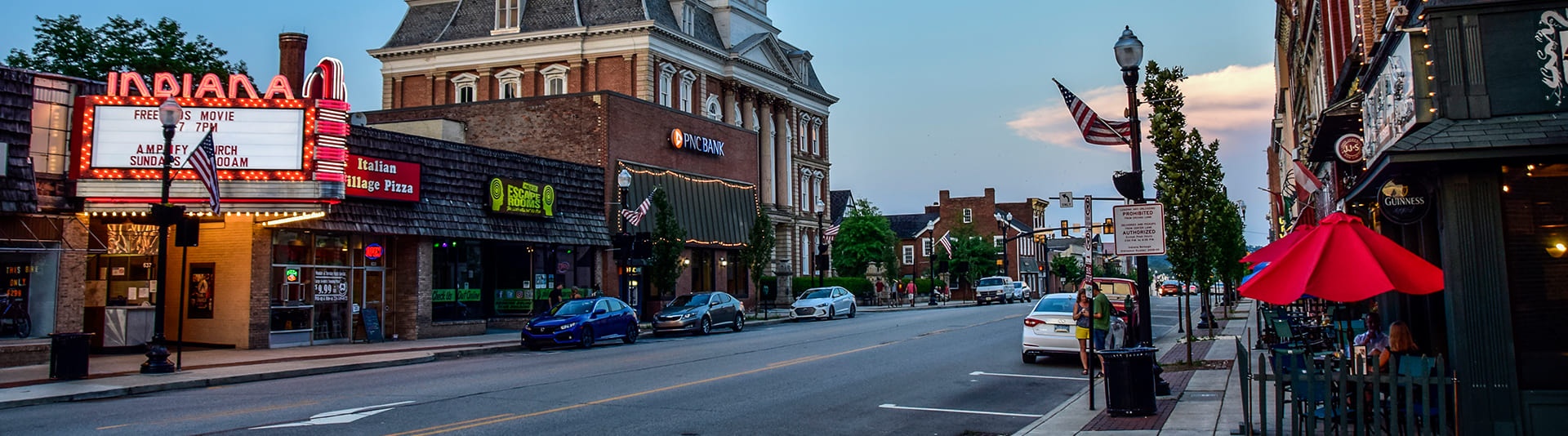
Indiana, Pennsylvania is a borough located in Indiana County, Pennsylvania. It's home to Indiana University of Pennsylvania and has a population of approximately 14,000 residents. As a Pennsylvania municipality, short-term rental operations in Indiana, PA are governed primarily by Pennsylvania state law, with local regulations implemented through zoning ordinances and municipal codes.
What do Airbnb hosts actually earn in Indiana?
Indiana hosts earn a median $29,247/year with $133 ADR and 65% occupancy.
Top performers pull in $38,826+ per year.
See the full Indiana market breakdownStarting a Short-Term Rental Business in Indiana, PA
1. Research Local Zoning Requirements
Before purchasing or converting property to a short-term rental, you must verify that such use is permitted in your specific zoning district. Pennsylvania law grants municipalities broad authority to regulate land use through zoning ordinances. Contact the Indiana County Planning Commission or the Borough of Indiana's zoning office to determine:
- Whether short-term rentals are permitted in your property's zoning district
- Any specific requirements for "transient lodging" or "vacation rentals"
- Parking, occupancy, and density limitations
- Whether special use permits or conditional use approvals are required
2. Register with State and Local Tax Authorities
Pennsylvania requires short-term rental operators to collect and remit hotel occupancy taxes:
State Requirements:
- Register with the Pennsylvania Department of Revenue for a Sales, Use, and Hotel Occupancy Tax license
- Collect 6% state hotel occupancy tax on all rentals under 30 days
- File monthly or quarterly tax returns depending on volume
Local Requirements:
- Indiana County may impose additional hotel taxes (typically 3-5% for 6th class counties)
- Register with local tax collection authorities
- Maintain detailed records of all rentals, guests, and tax collections
3. Comply with Safety and Building Standards
Pennsylvania's Lodging and Housing Code (48 Pa.C.S. § 1311 et seq.) applies to all "lodging establishments," which includes short-term rentals. Requirements include:
- Working smoke detectors and carbon monoxide alarms
- Fire extinguishers on each floor
- Emergency egress routes clearly marked
- Maximum occupancy limits posted
- Compliance with local building and fire codes
- Maintain guest records for at least two years
4. Secure Appropriate Insurance
Standard homeowner's insurance typically does not cover commercial short-term rental activities. Consider:
- Commercial short-term rental insurance policies
- Liability coverage of at least $1 million
- Property damage coverage
- Business interruption protection
- Guest medical coverage
Required Documents, Permits, and Licenses
State-Level Requirements
Pennsylvania Department of Revenue:
- Sales, Use, and Hotel Occupancy Tax License Application
- Monthly/Quarterly tax filing reports
- Guest registration records (minimum 2-year retention)
Tax Documentation:
- EIN or SSN for tax reporting
- Business registration if operating as formal entity
- Records of all rental income and expenses
Local Requirements
Municipal/Zoning:
- Conditional use permit or special exception approval (if required)
- Zoning compliance certificate
- Business license (if required by municipality)
Safety Documentation:
- Property inspection certificates
- Fire safety compliance documentation
- Occupancy permits
- Emergency contact information posted in rental unit
Specific Regulations for Short-Term Rentals in Pennsylvania
State-Level Framework
Pennsylvania operates under a decentralized regulatory approach where municipalities have significant authority to regulate short-term rentals through zoning ordinances. The state provides baseline requirements through:
Hotel Occupancy Tax System:
- 6% state tax on all accommodations under 30 days
- Additional local hotel taxes (varies by county classification)
- Mandatory registration for all operators
- Booking agents (Airbnb, VRBO) must collect and remit taxes
Lodging and Housing Code:
- Applies to all "lodging establishments" including private residences rented for less than 30 days
- Requires record-keeping, safety standards, and guest protections
- Defines "lodging establishment" broadly to include any place advertising or holding itself out as providing temporary accommodations
Municipal Authority
Under the Pennsylvania Municipalities Planning Code, municipalities can:
Zoning Regulations:
- Permit or prohibit short-term rentals in specific districts
- Establish conditional use procedures
- Impose density limitations and caps on rental frequency
- Distinguish between owner-occupied and investment property rentals
Operational Requirements:
- Mandate local contact persons
- Require permits and annual inspections
- Impose parking and signage restrictions
- Establish noise and nuisance standards
Legal Precedents
Recent Pennsylvania court decisions (notably Slice of Life v. Hamilton Township, 2019) have established that:
- Short-term rentals constitute commercial use of residential property
- Municipalities may prohibit transient rental use in residential zones
- Zoning ordinances must explicitly permit short-term rentals to be legal in residential areas
- Existing nonconforming uses are protected but new operations must comply with current zoning
Contact Information for Local Authorities
Indiana County Government
Indiana County Planning Commission
- Address: 825 Philadelphia Street, Indiana, PA 15701
- Phone: (724) 465-3801
- Website: www.countyofindiana.org
Indiana County Tax Assessment Office
- Address: 825 Philadelphia Street, Indiana, PA 15701
- Phone: (724) 465-3815
- Website: www.countyofindiana.org/tax-assessment
Borough of Indiana Government
Indiana Borough Zoning Office
- Address: 80 North 8th Street, Indiana, PA 15701
- Phone: (724) 465-6691
- Website: www.indianaboro.com
Indiana Borough Code Enforcement
- Address: 80 North 8th Street, Indiana, PA 15701
- Phone: (724) 465-6691
- Emergency Contact: (724) 465-6600
State-Level Contacts
Pennsylvania Department of Revenue
- Hotel Occupancy Tax Section
- Phone: (717) 787-1064
- Website: www.revenue.pa.gov
- Online Registration: myPath.pa.gov
Pennsylvania Department of Labor & Industry
- Bureau of Occupational and Industrial Safety
- Phone: (717) 787-3323
- Website: www.dli.pa.gov
Important Considerations for Indiana, PA Market
Market Characteristics
- College town environment creates seasonal demand tied to university calendar
- Strong weekend and event-based tourism
- Competition with traditional lodging options
- Proximity to outdoor recreation areas
Investment Implications
- Zoning compliance is critical given recent legal precedents
- Consider location relative to campus and commercial districts
- Factor in seasonal demand fluctuations
- Maintain good relationships with neighbors to avoid complaints
Recommended Actions
- Consult with local zoning officials before purchasing property
- Consider professional property management for out-of-town owners
- Join local host associations for regulatory updates
- Maintain comprehensive insurance coverage
- Implement robust guest screening and property management practices
Sources
-
Pennsylvania Joint State Government Commission - Short-Term Rental Study - Primary source for state-level regulations and recommendations
-
National Zoning Atlas - Pennsylvania - For understanding local zoning patterns
Disclaimer: This guide provides general information based on available sources as of March 2025. Short-term rental regulations are subject to change, and specific requirements may vary. Always consult with local authorities and legal counsel before operating a short-term rental business in Indiana, PA.
Next step
Found a property in Indiana?
Paste any address and get estimated revenue, cash-on-cash return, and comparable STR performance in under 5 minutes. 3 free analyses per day.
Free brief
Get the free Indiana STR Investment Brief
Revenue data, top neighborhoods, seasonal trends, and the key regulations for Indiana, Pennsylvania in one email.
Indiana
Market Saturation Score
Photos of Indiana


Overview of Indiana
Indiana is a small borough that serves as the seat of Indiana County in the rolling western foothills of Pennsylvania, with a population of roughly 13,000 to 14,000 residents. Its character is unmistakably shaped by Indiana University of Pennsylvania, a state-related university whose campus life, sports teams, and cultural events give the town a youthful, college-town energy. The community is also widely recognized as the birthplace of film legend James "Jimmy" Stewart, a heritage it celebrates prominently. Situated about 60 miles northeast of Pittsburgh, Indiana enjoys easy access to the larger city's amenities while maintaining a quieter, small-town feel of its own.
A central draw is the Jimmy Stewart Museum, located just off the town's main square. The museum honors the Oscar-winning actor's life and career through memorabilia, film clips, and personal artifacts, and it draws fans of classic Hollywood year-round. For visitors wanting to enjoy the outdoors, Yellow Creek State Park lies a short drive north of town, offering a large lake for boating, swimming, and fishing, as well as hiking trails, picnic areas, and campgrounds that make it a favorite weekend escape for both locals and travelers passing through the region. The downtown area itself is compact and walkable, with locally owned shops, restaurants, and the county courthouse forming a classic small-county-seat setting that gives Indiana its civic heart. Indiana County as a whole is also part of the broader Pennsylvania Wilds and Laurel Highlands regions, so travelers using Indiana as a base can easily reach larger outdoor destinations like the Prince Gallitzin State Park area or the heritage sites of the Laurel Highlands within an hour or two by car.
Indiana, Pennsylvania makes a compelling base for short-term rentals largely because of the steady traffic it sees from university events, prospective-student visits, reunions, and parents weekends tied to IUP, which keeps demand consistent through much of the year. Its position as the county seat also brings in business travelers, courtroom visitors, and people exploring western Pennsylvania's outdoor and cultural offerings. The combination of a walkable downtown, a recognizable cultural landmark in the Jimmy Stewart Museum, and quick access to Pittsburgh and the surrounding natural areas gives owners a flexible market to serve — from college-related stays to leaf-peepers, road-trippers, and heritage tourists passing through the Allegheny foothills.
Want to know if a property in Indiana is a good investment?
Enter an address to get instant revenue potential and comps.