
Brookville, Pennsylvania
Want to see how Brookville compares to other top cities in Pennsylvania? Explore all city regulations in Pennsylvania. →
Brookville, PA
Generally Investor Friendly
STR Regulations for Brookville, Pennsylvania
Executive overview: Short-term rentals are allowed in Brookville, Pennsylvania. Brookville is home to a small but active STR market (15 active listings in 2023) situated in Jefferson County, a rural county with lower average daily rates than many urban areas. No Brookville- or Jefferson County–specific STR regulatory text was provided in the source materials; investors must rely on state-level regulations and general Pennsylvania statutes, and should confirm local requirements with municipal and county officials.
Note on scope: The content available does not include the full text of Brookville or Jefferson County ordinances. Where local rules are unavailable, this guide defaults to Pennsylvania state-level guidance and general best practices.
Market Snapshot: STRs in Brookville and Surrounding Area (2023)
- Active listings: 15 in the municipality; 32 in the 5‑mile vicinity.
- Average Daily Rate (ADR): Lower than the statewide average ($175 ADR). The report flags Brookville (and nearby Kane and Wellsboro) as lower‑ADR rural markets relative to the state.
- Occupancy: Mean ~33%, median ~34%; average bookings ~28 per year.
- Capacity and layout: Typical capacity ~4–5 guests; most units are single‑family homes; average ~1.8 bedrooms.
- Cleaning fees: Very low compared to other municipalities; average ~$31, suggesting a budget‑oriented traveler segment and a price-sensitive local market.
- Interpretation: Brookville’s STR segment is modest in scale and more budget‑oriented. Given its proximity to Cook Forest State Park and regional outdoor attractions, performance is likely seasonal.
What do Airbnb hosts actually earn in Brookville?
Brookville hosts earn a median $28,661/year with $149 ADR and 63% occupancy.
Top performers pull in $57,816+ per year.
See the full Brookville market breakdownHow to Start a Short-Term Rental Business in Brookville
Operational steps:
- Select and secure a compliant property.
- Confirm zoning allows short‑term rental use (no specific local ban was identified).
- If subject to homeowners association (HOA) rules, review CC&Rs for rental restrictions (many associations limit transient rentals).
- Structure the business for tax and liability efficiency.
- Consider operating as an LLC (or other legal entity) for asset protection and tax planning.
- Decide between “primary residence” hosting vs. “investment/second home” hosting; this affects tax treatment, availability, and occupancy strategies.
- Implement hosting on recognized platforms.
- Airbnb, Vrbo, and HomeAway are the dominant channels referenced in the statewide analysis. Create compelling listings with accurate capacity, amenities, and availability windows.
- Establish operations and guest experience.
- Standardize cleaning, check‑in/out protocols, and turnover timelines to achieve ~35% occupancy on average.
- Design listings to support a realistic $7k–$12k annual revenue per unit (2023 mean/median) and plan for off‑peak-season vacancy.
- Monitor regulatory developments.
- Pennsylvania municipalities are considering or implementing STR ordinances. Brookville and Jefferson County may introduce registration, safety, or zoning rules; subscribe to local government updates or contact officials directly (see Contacts).
Business Formation and Tax Considerations (High-Level)
- 14‑day rule (IRS “Augusta rule”): Rent your entire home for 14 days or fewer in a calendar year, and you may exclude the rental income from federal taxation; if you exceed 14 days, you must report rental income and may deduct ordinary and necessary expenses. Consult a CPA to confirm eligibility and reporting.
- Material participation: If you materially participate in operating the rental, you may deduct rental losses against other income under IRS passive activity loss rules. Define and document your involvement (e.g., scheduling, cleaning, guest communications).
- Depreciation: Residential rental property is generally depreciable over 27.5 years. Plan depreciation schedules and track eligible improvements.
- Expense deductions: Mortgage interest (allocable portion), property taxes, insurance, utilities, repairs, maintenance, management fees, advertising, travel, supplies, and cleaning fees are commonly deductible when the property is rented. Keep meticulous records and receipts.
- Estimated taxes: If operating as a sole proprietor or pass‑through entity, plan quarterly estimated tax payments to avoid penalties.
- Extras: If applicable, consider cost segregation studies for larger properties and 1031 exchange strategies for portfolio growth.
Professional advice is strongly recommended.
Required Documents, Permits, Licenses, and Guidelines
No Brookville‑specific permits or licenses were identified in the provided content. Use the following as a working compliance checklist:
- Entity formation and registration
- Articles of organization/incorporation (LLC or corporation) filed with the Pennsylvania Department of State.
- Obtain an EIN from the IRS for banking and tax filings.
- Open a dedicated business bank account.
- Zoning and property compliance
- Confirm short‑term rental use is permitted in the property’s zoning district.
- Check HOA/POA covenants for rental restrictions.
- Verify building and housing code compliance (smoke/CO detectors, egress, occupancy limits).
- Landlord/tenant and safety compliance
- Lead paint disclosures if applicable (pre‑1978 housing).
- Fair housing compliance for advertising and guest screening.
- Safety standards: smoke and CO detectors, secure railings, safe sleep surfaces (for applicable ages), first‑aid kits, emergency instructions.
- Taxes
- IRS Form 1040/Schedule E (if not using the 14‑day exclusion).
- Pennsylvania personal income tax filing; local earned income tax where applicable via the PSD code.
- Sales/use tax: Hotels/ lodging in Pennsylvania are subject to state sales tax plus local sales tax (if any). Many municipalities in Pennsylvania also impose a local hotel occupancy tax; confirm Brookville’s tax posture with the borough/PSD.
- Business operations and record‑keeping
- Guest agreements/terms, cancellation policies, refund procedures.
- House rules (occupancy limits, quiet hours, parking).
- Cleaning protocols and supplier contracts.
- Insurance: General liability and property coverage; consider business interruption and umbrella policies.
Because local rules vary, call the borough before listing and confirm whether a license/registration, safety inspection, or hotel tax registration is required.
Specific Regulations for Short-Term Rentals
Brookville/Jefferson County
- No local ordinance excerpts were provided; market presence (15 STRs in 2023) indicates STRs are operating and likely permitted. However, municipalities may regulate occupancy, parking, noise, and licensing, and can introduce new rules over time.
- Action: Confirm with Brookville Borough and Jefferson County whether a local STR registration/permit is required, whether there are caps on rental days, occupancy or parking limits, or if zoning distinguishes “short‑term rental” from “bed & breakfast/inn.”
Pennsylvania (state-level context and statutes)
- Municipal home rule and zoning authority: Pennsylvania municipalities have authority to regulate land use, including STRs through zoning, licensing, and safety standards. Rules vary by locality.
- Landlord‑tenant context: The Landlord and Tenant Act (68 P.S. § 250.101 et seq.) governs leasing relationships but does not directly license STRs; municipalities often codify STR standards separately.
- Uniform Fire Prevention and Building Code (PA): Establishes building and fire safety requirements applicable to residential occupancies. STRs must meet applicable safety standards (e.g., egress, detectors).
- Lodging taxes
- State sales tax applies to hotel lodging; local sales taxes may also apply.
- Local hotel occupancy taxes are common (varying rates). Confirm Brookville’s local hotel tax, if any, and register if required.
- Taxation of STR income (IRS)
- If rented 14 days or fewer: income exclusion may apply.
- If rented more than 14 days: income must be reported; deductible expenses include operating costs, repairs, and depreciation (27.5‑year schedule). Material participation rules can allow loss deductions.
- Ongoing legislative environment: The statewide report notes that many Pennsylvania municipalities are considering or implementing STR regulations. State legislation or local ordinances could evolve; monitor changes.
Market and Regulatory Contacts
Because Brookville is in Jefferson County, reach out to both municipal and county authorities, plus state resources.
-
Brookville Borough (municipal authority)
- Phone: Use official directory lookup (the provided materials do not list borough contacts).
- Email/Website: Use the official borough website; the materials do not provide a direct URL.
- Purpose: Confirm zoning status for STRs; ask about any local registration, licensing, inspection, occupancy limits, parking or noise rules; inquire about local hotel occupancy taxes.
-
Jefferson County (county-level)
- Phone/Email: Not provided in the materials; check the county website via directory or search “Jefferson County Pennsylvania government.”
- Purpose: County planning/zoning office for guidance if county-level rules apply; confirm county tax collector or treasurer for hotel tax registration questions.
-
Pennsylvania Department of State (business formation)
- Phone: Directory lookup recommended.
- Website: Use official DOS portal for entity filings and registered agent requirements.
-
Pennsylvania Department of Revenue (state-level taxes)
- Phone: Directory lookup recommended.
- Website: Use official DOR portal for sales/use tax registration, local hotel tax guidance, and employer withholding, if applicable.
-
IRS (federal tax)
- Phone: Directory lookup recommended.
- Website: Use official IRS site for STR tax guidance, Form 1040/Schedule E instructions, material participation rules, and 14‑day rule details.
-
Center for Rural Pennsylvania (policy/research)
- Phone: (717) 787‑9555
- Website: www.rural.pa.gov
- Purpose: Access the statewide STR inventory and analysis, and track municipal policy trends.
Note: Because the provided materials do not include direct URLs or emails for the borough/county, investors should locate current contact information via official directories or government websites.
Appendix: Additional Municipal Benchmarks in Pennsylvania (Selected)
These neighboring municipalities illustrate how urban vs. rural positioning affects ADR, occupancy, and management:
- Derry Township (urban county): 292 active STRs; ADR far above state average; 0.51 occupancy; mean ~6.9 guests; cleaning fees ~$132.
- Harrisburg (urban): 501 active STRs; lower ADR than state average; 0.40 occupancy; heavy apartment stock; notable share of company‑managed units.
- State College (rural): 398 active STRs; high seasonal peaks; 0.37 occupancy; variable ADRs; large event‑driven demand.
- Jim Thorpe (rural): 139 active STRs; mid‑scale pricing; 0.42 occupancy; strong outdoor/tourism appeal.
- Gettysburg (rural): 106 active STRs; high ADR relative to rural peers; 0.49 occupancy; strong demand linked to historical tourism.
This comparison underscores that Brookville’s lower ADR and modest occupancy profile is typical of rural markets that rely on seasonal recreation and are more price‑sensitive than urban cores.
Links to Source Pages
- Center for Rural Pennsylvania: “Inventory and Analysis of Short-Term Rentals in Pennsylvania” (2023 data; January 2025)
- AirDNA (market data source cited in the report)
- U.S. Census Bureau: Quick Facts (population baselines)
Action checklist for Brookville investors:
- Verify zoning and local licensing with Brookville Borough and Jefferson County.
- Confirm whether a local hotel occupancy tax registration applies.
- File state business registrations (if using an entity) and obtain tax accounts as needed.
- Prepare IRS filings (Schedule E, or evaluate 14‑day rule eligibility); implement quarterly estimated tax.
- Standardize operations to reach ~35% occupancy and build a stable annual revenue base.
- Monitor ordinance updates; Pennsylvania municipalities continue to refine STR rules.
Next step
Found a property in Brookville?
Paste any address and get estimated revenue, cash-on-cash return, and comparable STR performance in under 5 minutes. 3 free analyses per day.
Free brief
Get the free Brookville STR Investment Brief
Revenue data, top neighborhoods, seasonal trends, and the key regulations for Brookville, Pennsylvania in one email.
Brookville
Market Saturation Score
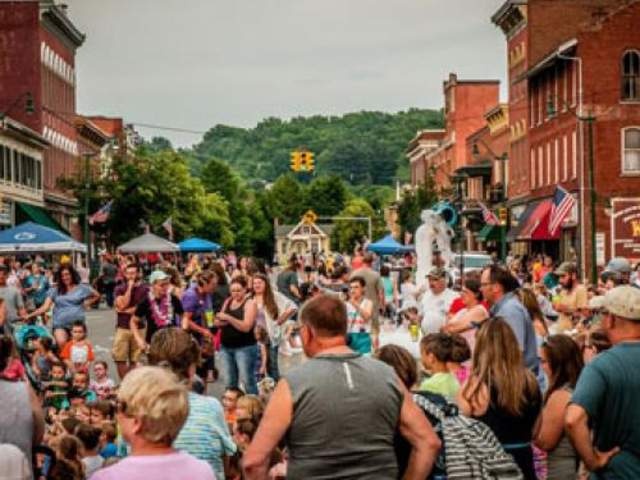
Photos of Brookville


Overview of Brookville
Nestled in the rolling hills of northwestern Pennsylvania, Brookville is a small historic town that serves as the seat of Jefferson County. With a population of roughly 4,000 residents, the community carries the relaxed pace of rural Pennsylvania while functioning as a friendly stopover and base for travelers exploring the wider Pennsylvania Wilds region. The town is best known for its preserved 19th-century architecture, its role as a regional hub for Jefferson County, and its proximity to some of the state's most scenic forests and waterways. Brookville sits about 80 miles northeast of Pittsburgh along the I-80 corridor, and roughly 50 miles south of the New York border, making it an accessible crossroads for road-trippers and outdoor enthusiasts alike.
A short drive west of Brookville brings visitors to Cook Forest State Park, a destination famous for some of the last remaining stands of old-growth forest in the northeastern United States. The park, located along the Clarion River, draws hikers, campers, and paddlers who come to walk beneath towering white pines and hemlocks that have stood for centuries. From Brookville, the main park entrance is roughly a 30-minute drive. Travelers interested in learning more about this natural landmark can read about it on its Wikipedia page for Cook Forest State Park.
To the north of Brookville spreads the Allegheny National Forest, a vast expanse of more than 500,000 acres of hardwood forest, lakes, and trails that forms the heart of the Pennsylvania Wilds. The forest is roughly an hour's drive from town and offers a wide range of outdoor recreation, from hiking and mountain biking to kayaking on the Allegheny Reservoir. It is also home to the seasonal Kinzua Sky Walk at Kinzua Bridge State Park, where visitors can step out onto a glass-floored observation deck above a former railroad bridge gorge. The national forest itself is described in detail on its Wikipedia entry for the Allegheny National Forest.
Back in town, Brookville's compact historic downtown offers a glimpse of the area's 19th-century prosperity, when the town was an important stop on regional rail and timber routes. Brick storefronts, restored Victorian-era homes, and the Jefferson County Courthouse anchor a walkable center that rewards visitors with small antique shops, local diners, and the Jefferson County Historical Society, which preserves artifacts from the region's pioneer and industrial past. The downtown's walkability gives the town a welcoming small-town character that contrasts with the wilderness just beyond its edges.
Brookville makes a compelling base for short-term rentals because it sits at the meeting point of small-town Pennsylvania charm and some of the state's best outdoor recreation. Visitors can spend the day exploring ancient forests, paddling the Clarion River, or browsing antique shops, and still return to a quiet, comfortable rental by evening. With Pittsburgh and the rest of the northeastern corridor within a few hours' drive, the town offers both a relaxed rural escape and practical accessibility for travelers looking to experience a less-crowded corner of Pennsylvania.
Want to know if a property in Brookville is a good investment?
Enter an address to get instant revenue potential and comps.