
Bethlehem, Pennsylvania
Want to see how Bethlehem compares to other top cities in Pennsylvania? Explore all city regulations in Pennsylvania. →
Bethlehem, PA
Generally Investor Friendly
STR Regulations for Bethlehem, Pennsylvania
Overview: Are short-term rentals allowed in Bethlehem, PA?
Yes—short-term rentals are allowed in Bethlehem, but only in two tightly regulated formats under City Ordinance Article 1741 and related zoning controls. Investors must secure a Short-Term Lodging (STL) license, pass an annual housing inspection, maintain compliance with performance standards, and observe occupancy, rental-duration, and business licensing requirements.
- Specific bedroom accommodation: Owner-occupied single-family dwelling; rent no more than 2 bedrooms; stay ≥24 hours and ≤30 consecutive days; owner must occupy during the stay.
- Entire residential unit accommodation: Owner’s primary residence only; minimum 7 consecutive days; maximum 30 consecutive or nonconsecutive calendar days per year (January 1–December 31).
Both formats require licensing, inspections, compliance with the City Housing Code, Business Privilege Tax License, floor plans, trash hauler certification, and recordkeeping.
Source: Bethlehem, PA, Codified Ordinances Article 1741 (Short Term Lodging Facilities); 2020 amendment draft to Article 1741.
What do Airbnb hosts actually earn in Bethlehem?
Bethlehem hosts earn a median $33,997/year with $171 ADR and 62% occupancy.
Top performers pull in $43,384+ per year.
See the full Bethlehem market breakdownHow to start a short-term rental business in Bethlehem, PA
- Confirm zoning and eligibility. The property must qualify under Article 1741:
- Owner-occupied single-family dwellings for “specific bedroom accommodation” (2 bedrooms max).
- Owner’s primary residence for “entire residential unit” (limited to 30 days per year).
- Select the licensing pathway:
- Type A: Specific bedroom accommodation in an owner-occupied single-family home.
- Type B: Entire primary residence (7+ day stays only).
- Prepare required documents and compliance items:
- Accurate floor plan showing all levels, windows, doors, bedrooms, and locations of smoke/CO detectors; clear designation of bedrooms or suite used for STR.
- Annual Housing Inspection (scheduled and paid by owner).
- Business Privilege Tax License.
- Certification of Trash Hauler (annual).
- Maintain a guest ledger of lengths of stay.
- Submit license application and pay fees to the City Department of Community and Economic Development.
- Pass inspection; maintain ongoing compliance (occupancy limits, anti-discrimination, noise/behavior, no structural changes that alter single-family character).
- Operate within rules (no event use; maintain residential character; keep trash/recycling service and notify guests).
- Track annual day limits for entire-unit stays (Type B) and comply with renewal/appeal processes if enforcement action occurs.
Source: Article 1741 (Sections 1741.03, 1741.04, 1741.05, 1741.06, 1741.07).
Required documents, permits, licenses, and guidelines
- Short-Term Lodging (STL) License (required before operating; not transferable; expires on property conveyance).
- Annual Housing Inspection (Bureau of Housing) and license/inspection fees per fee schedule.
- Business Privilege Tax License (City).
- Floor plan requirements:
- All levels and attached structures, windows and interior/exterior doorways.
- For Type A (bedrooms): clearly designate bedrooms for STR within the principal dwelling (not accessory buildings).
- For Type B (entire unit): if renting a suite of rooms, the floor plan must designate the specific suite; changing room configuration during a license period requires a new license and any required building permits.
- Certification of Trash Hauler (annual submission).
- Guest ledger (length of stay; must be presented upon Code Enforcement request).
- Proof of compliance with performance standards (see detailed list below).
Source: Article 1741 (Sections 1741.04, 1741.05).
Specific regulations: city, county, and state
- City of Bethlehem regulations (Article 1741):
- Types and restrictions:
- Type A: Specific bedroom accommodation; owner-occupied; max 2 bedrooms; stays 24 hours–30 consecutive days; owner present.
- Type B: Entire primary residence; minimum 7 consecutive days; maximum 30 days per year; owner may but need not be present.
- Occupancy: Determined by the current City Housing Code.
- Performance standards (selected highlights):
- The property must remain a single household residential living unit with common housekeeping, kitchen, and laundry facilities.
- No nonresidential event use (e.g., parties, receptions, meeting space).
- No physical changes that alter the property’s single-family appearance (e.g., separate entrances for guests).
- Noise/behavior: Owners must prevent unreasonable interference with neighborhood enjoyment; comply with anti-discrimination provisions; promptly report disruptive conduct to City enforcement.
- Trash/recycling: Owner responsible; submit annual trash hauler certification; notify guests of collection days.
- Annual inspection required; failure leads to revocation.
- Business Privilege Tax License required.
- Maintain a guest ledger.
- Ensure safety and welfare of transient visitors; no adverse impact on residential character.
- Enforcement:
- Formal warnings, suspension (up to one year), revocation, non-renewal, reinstatement conditions.
- Third offense within five years: disqualification from operating an STR for two years.
- Search warrants permitted upon probable cause.
- Appeals to the Board of Appeals within 10 days.
- Penalties:
- First violation: $200 or 30 days imprisonment, or both.
- Second violation: $500 or 60 days imprisonment, or both.
- Third and subsequent violations: Up to $1,000 or 90 days imprisonment, or both.
- Property owner liable for violations committed by property manager as if the owner committed the violation.
- Types and restrictions:
- Zoning controls (2020 draft amendment):
- Short-Term Lodging permitted only on owner-occupied single-family dwellings existing and occupiable by persons as of January 1, 2020; or, on lots exceeding one acre, in accessory/outbuilding structures existing and occupiable as of January 1, 2020.
- Parking: Two off-street spaces required for the dwelling; one additional space if more than one room is rented; exceptions for properties within the Central Business (CB) Zoning District.
- No exterior alterations or expansions solely to furnish or expand STR use, except as required for sanitation, accessibility, historic rehabilitation, or safety.
- Compliance with Article 1741 is required.
- Northampton County:
- No county-specific STR regulations provided in the source materials.
- Pennsylvania state-level:
- Municipalities in Pennsylvania are authorized to regulate STRs through local ordinances and zoning. Property owners must also comply with state laws that may apply, including:
- Hotel Room Tax/ Transient Occupancy Tax: Hosts may be required to register, collect, and remit taxes. Local rules vary; consult the City or the Pennsylvania Department of Revenue for specifics.
- Safety and building codes: Properties must comply with applicable building and housing codes. The City’s Housing Code determines occupancy and inspection standards.
- Anti-discrimination: State and local fair housing laws apply to lodging providers.
- Note: The provided sources do not include a comprehensive list of state-specific tax or safety requirements; investors should verify state obligations separately.
- Municipalities in Pennsylvania are authorized to regulate STRs through local ordinances and zoning. Property owners must also comply with state laws that may apply, including:
Sources: Article 1741; 2020 City zoning amendment draft; third-party summary of PA Airbnb laws (for context only).
Contact information (local authority in charge of STRs)
- City of Bethlehem — Department of Community and Economic Development
- Responsible for Short-Term Lodging license applications, renewals, and enforcement intake.
- Mailing address: 10 E. Church St., Bethlehem, PA 18018.
- Phone: 610-865-7088.
- City of Bethlehem — Bureau of Housing (Housing Inspection Program)
- Responsible for annual STR inspections and housing code compliance.
- Phone: 610-865-7088.
- Code Enforcement (Code Official)
- Administers warnings, suspensions, revocations, non-renewals, inspections with warrants as needed; receives disruption reports and monitors compliance.
- Phone: 610-865-7088.
- Board of Appeals (Codes Board of Appeals)
- Hears appeals of Code Official decisions within 10 days of service.
- Phone: 610-865-7088.
For general city information, website, and directories:
- City of Bethlehem official website: www.bethlehem-pa.gov.
Note: Email contacts are not specified in the provided sources; phone and website information are listed above.
Links to source pages
- Bethlehem Article 1741 (Short Term Lodging Facilities), 2017 ordinance: www.bethlehem-pa.gov/CityOfBethlehem/media/Ordinance-PDFs/ARTICLE1741.pdf?ext=.pdf
- 2020 draft amendments to Article 1741 (Council communication and ordinance draft): www.bethlehem-pa.gov/getattachment/Calendar/Meetings/2020/City-Council-Meeting/52/06c-Art-1741-Short-Term-Lodging-Amendments.pdf.aspx?lang=en-US
- The Bethlehem Gadfly coverage archive (context on STR debates and enforcement concerns): thebethlehemgadfly.com/category/short-term-lodging/
- Proper Insurance overview of Pennsylvania STR laws (general context, not City-specific): www.proper.insure/regulations/pennsylvania-airbnb-laws/
Important notes for investors
- License non-transferability: Licenses expire on property conveyance; new ownership requires a fresh application.
- Structural changes: No modifications that alter single-family character (e.g., separate guest entrances).
- Annual caps: Entire-unit rentals limited to 30 days per calendar year; track usage carefully.
- Enforcement escalation: Repeated violations can lead to multi-year disqualification.
- Documentation: Keep the floor plan, inspection reports, business tax license, trash hauler certification, guest ledger, and any notices/appeals records organized and readily accessible.
Next step
Found a property in Bethlehem?
Paste any address and get estimated revenue, cash-on-cash return, and comparable STR performance in under 5 minutes. 3 free analyses per day.
Free brief
Get the free Bethlehem STR Investment Brief
Revenue data, top neighborhoods, seasonal trends, and the key regulations for Bethlehem, Pennsylvania in one email.
Bethlehem
Market Saturation Score
Photos of Bethlehem


Overview of Bethlehem
Bethlehem is a city in eastern Pennsylvania, situated primarily in Northampton County with a portion extending into Lehigh County, along the Lehigh River. It has a population of approximately 75,000 to 80,000 residents and forms part of the broader Lehigh Valley metropolitan area alongside neighboring Allentown and Easton. The city is best known for its 18th-century Moravian heritage, its industrial legacy as the home of Bethlehem Steel, and its annual Christkindlmarkt, one of the most celebrated German-style Christmas markets in the country. Located roughly 60 miles north of Philadelphia and about 80 miles west of New York City, Bethlehem serves as both a cultural destination and a convenient gateway to the Pocono Mountains and the Appalachian foothills.
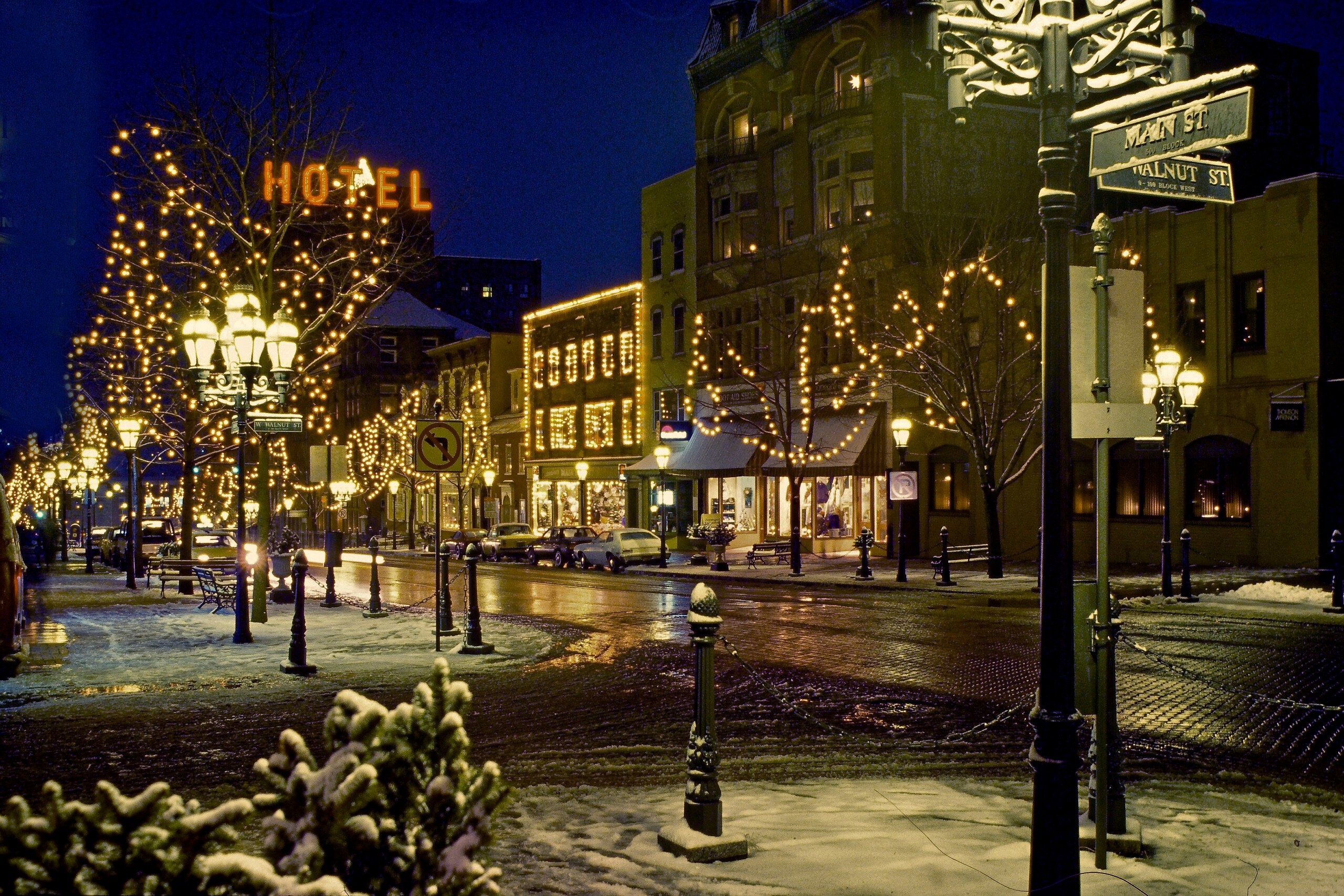
The historic Moravian district in downtown Bethlehem offers visitors a walkable introduction to the city's 18th-century founding. The area preserves early Moravian settlement buildings, including the 1741 Gemeinhaus, considered the oldest structure in Bethlehem and home to the Moravian Museum. The nearby Colonial Industrial Quarter showcases early American trades and crafts, while Main Street and adjoining blocks feature restored 18th- and 19th-century architecture, locally owned shops, and seasonal programming throughout the year.
Just south of the historic core, SteelStacks has transformed the former Bethlehem Steel plant into a 9-acre arts and cultural campus. The site hosts year-round concerts, festivals, and community events, anchored by outdoor performance venues and the preserved blast furnaces that once powered American industry. Visitors can take guided history tours, catch live music on most summer weekends, and attend the city's signature holiday events against the dramatic backdrop of the iconic steel stacks.
For outdoor recreation, the surrounding ridges of the Appalachian Mountains offer easy day-trip opportunities. Hawk Mountain Sanctuary, a renowned raptor conservation center in Kempton, sits about 30 miles west of the city and features hiking trails and seasonal hawk-watching programs. The Appalachian Trail also crosses the Blue Mountain ridge roughly 20 miles to the north, with several access points that connect to broader networks of hiking in the Delaware Water Gap area, which lies about 45 minutes to the northeast by car.
Bethlehem presents a compelling case for short-term rental investment thanks to its layered, year-round appeal. The holiday season draws tens of thousands of visitors for the Christkindlmarkt and SteelStacks programming, while spring and summer bring college events at nearby Lehigh University, weddings, and outdoor tourism tied to the Appalachian corridor. Its walkable historic core, ongoing redevelopment, and strategic position between New York, Philadelphia, and the Poconos make it a versatile base for travelers who want culture, history, and outdoor access in a single stay.
Want to know if a property in Bethlehem is a good investment?
Enter an address to get instant revenue potential and comps.