
Beaver, Pennsylvania
Want to see how Beaver compares to other top cities in Pennsylvania? Explore all city regulations in Pennsylvania. →
Beaver, PA
Generally Investor Friendly
STR Regulations for Beaver, Pennsylvania
Yes. Short-term rentals (STRs) for transient lodging—typically defined as occupancies under 30 days—are allowed in Beaver, Pennsylvania, subject to state-level Pennsylvania statutes governing lodging establishments and applicable local requirements (e.g., county hotel taxes and potential city or county zoning/permit systems). The Joint State Government Commission’s 2025 staff study confirms the Lodging and Housing Code (48 Pa.C.S. §1311(g)) covers “lodging establishments” broadly and applies to transient occupancies for less than 30 days, whether by direct booking or via online platforms. Zoning regulations for STRs are municipal; where there is no city- or county-specific ordinance explicitly addressing STRs, the state transient lodging framework still governs tax, health/safety expectations, and recordkeeping. Investors should also consider community association rules and potential litigation risk under the Slice of Life precedent, which allows municipalities to prohibit purely transient use in residential zones unless explicitly permitted by local ordinance.
How to Start a Short-Term Rental Business in Beaver, PA
- Define Your Operating Model
- Clarify whether you will operate a homestay (owner present), whole-home short-term rental, or a multi-property portfolio. Municipalities may impose different rules for each category (e.g., occupancy caps, inspection requirements, business licensing, and, in some places, a maximum number of rental nights per year). The state’s Lodging and Housing Code applies regardless of local classification.
- Check HOA/condo or planned community covenants. Planned communities can place use restrictions; recent cases suggest covenants prohibiting “commercial” use must be narrowly construed. Ensure short-term rental is not restricted before proceeding.
- Legal Formation and Registration
- Register the business entity (if using an LLC or corporation) with the Pennsylvania Department of State and obtain any applicable business licenses at the local level (e.g., city business license or rental registration if required).
- Obtain a Sales, Use, and Hotel Occupancy Tax license if you will collect and remit state and local hotel taxes directly. Registration is available through the Pennsylvania Department of Revenue.
- Zoning and Permitting
- Confirm your zoning district allows transient lodging uses. If your municipality lacks an explicit STR ordinance, it generally follows the state’s transient lodging framework. However, some Pennsylvania municipalities require a zoning permit and/or rental registration/licensing (see examples in the JSGC report such as Pittsburgh and Philadelphia). Ensure compliance with any municipal requirements for rental units even if not STR-specific.
- Obtain any local occupancy, safety, or rental permits required by your municipality or county (if applicable).
- Tax Setup
- Register for and collect the Pennsylvania state hotel occupancy tax (6%). Beaver County (a Fourth Class County) levies a local hotel tax at up to 5%. Rates may vary; always confirm the current rate with the local tax collection authority (often the county treasurer or revenue office).
- Some jurisdictions also collect a local sales and use tax in addition to hotel taxes. Verify local surtax applicability with county authorities.
- If you list on platforms, know that the state’s 2018 amendment expanded “booking agent” obligations to collect and remit hotel taxes. Airbnb and some platforms already operate collection agreements with the Department of Revenue, but you remain responsible for compliance if operating outside those platforms or in non-platform bookings.
- Insurance and Risk Management
- Standard homeowners’ policies typically exclude home-based businesses or limit coverage for short-term rentals. Purchase additional coverage (endorsement or stand-alone policy) for guest liability, property damage, loss of income, and other STR-specific risks. Both Airbnb and Vrbo provide limited host liability coverage; this is supplemental and not a substitute for a robust commercial policy.
- Consider naming a “person in charge” and ensuring local contact information is posted as required in municipalities with explicit STR ordinances.
- Operations and Recordkeeping
- Implement compliant recordkeeping (renter name, address, phone, email, check-in/out dates, and all guests) and maintain records for at least two years per best practices outlined in municipal model ordinances (e.g., Millcreek Township).
- Comply with posting requirements if applicable (e.g., notices of local ordinances, trash/recycling rules, quiet hours, occupancy limits).
- Maintain safety systems (smoke and CO alarms, fire safety, electrical/plumbing systems), and schedule inspections as required.
- Marketing and Compliance
- Align listings and signage with municipal standards. Many ordinances prohibit signage that alters the residential appearance of the property.
- Monitor occupancy caps and stay limits; comply with parking, noise, and nuisance standards.
- Stay current with any local updates to the STR regulatory regime.
What do Airbnb hosts actually earn in Beaver?
Beaver hosts earn a median $25,160/year with $121 ADR and 68% occupancy.
Top performers pull in $35,134+ per year.
See the full Beaver market breakdownRequired Documents, Permits, Licenses, and Guidelines
State-Level (Pennsylvania)
- Sales, Use, and Hotel Occupancy Tax License (PA Department of Revenue). Required if you directly collect/remit hotel taxes or if you are not exclusively using a booking agent that remits on your behalf.
- Lodging and Housing Code compliance (48 Pa.C.S. §1311(g)). Applies to “lodging establishments,” including private residences offered for transient lodging (<30 days). Requires recordkeeping, maintaining order, and ensuring guest safety.
- Insurance: Short-term rental liability and property coverage via rider or separate commercial policy. Hosts typically need guest liability coverage and loss-of-income protection; confirm scope with your insurer.
- PA Personal Income Tax (3.07% for 2024–2025). Short-term rental income is taxable as business income; expenses can offset gross rents. If renting less than 15 days, you may exclude income; if renting 15 days or more and the property is your home, expenses must be prorated between personal and rental use.
- Federal tax considerations (for completeness; not regulatory at local level): IRS Publication 527 guidance on residential rental property, including the “used as a home” rules and the 15-day exclusion.
Local-Level (Beaver, PA and Beaver County)
- Municipal business license or rental registration (if required by city or township).
- Zoning permits/compliance letters for transient lodging use, if local rules require a specific use approval (e.g., conditional use or variance in certain districts).
- Any local inspection requirements (fire, safety, habitability).
- Recording and posting requirements (occupancy, noise, trash, parking) if applicable in the jurisdiction where your property sits.
Specific Regulations for Short-Term Rentals: Beaver (City), Beaver County (County), and Pennsylvania (State)
City of Beaver (Third Class City)
- The JSGC 2025 report lists Beaver as a Third Class City. Most Third Class Cities regulate residential rentals through general rental ordinances rather than an explicit, dedicated short-term rental code. In such cases, the state’s Lodging and Housing Code governs core obligations, and local ordinances typically require rental registration and inspections. Refer to the City of Beaver for any specific rental licensing, inspection, or zoning rules before commencing STR operations.
Beaver County
- Hotel Occupancy Tax: As a Fourth Class County, Beaver County is authorized to impose a local hotel tax up to 5%. Total hotel taxes (state + local) typically range from 6% to 13% depending on county classification and surtaxes. Confirm the current Beaver County hotel tax rate and collection procedures with the Beaver County Treasurer or designated tax collection authority.
- Enforcement: County-level enforcement programs more commonly target hotels, motels, rooming houses, and boarding homes. However, county rules can intersect with STRs through tax collection, recordkeeping, and, in some jurisdictions, registration for transient lodging.
Pennsylvania State
- Lodging and Housing Code (48 Pa.C.S. §1311(g)): Applies to lodging establishments broadly, including private homes offered to transient guests. Establishes recordkeeping, safety, and “maintaining order” standards. Temporary lodging is defined as less than 30 days (or day-to-day basis if over 30 days).
- Hotel Occupancy Tax: The state imposes 6% on “hotels,” defined broadly to include any building offering sleeping accommodations to the public for periods less than 30 days. Booking agents must collect and remit the tax; private hosts must register and remit if not fully utilizing such agents. Counties may layer additional hotel taxes.
- Zoning (Pennsylvania Municipalities Planning Code): STRs are subject to local zoning. The Slice of Life case (2019) and subsequent Commonwealth Court decisions (e.g., Johnson v. Pocono Township, Thornhurst Township cases) affirm that purely transient, commercial STR use in single-family dwellings is not permitted in residential zones unless the local ordinance expressly allows it. Some municipalities have adopted permitting, licensing, and operating restrictions (see examples from Philadelphia, Pittsburgh, Lancaster, Erie, and others).
- State Tax Framework: PA personal income tax (3.07% 2024–2025). STR income is business income; standard business expense deductions apply. See PA Department of Revenue guidance for net income from rents.
Note: Because Beaver’s local STR-specific rules are not detailed in the source report, investors should obtain confirmation from the City of Beaver and Beaver County regarding any local rental registration, zoning, or transient lodging requirements that apply.
Contact Information (Local Authority)
Pennsylvania Department of Revenue (Hotel/Occupancy Taxes)
- Phone: 717-787-1064 (general), 717-787-4397 (Joint State Government Commission main office; refer for legislative context)
- Website: www.pa.gov/agencies/revenue/resources/tax-types-and-information/sales-use-and-hotel-occupancy-tax/home-sharing.html
- Email: jntst02@legis.state.pa.us (JSGC contact; not a tax questions line)
City of Beaver (Third Class City)
- Phone/Website: Not provided in source documents; verify city hall contact through official municipal channels or Beaver County government pages.
Beaver County (Hotel/Tax Authority; General Contacts)
- Website: www.beavercountypa.gov/ (verify current hotel tax rate and collection procedures)
- County Hotel Tax Rates & Contacts: www.pacounties.org/getmedia/607608ac-4f1d-44e9-93c3-5fc2f1f747d0/Hotel-Tax-Rates-and-Contacts.pdf
- Phone/Email: Verify via Beaver County’s official site for the Treasurer or Revenue Department.
Pennsylvania Joint State Government Commission (Legislative Study Resource)
- Address: Room 108 Finance Building, 613 North Street, Harrisburg, PA 17120
- Phone: 717-787-4397
- Fax: 717-783-9380
- Email: jntst02@legis.state.pa.us
- Website: jsg.legis.state.pa.us
Note: If local contacts are missing, consult Beaver County’s website or call the county administrative office for the appropriate revenue/tax authority.
Key Source Links
- The Short-Term Rental Industry in Pennsylvania (JSGC Staff Study, March 2025): jsg.legis.state.pa.us/resources/documents/ftp/publications/2025-03-17%20Short-term%20Rental%20Web%203.17.25.pdf
- PA Department of Revenue – Home Sharing/Third-party Broker Rentals: www.pa.gov/agencies/revenue/resources/tax-types-and-information/sales-use-and-hotel-occupancy-tax/home-sharing.html
- PA Constitution – Article VIII, Section 2 (Homestead Exemption): ldpc6.legis.state.pa.us/cfdocs/legis/LI/consCheck.cfm?txtType=HTM&ttl=00&div=0&chpt=8&sctn=2&subsctn=0
- National Zoning Atlas: www.zoningatlas.org/atlas
- County Hotel Tax Rates and Contacts (CCAP): www.pacounties.org/getmedia/607608ac-4f1d-44e9-93c3-5fc2f1f747d0/Hotel-Tax-Rates-and-Contacts.pdf
- AirDNA Market Overview (Pennsylvania): app.airdna.co/data/us/airdna-115?tab=performance&welcome=true&lat=41.132832&lng=-77.781724&zoom=8.37
- City of Philadelphia – Short-Term Rentals: www.phila.gov/services/permits-violations-licenses/rent-or-sell-property/rent-your-property-short-term/
- City of Pittsburgh – Residential Housing Rental Permit Program: www.pittsburghpa.gov/files/assets/city/v/1/pli/documents/residential-housing-rental-permit-program-rules-regulations_12192024.pdf
- Monroe County Model Short-Term Rental Ordinance (July 2019): www.monroecountypa.gov/getmedia/cb98bd0a-b729-4810-b89e-c3fbddbf7f3f/20220513_ShortTermRentalModelOrdinance.pdf
- City of Lancaster – Short-Term Rentals and Homestays: www.cityoflancasterpa.gov/short-term-rentals/
- State College Borough – Short-Term Rental License: www.statecollegepa.us/762/Short-Term-Rental-License
- Summit Township, Erie County – Short-Term Rental Ordinance (2022-02): summittownship.com/wp-content/uploads/2022/06/Ordinance-2022-02-Short-Term-Rentals.pdf
- Millcreek Township – Limited Lodging Ordinance (2022-7): www.millcreektownship.com/DocumentCenter/View/3011/Ord-2022-7--Limited-Lodging-Rentals
- City of Scranton – Rental Act and Zoning Amendments (2022–2023): ecode360.com/41823090 (Rental Act), ecode360.com/45088089#45088089 (Zoning)
Additional Notes for Investors
- Lack of an explicit STR ordinance does not eliminate obligations; the state’s Lodging and Housing Code and hotel tax regime apply. Always confirm municipal rules, even if general rental codes exist.
- Litigation risk is real. The Slice of Life line of cases allows municipal prohibitions on purely transient commercial use in residential zones; ensure your property’s zoning explicitly permits short-term rentals or secure approvals before purchase.
- Recordkeeping and safety are essential. Implement robust guest records retention and align with best-practice safety standards from model ordinances in other PA municipalities.
Next step
Found a property in Beaver?
Paste any address and get estimated revenue, cash-on-cash return, and comparable STR performance in under 5 minutes. 3 free analyses per day.
Free brief
Get the free Beaver STR Investment Brief
Revenue data, top neighborhoods, seasonal trends, and the key regulations for Beaver, Pennsylvania in one email.
Beaver
Market Saturation Score
Photos of Beaver


Overview of Beaver
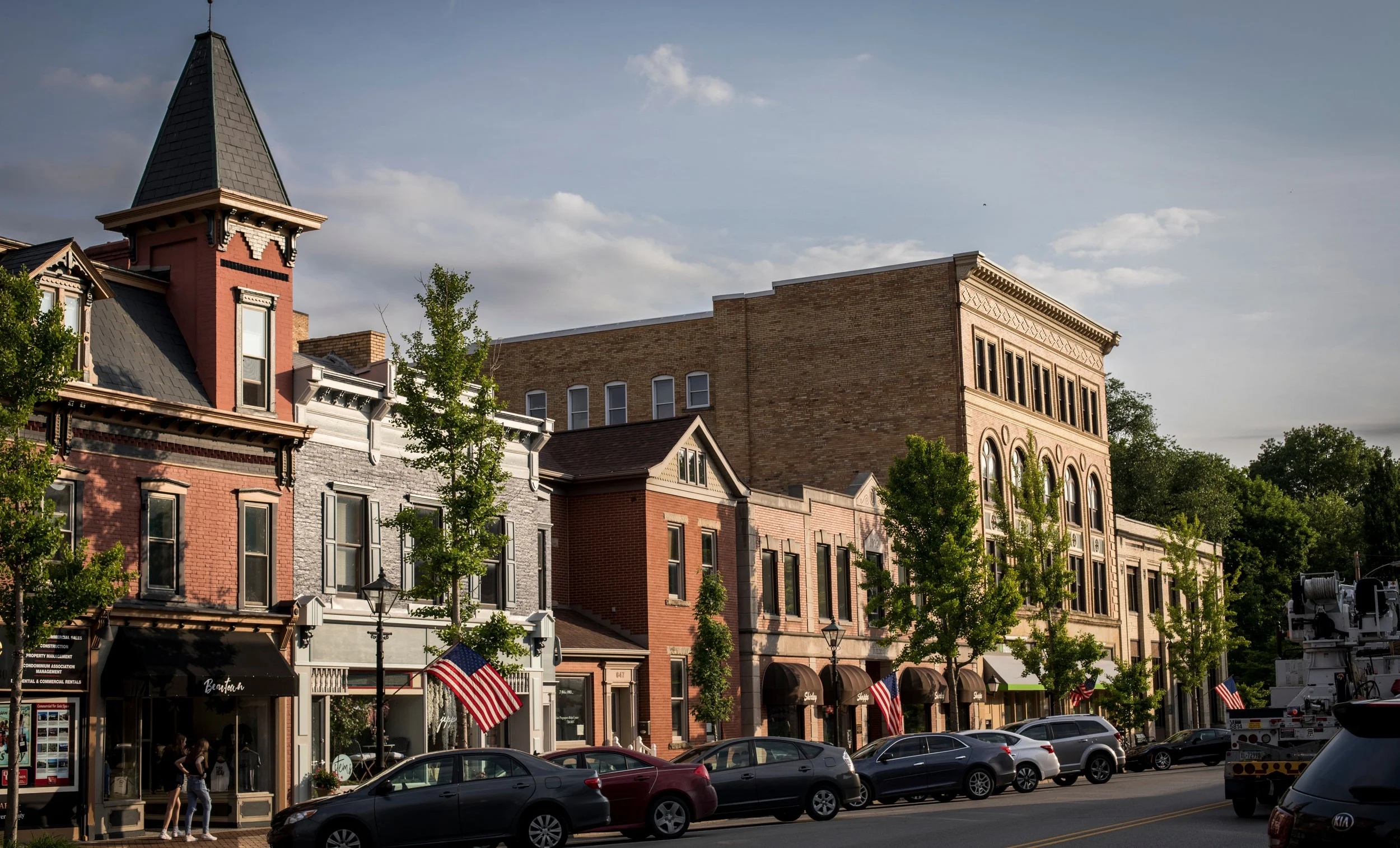
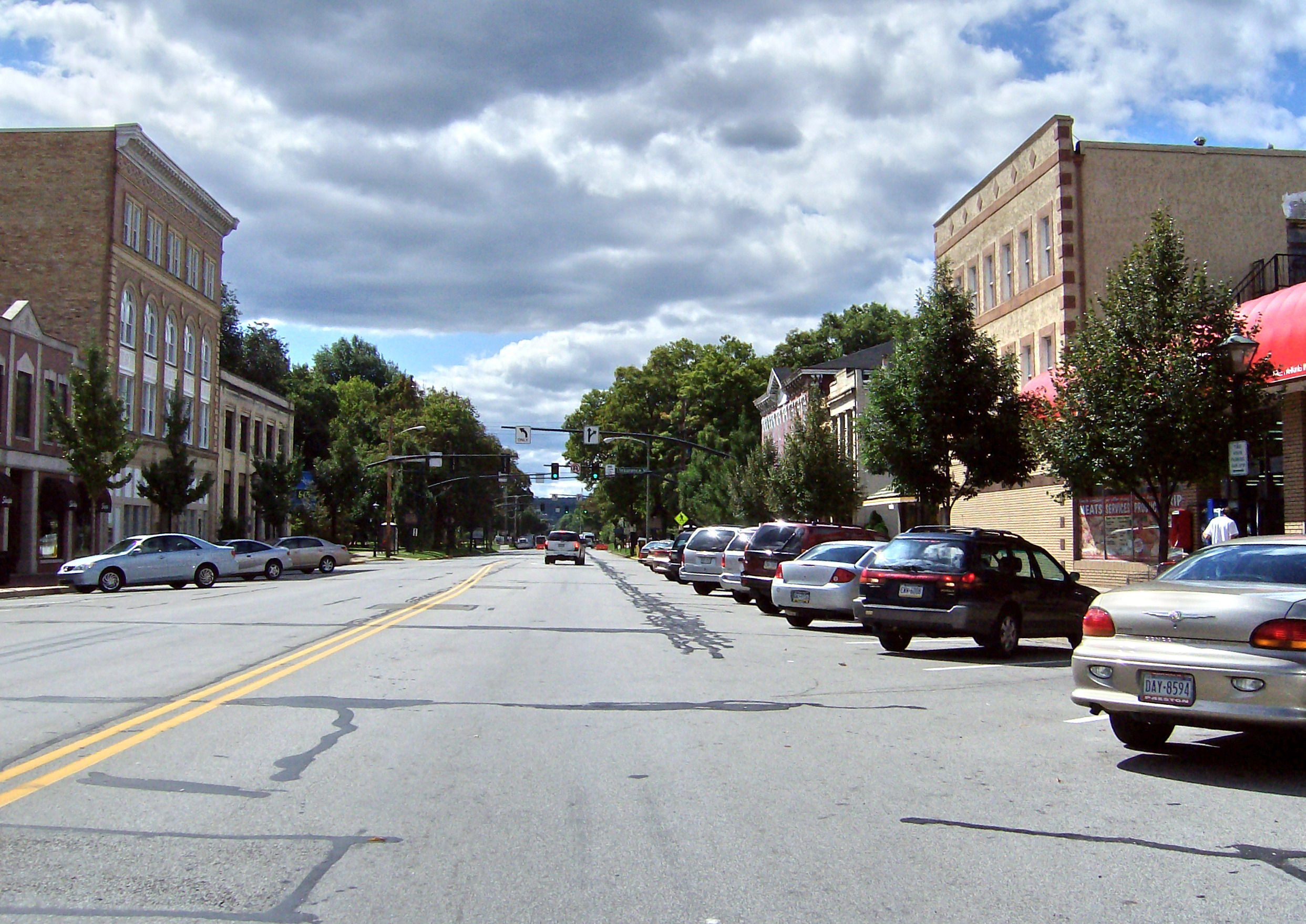
Beaver is a small borough in Beaver County, Pennsylvania, serving as the county seat and one of the oldest communities in western Pennsylvania. With a population of roughly 4,500 residents, it retains the feel of a quiet, walkable river town, anchored by a historic downtown of brick storefronts, locally owned shops, and tree-shaded streets. Positioned along the Ohio River, Beaver functions as a relaxed gateway to both the natural landscapes of western Pennsylvania and the cultural and sporting attractions of metropolitan Pittsburgh, which lies about 30 miles to the southeast.
Just a short drive east of Beaver, the Old Economy Village in Ambridge offers a window into the life of the Harmony Society, a nineteenth-century German religious commune. Roughly ten miles from Beaver, this National Historic Landmark preserves original eighteenth- and nineteenth-century buildings, including the Feast Hall, granary, and communal residences, giving visitors a tangible sense of early American communal life along the Ohio River valley.
Outdoor visitors will find a welcoming landscape just outside town. Raccoon Creek State Park, located about ten miles south of Beaver in southern Beaver County, encompasses more than 7,000 acres of rolling woodlands, a roughly 100-acre lake, and miles of hiking and equestrian trails. It is a popular destination for swimming, picnicking, and fall foliage viewing, and it offers a quieter counterpoint to busier regional parks closer to Pittsburgh.
The downtown core itself rewards a slow afternoon of browsing. The Beaver Area Heritage Museum, housed in a historic nineteenth-century building, presents the local story of the area, from the early days of frontier trading posts to the riverboat era and the borough's long role as a county seat. Surrounding it, the riverside park and walking paths along the Ohio provide a relaxed setting for an evening stroll, with views of the water and the wooded hills along the opposite shore.
Beaver appeals to short-term rental investors because it offers a small-town, low-density feel while sitting within easy reach of two strong demand drivers. The community itself draws visitors interested in heritage tourism, river travel, and the broader Beaver County attractions, while a roughly forty-minute drive connects guests to the dining, museums, and professional sports of Pittsburgh. For travelers who want a quieter home base with quick access to both natural escapes and a major metropolitan area, Beaver provides a compelling balance of charm and convenience.
Want to know if a property in Beaver is a good investment?
Enter an address to get instant revenue potential and comps.