
Baker City, Oregon
Want to see how Baker City compares to other top cities in Oregon? Explore all city regulations in Oregon. →
Baker City, OR
Generally Investor Friendly
STR Regulations for Baker City, Oregon
Executive overview: Yes — short‑term rentals are allowed in Baker City, Oregon. As of this writing, Baker City has not enacted city‑specific short‑term rental licensing, caps, or operating standards. Oregon state statutes do not require a local STR license, and Baker City’s adopted Housing Production Strategy (HPS) only calls for an analysis of STR impacts and potential future regulations by 2031. Operators should proceed under standard zoning and building rules, obtain any required building permits for conversions or new units, and comply with state lodging/tax obligations.
Note: If no city‑specific STR rules exist, this guide defaults to Oregon state‑level requirements and city zoning/building standards. The HPS indicates STR regulation may be considered later, so monitor City updates.
1) Starting an STR business in Baker City: step‑by‑step
-
Step 1: Confirm zoning eligibility
- Primary dwellings can generally be operated as short‑term rentals without a separate zoning approval.
- Accessory Dwelling Units (ADUs): Baker City allows up to two ADUs per lot in residential zones. New ADUs may face STR-use restrictions per the City’s HPS recommendations; if a rule is adopted, newly built ADUs could be prohibited from being used as STRs for a defined period. Confirm current code at the Planning Department.
-
Step 2: Assemble permits and approvals (if applicable)
- Building permit if:
- Converting space into a dwelling or creating new bedrooms/bathrooms.
- Constructing an ADU (note: ADUs are not a type of “short‑term rental”; ensure the unit meets ADU standards and any adopted restrictions).
- Electrical, plumbing, mechanical permits as required for conversions/new construction.
- If your STR will be employer‑provided housing for workers with the same employer, verify whether any local employer‑housing permit is needed.
- Building permit if:
-
Step 3: Business compliance
- City business license: Not specific to STRs, but most cities require a general business license. Confirm whether the city’s standard license is required for STRs operating from a residence.
- Oregon business registry (optional but recommended for liability protection).
-
Step 4: Taxes and online platforms
- State transient lodging tax (TLT) and applicable local transient room tax: Register with the Oregon Department of Revenue and collect/remit lodging taxes. Many hosts also collect on Airbnb/VRBO; ensure your platform settings remit taxes to Oregon and your local jurisdiction.
- Revenue account: Obtain an Oregon lodging account (Oregon DOR) and set up tax remittance cadence.
- State income tax: Report STR income on Oregon income tax returns.
-
Step 5: Safety and operations
- Post a 24‑hour contact; guest rules; emergency procedures; occupancy limit; quiet hours per city code (if any).
- Install/maintain required smoke and carbon monoxide alarms; ensure egress, safe stairways, and address signage as required by building/fire codes.
-
Step 6: Property management and community expectations
- Be a good neighbor: parking, noise, trash, snow/ice removal, occupancy posted, and compliance with any HOA rules.
- Tracking: The HPS suggests tracking STRs via a permitting system; if implemented, expect a future registration/fee.
What do Airbnb hosts actually earn in Baker City?
Baker City hosts earn a median $25,704/year with $152 ADR and 60% occupancy.
Top performers pull in $39,562+ per year.
See the full Baker City market breakdown2) Required documents, permits, licenses, and guidelines
-
City (Baker City)
- General business license: Potentially required for operating any business; confirm applicability.
- Building and life‑safety permits: Required for conversions, new ADUs, or significant remodels; follow adopted building codes.
- Zoning compliance: No city STR license at present; ensure ADU and primary dwelling use comply with zoning (allowed housing types; density; setbacks).
- HPS plan reference (no current rule): Strategy 2.6 (June 2031) calls for analyzing STR impacts and adopting possible regulations later.
-
State (Oregon)
- Oregon lodging tax registration (TLT): Collect and remit state transient lodging tax; may also include local transient room taxes depending on jurisdiction.
- Building/fire/life‑safety: Comply with Oregon building codes (structural, fire, egress, alarms, accessibility where applicable).
- Income taxes: Report STR income on Oregon tax returns.
-
County (Baker County)
- Transient room tax (TRT) and/or other assessments: If applicable to lodging in the city or county, obtain the correct county or city account and remit taxes.
- Health and safety: Follow county health department requirements (e.g., drinking water, sewage) as applicable to lodging.
-
Notes and uncertainties to verify
- County TRT applicability in Baker City has not been confirmed in the provided sources. Because lodging tax rules vary widely among Oregon jurisdictions, hosts should verify with Baker City and Baker County (and the Oregon DOR) which taxes apply to STRs in this specific market.
- City may be considering or have adopted nuisance, parking, or occupancy standards; verify current municipal code provisions.
3) Specific regulations: city, county, and state
-
Baker City
- STRs are allowed operationally under current city policy; no STR‑specific license, fee, or cap.
- New ADUs may face STR‑use restrictions if/when HPS strategy 2.6 is implemented (June 2031); monitor future ordinances.
- Observe zoning, building, and life‑safety requirements; comply with any adopted nuisance or occupancy rules.
-
Baker County
- Possible TRT/assessment for lodging; verify with county for STRs within city limits.
- County health and environmental rules may apply to lodging operations depending on site conditions.
-
State (Oregon)
- No statewide STR license; lodging tax registration required.
- STRs must meet Oregon building/fire codes.
- ADU guidance: State encourages ADUs; Baker City allows up to two ADUs per lot. If the ADU is newly constructed, check whether any city restriction on STR use applies.
-
Important
- Because Baker City is considering future STR regulations (HPS strategy 2.6), expect potential changes around licensing, caps, and operating standards no earlier than 2031 and possibly earlier if the City acts sooner.
4) Contact information (phone, email, website)
-
City of Baker City — Planning Department (lead on zoning and potential future STR regulation)
- Phone: (541) 524‑2050
- Address: 1655 1st Street, Baker City, OR 97809
- Website (planning reference): www.bakercity.gov/165/Planning
- Email (City Recorder for official submissions): cityrecorder@bakercity.gov
- Note: Ask to confirm the current status of city STR regulations and ADU STR restrictions.
-
Baker County (TRT and health department — verify applicability)
- Baker County Finance/Transient Room Tax: (541) 523‑8200
- Baker County Health Department: (541) 523‑8211
- County website: www.bakercounty.gov/
-
Oregon Department of Revenue (lodging tax registration/account)
- Phone: (503) 378‑4988
- Website: www.oregon.gov/dor/
- Program reference (search “transient lodging tax”): DOR lodging tax page
-
Oregon Department of Land Conservation and Development (DLCD)
- Website (housing and STR policy context): www.oregon.gov/lcd
5) Links to source pages
-
Oregon DLCD — Baker City Housing Production Strategy (Resolution 3947) [PDF]: www.oregon.gov/lcd/Housing/Documents/Resolution%203947%20Signed_CPA-23-079%20Housing%20Production%20Strategy%20(1.pdf
- See Strategy 2.6 (Analyze Impact of Short‑term Rentals and Create Regulations), pages 34–36 (timeline: June 2031).
-
City of Baker City — Planning Department: www.bakercity.gov/165/Planning
-
Oregon Department of Revenue (lodging tax registration/account): www.oregon.gov/dor/
-
Oregon Department of Land Conservation and Development: www.oregon.gov/lcd
6) Practical checklist and investor reminders
-
Permits
- Confirm zoning; obtain building permits for any new construction, conversion, ADUs, or significant remodels.
- Post occupancy limits, egress plans, and emergency contacts.
-
Taxes
- Register with Oregon DOR for lodging tax; collect and remit state TLT and any applicable local TRT.
- Report income on state returns.
-
Operations
- Safety: Smoke/CO alarms, address signage, safe stairs, and building code compliance.
- Community: Noise, parking, trash, and property management plan to avoid nuisance.
-
Future watch
- Monitor City Council/Planning Commission for STR ordinances (expected consideration by 2031 per HPS; may occur earlier).
- Confirm if newly built ADUs are restricted from STR use when adopted.
If you need a concise one‑page compliance template (addresses, emergency contacts, occupancy, and STR rules posting), I can provide a downloadable format tailored to Baker City.
Next step
Found a property in Baker City?
Paste any address and get estimated revenue, cash-on-cash return, and comparable STR performance in under 5 minutes. 3 free analyses per day.
Free brief
Get the free Baker City STR Investment Brief
Revenue data, top neighborhoods, seasonal trends, and the key regulations for Baker City, Oregon in one email.
Baker City
Market Saturation Score
Photos of Baker City


Overview of Baker City
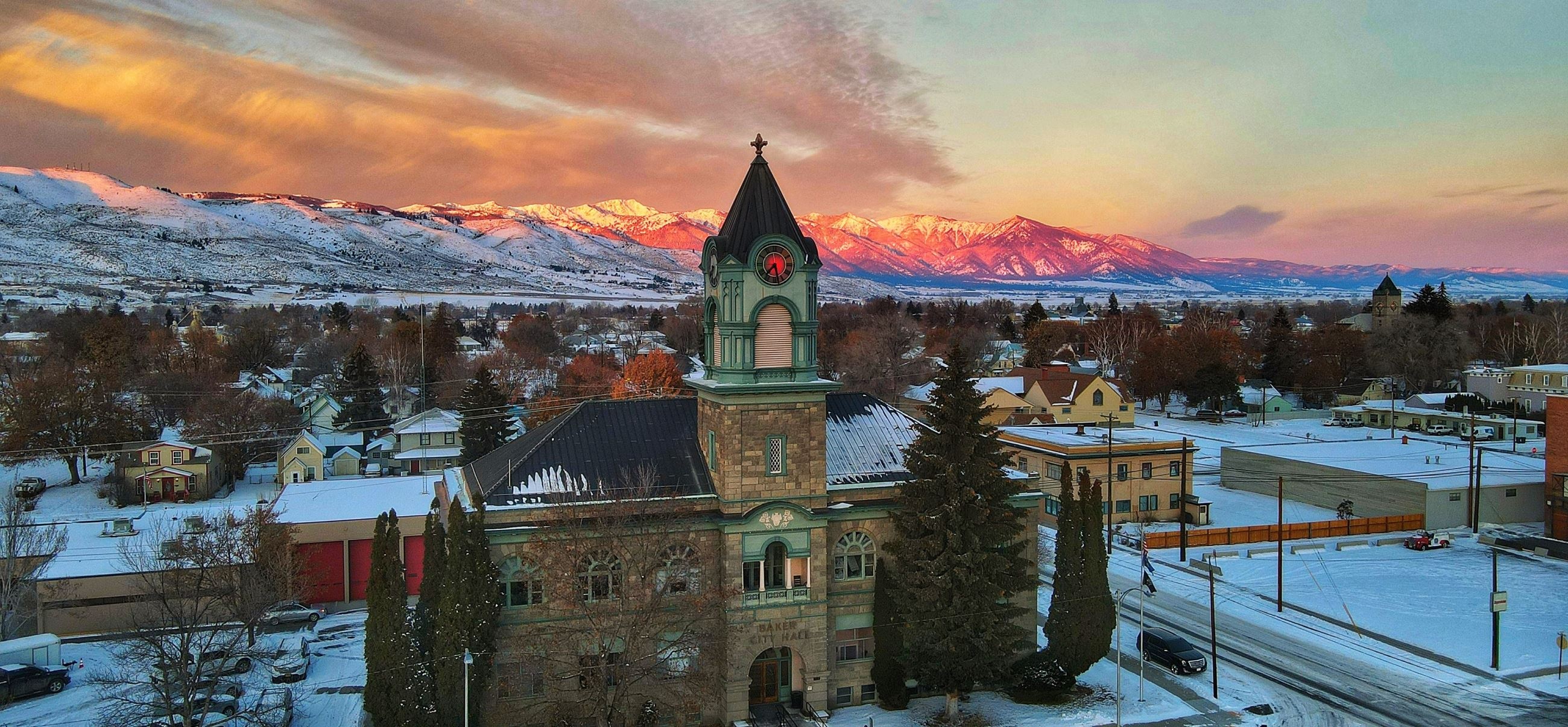
Baker City is a small, welcoming community in eastern Oregon and the seat of Baker County, with a population of roughly 10,000. Set in a broad valley at the foot of the Blue Mountains, the city is best known for its remarkably preserved late-19th-century downtown, where brick storefronts and Victorian-era buildings reflect its roots as a gold rush supply center. Today, Baker City functions as a gateway to some of eastern Oregon's most dramatic landscapes, including the Wallowa Mountains and Hells Canyon. It lies about 125 miles northwest of Boise, Idaho, and roughly 300 miles east of Portland, giving it the feel of a quiet, historic outpost surrounded by wide-open country.
A short drive east of town, the National Historic Oregon Trail Interpretive Center offers an in-depth look at the roughly 2,000-mile route that carried emigrants westward in the mid-1800s. Operated by the Bureau of Land Management and located about five miles from downtown, the center features museum exhibits, re-enactor demonstrations, and a stretch of preserved ruts left by original wagon trains. It draws both casual visitors and history enthusiasts tracing family connections to the trail.
To the north, the Wallowa Mountains are a defining feature of the regional landscape, often called the "Alps of Oregon" for their jagged peaks, alpine lakes, and glacial cirques. The Wallowa–Whitman National Forest that surrounds the range offers hiking in summer and a quieter alternative to more crowded Cascade destinations, with the trail to Ice Lake and the scenic tramway at the top of the Wallowa Lake basin among the most popular experiences. From Baker City, the drive to Wallowa Lake typically takes about an hour and a half.
Southwest of the city, Anthony Lakes Mountain Resort is a compact, family-friendly ski area in the Elkhorn Mountains, generally reached in about 45 minutes. In winter it offers downhill and Nordic skiing, while summer brings trails for hiking and mountain biking, plus access to the surrounding high-country lakes. Closer to town, the Baker City Downtown Historic District invites visitors to stroll past preserved 19th-century architecture, browse local shops, and dine in restaurants housed in historic buildings, giving the community a lively yet unhurried main street.
With its historic character, low-key atmosphere, and proximity to both the Wallowas and Hells Canyon country, Baker City makes a compelling base for short-term rentals. Travelers can spend the day hiking, skiing, or exploring pioneer history, then return in the evening to a walkable downtown that feels a world away from Oregon's larger tourist hubs. For visitors seeking a quieter, story-rich alternative to the usual Pacific Northwest itineraries, the city offers a strong blend of culture and outdoor adventure.
Want to know if a property in Baker City is a good investment?
Enter an address to get instant revenue potential and comps.