
Carrollton, Ohio
Want to see how Carrollton compares to other top cities in Ohio? Explore all city regulations in Ohio. →
Carrollton, OH
Very Investor Friendly
STR Regulations for Carrollton, Ohio
Overview: Are short‑term rentals allowed in Carrollton, OH?
Allowed by default. Based on the provided sources, there are no city-specific short‑term rental (STR) ordinances, licensing requirements, or bans identified for Carrollton. In the absence of local STR rules, a property used as an STR must comply with the city’s base zoning and standard local ordinances that apply to all residential uses (for example, noise, property maintenance, and related health, safety, and welfare regulations). Operationally, treat an STR as a standard residential use unless and until you confirm otherwise with the city or county.
Important nuance: The information in this guide is limited to the provided sources. If Carrollton later adopts STR rules, those would supersede this default position.
What do Airbnb hosts actually earn in Carrollton?
Carrollton hosts earn a median $26,123/year with $159 ADR and 52% occupancy.
Top performers pull in $31,516+ per year.
See the full Carrollton market breakdownHow to start a short‑term rental business in this market
- Confirm zoning and land use compatibility
- Verify your property’s current zoning allows short‑term occupancy (the legal equivalent of a short hotel/motel stay) as a permitted or conditionally permitted use. If the zoning treats such use as a commercial lodging activity, you may need a zoning variance, conditional use permit, or a change of use.
- Check for deed restrictions, homeowners association covenants, or neighborhood rules that limit STR activity.
- Comply with baseline residential standards
- Follow all standard local ordinances applicable to residential properties: noise control, occupancy limits, solid waste management, parking, and property maintenance. Absent a dedicated STR ordinance, these baseline rules are your operational guardrails.
- Determine tax and reporting obligations
- Review state and local tax rules that apply to lodging/transient occupancy. Because local, county, or regional lodging taxes may exist in some Ohio jurisdictions (the provided sources mention Oxford’s 6% lodging tax as a regional example), confirm current tax requirements for Carrollton/Carroll County and remit accordingly.
- Establish property safety and operating controls
- Adopt housekeeping and safety standards consistent with residential rental best practices (guest screening, quiet hours, parking management, occupancy limits, and emergency contact availability) to reduce complaints and mitigate enforcement risk.
- Track local policy changes
- Monitor city and county meetings and codes for any future STR rules, permits, registration requirements, or tax changes.
Required documents, permits, licenses, and guidelines
As of the provided sources, no city- or county-specific STR permits, licenses, or registrations are documented for Carrollton. If you proceed under the default residential-use approach, ensure you maintain:
- Property ownership or lease documentation.
- Insurance appropriate for residential rental operations (consider liability coverage for short-term occupancy).
- Guest screening policies and house rules (noise, occupancy, parking, etc.).
- Any documentation showing compliance with standard zoning and residential codes.
- If lodging taxes apply, maintain records and submit remittances as required.
If local authorities later adopt STR rules, expect potential requirements such as:
- Registration or licensing (with contact information and responsible party details).
- Safety inspections (e.g., every other year, similar to frameworks noted in nearby municipalities).
- Lodging tax registration and periodic remittance.
- Posting or digital disclosure of local rules, contact information, and occupancy limits.
Specific regulations (city, county, and state)
-
City of Carrollton
- No city-specific STR ordinance, licensing, registration, or ban is identified in the provided sources. Properties operate under standard zoning and residential ordinances until local STR rules are enacted.
-
Carroll County
- No county-level STR framework is identified in the provided sources. County-level rules, if any, would be separate from city rules and would require confirmation from county authorities.
-
State of Ohio
- There is no statewide STR regulation in the provided sources.
- Ohio House Bill 563 (2022–2023) was introduced and would have restricted local authority to regulate STRs (e.g., limiting a municipality’s ability to ban or cap number/frequency of stays, while allowing certain health/safety rules parallel to long-term rentals). As reported, HB 563 died in committee and did not become law. Consequently, local home rule authority over STRs remains intact unless new state legislation is enacted.
- Municipalities retain authority over traditional land use, zoning, and general welfare (noise, property maintenance, etc.). These are the baseline constraints in the absence of STR-specific rules.
-
What neighboring approaches illustrate
- West Carrollton (Montgomery County) implemented a moratorium on STRs in 2022 to study impacts and await state action.
- Oxford (Butler County) requires STR registration, biennial inspections, and charges a 6% lodging tax.
- Hamilton (Butler County) requires a $50 license for non-owner-occupied STRs with as‑needed inspections and no lodging tax.
- Oakwood (Montgomery County) bans STRs for stays under 25 days.
- Yellow Springs (Greene County) limits STR concentration and requires owner occupancy and a lodging tax.
- Xenia (Greene County) allows nonresident STR operation under zoning permits with basic standards.
These examples demonstrate the varied approaches seen across Ohio communities; they are not Carrollton rules but show the regulatory spectrum.
Contact information for local authority in charge of STRs
Designated STR authority for Carrollton or Carroll County is not identified in the provided sources. Until an STR‑specific department is named, direct inquiries to:
- Carrollton City Hall or Planning/Zoning Department.
- Carroll County Commissioners or County Planning/Zoning Department.
For context and comparisons (not Carrollton contacts), regional authorities mentioned in the sources:
- West Carrollton (moratorium): City Law Director/Prosecuting Attorney noted in coverage; for official contact, use the city’s general channels.
- Oxford (Butler County): Community Development Department (licensing, lodging tax, inspections).
- Hamilton (Butler County): Department of Planning and Development (licensing, inspections).
Note: Use municipal websites or main phone lines for current official STR contacts where not specifically listed in the sources.
Links to source pages (IMPORTANT)
- West Carrollton extends moratorium on short-term rentals (Dayton Daily News): www.daytondailynews.com/local/west-carrollton-extends-moratorium-on-short-term-rentals-like-airbnbs/S5VYLZAIYZCBXCVSRKFMILIMNU/
- Cities weigh regulating Airbnbs; some ban, some ignore (Dayton Daily News): www.daytondailynews.com/local/cities-weigh-regulating-airbnbs-short-term-rentals-some-ban-them-some-ignore/ORDHWLEPNZCHXBRHSZID4EGE2A/
- Butler County municipalities regulating STRs (Journal‑News): www.journal-news.com/news/licenses-and-registrations-some-butler-county-municipalities-regulate-short-term-rentals/YR7IHJ3FRVAVFGFPLDC4WNKXZM/
- Facebook community post (Group post content, no additional official guidance provided): www.facebook.com/groups/357429437363068/posts/653451337760875/
Practical compliance checklist for Carrollton (as of the sources)
- Zoning: Confirm short‑term occupancy is allowed as a residential use; obtain any needed variances/permits.
- Taxes: Determine if lodging/transient occupancy taxes apply locally; register and remit if required.
- Ordinances: Adhere to noise, property maintenance, parking, and occupancy rules.
- Insurance: Maintain liability coverage appropriate for short‑term occupancy.
- Operations: Implement clear house rules, quiet hours, and guest screening; provide a local contact for issues.
- Monitoring: Watch city/county code updates for STR licensing, inspections, or tax changes.
If you prefer a permitting roadmap modeled on nearby municipalities (for planning purposes only), anticipate steps like registration, safety inspections, and lodging tax compliance. However, absent Carrollton‑specific rules, proceed under standard residential requirements and confirm directly with city/county authorities.
Next step
Found a property in Carrollton?
Paste any address and get estimated revenue, cash-on-cash return, and comparable STR performance in under 5 minutes. 3 free analyses per day.
Free brief
Get the free Carrollton STR Investment Brief
Revenue data, top neighborhoods, seasonal trends, and the key regulations for Carrollton, Ohio in one email.
Carrollton
Market Saturation Score
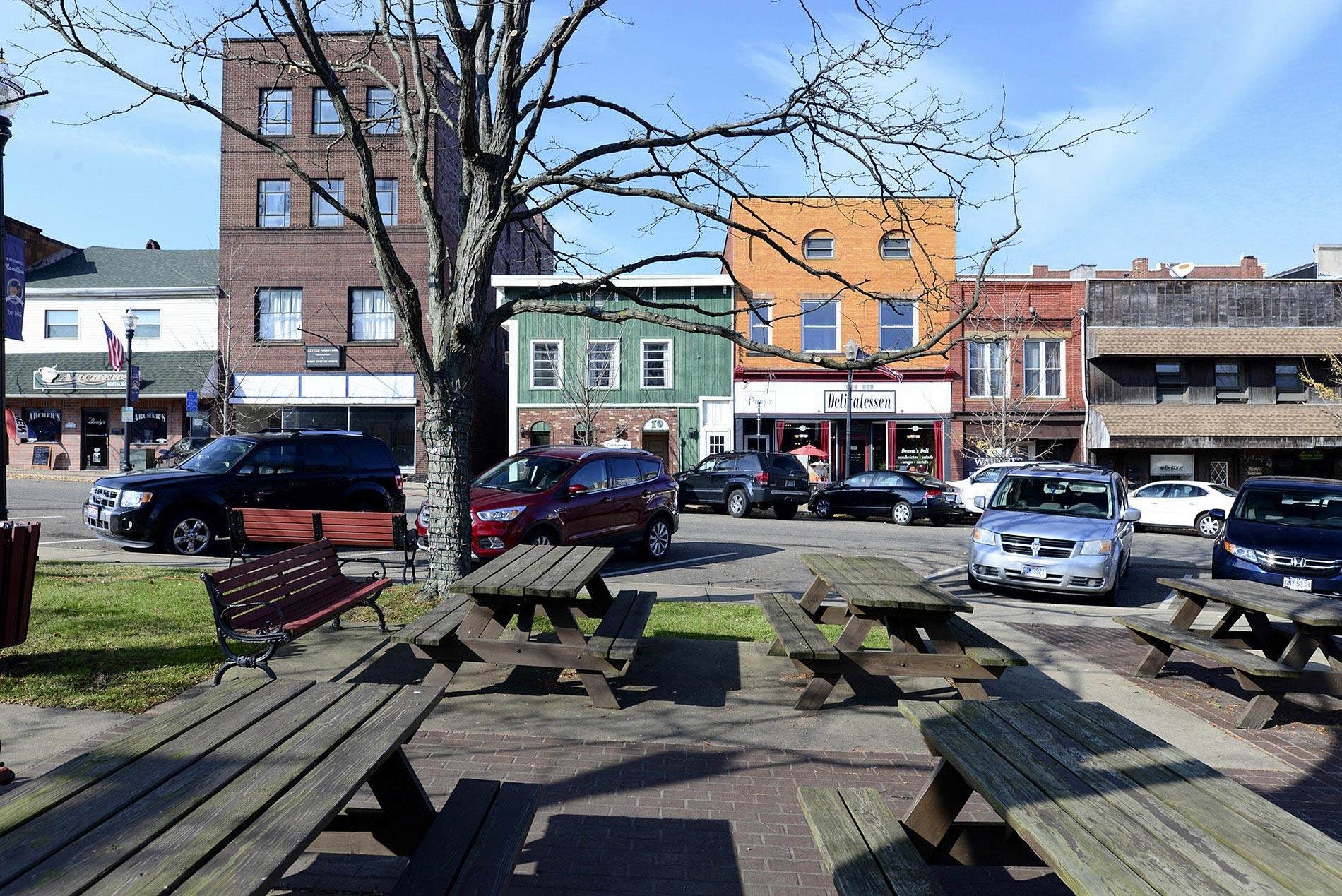
Photos of Carrollton

Overview of Carrollton
Carrollton is a small village in eastern Ohio that serves as the county seat of Carroll County. With a population of roughly 3,000 residents, it has the quiet, friendly character of a rural county seat, surrounded by the rolling hills, woodlands, and farmland of the Appalachian foothills. The community is best known as a gateway to the Muskingum Watershed Conservancy District lakes, which draw visitors for boating, fishing, and camping throughout the warmer months. Carrollton sits about 30 miles southeast of Canton and roughly 50 miles southeast of Akron, placing it within easy reach of Northeast Ohio's larger urban amenities while preserving a small-town atmosphere that appeals to travelers looking for a quieter base.
Just a short drive east of town, Atwood Lake forms the centerpiece of one of the region's most popular outdoor recreation areas. The lake and its surrounding park offer fishing, swimming, boating, golf, and a marina, making it a frequent draw for families and outdoor enthusiasts. The lake straddles Carroll and Tuscarawas counties, and the drive from Carrollton to the main recreation areas is generally under 15 minutes.
A bit further south, Tappan Lake provides another scenic option within the same conservancy district system. Known for its wooded shoreline and quiet coves, it is popular with anglers and paddlers, and the surrounding park includes campgrounds and trails. From Carrollton, Tappan Lake is roughly a 20 to 25 minute drive.
Downtown Carrollton offers a classic small-town Ohio main street, with locally owned shops, diners, and the historic Carroll County Courthouse anchoring the square. The area also has Civil War heritage ties, as several officers associated with the Union Army came from this part of Ohio, and the surrounding countryside is dotted with reminders of the region's 19th-century history.
For travelers, Carrollton works well as a short-term rental base because it combines the peace of rural Ohio with practical access to a string of outdoor attractions. Guests can spend their days on the lakes, explore the surrounding county roads and small villages, and still make an easy day trip into Canton or the greater Akron area for larger events, shopping, or dining. This blend of small-town character, lake-country recreation, and proximity to Northeast Ohio's population centers gives the area a steady appeal for visitors seeking an unhurried getaway.
Want to know if a property in Carrollton is a good investment?
Enter an address to get instant revenue potential and comps.