
Sag Harbor, New York
Want to see how Sag Harbor compares to other top cities in New York? Explore all city regulations in New York. →
Sag Harbor, NY
Challenging To Investors
STR Regulations for Sag Harbor, New York
ALLOWANCE STATUS: Short-term rentals ARE ALLOWED in Sag Harbor with restrictions
Explicit Overview: Short-term rentals are permitted in Sag Harbor Village, New York, but under strict regulatory requirements. As of January 1, 2024, the village has implemented a comprehensive Rental Registry Permit system that allows rental properties but prohibits transient rentals (14 days or less). Seasonal rentals (30+ consecutive days) are permitted with proper registration, and properties rented for more than two weeks but less than 30 days are allowed but require the new rental permit. The village has explicitly prohibited transient rentals (14 days or less) and enforces minimum stay requirements as part of its housing stock protection and public safety measures.
What do Airbnb hosts actually earn in Sag Harbor?
Sag Harbor hosts earn a median $61,378/year with $1,030 ADR and 48% occupancy.
Top performers pull in $105,071+ per year.
See the full Sag Harbor market breakdownHow to Start a Short-Term Rental Business in Sag Harbor
Initial Planning Phase
- Property Assessment: Ensure your property meets all safety and zoning requirements
- Insurance Consultation: Contact your insurance broker immediately to discuss rental plans, as many carriers have specific restrictions or prohibitions on short-term rentals
- Financial Preparation: Budget for permit fees, inspection costs, and potential insurance premium increases
Registration Process
-
Determine Rental Type:
- Seasonal rental (30+ consecutive days) - requires seasonal dwelling unit registry
- Rental property (more than 2 weeks) - requires rental registry permit
- Transient rental (14 days or less) - PROHIBITED
-
Prepare Required Documentation (see detailed list below)
-
Submit Application: File with the Village Building Department before rental commencement
-
Safety Inspection: Complete the 12-point Rental Property Inspection Checklist
Operational Requirements
- Tenant Screening: Comply with all application requirements including tenant information
- Lease Preparation: Prepare compliant leases with proper terms
- Ongoing Compliance: Maintain current registration and comply with all village ordinances
Required Documents, Permits, Licenses, and Guidelines
Mandatory Permits and Registrations
-
Rental Registry Permit (effective January 1, 2024)
- Required for all rental properties (non-owner occupied)
- Must be obtained before rental commencement
- Only issued to property owners
-
Seasonal Dwelling Unit Registry (for 30+ day rentals)
- Filed with Village Clerk
- Must be completed before seasonal rental begins
Required Documentation for Application
-
Property Ownership Documents:
- Copy of most recent deed
- Property tax bill confirming ownership
- Suffolk County Tax Map parcel number
-
Property Details:
- Floor plan depicting location and size of each conventional bedroom
- Certificate of occupancy or pre-existing certificate of occupancy
-
Owner Information:
- Name and legal address of all owners
- Mailing address if different from legal address
-
Tenant Information:
- Name and legal address of each tenant
- Number of tenants intended to occupy property
-
Rental Terms:
- Period of proposed occupancy
- Complete signed copy of lease between owner(s) and tenant(s)
-
Waste Management:
- Contract with carter providing weekly pickup minimum, OR
- Letter from carter confirming full payment for rental term, OR
- Affidavit from owner acknowledging refuse removal responsibility
-
Compliance Affidavits:
- Signed affidavit by all owners and tenants confirming review of village laws and ordinances
- Agreement to abide by noise, parking, and refuse disposal regulations
-
Safety Inspection:
- Completed and notarized Rental Property Inspection Checklist (12-point checklist)
- Signed by property owner, licensed architect, licensed engineer, or licensed home inspector
Safety Inspection Checklist Requirements
The 12-point checklist includes but is not limited to:
- Smoke detectors in every bedroom and common areas on each floor
- Carbon monoxide detectors on each habitable floor within 15 feet of bedrooms
- Electrical outlet compliance
- Egress requirements
- Pool area safety measures
- Other life safety provisions per current building code
Specific Regulations: City, County, and State Level
Sag Harbor Village Regulations
-
Prohibited Activities:
- Transient rentals (14 days or less) are strictly prohibited
- Leasing less than entire dwelling unit is prohibited
- Selling shares to tenants for less than rental term is prohibited
-
Seasonal Rental Restrictions:
- Minimum 30 consecutive days (except two-week rentals permitted maximum twice per year)
- Any dwelling unit rented more than 120 days in calendar year does not qualify as seasonal rental
- Maximum two short-term rentals (2 weeks or less) per 6 months allowed
-
Tenant Limitations:
- Only individual or family tenants permitted
- Leasing must comply with registered number of tenants
- Change in tenants requires registry application amendment
-
Property Use:
- Must comply with all applicable parking regulations
- Subject to noise, vehicle parking, and refuse disposal ordinances
Suffolk County Context
- Property must comply with Suffolk County Tax Map requirements
- Deed recording with Suffolk County Clerk required for ownership verification
New York State Regulations
-
Housing Stability and Tenant Protection Act of 2019:
- Caps security deposits at one month's rent
- Prohibits commingling of security deposits with other funds
- Requires security deposits in separate bank account
- Mandatory return of security deposit within 14 days minus itemized deductions
-
Building and Safety Codes:
- Properties must comply with current New York State building codes
- Safety inspection requirements per state standards
- Electrical, fire safety, and habitability standards
Contact Information for Local Authority
Sag Harbor Village Building Department
- Phone: Not specified in provided materials
- Email: Not specified in provided materials
- Address: Sag Harbor Village Municipal Building, 55 Main Street, Sag Harbor, NY 11963
- Website: www.sagharborny.gov
Key Officials
- Senior Building Inspector: Enforcement authority for rental permits
- Fire Marshal: Co-enforcement authority for safety regulations
- Village Clerk: Handles seasonal dwelling unit registry
Application Submission
- Location: Village Building Department
- Timing: Must be filed before rental commencement
- Format: Signed, sworn, and notarized by all owners
Source Links
- Sag Harbor Village Cracks Down on Rentals - East Hampton Star
- Short-term Rentals and Safety Concerns - CNN
- Hamptons Rental Legislation Overview - 27east
- Rental Permit Laws and Requirements - Hamptons Expediting
- Sag Harbor Village Local Law No. 7-2023 - Official Document
Critical Compliance Notes
Insurance Alert: Many insurance carriers prohibit or severely restrict short-term rentals. Consult with your insurance broker before proceeding, as some carriers will not write policies for Airbnb or Vrbo-listed properties.
Enforcement: The village has authorized police officers, peace officers, fire marshals, ordinance inspectors, and building inspectors to issue summons for violations. Penalties up to $1,000 per day per violation are possible.
Effective Date: All rental registry permit requirements took effect January 1, 2024. Properties must be in full compliance before any rental activities commence.
Registration Renewal: "Renewal Rental Registry" permits are available for properties with continuous prior rental permits, subject to ongoing compliance with all regulations.
Next step
Found a property in Sag Harbor?
Paste any address and get estimated revenue, cash-on-cash return, and comparable STR performance in under 5 minutes. 3 free analyses per day.
Free brief
Get the free Sag Harbor STR Investment Brief
Revenue data, top neighborhoods, seasonal trends, and the key regulations for Sag Harbor, New York in one email.
Sag Harbor
Market Saturation Score
Photos of Sag Harbor


Overview of Sag Harbor
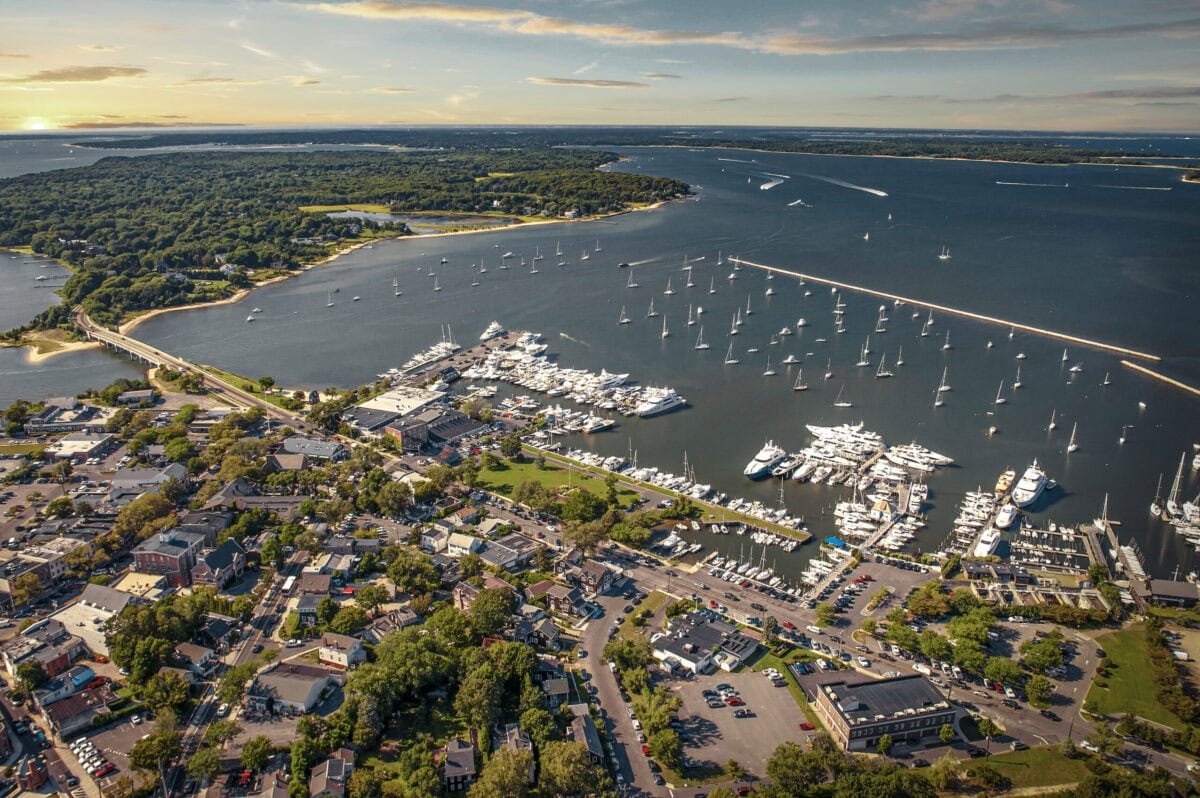
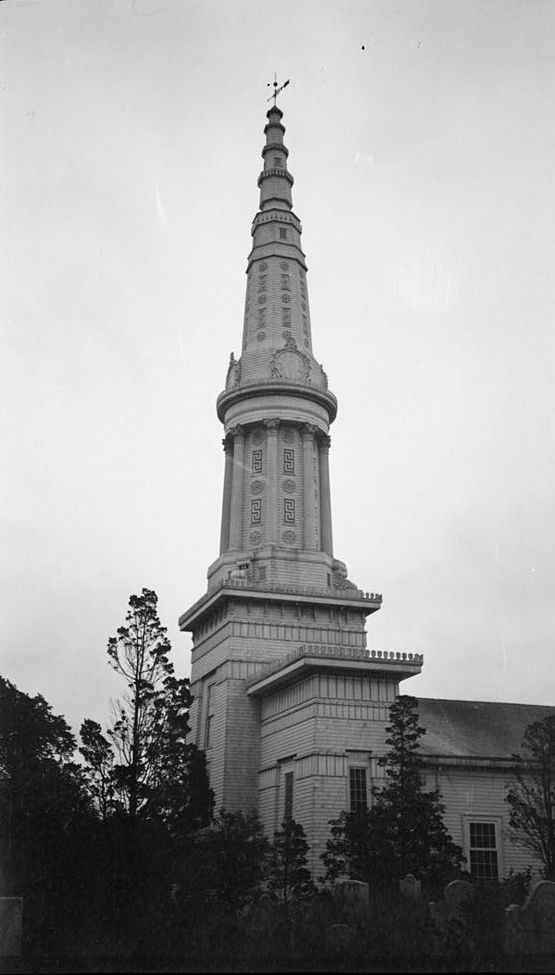
Sag Harbor is a small historic village in Suffolk County, New York, tucked along the sheltered inner shore of the South Fork of Long Island within the broader Hamptons region. With a year-round population of roughly 2,300 residents, it retains the feel of a working New England harbor village rather than a purely seasonal resort, even as it draws a steady stream of summer visitors. Once a busy 19th-century whaling port whose captains built grand homes from their profits, Sag Harbor is best known today for its preserved 18th- and 19th-century architecture, its walkable Main Street of boutiques, restaurants, and galleries, and its reputation as a quieter, more art-minded alternative within the Hamptons. It sits about 100 miles east of New York City, typically a two-and-a-half-hour drive depending on traffic, and is split administratively between the Town of Southampton and the Town of East Hampton.
A natural starting point for visitors is the Sag Harbor Whaling and Historical Museum, housed in a stately 1845 mansard-roofed former home of a whaling captain just off Main Street. The museum recounts the village's role in the whaling industry, displays scrimshaw and nautical artifacts, and offers context for the Greek Revival and Federal homes still lining the streets. It is essentially in the center of the village, within a few minutes' walk of the harborfront.
Downtown Sag Harbor itself is one of the most photographed commercial strips on eastern Long Island. Main Street, Bay Street, and the dock area together offer independent bookstores, harbor-view seafood spots, antique shops, and a historic single-screen cinema, all framed by 19th-century facades and sailboat masts in the distance. Visitors can stroll from one end to the other in well under an hour, and the harbor's John A. Larsen Park at the foot of Main Street provides benches and a small beach along the waterfront.
Just a few minutes' drive southeast, Cedar Point County Park and the adjacent Long Beach give visitors a sandy Atlantic Ocean beach with calm bay-side alternatives like Havens Beach right in the village. These spots are popular for swimming, paddleboarding, and family picnics during the warmer months, and they tend to feel notably less crowded than the more famous ocean beaches farther west.
To the east, about a 30-mile drive along Route 27, the Montauk Point Lighthouse marks the easternmost tip of Long Island and anchors Montauk Point State Park, where bluffs drop to the Atlantic and walking paths lead past WWII-era batteries. The drive out doubles as a scenic trip through Amagansett and past the surf breaks of Ditch Plains, making it a popular day excursion from Sag Harbor.
For short-term-rental investors and visitors alike, Sag Harbor offers a rare combination: authentic small-village character, walkable amenities, water on three sides, and easy access to the wider Hamptons and Montauk. That mix of charm and centrality is exactly what makes a stay here memorable.
Want to know if a property in Sag Harbor is a good investment?
Enter an address to get instant revenue potential and comps.